Scouting a ranch is about covering ground and building a picture of it — where the hogs are rooting up the pasture, which draw the deer bed in, how a herd moves between water and cover across hundreds of acres. You are not sitting one stand; you are working the whole property, at first light and after dark, and you want to remember and map what you find. The ATN Binox-6 Dual 640 is the tool for that, because it sees far, marks locations with built-in GPS, ranges what you spot, and works from daylight into full dark. Here is why it leads for ranch scouting, and where the high-zoom 384 fits.
Best for glassing far corners: ATN Binox-6 Dual 384x288 5.5-44x — higher zoom to study game in a distant back pasture or across a canyon.
Bottom line: the 640's wider base view and sharper picture cover ground faster; the 384's zoom reaches into the far edges of a big spread.
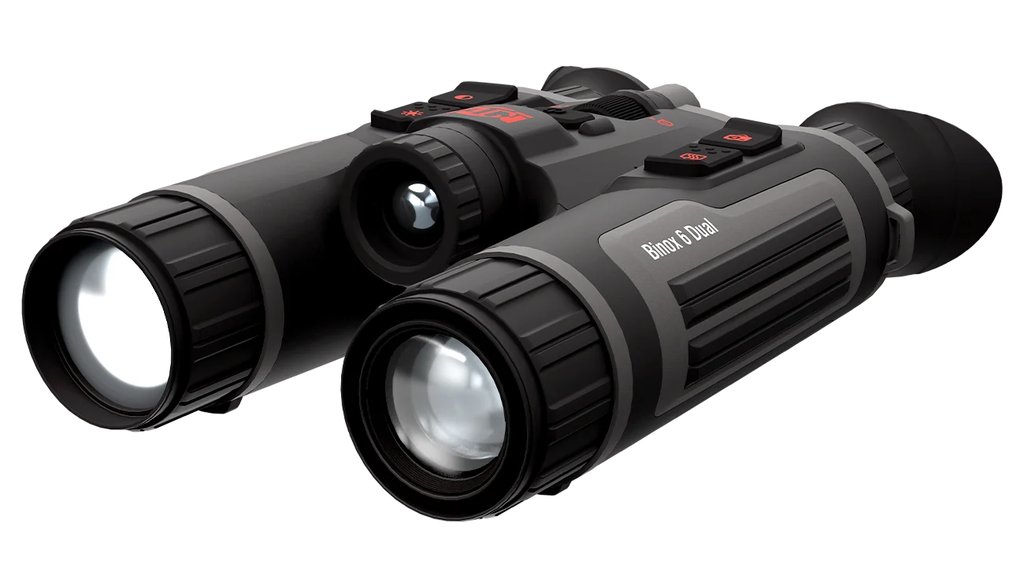
Why ATN's 6th-gen Binox-6 covers a whole property
Scouting acreage rewards range, a way to remember where things are, and a device that works whenever you are out — which on a ranch is often dawn and dusk. The 6th-gen Binox-6 fits that pattern. Detection out past 3,100 m on the 640 means you glass a full pasture from a truck bed or a rise and count what is on it without walking every acre. Built-in GPS lets you drop a waypoint where you find a wallow, a fresh trail, or a group of hogs, so next time you know exactly where to go — you are building a map, not just looking once. The <=15mK NETD — a rating of the smallest temperature difference it reads — keeps the picture clean in the humid pre-dawn air common on open country. And because it is a 4-in-1 day, night, thermal, and twilight unit, you scout the property in daylight for tracks and rubs, then come back after dark to see what actually moves — all from one pair of glass. The 640x512 sensor puts more dots in the picture, the way HD beats an old TV, so a far-off animal resolves clearly instead of as a warm smear you have to guess at.
Best overall for ranch scouting: ATN Binox-6 Dual 640
The ATN Binox-6 Dual 640 is the top pick for working a property because it covers ground fast and helps you record what you learn. The 3,100 m detection range clears a big pasture in a few sweeps, and the 640x512 resolution turns a distant heat signature into an identifiable animal — a hog, a deer, a coyote — so your scouting notes are accurate, not guesses. Its wide 3x base view lets you scan a lot of country at once before you ever zoom in.
Mark it, find it again
The built-in GPS is what turns a single glassing session into a map of the ranch. Drop a waypoint on a bedding area, a water crossing, or a spot where hogs are hitting the field, and you can return straight to it. The compass keeps your bearings on a spread where one grassy rise looks like the next.
Range every group you spot
The laser rangefinder (out to 1,000 yards) tells you how far a group of animals is, which matters when you are planning where to set up or judging whether that herd is on your side of the fence. Who it is for: landowners, managers, and hunters scouting large acreage who want range, mapping, and day-to-night use in one tool. Who it is not for: someone watching a single small food plot who never needs to cover distance.
Best for far corners: ATN Binox-6 Dual 384 5.5-44x
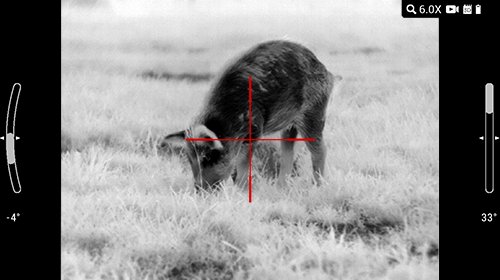
The ATN Binox-6 Dual 384 steps magnification up to 5.5-44x, which earns its place on a big spread where the interesting ground sits far from where you can stand. If you are glassing a back pasture across a canyon or studying a herd on a distant hillside, the higher zoom lets you count and identify animals the 640 would show only as small warm shapes. It carries the same GPS, compass, and rangefinder as the 640, so the scouting tools are identical.
When reach wins on a big spread
For ranches with long sightlines and far corners, the 384's zoom turns distant activity into readable detail. Who it is for: scouts working wide-open country who value zoom reach over the widest view. Who it is not for: anyone covering closer, broken ground, where the 640's wider field scans faster and its resolution reads sharper.
Building a picture of the property over time
One scouting trip tells you a little; a season of them tells you where to hunt and how to manage the land. The Binox-6 is built to turn scattered sightings into that bigger picture. Every time you glass a pasture, drop a GPS waypoint on what you find — a wallow, a bedding thicket, a fence crossing the deer favor, a spot where hogs are tearing up the field. Over weeks those marks form a map of how game uses your ground through the day and the season. Pair that with the onboard recording — 64 GB of storage holds clips of the herds and groups you spot — and you can review activity back at the house, count what you saw, and share it with a manager or a hunting partner over the ATN Connect 6 app. Scouting stops being memory and guesswork and becomes a record you can act on.
The day-to-night span is what makes this practical on a working property. In daylight you read the physical sign — tracks, rubs, trampled grass, torn-up ground — and mark it. After dark you come back to the same country and watch what actually moves, because on most ranches the game travels at dusk, dawn, and through the night. Doing both with one device means your daylight notes and your night observations line up on the same map, so you learn not just where the sign is but which animals made it and when they use each spot. That is the kind of knowledge that decides where you put a stand, where you run a fence, or where you focus a hog-control effort — and it comes from having a tool that works every active hour, not just the convenient ones.
How to choose thermal binoculars for scouting a ranch
For scouting acreage, lead with range and mapping — you are covering distance and you want to remember what you find. Then weigh the view and the picture. What matters most:
- Detection range — the farther you spot game, the more pasture you clear from one spot, saving miles across a big property.
- GPS waypoints — marking sign, trails, and water lets you build a map of the ranch instead of scouting the same ground blind each time.
- Rangefinding — knowing the distance to a group helps you plan setups and judge fence lines.
- Field of view — a wider base view (the 640) scans acreage faster; higher zoom (the 384) reaches far corners.
- Day-to-night use — an all-in-one unit scouts sign in daylight and movement after dark from one device.
- Resolution — a 640 sensor identifies distant animals accurately, so your scouting notes are reliable.
How we picked these ATN thermal binoculars
We judged these on the real work of scouting a property — covering ground, identifying game at distance, and remembering where you found it — not on lab charts. That put detection range, GPS mapping, rangefinding, and day-to-night use at the front, weighed against the need to build a picture of large acreage over repeat visits. We looked only at the current 6th-gen ATN Binox-6 line, then split the two honestly: the 640 scans wide country faster with a sharper picture, while the 384 trades field of view for zoom that reaches the far corners of a big spread. Neither replaces boots-on-the-ground knowledge of your land, and neither is needed for someone watching a single small plot. This is an in-house comparison of ATN's own range, not an independent lab test, so match these strengths to the size and layout of the ground you scout.
Frequently Asked Questions
What makes thermal binoculars good for scouting a ranch?
Long detection range, GPS mapping, and day-to-night use. The ATN Binox-6 Dual 640 spots game out past 3,100 m so you clear big pastures from one spot, marks where you find sign with built-in GPS, and works from dawn through dark, which is exactly what covering acreage requires.
How does the GPS help when scouting a property?
The built-in GPS lets you drop a waypoint wherever you find something worth remembering, like a wallow, a fresh trail, or a group of hogs. Over repeat visits those marks build a map of the ranch, so you return straight to productive ground instead of scouting blind.
How far can the Binox-6 spot game across a pasture?
The 640 model detects heat out to about 3,100 m and the 384 to about 2,750 m in good conditions. On open ground that lets you glass a full pasture from a rise or a truck bed and count what is on it without walking every acre.
Should I choose the 640 or the 384 for a ranch?
Choose the 640 for scanning wide acreage quickly with a sharper picture and a wider base view. Choose the 384 if your property has long sightlines and far corners where the higher 5.5-44x zoom helps you study distant game in detail.
Can I use it during the day as well as at night?
Yes. The Binox-6 is a 4-in-1 day, night, thermal, and twilight unit, so you scout for tracks and sign in daylight and watch actual movement after dark from the same device. That covers the dawn and dusk hours when ranch game is most active.
Can I tell how far away a herd is?
Yes. Both models have a built-in laser rangefinder out to 1,000 yards, so you can measure the distance to a group of animals. That helps you plan where to set up and judge whether game is on your side of a fence line.
Working a spread that takes more than a walk to cover? The ATN Binox-6 Dual 640 gives you the range to clear big pastures, the GPS to map where the game is, a rangefinder to measure it, and day-to-night modes to scout every active hour — all from one pair of glass. Mark your findings, return to them, and build a real picture of your land. Compare it with the higher-zoom 384 and the full lineup on the ATN thermal binoculars page, then pick the view that fits the ground you scout.
Created: July 7, 2026 · 19:22:58 UTC