Guarding a property line at night is a waiting game, and the thing that beats you is not seeing the person before they are on top of you. Perimeter security is the opposite of a hunt on the move — you hold a position, sweep the same boundary over and over, and you need to pick a warm body out of the dark the instant it crosses your line. That calls for long range, a sharp picture, and a way to flag movement fast. The ATN Binox-6 Dual 640 leads here because it detects heat out past 3,100 m, tags warm targets with Hot Point Tracking, and ranges them so you know how far off the boundary they are. Here is why it is the pick for watching a line, and how the 384 fits.
For perimeter security, the best thermal binoculars are the ATN Binox-6 Dual 640x512. It detects a warm body out past 3,100 m in complete darkness, Hot Point Tracking flags the hottest object so movement never slips past you, and a built-in rangefinder tells you exactly how far the target sits from your line — turning a black boundary into something you can actually watch and hold.
Quick answerBest overall for perimeter security: ATN Binox-6 Dual 640x512 3-24x — long range, sharp detection, Hot Point Tracking, and rangefinding for a wide watch line.
Best for a distant, narrow choke point: ATN Binox-6 Dual 384x288 5.5-44x — higher zoom to identify a target far down a single approach.
Bottom line: the 640's wider base view and sharper picture suit covering a broad boundary; the 384's zoom suits studying one far-off approach in detail.
Why ATN's 6th-gen Binox-6 is built for watching a line
A boundary watch rewards range, clarity, and anything that catches movement before you do. The 6th-gen Binox-6 delivers on all three. Detection out past 3,100 m on the 640 model means you pick up a warm body far outside your fence line, giving you time to react instead of surprise. A <=15mK NETD — how small a temperature difference the sensor can read — makes a person stand out cleanly against cool ground, walls, or brush even in fog. Hot Point Tracking marks the hottest object in the frame, so a moving figure gets flagged instead of blending into the scene during a long, tired watch. The 640x512 sensor puts more dots in the picture — HD versus an old TV — so a distant shape resolves into a person or an animal rather than a guessing game. And because it is a 4-in-1 day, night, thermal, and twilight unit with a built-in laser rangefinder, you watch the line around the clock and instantly know how far a target sits from your position — the difference between a real alert and a false one.
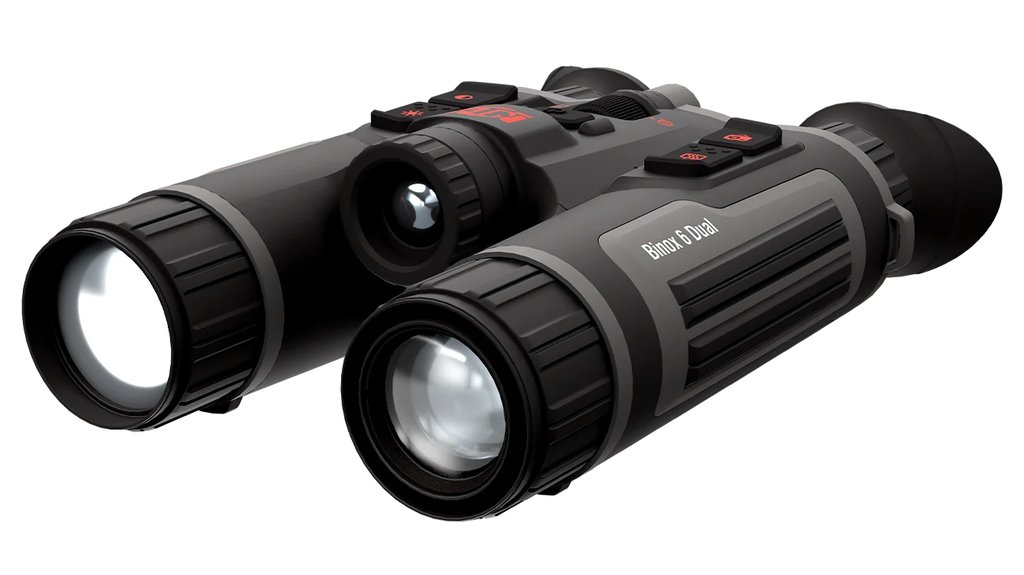
Best overall for perimeter security: ATN Binox-6 Dual 640
The ATN Binox-6 Dual 640 is the strongest choice for holding a line because it sees far, sees clearly, and helps you catch what moves. The 3,100 m detection range buys you reaction time — you spot approach well before the fence. The 640x512 resolution turns a far heat signature into an identifiable shape, so you are not squinting at a warm smudge wondering what it is.
Catch movement with Hot Point Tracking
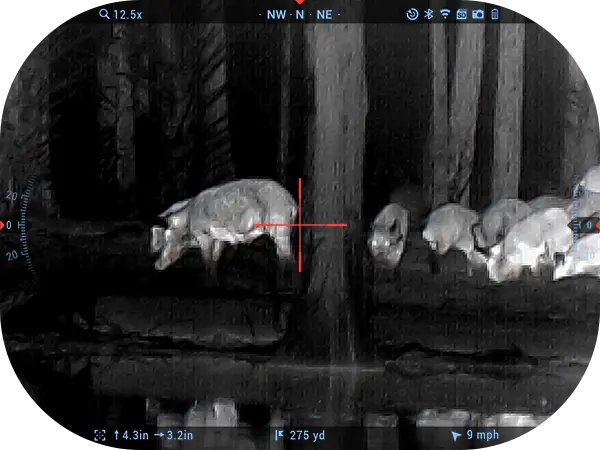
During a long watch, attention drifts — that is when things slip past. Hot Point Tracking marks the hottest object in view, so a figure crossing your line gets flagged for you rather than depending on you noticing at the exact right second. Paired with the wide base view of the 640's 3x zoom, you cover a broad boundary without constantly panning.
Range every contact
The built-in laser rangefinder (out to 1,000 yards) tells you how far a target sits from your position, which turns a vague sighting into hard information — is that heat source at the fence or a field away? GPS and compass help you note fixed reference points along the line. Who it is for: anyone watching a wide property line or boundary at night who wants range, clarity, and movement flags. Who it is not for: someone who only needs a quick handheld scan and never holds a fixed watch.
Two eyes for the long watch
A boundary watch is often measured in hours, and that is where a binocular beats a single-eye optic. Glassing with both eyes open is how your vision naturally works, so it strains you less over a long night and keeps your scanning sharp instead of sloppy by the small hours. Fatigue is the quiet enemy of a watch — a tired watcher misses the very movement they are there to catch — and the two-eye view of the Binox-6 buys you more attentive time on the line before that sets in. The 50 Hz refresh keeps a moving figure smooth rather than smeared, so your eye tracks it cleanly across the frame instead of losing it in a stutter.
Best for a distant approach: ATN Binox-6 Dual 384 5.5-44x
The ATN Binox-6 Dual 384 steps the magnification up to 5.5-44x, which is what you want when your concern is one specific far-off approach — a distant gate, a road, a single choke point down which anything must come. The higher zoom lets you study that point and identify a target well before it closes. It shares the same Hot Point Tracking, rangefinder, GPS, and compass as the 640, so the security tools are identical.
When the extra zoom matters
If you are covering a narrow, distant lane rather than a wide boundary, the 384's reach lets you resolve detail the 640 would leave small. Who it is for: watchers focused on one far approach who value zoom over a broad view. Who it is not for: anyone covering a wide perimeter, where the 640's wider field catches more of the line at once.
Holding a watch without giving yourself away
A boundary watch works best when the watcher stays hidden, and thermal binoculars fit that because they are passive — they read the heat already in the scene and emit no light of their own. No beam sweeps the fence line to announce that someone is watching. That matters on a rural property where you would rather not tip off whoever is testing the boundary. A person's body heat gives them away against cool ground, a cold wall, or the night air, and there is no shadow to hide in the way there is for the naked eye. Even someone crouched behind brush reads as a warm mass through the leaves, because thermal sees heat that visible cover does not block the way it blocks light.
One honest limit: thermal detects heat, so it does not read through solid walls, thick glass, or dense earth, and a determined intruder can reduce their signature. That is why the Binox-6's day channel and twilight modes matter — you confirm what the thermal flagged with a detailed daylight or low-light look, rather than acting on a warm blob alone. The 4K day sensor lets you record a clear image of a contact for later, and the onboard 64 GB storage keeps that record. For steady, all-hours coverage of a line, that combination of passive thermal detection plus a confirming day view is stronger than either on its own. DeFog mode also keeps the picture usable when a damp night would otherwise wash out the view along a low, wet boundary.
How to choose thermal binoculars for perimeter security
For watching a line, lead with detection range and anything that flags movement — you cannot react to what you never noticed. Then weigh the picture and the view against your boundary. What matters:
- Detection range — the farther you pick up a warm body, the more reaction time you have before it reaches your line.
- Movement flags — Hot Point Tracking marks the hottest object so a moving figure does not slip past during a long watch.
- Rangefinding — knowing how far a contact sits turns a vague sighting into a decision, and cuts false alarms.
- Resolution — a 640 sensor identifies a distant shape; a lower-resolution picture leaves you guessing.
- Field of view — a wider base view (the 640) covers a broad boundary; higher zoom (the 384) suits one far lane.
- All-hours use — day, twilight, and night modes mean one device holds the watch from dusk through dawn.
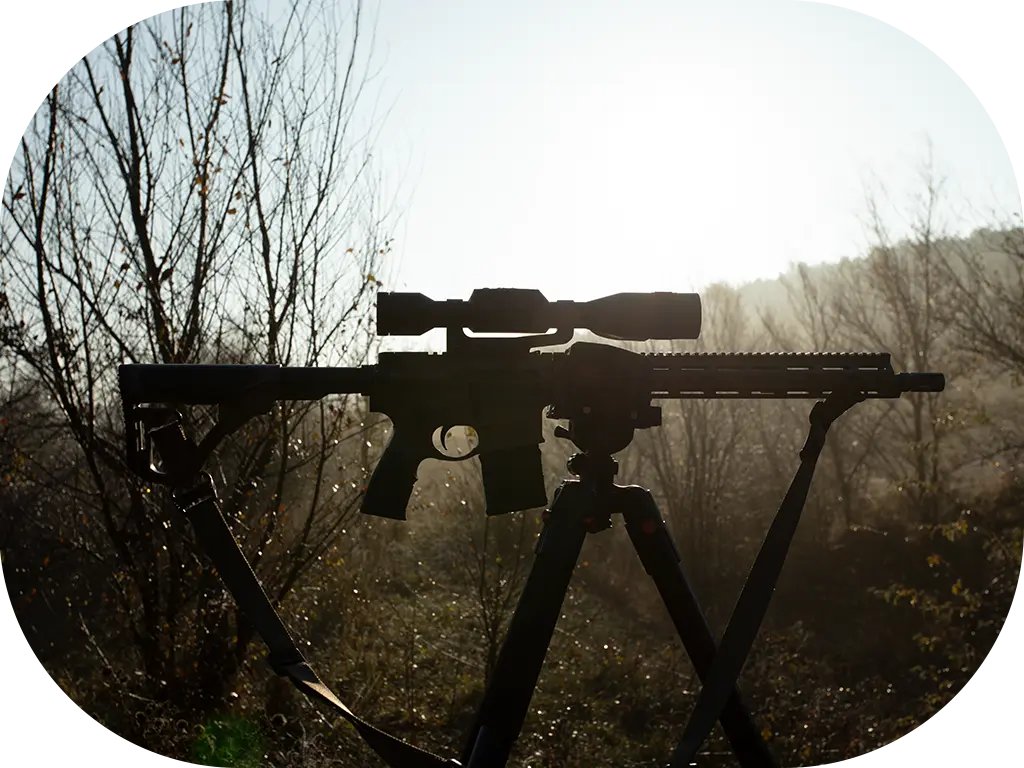
How we picked these ATN thermal binoculars
We measured these against the job of holding a fixed watch over a boundary, not moving through it. That put detection range, resolution, movement flags like Hot Point Tracking, and rangefinding at the front, judged against the need to spot and identify a contact before it crosses your line. We looked only at the current 6th-gen ATN Binox-6 line, then divided the two honestly: the 640 covers a wide boundary with a sharper picture, while the 384 trades field of view for zoom that helps only on one distant approach. Neither is a replacement for a full sensor system on a large facility, and neither suits someone who only wants a quick handheld glance. This is an in-house comparison of ATN's own range, not an independent lab review, so match these strengths to the line you actually need to hold.
Frequently Asked Questions
What makes thermal binoculars good for perimeter security?
Long detection range, a sharp picture, and a way to catch movement. The ATN Binox-6 Dual 640 detects a warm body out past 3,100 m, resolves it clearly with its 640 sensor, and flags the hottest object with Hot Point Tracking, so an approach along your line does not slip by unnoticed.
How far can the ATN Binox-6 detect a person at night?
The 640 model detects heat out to about 3,100 m and the 384 to about 2,750 m under good conditions. That range gives you time to notice and assess a contact well before it reaches your boundary.
What is Hot Point Tracking and why does it help a watch?
Hot Point Tracking marks the hottest object in the view so it stands out on screen. During a long, tired watch that flag helps you catch a moving figure you might otherwise miss, which is exactly what a boundary watch needs.
Can I tell how far away an intruder is?
Yes. Both Binox-6 Dual models have a built-in laser rangefinder out to 1,000 yards, so you can measure how far a contact sits from your position. Knowing the distance turns a vague sighting into useful information and helps rule out false alarms.
Should I choose the 640 or the 384 for perimeter work?
Choose the 640 for covering a wide boundary, since its lower base magnification gives a broader view and its higher resolution identifies distant shapes. Choose the 384 if you are watching one far-off approach and want the extra zoom to study it in detail.
Can the Binox-6 watch a line during the day too?
Yes. It is a 4-in-1 day, night, thermal, and twilight unit, so it holds the watch around the clock from a single device. That means you use the same optic for a daytime scan and a nighttime boundary watch.
If your nights are spent holding a line rather than chasing across it, the ATN Binox-6 Dual 640 gives you the range to see an approach early, the resolution to know what it is, and Hot Point Tracking plus rangefinding to catch and measure it. One rugged unit covers your boundary from dusk through dawn. Compare it with the higher-zoom 384 and the rest of the lineup on the ATN thermal binoculars page, then pick the view that matches the line you need to watch.
Created: July 7, 2026 · 19:22:58 UTC