Moving through unfamiliar ground in full dark is where most people get turned around, twist an ankle on a hidden ditch, or walk right into a fence. Night navigation asks something different from a thermal optic than glassing does — you need to read the terrain in front of your boots, know which way is north, and keep track of where camp is. For that job the ATN Binox-6 Dual 640 stands out, because it pairs a clean thermal picture with a built-in GPS and compass so you both see the ground and know where you are on it. Below is why it leads for finding your way in the dark, and how the higher-zoom 384 model compares.
Best for spotting far waypoints: ATN Binox-6 Dual 384x288 5.5-44x — higher zoom to pick out a distant ridge or landmark you are steering toward.
Bottom line: the 640's lower base magnification gives a wider view for walking, which is what you want underfoot; the 384's zoom shines when you are identifying a far-off point to aim for.
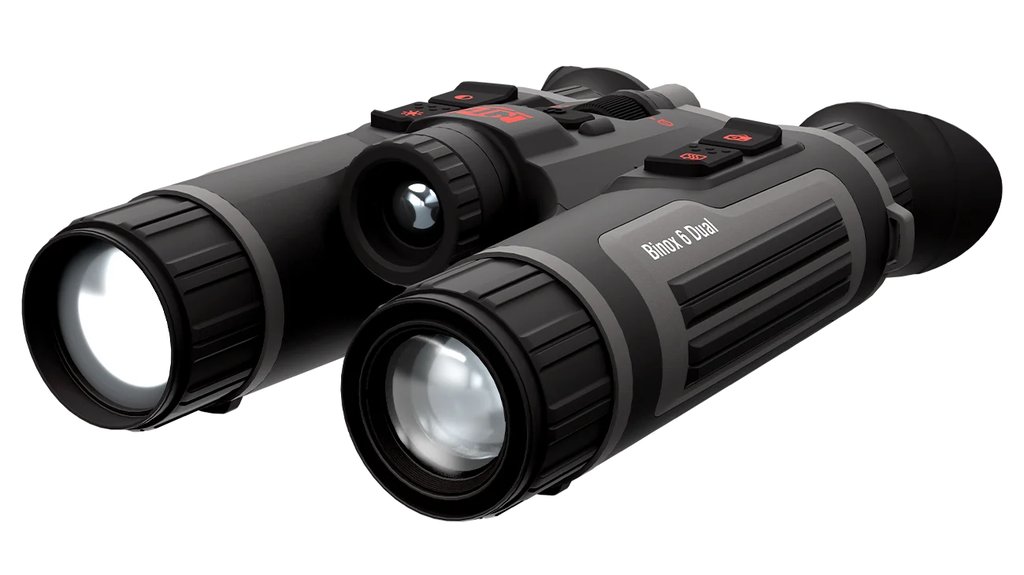
Why ATN's 6th-gen Binox-6 works for moving in the dark
Night navigation needs three things at once: something that shows you the ground, something that tells you your heading, and a picture wide enough to walk behind safely. The 6th-gen Binox-6 does all three. Its GPS and built-in compass mean you always know your position and which way you are pointed — the difference between walking a straight line back to camp and wandering in a circle. The thermal sensor turns a pitch-black draw into a readable scene: warm animals, running water, and even a person stand out against cool ground, so you spot hazards and features you would otherwise trip over. A <=15mK NETD — a rating of how fine a temperature difference it detects — keeps that picture crisp in the fog and dew that come with night air. The 640 model's lower base zoom of 3x gives you a wider view than the high-magnification 384, and a wide view is exactly what you want when you are walking, not just watching. It is also a 4-in-1 device with twilight and night modes, so the whole span from dusk to dead dark is covered from one unit — no swapping optics as the light drops.
Best overall for night navigation: ATN Binox-6 Dual 640
The ATN Binox-6 Dual 640 is the right tool for finding your way after dark because it answers the two questions that matter most on the move: what is in front of me, and where am I. The GPS and compass handle the second; the 640x512 thermal sensor handles the first. More dots in the picture — think HD versus an old set — means terrain edges, drop-offs marked by temperature differences, and warm hazards read clearly instead of as a vague blur.
A wider view for walking
The 640's 3x base magnification gives a broader field than the zoom-heavy 384, and that width is what keeps you oriented when you are moving. A wide picture shows the path and its surroundings at once, so you place your feet with confidence and catch obstacles at the edge of the frame before you reach them.
Know your position, mark your route
With GPS and compass built in, you drop a waypoint at camp or a trailhead and steer back to it, and the compass keeps your heading honest when every dark hillside looks the same. The built-in rangefinder (to 1,000 yards) also lets you measure the distance to a landmark you are walking toward. Who it is for: anyone crossing unfamiliar ground in the dark who wants terrain, heading, and position in one device. Who it is not for: someone who only needs to spot game from a fixed stand and never moves.
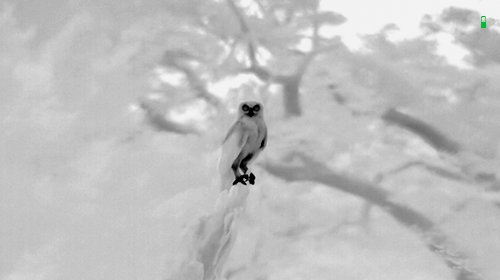
Best for far waypoints: ATN Binox-6 Dual 384 5.5-44x
The ATN Binox-6 Dual 384 brings much higher magnification — 5.5-44x — which is the tool you reach for when the thing you are steering toward is a long way off. If you navigate by picking out a distant ridge, a far tree line, or a warm structure and walking to it, the extra zoom lets you confirm that landmark before you commit to the route. It carries the same GPS, compass, and rangefinder as the 640, so the navigation aids are identical.
When the higher zoom helps you steer
In open country where your reference points sit far off, the 384's reach earns its place. Who it is for: navigators who identify distant landmarks and prefer zoom over a wide walking view. Who it is not for: anyone moving through close, broken terrain, where the 640's wider base view keeps you safer on your feet.
Reading terrain in the dark without your own light
The quiet advantage of a thermal for night movement is that it needs no light of your own — no headlamp splashing across the ground, no flashlight beam that blinds your own night vision and announces you to every animal for a mile. You move through the dark the same way the ground actually is, reading it by temperature. Warm running water reads clearly, which keeps you from stepping into a creek you did not know was there. Warm animals show up before you spook them, so you are not surprised by a bedded deer at ten feet. Even ground that has held the day's heat differently — a rock face, a dirt road, a tree line — often reads as a distinct shade, and those contrasts give you handrails to follow. SharpIR image enhancement sharpens those edges so the scene resolves faster, which matters when you are placing your feet and cannot stop to study the picture.
There is a limit worth stating plainly: thermal shows heat, not detail the way daylight does, so a smooth cold surface like flat rock or still water can look featureless. That is exactly why the built-in compass and GPS carry the other half of the job. You navigate by heading and waypoint, and you use the thermal picture to keep from walking into trouble along that heading. The two together — a known direction and a readable scene — are what make crossing dark ground safe rather than a gamble. The Binox-6's DeFog mode helps here too, keeping the picture usable when night air fogs the view and you most need to see where your next step lands.
How to choose thermal binoculars for night navigation
For finding your way in the dark, put the navigation aids first — a thermal optic without a heading is only half the tool. Then weigh the picture and the view. Here is what actually matters:
- GPS and compass — knowing your position and heading is the core of navigating; a unit with both built in keeps you from circling.
- Field of view — a wider base view (the 640's 3x) is safer for walking than a narrow high-zoom frame.
- Thermal sensitivity (NETD) — a low NETD keeps terrain and hazards readable in fog and dew.
- Detection range — longer range lets you read the ground and spot warm hazards well before you reach them.
- Twilight and night modes — an all-in-one unit covers the whole dusk-to-dark span without switching devices.
- Weight and hand feel — near 1.6 lbs, both models are easy to bring up to your eyes repeatedly as you move.
How we picked these ATN thermal binoculars
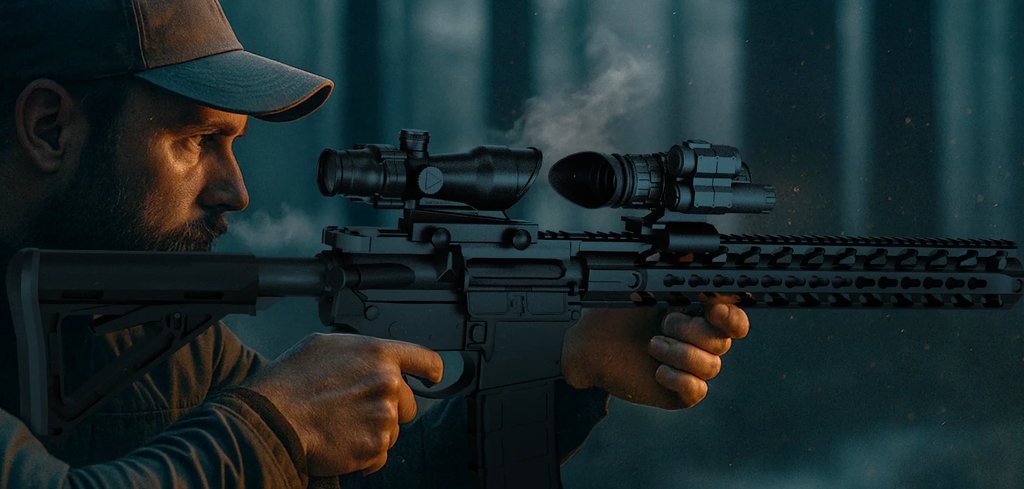
We judged these against the real job of moving through dark terrain, not standing still and glassing. That meant weighting the navigation aids — GPS and compass — alongside field of view and thermal clarity, because a wide, readable picture with a known heading is what keeps you safe on your feet at night. We considered only the current 6th-gen ATN Binox-6 line, then separated the two models honestly: the 640 gives the wider walking view and sharper terrain read, while the 384 trades that width for zoom that helps only when your landmarks are far off. Neither replaces basic map sense, and neither is ideal if you never leave a fixed spot. This is an in-house comparison of ATN's own range, not an independent lab test, so weigh these features against the ground you actually cross.
Frequently Asked Questions
Why use thermal binoculars for night navigation?
Thermal binoculars show terrain, water, and warm hazards in total darkness without any light of your own. The ATN Binox-6 Dual 640 adds a built-in GPS and compass, so you not only see the ground ahead but also know your position and heading, which is the core of finding your way at night.
Does the ATN Binox-6 have a compass and GPS?
Yes. Both Binox-6 Dual models have built-in GPS and a compass. Together they let you mark waypoints like camp or a trailhead, hold a straight heading, and steer back to your start point in the dark.
Is the 640 or the 384 better for walking at night?
The 640 is better for walking because its 3x base magnification gives a wider view, and a wide picture keeps you oriented and shows obstacles at the edge of the frame. The 384's higher zoom is more useful for identifying a distant landmark you are steering toward than for moving over close ground.
Can I see hazards like ditches or fences with it?
You can see anything that differs in temperature from its surroundings, which often includes water, warm animals, and people. Terrain edges frequently show a temperature contrast too, so hazards read more clearly than they would with your eyes alone, though a thermal optic complements rather than replaces careful footing.
Does it work through the whole span from dusk to full dark?
Yes. The Binox-6 is a 4-in-1 unit with day, twilight, night, and thermal modes, so it covers the changing light from dusk into complete darkness. You do not need to switch to a second optic as the light fades.
How far can it detect warm objects at night?
The 640 model detects heat out to about 3,100 m and the 384 to about 2,750 m. On open ground that lets you read the terrain and spot warm hazards or reference points well before you reach them.
If your nights involve crossing ground rather than sitting still, the ATN Binox-6 Dual 640 gives you terrain, heading, and position in one pair of glass — GPS and compass to keep you found, a wide thermal view to walk behind, and twilight-to-dark modes for every stage of the night. Set a waypoint at camp and steer back to it without second-guessing the trail. See how it lines up against the higher-zoom 384 and the full range on the ATN thermal binoculars page, and pick the view that suits the country you move through.
Created: July 7, 2026 · 19:22:58 UTC