A multiday hunt punishes gear that can't go the distance. You're miles from a wall outlet for days, the weather turns, and the binocular you trusted at home has to keep glassing on night three the way it did on night one. That's a different test than a single evening in the back forty, and it's why the best thermal binoculars for multiday hunts are the ones built around endurance: swappable power, a tough sealed body, and a picture that doesn't quit. By that measure the winner is the ATN Binox-6 Dual 640x512. Below we lay out why it survives a hard back-country week, with the high-magnification 384 as the reach-focused sibling.
Best for long-range glassing on a trip: ATN Binox-6 Dual 384x288 5.5-44x — trades resolution for a much higher top-end zoom to study distant ridges.
Best power strategy: both run dual replaceable 18650s, so a pocket of charged cells outlasts any single-day hunt.
Toughest build: IP67 sealing on both handles a week of weather without babying.
Why ATN's 6th-gen Binox-6 survives a multiday hunt
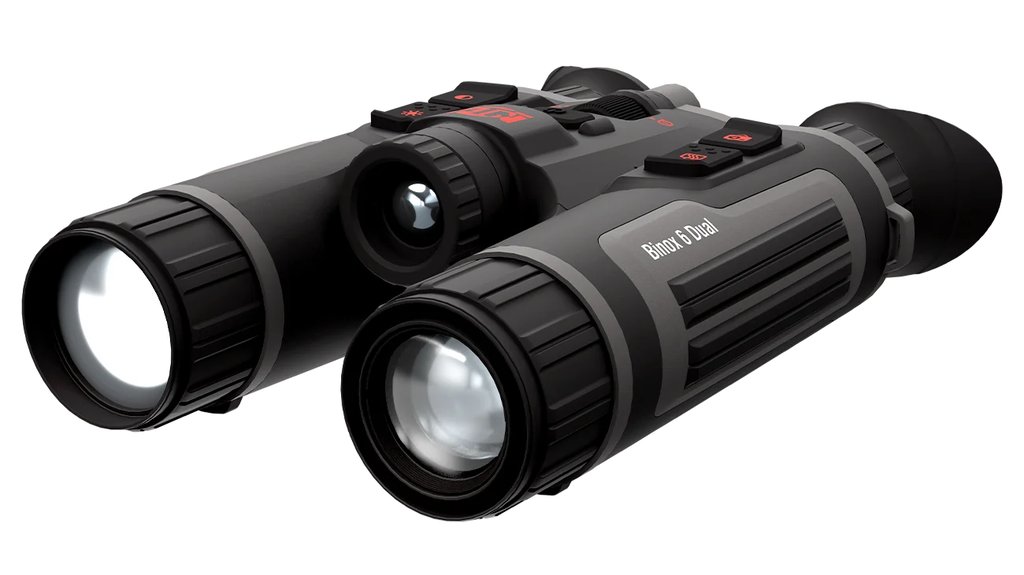
The Binox-6 survives a multiday hunt because it's engineered around the two things that end a trip early: dead batteries and broken seals. Its dual 18650 batteries are replaceable, so when they drain on night two you swap in a charged pair from your pack in seconds and keep going — you're never tethered to an outlet you don't have. The IP67 waterproof rating seals it against days of rain, heavy dew and trail dust, the exact conditions that creep into unsealed optics over a week outdoors. Behind that endurance sits a real optic: a 640x512 thermal sensor with tight <=15mK sensitivity that stays sharp and clean on night three the same as night one, a 35mm F/1.0 lens driving a 3100m detection range, and a 50 Hz refresh that keeps moving game crisp. The 4K day sensor lets you scout the country in color by daylight, the built-in 1000-yard rangefinder calls distance without a second device, and GPS plus a compass mark your glassing spots so you can navigate back over unfamiliar ground. It's an observation kit built to be lived with, not just carried once.
Best overall: the ATN Binox-6 Dual 640x512
The ATN Binox-6 Dual 640x512 is the multiday winner because it treats a hunt as something that lasts days, not hours. The swappable dual batteries mean runtime is limited only by how many charged cells you bring, the IP67 body takes a week of weather without complaint, and the 640 sensor gives you a picture sharp enough to identify game reliably on the fifth night when you're tired and the conditions are worse. It's the binocular you can depend on when resupply and a power outlet are both a long way off.
Swappable power is the whole game away from the truck
On a multiday hunt, how a binocular is powered matters more than any single spec, and this is where the Binox-6 wins. Each cell gives around 8 hours, but the real point is that the dual 18650s pull out and swap in seconds. A sealed-battery optic is done the moment it dies — and it will die, on the night you can least afford it. With the Binox-6 you carry a stack of charged 18650s in a pocket, rotate a fresh pair in when the old ones fade, and top the spent cells on a small solar panel or a truck charger between sits. Runtime stops being a fixed number and becomes a matter of how much power you packed, which is exactly the flexibility a days-long trip demands. Standard 18650s are also easy to source and carry in bulk, so scaling up power for a longer trip is simple.
Built to shrug off a week of weather
Durability is the second half of surviving a multiday hunt, and the IP67 rating is what earns the Binox-6 its place in a pack. IP67 is a sealed rating against both dust and water immersion, which in the field means days of rain, morning dew soaking everything, river-crossing splashes and trail grit are simply non-events — moisture and dirt stay out of the electronics. Over a single evening you might get away with an unsealed optic; over a hard week outdoors, small ingress adds up and kills gear. A binocular you can leave clipped to your chest through a downpour, stuff into a wet pack, and pull out working the next morning is a binocular that finishes the trip. That reliability is worth more on day five than any feature on the box.
A 640 sensor that stays sharp when you're tired
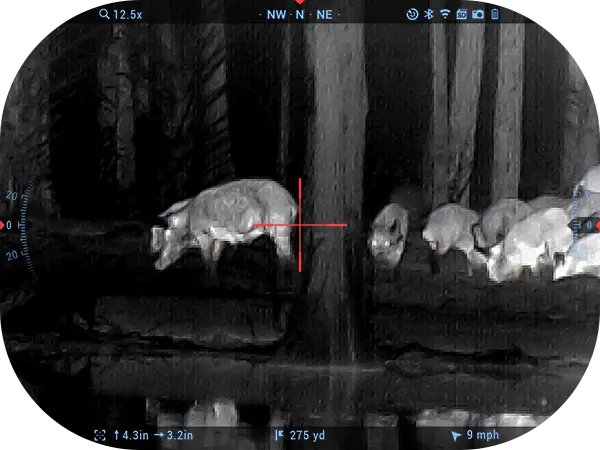
The 640x512 thermal sensor matters most late in a long hunt. Resolution is how many dots build the picture — more dots is the jump from standard definition to HD — so an animal at distance fills more pixels and stays clearly identifiable. On night five, when you're fatigued and the weather is against you, a sharp, high-resolution picture is what keeps you from second-guessing whether that heat signature is the animal you're after. The tight <=15mK sensitivity holds contrast clean in the fog and humidity that build over a multiday sit, and SharpIR AI processing keeps the outline crisp. A binocular that shows you a confident picture when you're least sharp yourself is doing exactly the job an endurance optic should.
Comfort that adds up over days
Two-eye comfort is easy to dismiss on a short outing, but over multiple days it compounds. Glassing through a single-eye optic strains one eye and flattens depth perception, and that fatigue builds night after night until your scanning gets sloppy. Using both eyes is how your vision naturally works, so you glass longer each night and recover better between them. Across a week, that's the difference between hunting hard every evening and running out of steam by the third. At 730 grams the Binox-6 is also light enough to wear on a chest harness all day without becoming a burden you resent by day four.
Navigate, mark and record over unfamiliar ground
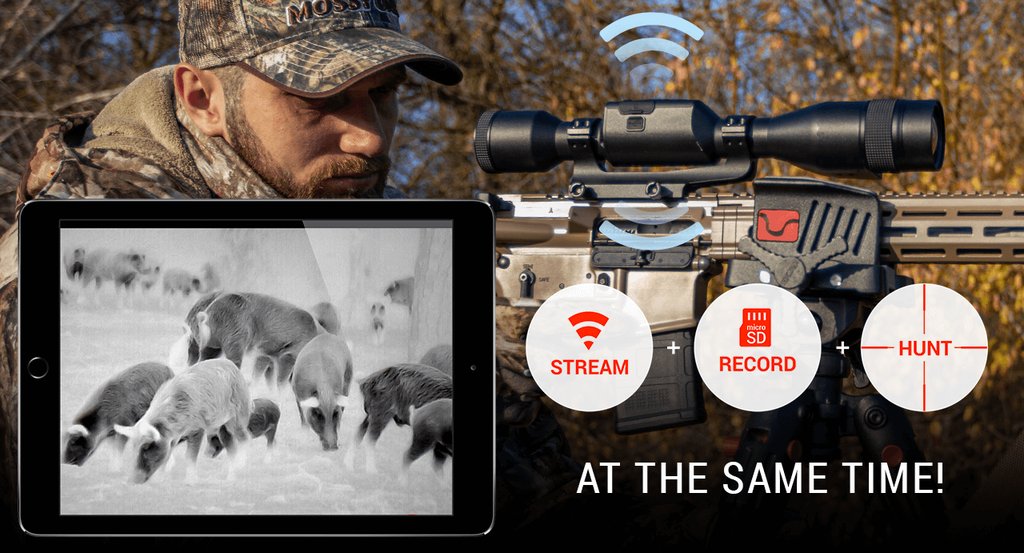
A multiday hunt often means unfamiliar country, and the Binox-6's built-in navigation tools earn their keep there. GPS and a compass let you mark exactly where you spotted game and find your way back to a productive spot over ground you don't know well, which is genuinely useful when you're covering new terrain day after day. The 1000-yard laser rangefinder tells you how far a ridge or an animal is right in the view, and 64 GB of storage with Wi-Fi to the ATN Connect 6 app lets you record and review what you saw each night. On a trip where every observation counts, having the tools to log and relocate your finds is a real advantage.
Who it's for and who it's not
The Binox-6 640 is for the hunter who spends days in the back-country — pack trips, multi-night stands, ranch stays far from a charger — and needs an optic that endures rather than one that merely works once. It's not the pick for someone who only ever hunts a single evening close to the truck; that hunter doesn't need to plan around swappable power. And if your whole game is studying animals on far ridges at extreme magnification, the higher-zoom 384 sibling may suit you better than this all-round pick.
Best for long-range glassing: ATN Binox-6 Dual 384x288 5.5-44x
If your multiday hunts happen in big, open country where you're studying distant ridges and basins, the ATN Binox-6 Dual 384x288 5.5-44x is the reach-focused sibling. It shares the same endurance DNA — swappable dual 18650s, IP67 sealing, the 4K day sensor and the rangefinder — but trades some thermal resolution for a much higher top-end magnification to reach deep into the distance.
Higher zoom for country where you glass far
The 5.5-44x magnification is the headline difference. Where the 640's 3-24x is built for all-round scanning and identification, the 384's much higher top end lets you study an animal or a distant slope in far more detail from a fixed glassing point — the kind of long, patient observation that open-country multiday hunting rewards. It keeps the same tight <=15mK sensitivity, so the picture stays clean, and the same swappable batteries and sealed body, so the endurance is identical. What you give up is resolution: the 384 sensor has fewer dots than the 640, so at a given distance it resolves a little less fine detail.
The trade against the all-round pick
Choosing between them is really about your country. The 640 is the better all-round endurance pick — more resolution for confident identification across mixed terrain and closer glassing, at a 3100m detection range. The 384 5.5-44x is the specialist for wide-open ground where the extra top-end zoom lets you reach and study distant animals, at a slightly shorter 2750m detection range. Both survive a multiday trip equally well thanks to identical power and sealing; the decision is resolution and versatility versus outright magnification. Who the 384 is not for: a hunter in mixed or close cover who'd rather have the resolution — that's the 640's territory.
How to choose thermal binoculars for a multiday hunt
For a multiday hunt, judge a binocular first on whether it can go the distance, then on how well it sees. The trap is buying on a single-night spec and getting stranded on night three with a dead, damp optic. Weigh these in order:
- Swappable power — replaceable 18650 batteries turn runtime into a matter of how many cells you pack, not a fixed number. This is the single most important multiday spec.
- Sealing and durability — IP67 waterproofing survives a week of rain, dew and dust that would kill an unsealed optic.
- Thermal resolution — a 640 sensor keeps game identifiable when you're tired late in the trip; the 384 trades this for higher zoom.
- NETD sensitivity — <=15mK holds a clean picture through the fog and humidity that build over days outdoors.
- Navigation tools — GPS, compass and a rangefinder help you mark, relocate and range spots across unfamiliar back-country.
How we picked these ATN thermal binoculars for multiday hunts
We ranked only ATN's current 6th-gen Binox-6 line, and we ranked it specifically for endurance rather than for a single evening's use — older and discontinued binoculars were left out because a multiday tool has to be current, dependable technology. The specs we weighed hardest were the ones that decide whether an optic finishes a hard week: swappable battery design and runtime, IP67 sealing against sustained weather, and build toughness, followed by the thermal resolution and <=15mK sensitivity that keep the picture reliable late in a tired, damp trip. We treated navigation tools and two-eye comfort as real multiday advantages because they compound over days, not because they look good on a spec sheet.
The honest trade-off is between the two Binox-6 variants, not against endurance — both endure equally. The 640 gives resolution and all-round versatility; the 384 5.5-44x gives reach at the cost of resolution. Neither is the right pick for a hunter who never leaves sight of the truck. This is an in-house comparison of ATN's own range, not an independent lab test, so treat it as a guide to how ATN's binoculars hold up on a long trip rather than a cross-brand verdict — and weigh the power strategy, the sealing and the resolution against the length and country of the hunts you actually take. Who it's not for: the single-evening, close-to-home hunter who doesn't need to plan around days away from a charger.
Frequently Asked Questions
What are the best thermal binoculars for multiday hunts?
The ATN Binox-6 Dual 640x512 are the best for multiday hunts. Dual replaceable 18650 batteries let you swap in fresh cells away from any charger, an IP67 sealed body survives days of rain and dust, and a 640x512 sensor with <=15mK sensitivity keeps game sharp night after night.
Why do swappable batteries matter on a multiday hunt?
Because you're days from a wall outlet, a sealed-battery optic is done the moment it dies. The Binox-6's dual 18650 cells pull out and swap in seconds, so you carry a stack of charged cells and rotate them — runtime becomes a matter of how much power you packed rather than a fixed number.
Is the Binox-6 tough enough for a week in the back-country?
Yes. Its IP67 rating seals it against both dust and water, so days of rain, heavy dew, splashes and trail grit stay out of the electronics. You can leave it on a chest harness through a downpour and pull it out working the next morning.
What's the difference between the 640 and the 384 5.5-44x for a trip?
They share identical endurance — swappable batteries, IP67 sealing, the 4K day sensor and rangefinder. The 640 has more resolution for confident identification across mixed terrain; the 384 trades resolution for a much higher 5.5-44x zoom to study distant animals in wide-open country.
How long does the Binox-6 last between charges?
Each pair of 18650 cells gives around 8 hours, but because they swap out you're not limited to that. Carrying several charged pairs and topping the spent ones on a solar panel or truck charger between sits keeps the binocular running for the whole trip.
Can the Binox-6 help me navigate unfamiliar ground?
Yes. Built-in GPS and a compass let you mark where you spotted game and find your way back over country you don't know, and the 1000-yard laser rangefinder tells you how far a ridge or animal is. Those tools are genuinely useful when you cover new terrain day after day.
Is a binocular better than a monocular for a multiday hunt?
For long, repeated glassing sessions, yes. Two eyes on the glass cut the eye fatigue that a single-eye optic causes, and that tiredness compounds over multiple nights. Better comfort each evening means you glass harder for longer across the whole trip.
Heading out for days at a time? The ATN Binox-6 Dual 640x512 is built to finish a hard week — swappable batteries, IP67 sealing and a 640 sensor that stays sharp on the last night as much as the first. Compare it and its higher-zoom sibling against the rest of the line on the ATN thermal binoculars page, and pick the one that matches the length and country of your hunts.
Created: July 7, 2026 · 19:22:57 UTC