The last hour before full dark is when the woods come alive — and when ordinary optics quit on you. That gray, in-between light is exactly where the best thermal binoculars low-light twilight setups earn their keep, because thermal doesn't care how much light is left. It reads heat, not brightness. The ATN Binox-6 Dual 640x512 3-24x goes a step further with a dedicated twilight mode inside its 4-in-1 vision, so as dusk fades you can slide from a normal view into a heat picture without ever lowering the glass. This guide covers which ATN Binox-6 handles that fading-light window best and why.
Best for spotting distant game at last light: ATN Binox-6 Dual 384x288 5.5-44x — same twilight vision, more zoom to pick apart far-off shapes before dark.
The short version: both switch seamlessly between day, twilight, night, and thermal; the 640 gives the crispest low-light image, the 384 gives you extra reach across a field at dusk.
Why ATN's 6th-gen Binox-6 owns the twilight window
Twilight is a hard problem for optics because there's just enough light to fool a day scope and not enough to see clearly. ATN's 6th-gen Binox-6 solves it two ways. First, thermal imaging ignores the problem entirely — it sees the heat coming off an animal whether it's noon or midnight, so a deer stepping out at last light glows plainly against a cooling background. Second, the Binox-6's 4-in-1 vision gives you an actual twilight mode alongside day, night, and pure thermal, so you can pick the view that matches the exact light you have and switch as it changes. The <=15mK NETD rating is the quiet hero here: a lower NETD means the device can tell apart very small temperature differences, so it draws a clean picture even in the humid, cooling air of dusk when everything is close to the same temperature. Add SharpIR AI sharpening, six palettes so you can pick the one that pops against a twilight scene, and Dual View Switching to flip modes fast — all of it on current 6th-gen hardware, none of it carried over from an older line.
It's worth being clear about why regular glass struggles when thermal doesn't. A day binocular works by gathering the light that's left, so as the sun goes the picture gets dimmer, grainier, and finally black. Night-vision glass amplifies what little light remains, which helps under moon and stars but still fails in true dark or heavy cover. Thermal takes none of that on — it doesn't need any ambient light at all, because it's reading the temperature difference between an animal and its surroundings. That's why a warm-bodied deer, hog, or coyote can stand out sharply in thermal at the exact moment your naked eye and a day optic have both given up. During twilight you actually have both signals available at once, which is why a device that lets you blend and switch between them is so useful in that window.
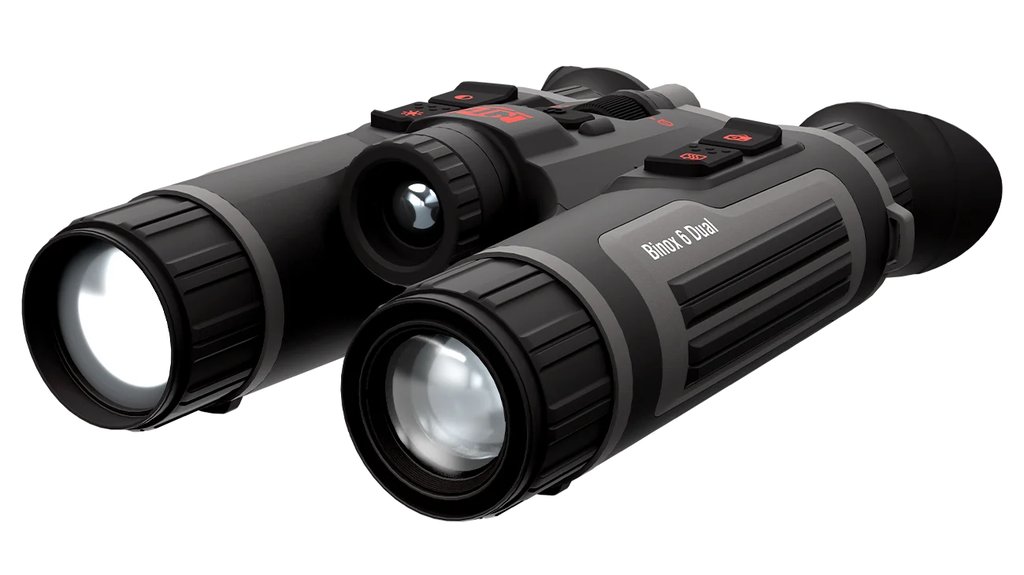
Best overall for twilight: ATN Binox-6 Dual 640x512 3-24x
The ATN Binox-6 Dual 640x512 3-24x is the one to reach for when the light is dying and you still want a clean, readable picture. Its 640x512 sensor packs the most dots into the image of any Binox-6, so the picture holds detail as conditions worsen — the difference between HD and standard definition when you're straining to tell a buck from a doe in gray light.
A mode for every stage of dusk
As the sun drops you can start in a normal view, flip to twilight mode as color drains out, then to full thermal once it's dark — all on the same glass, with Dual View Switching making the change quick. That means you're never caught with the wrong tool during the fastest-changing light of the day.
Reading faint heat when everything cools down
At dusk the ground and the air start giving back the day's heat, so temperatures bunch up and animals stand out less. The <=15mK sensitivity is what keeps the Binox-6 useful here — it separates a warm body from a cooling field even when the difference is small. The wide 3x base view lets you sweep a tree line quickly before zooming in to confirm.
Palettes that pop in gray light
When contrast is low, the color palette you choose does a lot of the work. The Binox-6 gives you six, and at twilight that flexibility pays off — White Hot keeps a natural look, Black Hot can make shapes read more clearly against a fading sky, and Iron Red or Alarm push a warm animal forward so it separates from a dim, low-contrast background. Being able to cycle palettes on the fly means you can find the view that makes your subject easiest to pick out as the light keeps changing.
Who it's for: anyone who hunts or observes through the dusk-to-dark transition and wants the cleanest image in the worst light. Who it's not for: a glasser who works almost entirely at long range and wants maximum zoom over image sharpness.
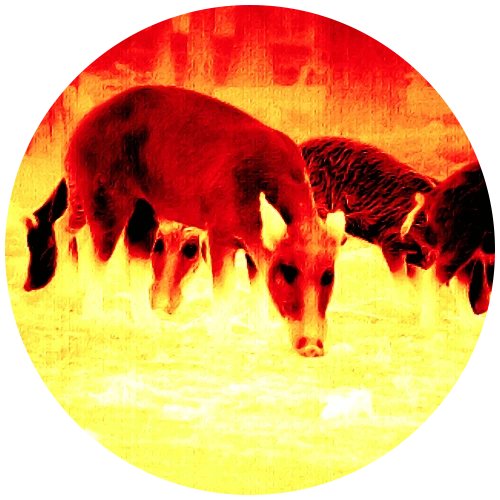
Best for reach at last light: ATN Binox-6 Dual 384x288 5.5-44x
The ATN Binox-6 Dual 384x288 5.5-44x carries the same 4-in-1 twilight vision and the same <=15mK sensitivity, but stretches the zoom out to 44x. If your twilight problem is distance — game showing up as small shapes across a big field just before dark — the extra reach helps you sort them out while there's still a picture to read.
When distance is the real challenge
On open ground, a deer at 600 yards at last light is a tough call with a wide-view optic. The 384's longer zoom lets you pull that shape in close enough to judge it, and its 2750m detection range means the heat still reaches you. The twilight and thermal modes work exactly as they do on the 640.
There's a natural trade here worth understanding rather than glossing over. Higher zoom narrows the field of view, so the 384 sees a smaller slice of the world at once — great for studying a distant target, less handy for sweeping a broad area fast. In low light that cuts both ways: the wider 640 finds more warm bodies quickly during the fading window, while the 384 is the better tool once you've spotted something far off and need to size it up before dark. Neither is more low-light capable than the other; they're built for different distances within the same twilight problem.
Ranging in the same low light
The 384 also carries the built-in laser rangefinder, which matters at dusk more than you'd think. Once you spot a far shape you can range it right away and know whether it's inside your comfortable distance before the light is fully gone. Pairing that ranging with the longer zoom means you can find, size up, and range a distant animal all in the same fading window, without swapping to a second device you can barely see to operate.
Who it's for: long-range observers who need zoom reach at dusk. Who it's not for: anyone whose priority is the sharpest close-to-mid image as the light goes, where the 640 is the better call.
A real dusk-to-dark sit with the Binox-6
Picture a normal evening on the stand to see how the modes hang together. You get settled with an hour of light left and start in the day view, glassing the field edges in full color. As the sun drops and colors flatten, you flip to twilight mode and keep picking apart the shadows where deer like to hold. Half an hour later the field goes to shades of gray to your naked eye — but in thermal the whole scene lights up with heat, and a doe you'd never have seen steps out of the timber, glowing plainly. You range her at the press of a button, watch her feed for a few minutes, and record the encounter to review later. That smooth handoff from day to twilight to thermal, all on one pair of glass, is the whole point of a 4-in-1 binocular built for low light.
How to choose a twilight thermal binocular
Both variants handle low light with the same core tools, so match the glass to the way your light actually fades and how far you look:
- How dark does it get before you stop? — Thermal works past full dark on both, so you're never forced to quit when the light does.
- Near or far? — Choose the 640 for the crispest close-to-mid picture in fading light; choose the 384 when you glass distant open ground and need the extra zoom.
- Humid, cooling evenings? — The <=15mK sensitivity on both keeps the picture clean when temperatures bunch together at dusk.
- Do you switch light modes a lot? — 4-in-1 vision and Dual View Switching on both let you flip between day, twilight, night, and thermal fast as conditions change.
- Do you want a smooth picture on moving game? — The 50 Hz refresh on both keeps a walking animal from smearing across the view.
- Enough runtime for a dusk-to-dark sit? — Around 8 hours on swappable 18650s covers the evening window, with a spare set as backup.
- Do you glass in wet weather? — Both are IP67 waterproof and both have a DeFog mode, so damp, misty dusks that fog a regular lens won't force you to stop.
One more thing worth saying plainly: neither variant is a low-light miracle that turns a pitch-black woods into daylight. What they do is far more useful — they let you keep seeing, and keep identifying warm targets, through the exact transition where every other optic quits, and then carry you right on into full dark. If your evenings routinely stretch past the point where color drains out of the world, a 4-in-1 thermal binocular changes how much of that prime time you can actually hunt.
For most twilight hunting the 640 wins on picture quality; the 384 is the pick when reach matters more than sharpness. Compare both on the thermal binoculars page.
Common low-light mistakes to avoid
- Waiting too long to switch modes. — Twilight changes fast. Flip from day to twilight to thermal as the light drops instead of clinging to a dimming day view until you can't see, and you'll never lose the animal in the handoff.
- Leaving it on one palette. — Low contrast is where palettes matter most. If a scene looks flat, cycle through White Hot, Black Hot, and Iron Red until your subject separates from the background.
- Zooming in before you've found the target. — Sweep at low magnification to locate warm bodies first, then zoom to identify. Starting zoomed narrows your view and makes finding anything slower in the fading light.
- Forgetting the rangefinder while you still can see. — Range a target as soon as you spot it, rather than waiting; a distance in hand early lets you plan your move before it's fully dark.
- Running the battery dry. — A dusk-to-dark sit can outlast a single charge if you also record heavily, so carry a spare 18650 set and you won't get cut off at the best moment.
How we picked these ATN thermal binoculars
For a twilight and low-light comparison we leaned hardest on the things that decide whether you can still see when the light fails: thermal sensitivity (NETD), sensor resolution, and the presence of a real twilight mode inside a 4-in-1 vision system. We then weighed detection range, refresh rate, weight, and battery against a dusk-to-dark use case. Only ATN's current 6th-gen Binox-6 line was considered; older models were excluded. Honest trade-offs: the 384 gives up resolution for longer zoom, so its low-light picture is a touch less detailed than the 640's, and neither is the smallest option if you want a one-hand monocular. Who these aren't for: someone who only ever glasses in bright daylight and doesn't need thermal at all. This is an in-house comparison of ATN's own range rather than an independent lab test, so weigh the specs against the light you actually hunt in.
Frequently Asked Questions
Why are thermal binoculars better than regular binoculars in twilight?
Thermal binoculars read heat instead of visible light, so they keep working as the light fades and after dark when regular optics go blind. The ATN Binox-6 also adds a dedicated twilight mode, so you can match the view to the exact light you have as dusk falls.
What is the twilight mode on the ATN Binox-6?
It's one of the Binox-6's four vision modes, alongside day, night, and pure thermal. Twilight mode is tuned for the low, flat light of dusk and dawn, and you can switch into it quickly with Dual View Switching as conditions change.
Does NETD matter for low-light performance?
Yes. NETD measures how small a temperature difference the sensor can detect, and the Binox-6's <=15mK rating is very sensitive. That matters at dusk when the ground and air cool toward the same temperature and animals stand out less against the background.
Which Binox-6 is best for spotting game right before dark?
The 640x512 variant gives the sharpest picture in fading light and a wider view for scanning. The 384x288 is better if your game shows up at long distance and you need the extra zoom to identify shapes before it's fully dark.
Can I use the Binox-6 in fog or light rain at dusk?
Yes. It carries an IP67 waterproof rating and a DeFog mode, so damp, misty evenings won't stop you. Thermal also cuts through light haze better than the naked eye because it reads heat rather than reflected light.
Will a moving deer look smeared at low light?
No. The Binox-6 has a 50 Hz refresh rate, which keeps moving animals looking smooth rather than blurred or ghosted, even in the low-contrast conditions of twilight.
How long can I glass through the evening on one charge?
About 8 hours on dual replaceable 18650 batteries, which easily covers a dusk-to-dark sit. Because the cells swap out, you can carry spares for longer outings.
When the light drops and you don't want to quit, the ATN Binox-6 Dual 640x512 keeps a clean picture right through dusk and into full dark, with a dedicated twilight mode and a sensor sharp enough to tell what you're looking at. If most of your low-light glassing happens at long range, take a look at the longer-zoom 384 variant too. Either one is easy to compare on the thermal binoculars page, so you can match the glass to the way your evenings actually play out and stay in the field for the best hour of the day.
Created: July 7, 2026 · 19:22:57 UTC