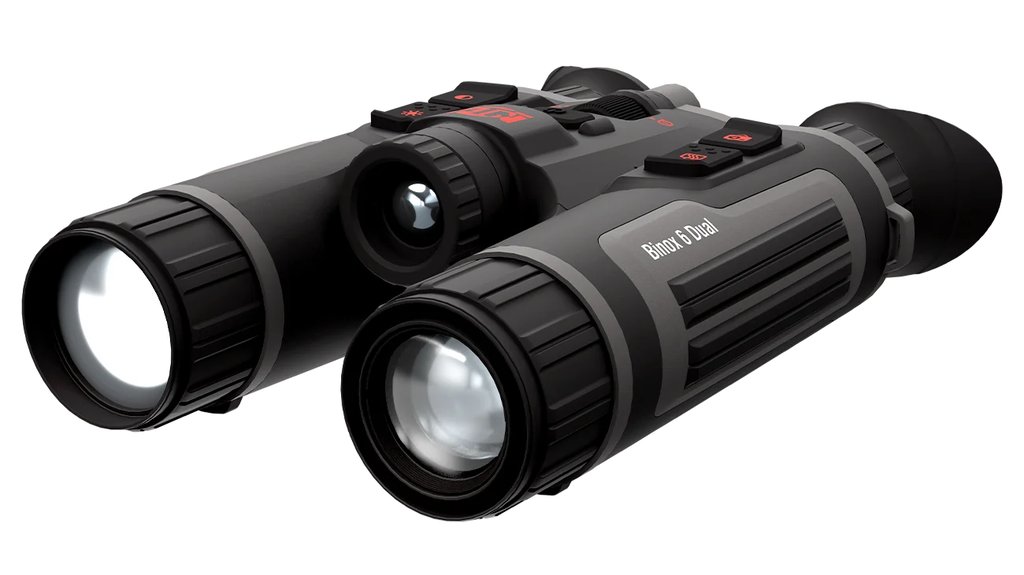
"For the money" isn't the same as "cheapest" - it means the most capability for what you spend. For hogs, that capability is the ability to pick a dense, low signature out of brush and confirm it across a field. The best thermal binoculars for the money hog hunting are the ATN Binox-6 640x512: the higher-resolution Binox that spots and identifies hogs where a smaller sensor leaves you guessing, at a price that still makes sense for a serious hog hunter.
Best cheaper alternative: ATN Binox-6 384x288 5.5-44x - a lower tier with huge zoom if the budget is tighter.
Best for two-eyed comfort on long sits: either Binox-6 - both keep both eyes open for patient scanning.
Why the ATN Binox-6 640 is the value pick for hogs
The ATN Binox-6 640 is the value pick for hogs because hog hunting rewards resolution, and this is where the 640 earns its price. Hogs are dense, low-slung, and often half-hidden in brush or moving as a group, so a sharper picture makes the difference between spotting the whole sounder and missing pigs behind the lead one. The 640 sensor packs more dots into the image - the HD-versus-standard-definition jump - so a hog stays a recognizable shape as you zoom, while a NETD of 15mK or better, the measure of how faint a temperature difference it can see, keeps that shape crisp against cooling ground.
Comfort is the other half of value on a hog hunt. Sounders move and scatter, and reading the group takes patient, both-eyes glassing rather than a quick squint. The Binox-6's two-eyepiece design lets you track a moving group without eye strain, and detection out to around 3,100 meters means you see the pigs working a field edge with time to plan the stalk. Paying for the 640 buys capability you actually use on hogs, which is what 'for the money' should mean.
Best for the money: ATN Binox-6 640x512 3-24x
The ATN Binox-6 640x512 gives a hog hunter the most usable capability per tier. The 640 sensor identifies pigs clearly as you zoom, so you can count a sounder and pick a target instead of staring at a warm blob, and the 3-24x range covers wide scanning up to confident confirmation. Detection past 3,100 meters spots hogs early, and the two-eyed view keeps you comfortable through a long, patient sit.
Why resolution matters most on hogs
Hogs travel in groups and hide in cover, so telling one pig from another - and from a stump or a cool patch - takes detail. The 640's extra resolution keeps the whole scene readable as you zoom, which is how you avoid shooting the wrong animal or missing pigs screened behind the first.
Who it's for - and who it's not
It's for the hog hunter who wants the best value in a binocular that genuinely helps on pigs. It's not the pick for someone whose budget is firm and whose glassing is closer, where the cheaper 384 with its big zoom is the smarter spend.
Best cheaper alternative: ATN Binox-6 384x288 5.5-44x
The ATN Binox-6 384x288 5.5-44x is the value alternative when the budget is tighter. It gives up some resolution but adds an even bigger 5.5-44x zoom and comes in at a lower tier. For a hog hunter who glasses closer ground or wants the most reach-for-the-money, it's a strong, more affordable choice that still finds pigs well.
Using binoculars to work a sounder
Binoculars change how you hunt hogs because they let you plan before you move. When you spot heat, glass the whole area first: count the pigs, find the boars and sows, and watch which way the group is feeding before you commit to a stalk. That patient read keeps you from bumping the sounder by moving too soon, and it steers you to the best shooting angle rather than the first one.
Work the conditions and the wind. Cool, dry nights after the ground cools give the cleanest contrast, so hogs pop against the background even at distance, while warm, humid evenings call for slower sweeps and a palette change. Keep the breeze in your face as you close, because pigs scent you long before they'd notice a silent binocular, and re-glass from each new position. Handled this way, the Binox-6 turns a scattered sounder into a planned, deliberate hunt.
How to choose hog-hunting binoculars for the money
Choose for the capability that actually helps on pigs, then match the tier to your budget. Resolution and comfort come first for hogs.
- Sensor resolution - a 640 keeps a hog identifiable at zoom, so you read the whole sounder.
- Detection range - more range spots pigs working a field edge early enough to plan.
- Two-eyed comfort - patient both-eyes glassing tracks a moving group without strain.
- Zoom range - enough reach to confirm targets at the distances hogs appear.
- Battery life - a full evening of runtime for long, patient sits.
Reading a sounder before you commit
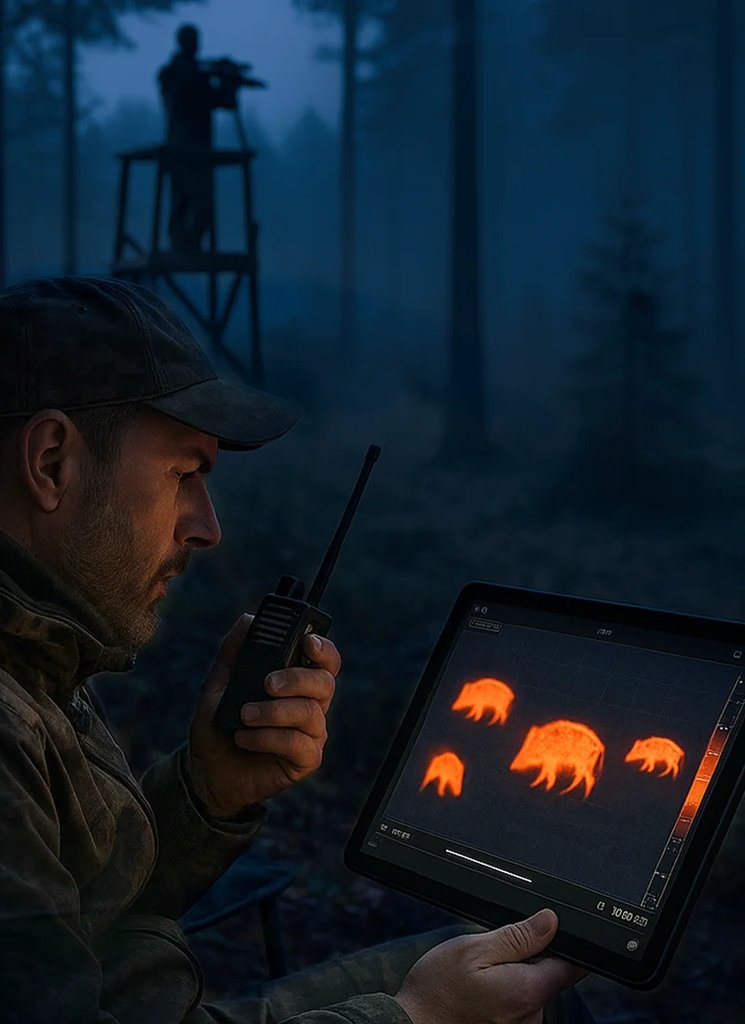
The real payoff of a sharp binocular on hogs is the information it gives you before you ever move. When you pick up a group, take the time to glass the whole sounder: count the pigs, find the big boars and the sows with piglets, and watch the direction they are feeding. The 640's resolution lets you tell those animals apart at a distance, which is how you pick a legal, ethical target and avoid shooting into a group blind. That patient read, made from far enough away that the pigs never know you are there, is what turns a chaotic sounder into a planned shot.
Comfort is what makes that patience possible. A single-tube monocular tires your eye and pushes you to rush, but two-eyed glassing lets you watch a moving group for as long as it takes to understand it. Pair that with the wind in your face as you close, and you can shadow a sounder into position rather than bumping it. For hog hunters who work groups rather than singles, the combination of resolution and comfort in the Binox-6 640 is exactly the capability that puts more pigs on the ground per outing.
Value for hogs is ultimately about outcomes, not sticker price, and a sharper binocular changes outcomes. Being able to count a sounder, pick a legal target, and see what is behind it means cleaner, more confident shots and fewer wasted stalks. Over a season, the 640's resolution translates directly into more pigs on the ground per outing, which is exactly what 'for the money' should measure.
How we picked these ATN binoculars
We considered only ATN's current 6th-generation Binox-6 binoculars and judged them on value for hog hunting specifically - the most usable capability per tier. The criteria were sensor resolution and NETD, detection distance, two-eyed comfort, zoom range, battery, and weight - weighed for finding and reading sounders rather than a raw spec race. The honest trade-off is resolution and range for price: the 640 is the best hog performer but costs more than the 384, which is the smarter buy on a tighter budget or closer ground. This is an in-house comparison of ATN's own binoculars, not an independent lab test, so match the pick to how and where you hunt hogs.
Frequently Asked Questions
What are the best thermal binoculars for the money for hog hunting?
The ATN Binox-6 640x512 3-24x. Its 640 sensor keeps hogs identifiable at zoom, detection reaches around 3,100 meters, and comfortable two-eyed glassing helps you read a sounder - the most hog-finding capability per tier. That combination of resolution, detection range, and two-eyed comfort is what makes it the value leader for hunters who work sounders rather than single pigs, night after night.
Is a 640 sensor worth the extra cost for hogs?
For hogs, usually yes. Pigs travel in groups and hide in cover, so the 640's extra detail helps you count a sounder and pick a target. On a tighter budget or closer ground, the cheaper 384 still performs well.
How far can the Binox-6 640 detect hogs?
Detection reaches around 3,100 meters. You'll identify and count pigs at closer distances using the zoom, but the long detection range spots a sounder working a field edge early.
Why use binoculars instead of a monocular for hogs?
Two-eyed glassing is far less tiring, so you can patiently watch and read a moving sounder before committing to a stalk. That patience is exactly what avoids bumping the group too soon.
Binox-6 640 or 384 for hog hunting?
Choose the 640 for the best resolution and value on pigs at distance. Choose the 384 if your budget is tighter or your glassing is closer, since its bigger zoom and lower price still find hogs well.
Do thermal binoculars work in daylight for hogs?
Yes. Thermal reads heat, not light, so the Binox-6 works around the clock - useful for daytime hog activity in shade or brush as well as night hunting.
Do thermal binoculars replace a rifle scope for hogs?
No. Binoculars find and read the sounder; a rifle optic makes the shot. Many hunters scan and plan with the Binox-6, then switch to a thermal or day scope to shoot, which is the safest, most effective setup.
How long does the Binox-6 640 run on a charge?
About eight hours, enough for a full evening of hog glassing. Start on a full charge and you can scan and plan through the productive night hours without being cut short.
Spend where it helps on hogs - resolution and comfort. See the ATN Binox-6 640x512 and compare it across the ATN thermal binoculars lineup to match capability to your budget. Read the sounder before you move, keep the wind in your face, and you'll turn scattered pigs into a planned shot.
Created: July 8, 2026 · 09:58:32 UTC