A coyote in January reads very differently through thermal than the same dog in August — snow throws the whole field into sharp contrast, while a heat-soaked summer pasture can wash a warm-blooded target into its background. So the honest way to pick the best thermal binoculars for the money for coyote hunting is to ask how they hold up across the calendar, not just on a spec sheet in one temperature. This roundup sorts ATN's current thermal binoculars by season, because a binocular that only shines on a cold night isn't real value — the one that earns its money works from the rut in fall through the dead heat of summer.
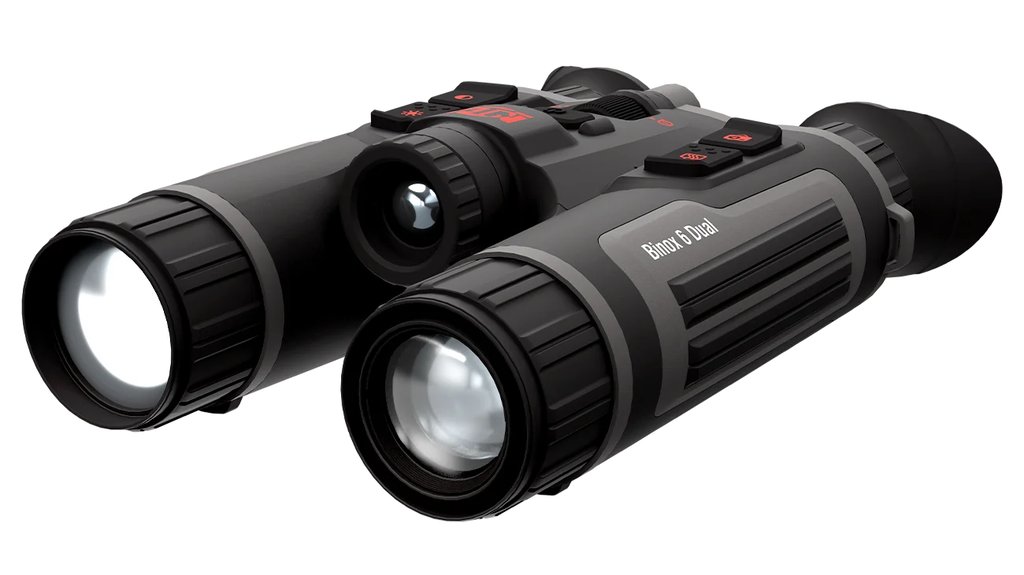
Best for the hardest heat months: ATN Binox-6 Dual 640x512 3-24x — the finer sensor pulls a coyote out of a warm summer background when contrast is thin.
Both share: ≤15 mK NETD, built-in 1000 m rangefinder, 4-in-1 day/night/thermal/twilight, GPS and compass — a full year of use from one purchase.
Why season decides value in a coyote thermal
Season changes the one thing thermal binoculars live or die on: contrast between the animal and its surroundings. In winter, a coyote against snow or frozen ground is an easy, bright signature — almost any decent sensor copes. The real test comes in late summer, when the ground has soaked up a day of sun and radiates heat close to the coyote's own body temperature. That's where a sensor's NETD — the smallest temperature difference it can resolve, lower being better — decides whether you see a clean dog or a faint smear. Both ATN models hold a class-leading ≤15 mK, which is why they keep working when a cheaper optic quits in August.
The second seasonal factor is field openness. Fall and winter strip the cover, so you're glassing long across bare fields and want reach; spring and summer bring tall grass and brush, so you scan closer and wider. The Binox-6 line covers both because it's 4-in-1 — day optics for scouting the changed terrain, thermal for the hunt — and offers two zoom characters between the models. Here's how they stack up across the year.
Winter and the rut: bare fields, long reach
Cold weather is coyote prime time, and it's where the ATN Binox-6 Dual 384x288 5.5-44x shows its value. With cover knocked down, you're glassing the far side of open fields, and the 5.5-44x zoom lets you study a distant heat signature and confirm it's a coyote before you commit to a stand. Winter contrast is generous — a warm dog on cold ground lights up — so you don't need the largest sensor to identify targets cleanly, which is exactly why the 384 model is the smart-money choice this time of year. Cold does shorten battery life, but the two 18650 cells are swappable, so a charged spare pair keeps you out through a long, frigid sit.
It's for the hunter who does most of their calling in the cold months and wants reach and ranging without paying flagship money. It's not for someone whose hardest hunting is deep-summer heat where every degree of sensor sensitivity counts — that leans toward the 640. One winter habit worth building: because rangefinders read a hair short through falling snow, take a second reading when weather is heavy, and trust the closer of the two so your holdover on a distant dog stays honest even when visibility drops.
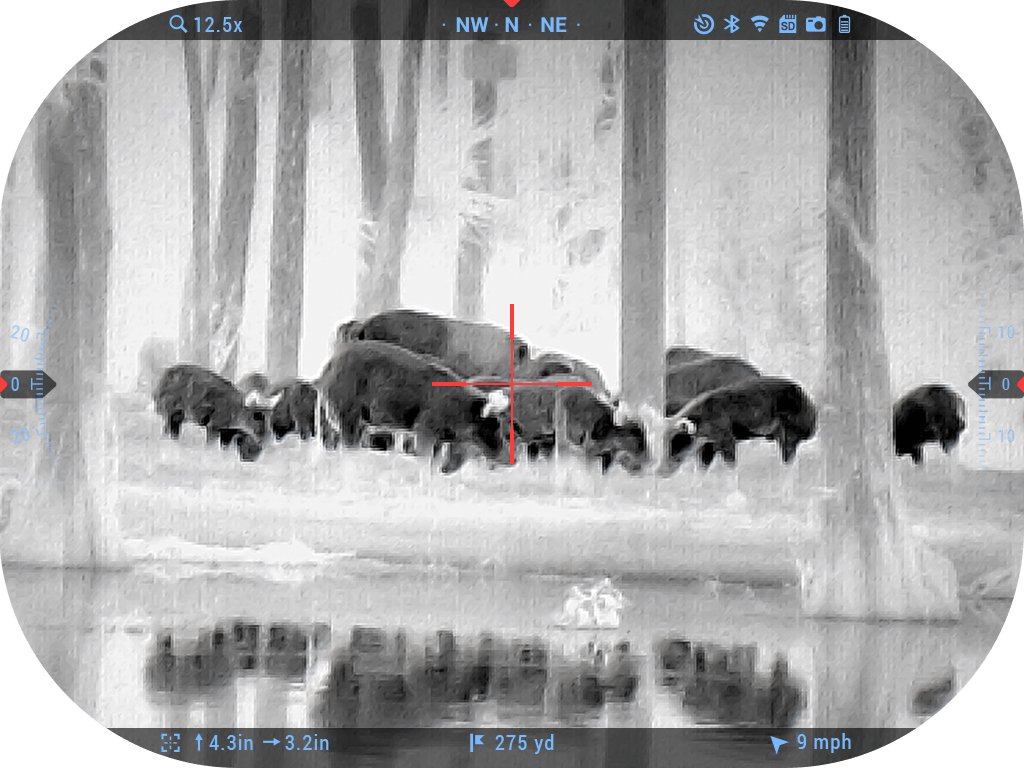
Spring and early season: thicker cover, closer work
As green-up brings back grass and brush, coyote work moves closer and the challenge shifts from reach to picking a dog out of a busier, warmer scene. The 384x288 5.5-44x still leads on value here: dial the zoom back toward its 5.5x base for a wider field to catch movement in cover, and lean on the built-in rangefinder to confirm distance when a coyote appears at an odd spot in tall grass. The ≤15 mK sensitivity keeps the signature crisp even as ambient temperatures climb. This is the model's sweet spot for hunters who want one binocular that adapts as the season thickens up.
Late summer heat: the hardest test for any thermal
August is when the money question gets interesting, and it's the one season that argues for stepping up to the ATN Binox-6 Dual 640x512 3-24x. When the ground has baked all day and radiates heat close to a coyote's body temperature, contrast collapses and a lesser sensor turns the dog into a faint blur. The 640x512 core — roughly four times the heat-reading pixels of the 384, like moving from standard definition to HD — pulls finer thermal detail out of that thin contrast, so you can still tell a coyote from a warm rock or a stray dog. It's for the hunter whose toughest nights are hot and humid. It's not for someone who mainly hunts cold months, where the cheaper 384 already sees everything they need.
How to choose by your hunting calendar
Match the binocular to the season you actually hunt hardest, then let the shared features (rangefinder, 4-in-1 modes) cover the rest of the year.
- Mostly cold-weather calling — the 384x288 5.5-44x is the value winner; winter contrast is easy and you'll appreciate the reach and the lower price.
- Year-round hunter — the 384 still leads, because its ≤15 mK sensitivity holds up in every season while keeping money in your pocket.
- Hardest nights are hot and humid — step up to the 640x512 3-24x for the extra sensor detail that saves a summer stand.
- Thick-cover spring work — either model works; use the wider low-zoom end and the rangefinder to confirm close, odd-angle appearances.
- Cold-weather battery plan — both use swappable 18650 cells; carry a charged spare pair through winter when runtime drops.
How we picked these ATN thermal binoculars
This is an in-house look at ATN's own current 6th-generation Binox-6 binoculars, not an independent lab test, and we've framed it around the calendar because season is the honest variable most spec sheets ignore. We weighed NETD and sensor resolution for holding contrast when summer heat thins it out, magnification and field of view against bare-field winter reach versus close spring cover, the built-in rangefinder for confirming distance in any season, and swappable battery life for cold-weather runtime loss. We named the 384x288 5.5-44x the all-season value leader because it stays capable across the whole year at a lower price, and flagged the 640 only where hot-night contrast genuinely justifies it. Neither is the pick if you want a bargain viewer with no ranging. Check these specs against the months you actually hunt and the country you cover.
Frequently Asked Questions
Does season really change which thermal binocular is best for coyotes?
Yes, because season controls the thermal contrast between a coyote and its background. Winter snow makes almost any decent sensor look good, while late-summer heat can wash a warm target into hot ground. A sensor with low NETD, like the ATN Binox-6's ≤15 mK, is what keeps a coyote readable across all seasons, which is why sensitivity is the value feature to prioritize.
Which ATN Binox-6 is the better all-year value for coyotes?
The Binox-6 Dual 384x288 5.5-44x is the strongest year-round value. It holds contrast across seasons thanks to its ≤15 mK sensitivity, reaches across bare winter fields with 44x zoom, and includes the built-in rangefinder, all at a lower price than the 640 model. Only the hardest heat-soaked summer nights make a real case for stepping up.
Why is summer harder on thermal binoculars than winter?
In summer the ground absorbs a full day of sunlight and then radiates heat close to a coyote's own body temperature, so the contrast that thermal relies on shrinks. That is when a higher-resolution sensor like the 640x512 helps pull the animal out of a warm background. In winter the temperature gap is large, so even the 384x288 sensor sees coyotes clearly.
Do both models work as day optics for scouting the changing terrain?
Yes. Both are 4-in-1 with a 4K CMOS day sensor plus twilight, night and thermal modes. You can scout how cover has changed with the season in daylight, then switch to thermal for the hunt. That saves you from buying a separate day optic for each part of the year.
How does cold weather affect battery life?
Cold reduces the runtime of the 18650 lithium cells, so a set that lasts about 8 hours in mild weather may fall short on a frigid winter night. Because the cells are user-replaceable, you can carry a charged spare pair and swap them in the field. Keeping spares warm in an inside pocket also helps.
Is the built-in rangefinder useful in every season?
Yes. Coyotes set up at unpredictable distances year-round, and the built-in 1000 m rangefinder confirms the actual distance to the animal rather than a landmark. That matters just as much on a snowy winter field as in tall summer grass. Confirmed range is what keeps shots on a small target ethical in any season.
Can I use one Binox-6 for coyotes all year instead of two optics?
That is the whole point of the 4-in-1 design. One Binox-6 covers day scouting, night calling, twilight transitions and full thermal across every season, with GPS, compass and the rangefinder built in. Buying one unit that works all year is exactly why these rank as the best value for the money.
Coyote hunting is a year-round game, and the binocular that earns its money is the one that works every month. For most hunters that's the value-tier ATN Binox-6 Dual 384x288 5.5-44x — sensitivity and reach that carry from snow to summer heat, with ranging built in. If your hardest nights are hot and humid, the 640x512 model buys you extra contrast when you need it most. See both, and the full seasonal spec sheets, on the ATN thermal binoculars page and pick for the season you hunt hardest.
Created: August 5, 2026 · 19:53:40 UTC