Value is not the cheapest sticker — it is how many jobs one tool does before you have to buy a second. Judged that way, the best thermal binoculars for the money for coyote hunting are the ATN Binox-6, because one body scans, ranges, records, and even shows a daylight or twilight picture from the same eyecups. A coyote setup usually means a truck full of gear; the Binox-6 folds the spotting optic, the rangefinder, and the scouting camera into a single purchase. That is where the money actually goes further.
Most capable: ATN Binox-6 640x512 3-24x — more resolution, longer reach, wider base view for open ground.
Bottom line: The 384 wins on value for a typical caller; the 640 is worth the step if you record a lot at range or hunt wide country.
Why ATN's 6th-gen Binox-6 stretches your budget
ATN's 6th-generation Binox-6 stretches your budget because it is not just a thermal — it is a 4-in-1 optic that runs Day, Night, Thermal, and Twilight from one set of eyecups. For a coyote hunter that means the same binocular you scan with at 2 a.m. also glasses in daylight for scouting, so you buy one tool instead of separate day and thermal glass. On top of that you get a 4K Ultra HD day sensor for recording, a laser rangefinder, GPS and compass, and a Wi-Fi app that streams to your phone. Both current models share the same 15mK sensitivity, so the picture stays clean in humid pre-dawn air regardless of which you choose. Because we only consider the current line, every feature here is the newest generation, not a discounted holdover. That bundle of jobs in one body is the whole 'for the money' argument.
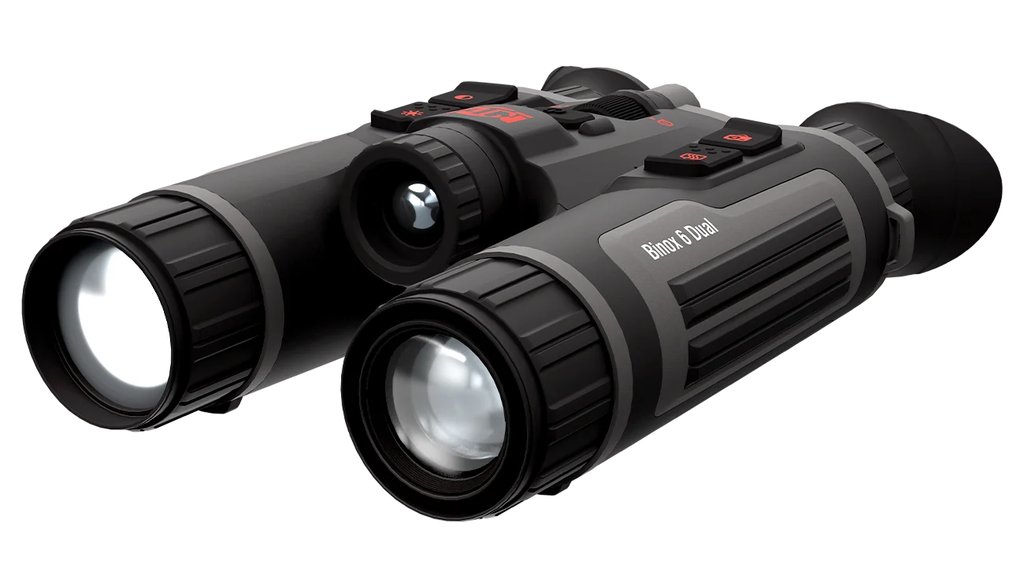
Best value overall: ATN Binox-6 384x288 5.5-44x
The ATN Binox-6 384x288 5.5-44x is the best value because it carries the full feature bundle — 4-in-1 modes, rangefinder, 4K day camera, app streaming — at the lower entry point, so nothing is stripped out to hit the price. The 384 sensor is sensible for a caller: enough resolution to read a coyote clearly at normal ranges, without paying for reach you will not use on a typical stand.
One body, four jobs
During the day you use it as a scouting binocular to find fresh sign and pinch points. After dark you flip to thermal and the same tool becomes your dog-finder. The 4K sensor records the stand so you can review where a dog broke and hung up. Buying one optic that covers all of that is exactly why it reads as the money pick.
Range and record without extra kit
The laser rangefinder ranges to 1000 yards, and Recoil-free video plus Wi-Fi streaming let you save and share the sit from your phone. That is a scouting camera, a rangefinder, and a spotter that would otherwise be three separate buys.
Who it's for: the hunter who wants every useful feature at the friendliest price and mostly calls at normal ranges. Who it's not for: someone who lives at max zoom on open ground and needs the cleanest possible image at extreme distance.
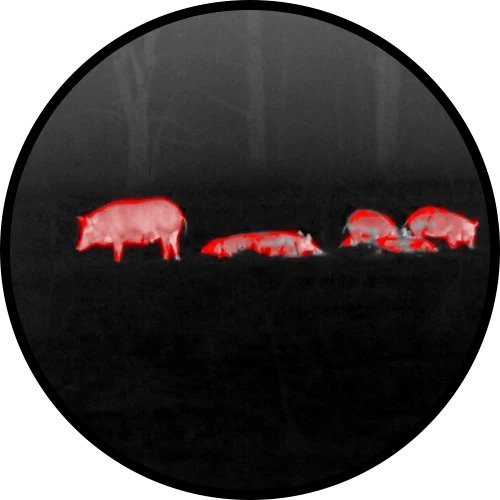
Most capable: ATN Binox-6 640x512 3-24x
The ATN Binox-6 640x512 3-24x is the most capable because its 640 sensor holds a sharp picture deeper into the zoom, so your recorded footage and your long-range IDs both look cleaner. It carries the identical feature bundle as the 384 — you are paying purely for more dots and more reach, out to 3100m detection.
When paying up is the better value
If you post content, run guided hunts, or simply hunt country where dogs answer far off, the 640's clarity at range turns 'is that a coyote?' into a confident yes. For that hunter, the extra resolution is not a luxury, it is the feature that closes stands. It steps up in price over the 384, but stays inside the same family and the same app ecosystem.
Who it's for: content creators, guides, and open-country callers who value image quality at distance. Who it's not for: the value-first buyer whose stands rarely stretch past normal calling range.
How to choose the best-value coyote binoculars
Get the most for your money by counting the jobs you actually do, then matching the sensor to the hardest one:
- Count your tools — if you were about to buy separate day glass, a rangefinder, and a camera, the Binox-6 folding all three in is where the value lives.
- Match sensor to distance — the 384 is plenty for normal calling; the 640 earns its step-up when you ID and record at long range.
- Value the 4-in-1 modes — Day, Night, Thermal, and Twilight from one body means the optic works around the clock, not just after dark.
- Check the running costs — both use swappable 18650 cells for ~8 hours, so a spare set is cheap insurance against a dead sit.
- Think resale of effort — recorded stands and app streaming make the tool useful beyond the trigger pull, which is real value over a season.

Where the value shows up over a full coyote season
The 'for the money' case gets stronger the longer you own the Binox-6, because the features that seem like extras on day one become the ones you rely on by month three. Think about a real calling season instead of a single stand. In late summer you are scouting in daylight, walking field edges and creek crossings, and the 4-in-1 optic doubles as your day glass to read fresh sign — no second binocular needed. When the season opens and the nights turn cold, the same tool flips to thermal and becomes your dog-finder without you buying anything new. Come the dead of winter, when dogs get call-shy and educated, the recorded footage is what lets you diagnose why a setup failed and adjust your next stand. One purchase covers scouting, hunting, and learning across the whole calendar, and that spread is where the budget actually stretches.
There is also a quieter kind of value in the platform itself. The GPS and compass help you mark productive stands and re-find them in the dark; the Wi-Fi app puts a live view on your phone so a hunting partner can watch the same field without a second optic; and the swappable 18650 batteries mean your running cost per night is a set of cells, not a proprietary pack you replace every season. None of these are headline specs, but added up over a year they are the difference between a tool you tolerate and one you reach for every hunt. That is the honest 'for the money' argument — not the lowest price, but the most seasons of use per tier of spend spent.
It is also worth being clear about what you are not overpaying for. Some hunters assume 'best for the money' means chasing the cheapest possible thermal and living with a bad picture, but that is false economy on a coyote stand where a smeared image costs you the animal. The Binox-6 value model does not cut the sensor sensitivity or the rangefinder to hit its price, so you are not trading away the parts that decide a hunt. What you are trading is raw resolution and maximum reach, which a typical caller taps only at the edges of a stand. That is the right thing to give up when the goal is the most usable capability per tier of spend, and it is why this model, not the cheapest thing on a shelf, is the honest money answer.
The features that quietly pay for themselves
- Day scouting — the 4-in-1 modes let the same binocular find sign in daylight, saving a separate day optic.
- Marked stands — GPS and compass log your best setups so you can walk back in the dark.
- Shared view — app streaming lets a partner watch the field from a phone, no second glass required.
- Cheap running cost — standard 18650 cells keep per-night cost low across a whole season.
How we picked these ATN thermal binoculars
We judged value the way a hunter spends: capability per tier of spend across a whole season, not the lowest tag. The criteria were how many tools one body replaces (spotter, rangefinder, day camera), thermal sensitivity (NETD), resolution, base magnification and field of view, detection range, and battery on a long sit. Only the current 6th-generation Binox-6 line was considered, so you are comparing the newest sensor and processing. Honest trade-off: the 384 gives up resolution and reach to win on price, and the whole platform is heavier and pricier than a bare-bones single-mode thermal for someone who truly only wants a dog-finder. This is an in-house comparison of ATN's own binoculars, not an independent lab review — weigh the features against what you will really use.
Frequently Asked Questions
Which Binox-6 is the best value for coyote hunting?
The 384x288 5.5-44x. It carries the full feature set — 4-in-1 modes, rangefinder, 4K day camera, app streaming — at the lower price, and its resolution is enough for a coyote at normal calling ranges. The 640 is worth the step only if you regularly ID or record dogs at long range.
What makes the Binox-6 good value beyond the price?
It replaces several tools at once. The same body scouts in daylight, ranges to 1000 yards, records in 4K, and finds heat after dark, so you avoid buying separate day glass, a rangefinder, and a camera. That bundle is the real 'for the money' argument.
Do the 4-in-1 modes actually help a coyote hunter?
Yes. You scout and glass in Day mode, then flip to Thermal to hunt after dark using the same optic. Twilight and Night modes cover the low-light window at dawn and dusk when coyotes are most active.
Is the 384 sensor too low for identifying coyotes?
No, not at normal ranges. With 15mK sensitivity the 384 resolves a coyote's shape, ears, and tail clearly on a typical stand. The 640 only pulls ahead when you push deep into the zoom or reach past your usual calling distance.
Can I share footage from a stand?
Yes. The 4K day sensor records the sit and the Wi-Fi ATN Connect 6 app streams to your phone, so you can review where a dog broke or share the hunt. That turns the binocular into a scouting camera as well as a spotter.
How does the rangefinder add value on a stand?
It gives you the exact distance the moment a coyote steps out, so you do not rush a guess. Both models range to 1000 yards, meaning you get that firing solution no matter which you buy.
If you want your money doing more than one job, the ATN Binox-6 is a scouting binocular, a thermal dog-finder, a rangefinder, and a 4K camera in one body — so a single purchase covers your whole calling season. Look over the 384 and 640 in ATN's thermal binoculars range, match the resolution to how far your coyotes make you look, and put your budget where they pull double duty.
Created: July 7, 2026 · 14:32:46 UTC