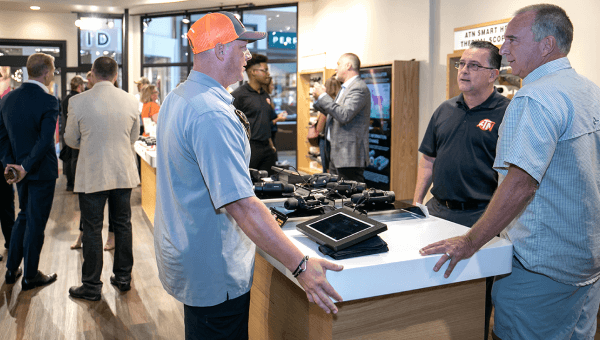
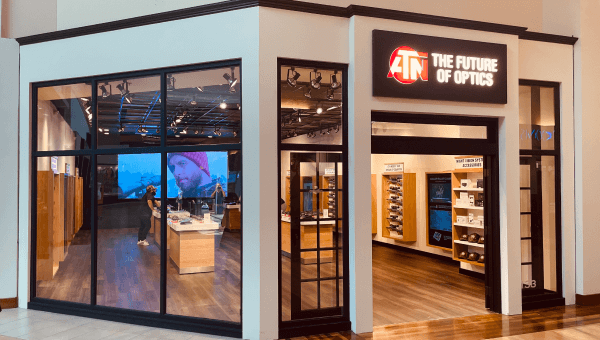
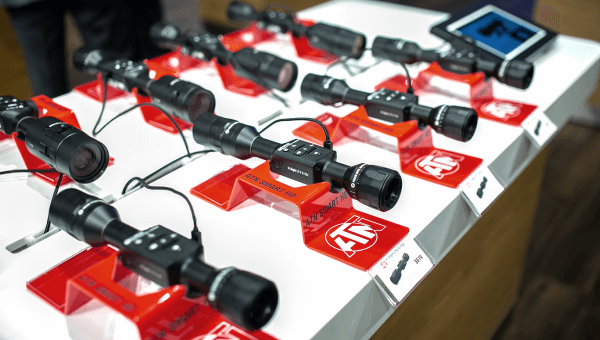
The best thermal binoculars for hunting have to work in two very different places: the tight, tangled brush where a hog can bed ten yards off your boot, and the open field where a coyote slips along a distant treeline. The ATN Binox-6 Dual 640x512 3-24x is built for both. It is a 4-in-1 optic that reads heat in thick cover and reaches thousands of meters across open ground, with a built-in laser rangefinder that tells you exactly how far that animal is. This guide covers why it leads for hunting, where the higher-magnification 384 sibling fits, and how to pick the right one for your terrain.
Best for maximum reach: ATN Binox-6 Dual 384x288 5.5-44x — same features with a much higher top-end zoom for wide, open country.
Bottom line: the 640 3-24x is the do-it-all hunting pick; the 384 5.5-44x is the specialist for long, open glassing.
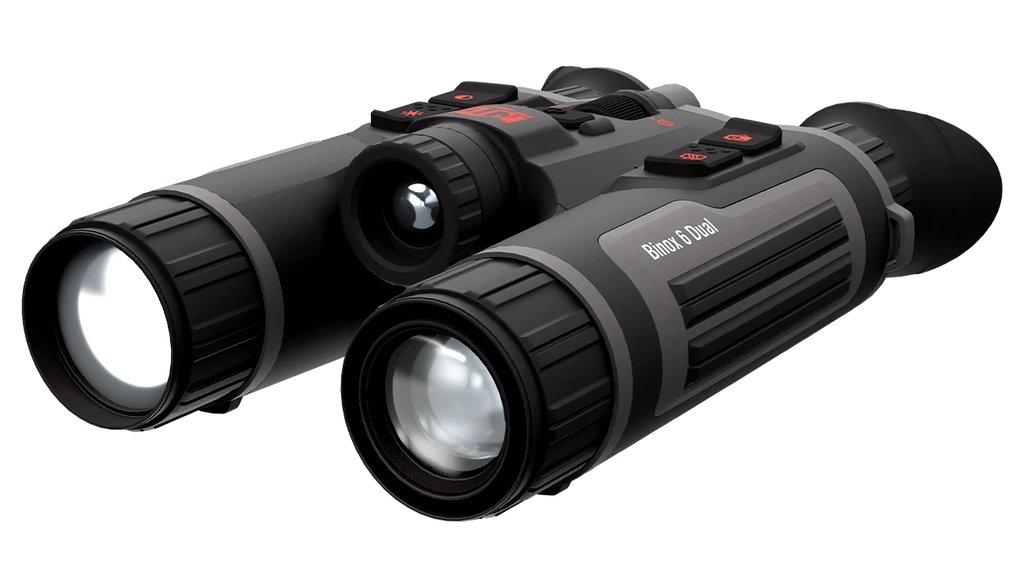
Why ATN's 6th-gen Binox-6 leads for hunting
The Binox-6 leads because it covers every kind of ground a hunter walks, not just one. Thick brush and long fields ask opposite things from an optic: brush wants a wide view and a clean read of heat close in, while open country wants reach and detail at distance. The Binox-6 handles both with a wide-to-tight zoom range and a 640 or 384 thermal sensor tuned to a very low NETD, which means it draws a clean picture even when the air is humid, foggy, or damp. It is also a true two-eyed binocular, so you glass for long stretches without the eye strain a single-tube monocular brings. On top of that it stacks features hunters actually use: a built-in laser rangefinder for instant distance, SharpIR AI to sharpen the image, DeFog mode for wet mornings, and 4-in-1 day, night, thermal, and twilight vision so one pair covers the whole day. That range of ability across terrain is what earns it the top spot for hunting.
There is also the matter of comfort over a long hunt. Scanning for game is not a quick glance; you may glass a field edge for an hour before anything moves. Two eyes on a binocular are far easier over that stretch than squinting through a single-tube monocular, and less eye strain means you stay sharp and catch the animal you would otherwise miss. Pair that with a Picture-in-Picture window and Hot Point Tracking that flags the hottest object in view, and the Binox-6 does some of the watching for you while you rest your eyes. For a hunter who is out from last light until the small hours, that ease of use matters as much as raw range.
How the picks compare at a glance
Best overall for hunting: ATN Binox-6 Dual 640x512 3-24x
The ATN Binox-6 Dual 640x512 3-24x is the best all-around hunting pair because its zoom range and 640 sensor cover both brush and field. At 3x you get a wide view for scanning close cover and following an animal that breaks; dial up toward 24x and you can study a heat signature far across a field to be sure what it is before you move. The 640x512 sensor is the reason the picture holds together as you zoom: more dots in the image mean you can push in further before it turns soft, the way a lower-resolution feed does.
Range built right in
The built-in laser rangefinder gives you the distance to that animal at the press of a button, accurate to within a meter out to 1000 yards. In thick cover that tells you if a hog is close enough to move on; across a field it feeds your shot. No guessing, no separate rangefinder to fumble for.
Reads heat in cover, reaches across the open
The very low NETD keeps the image clean when the air is damp or foggy, which is exactly when brush hunting gets hard. The long detection range means an animal stepping out of a distant treeline still lights up. DeFog mode and SharpIR AI keep the picture usable on the worst mornings.
Day and night in one pair
The 4-in-1 vision means you are not limited to the dark. In daylight the 4K day sensor gives a sharp color picture for scouting and confirming a target; at night you switch to thermal to read heat through cover; and in the low light of dusk and dawn, twilight mode bridges the gap when game moves most. One pair covers the whole cycle of a hunt, so you carry less and never get caught with the wrong optic when the light changes.
Who it's for: hunters who move between thick brush and open fields and want one pair that does both. Who it's not for: someone glassing only wide, distant ground who wants the highest possible magnification — they should look at the 384 5.5-44x.
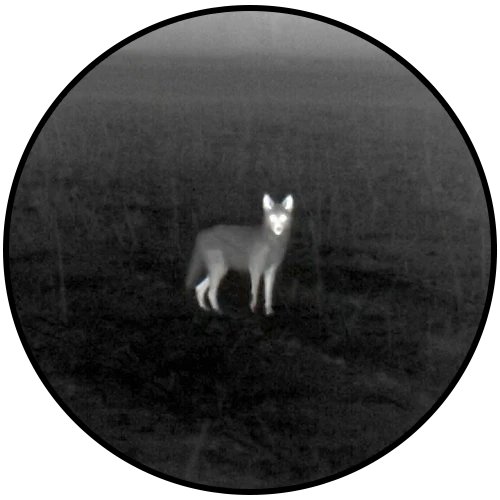
Best for maximum reach: ATN Binox-6 Dual 384x288 5.5-44x
The ATN Binox-6 Dual 384x288 5.5-44x is the pick for wide, open country. It carries the same 4-in-1 vision, the same built-in laser rangefinder, the same SharpIR AI and low NETD, but the magnification climbs from 5.5x all the way to 44x. On open ground that lets you reach far out and confirm exactly what you are looking at before you close the distance.
High magnification for open fields
When your shots and your scanning happen across long fields, the 5.5-44x range fills the frame with a distant animal. The starting 5.5x is still wide enough to scan comfortably, and the top end reaches out for detail no lower-zoom optic can match. It is the specialist for open-country hunters. On a big agricultural field or a long powerline cut, that reach lets you catch a heat signature at the far edge, zoom in to identify it, and plan your stalk before the animal ever knows you are there. That is a real advantage where distances are long and cover is thin.
Same smart help, more magnification
Stepping up in zoom does not cost you the features that make the Binox-6 easy to hunt with. You still get the built-in laser rangefinder for instant distance, SharpIR AI sharpening the picture, Hot Point Tracking flagging the warmest object in view, and DeFog mode for damp mornings. The 384 sensor keeps the image clean at a very low NETD, so even at high magnification the picture holds together. For a hunter whose ground is wide and open, it is the same trusted toolkit with the extra reach that terrain demands.
Who it's for: hunters glassing wide, open ground who want the most magnification available. Who it's not for: brush hunters who need the wider low-end view and top image clarity of the 640 3-24x.
How to choose thermal binoculars for your terrain
Match the binocular to the ground you hunt most. Both picks share the 4-in-1 vision, the laser rangefinder, and the same weatherproof build, so the choice comes down to resolution and zoom range. Run through these points:
- Your terrain — mixed brush and field favors the wider, sharper 640 3-24x; wide-open country favors the high-zoom 384 5.5-44x.
- Resolution — the 640 sensor gives more dots in the picture, so it stays clean deeper into the zoom.
- Reach — both see thousands of meters, but the 384 pushes magnification much higher for distant detail.
- Ranging — the built-in laser rangefinder on both tells you exact distance without a second tool.
- All-day use — 4-in-1 day, night, thermal, and twilight vision means one pair covers dawn to dark.
- Wet weather — low NETD, DeFog mode, and IP67 waterproofing keep them working in fog, rain, and heavy dew.
Not sure yet? Compare the variants across the thermal binoculars lineup, or read our take on using thermal binoculars for hunting. For most hunters who move between cover and open ground, the 640 3-24x is the pick.
How we picked these ATN thermal binoculars
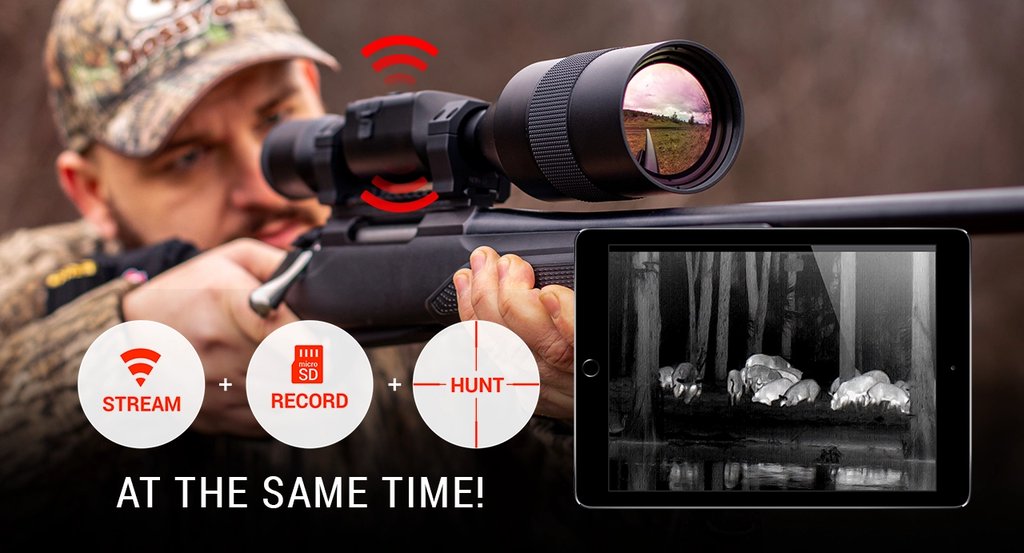
A quick word on method, because "best" should mean something. The shortlist is drawn only from ATN's latest 6th-generation range, and each model was judged on the same measuring stick: resolution and NETD for image clarity, detection range and refresh rate for spotting and tracking, plus weight and battery for a full night out — all viewed through the lens of thick brush + long fields. When one pick trades sharpness for reach or price, that is stated openly. This is a manufacturer comparing its own current line, so the honest trade-offs and the "who it's not for" notes matter more than any single label.
Frequently Asked Questions
Are thermal binoculars better than a monocular for hunting?
For long glassing sessions, yes. Two eyes cut eye strain and give a more natural, comfortable view when you are scanning for a while. A monocular is lighter and more pocketable, but a binocular like the Binox-6 is easier on the eyes over a full night. It also gives you depth cues a single tube cannot.
Can the Binox-6 range my target?
Yes. Both hunting picks have a built-in laser rangefinder accurate to within a meter out to 1000 yards. You get the distance at the press of a button, so there is no guessing and no separate rangefinder to carry. That distance can also feed your shot planning.
Do they work in fog and rain?
Yes. The low NETD keeps the thermal picture clean in humid and foggy air, DeFog mode helps on wet mornings, and the IP67 rating means rain and heavy dew are not a problem. Thermal reads heat, not visible light, so it sees through conditions that stop normal optics. That is a big part of why it works well in cover.
What is the difference between the 640 and 384 versions?
The 640 3-24x has a higher-resolution sensor and a wider low-end zoom, making it the sharper all-terrain pick. The 384 5.5-44x trades some resolution for far higher top-end magnification, which suits open-country glassing. Both share the rangefinder, 4-in-1 vision, and weatherproof build.
Are they day and night capable?
Yes. The Binox-6 is a 4-in-1 optic with day, night, thermal, and twilight vision, plus a 4K day sensor. You can glass in full daylight, in the dark, or read heat through cover, all with one pair. That means you are not buying separate gear for different times of day.
How long does the battery last?
About 8 hours on the dual replaceable 18650 batteries, which covers a full night of hunting. Because the batteries swap out, you can carry a spare set and keep going past that. Charging is over USB-C.
Want one pair of binoculars that works in tight brush and across long fields? The ATN Binox-6 Dual 640x512 3-24x is the all-terrain hunting pick: a wide-to-tight zoom range, a built-in laser rangefinder, 4-in-1 vision, and a clean picture even in fog and rain. If your ground is wide open, the 384 5.5-44x brings the same brains with far more reach. Explore the full thermal binoculars lineup, match the resolution and zoom to your terrain, and get ready for your next night in the field.
Created: July 7, 2026 · 08:31:01 UTC