Shopping for the best thermal binoculars for hog hunting, most people fixate on the sensor number and miss the feature that actually decides a lot of pig encounters: how far you can zoom to confirm the target. A hog at the far end of a cut field is only a warm dot until you can pull it in close enough to be sure it is a pig and not a coyote. That one feature-magnification versus raw resolution-splits ATN's two thermal binoculars more than anything else. So this is a focused head-to-head on that trade: reach versus detail, judged for hogs.
The two ATN binoculars compared by their key feature
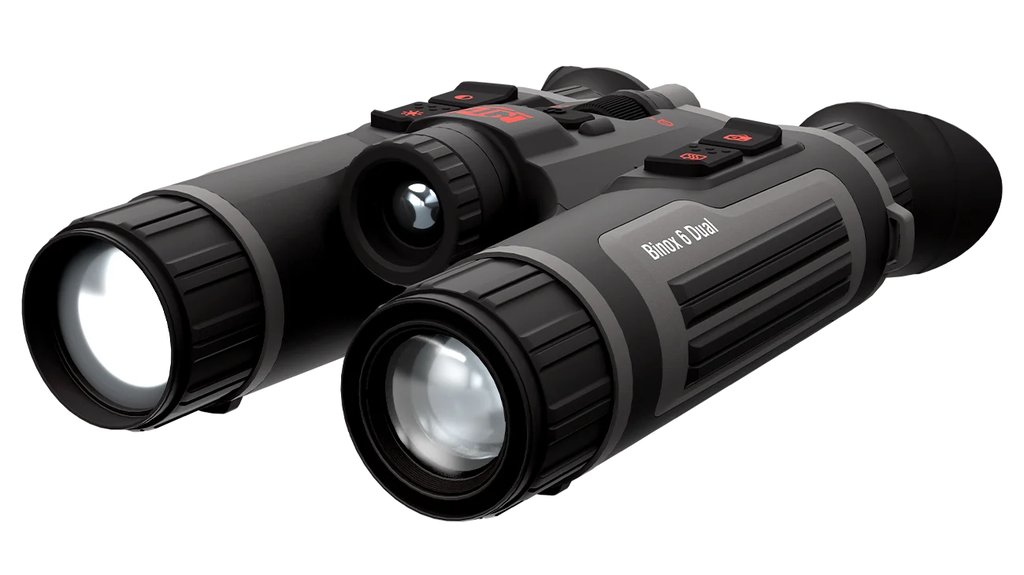
The ATN Binox-6 Dual 384x288 5.5-44x is built around reach; the ATN Binox-6 Dual 640x512 3-24x is built around thermal detail. Both are current 6th-gen 4-in-1 binoculars-thermal, night, 4K day, twilight-with the same ≤15 mK sensitivity, a ±1 m laser rangefinder, GPS and compass, and about 8 hours of runtime. The real fork is the feature that changes how you handle a distant hog: how far you can magnify versus how many pixels draw the picture. The table isolates that trade.
How the 384x288 44x reach works for hogs
The Binox-6 384x288 leans on magnification: its 5.5-44x range lets you pull a far-off heat signature in close, which is the feature that matters when pigs show up small and distant. On a long cut lane, a levee, or a wide flat, a hog can be a dim dot to the naked thermal view; cranking to 44x brings it big enough to read the body shape and tell a pig from a coyote. The ±1 m laser rangefinder then tells you the exact distance so your hold is honest. Its 384 thermal sensor carries fewer pixels than the 640, but with heavy zoom on a single distant target, reach does more for the shot than raw resolution would. Detection out to 2750 m means you pick up warmth long before it matters. The trade is a wider starting view-you begin at 5.5x, so it is a touch less sweepy up close.
How the 640x512 detail works for hogs
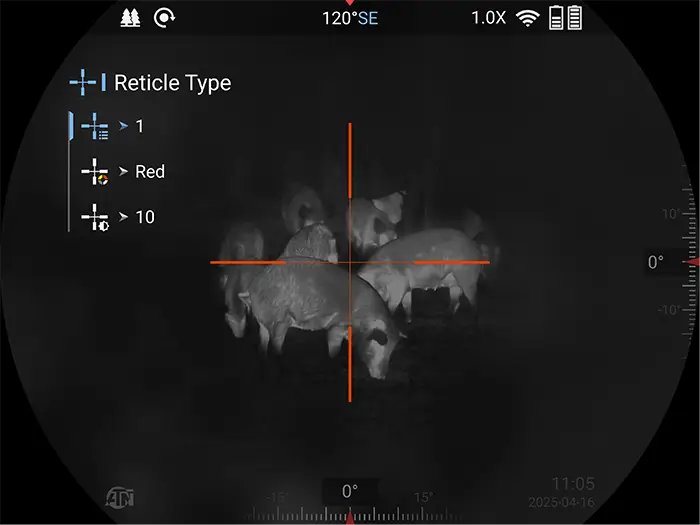
The Binox-6 640x512 leans on sensor detail: its 640 thermal sensor draws each pig with cleaner edges, so identification is easier across the board and especially in a busy scene with multiple animals. Think of it like the step from a standard photo to a sharper one-more dots means confident calls on hogs versus deer or cattle without leaning entirely on zoom. It also starts wider at 3x, so you sweep a bigger slice of field in one pass to catch a moving sounder, and its 3100 m detection edges out the 384. You give up top-end magnification-24x instead of 44x-so on the very longest sightlines you cannot pull a distant pig in quite as tight. For most ground, the sharper picture and wider scan win.
When to choose the 384x288 5.5-44x
Choose the 384x288 5.5-44x when reach is the feature your ground demands-long, narrow sightlines and big open flats where pigs routinely show up far off and small. The 44x top end is what lets you confirm a distant hog instead of guessing, and paired with the rangefinder it turns a far dot into a known target at a known distance. It is also the pick if you already know most of your encounters happen at the far edge of the field. It is not the choice if you mostly work closer ground and want the sharpest possible picture and the widest scanning start.
When to choose the 640x512 3-24x
Choose the 640x512 3-24x when detail and a wide scan matter more than maximum zoom-mixed fields, closer-to-mid pig distances, or busy scenes where you need clean identification of several animals at once. Its sharper sensor and lower 3x starting magnification make it the more versatile everyday glass, sweeping wide to find a sounder and resolving pigs cleanly without maxing out the zoom. It is also the pick for the hunter who wants one do-most-things binocular. It is not the choice if your entire hunt is long-range work down a lane where 44x is the deciding factor.
Our recommendation
If the feature that decides your hunts is reach-long sightlines, distant pigs-the ATN Binox-6 Dual 384x288 5.5-44x is our pick, because its 44x zoom confirms hogs at ranges the 640 cannot pull in as tight. For hunters who value the cleanest picture and the widest scan on more typical ground, the 640x512 3-24x is the sharper all-rounder. Both are the same current 6th-gen 4-in-1 family with the same ranging and sensitivity, so you can weigh either against the rest of the range on the ATN thermal binoculars page and buy for the feature your ground actually rewards.
How we compared them
We compared these two on the single feature that most often decides a hog encounter-magnification reach versus thermal detail-then checked it against NETD sensitivity, detection range, ranging, day sensor, battery and weight at real pig distances rather than in a spec vacuum. Only ATN's current 6th-gen Binox-6 line is considered. The honest trade-off is clean: the 384x288 buys long-range identification through 44x zoom at the cost of some sensor detail and a wider starting view, while the 640x512 buys a sharper picture and a broader scan at the cost of top-end reach. Neither is right if you want a weapon-mounted sight-both are handheld two-eyed binoculars. This is an in-house comparison of ATN's own binoculars, not an independent lab review, so measure the reach-versus-detail trade against your own sightlines before you decide.
Frequently Asked Questions
Which Binox-6 is the best thermal binocular for hog hunting?
It depends on the deciding feature for your ground. The 384x288 5.5-44x is the pick for long sightlines where 44x zoom lets you confirm distant pigs. The 640x512 3-24x is the pick for cleaner detail and a wider scan on more typical ground. Both share the same 4-in-1 modes, ranging, and sensitivity.
Is more magnification or more resolution better for pigs?
It comes down to distance. On long sightlines where hogs show up far and small, the 384x288's 44x reach lets you pull them in and identify them. At closer to mid range, the 640x512's extra thermal detail gives cleaner identification without maxing the zoom. Match the feature to how far your pigs typically appear.
Do both binoculars have a laser rangefinder?
Yes. Both the Binox-6 Dual 384x288 and 640x512 include a built-in laser rangefinder accurate to about a meter out to 1000 m. That lets you range a hog before the shot so your hold is correct, which matters most on the open, long-range ground the high-magnification model targets.
How far can each binocular detect a hog?
The 640x512 detects heat out to about 3100 m and the 384x288 to about 2750 m. Detection means picking up that something warm is present, not identifying it. On the 384, the high 44x magnification is what turns a distant detection into a confirmed pig, while the 640 leans more on its sharper sensor.
Do the higher magnification and 4-in-1 modes work in summer heat?
Yes. Both models have a ≤15 mK NETD, the smallest temperature gap the sensor can tell apart, plus DeFog and Wide Dynamic Range for humid nights, so a warm hog stays separated from sun-heated ground. All four vision modes-thermal, night, 4K day, and twilight-are available on both units.
Can I put either binocular on my rifle?
No. Both are handheld two-eyed scanning and observation binoculars, not weapon sights, so they are for finding, glassing, and identifying hogs by hand. For a thermal optic mounted on the rifle, ATN's thermal scope line is the correct tool. Many hunters glass with binoculars, then aim with a separate mounted optic.
Decide on the feature your ground rewards and the choice is easy. If your pigs show up far down long sightlines, the ATN Binox-6 Dual 384x288 5.5-44x and its 44x reach let you confirm and range them from way out. If you want the sharpest picture and the widest scan for more typical ground, the 640x512 3-24x is the versatile all-rounder. See both against the full current lineup on the ATN thermal binoculars page and buy for the feature-reach or detail-that matters where you hunt.
Created: August 10, 2026 · 09:39:31 UTC