The best thermal binoculars for hog hunting do one thing better than any monocular: they let you glass warm bodies out of the dark with both eyes, so a whole sounder crossing a field reads instantly instead of one blob at a time. Hogs travel in groups, feed at night, and hug cover, so a two-eyed scanner that also ranges and switches between thermal and 4K day view earns its keep on real ground. This roundup sorts ATN's current 6th-gen Binox-6 binoculars by the terrain you hunt-wide flats versus long, tight sightlines-so you can match glass to ground.
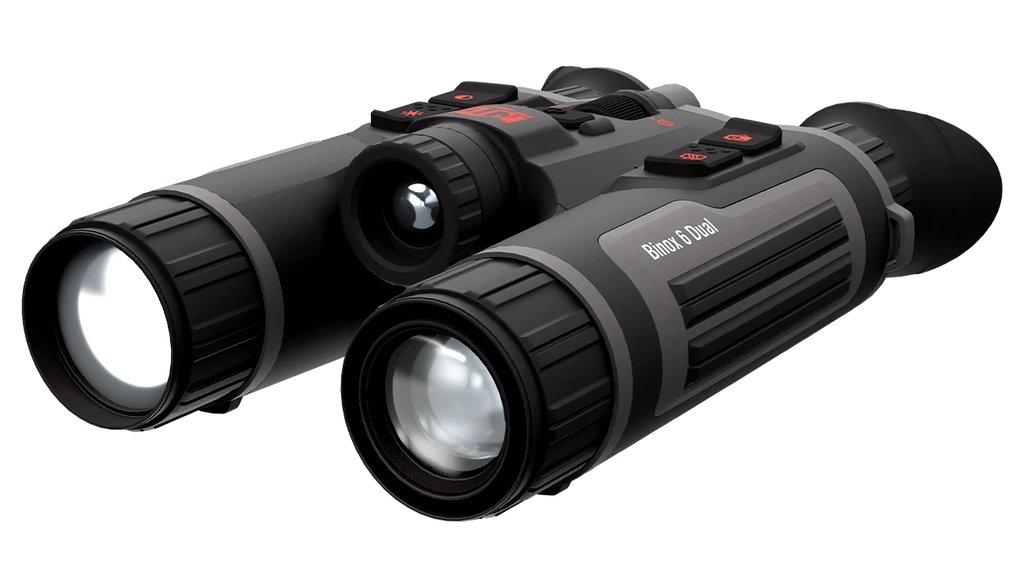
Best for long, tight sightlines: ATN Binox-6 Dual 384x288 5.5-44x-high 44x magnification to reach out and confirm pigs down a lane or across a big flat, with the same 4-in-1 modes and ranging.
Why ATN's 6th-gen Binox-6 suits hog hunting
The 6th-gen Binox-6 suits hog hunting because it is really four optics in one body-thermal, digital night, 4K day, and twilight-plus a laser rangefinder, so a single unit handles a whole night of glassing pigs. Two-eyed viewing is less tiring than a monocular over a long sit, and a hog's heat glows against cooler ground in full dark on the thermal channel. Both models here add SharpIR AI enhancement for a cleaner picture, DeFog and Wide Dynamic Range for humid summer nights, GPS and a compass for marking sign, and a ±1 m laser rangefinder out to 1000 m so you know the distance before the shot. The table lays the two side by side on the specs that decide a hog glass.
ATN Binox-6 Dual 640x512 3-24x - best overall for hogs
The ATN Binox-6 Dual 640x512 is the best all-round hog binocular because it pairs a sharp 640 thermal sensor with a wide 3-24x range and built-in ranging-the mix that lets you find a sounder fast, identify what you are looking at, and know the distance without swapping tools. Add its 4-in-1 vision and you have one unit that covers scanning, day glassing, and low-light confirmation on the same hunt.
What the 640 thermal sensor buys you
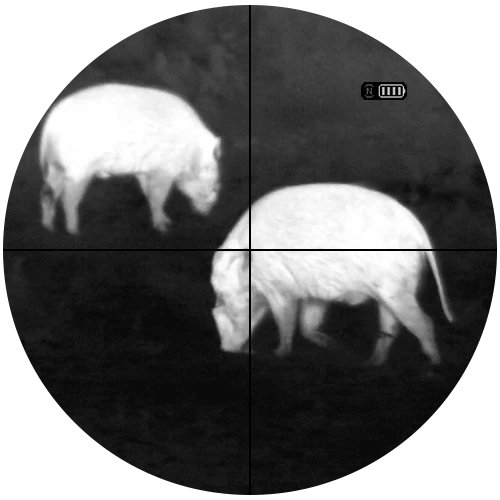
Think of the 640x512 thermal sensor like the jump from a standard photo to a crisp one-more dots drawing each pig means cleaner edges and confident calls on hogs versus deer or cattle. Its ≤15 mK NETD, the smallest temperature gap it can tell apart, keeps a warm pig separated from sun-heated ground on a summer night. At normal hog range you see shapes you can identify, not guesswork. That matters most when a sounder is bunched together and you need to count heads and pick a target rather than see one undefined mass of heat.
Why the 3-24x range and ranging help on pigs
Starting at 3x gives a wide view to sweep a field and catch a moving sounder in one pass; zooming to 24x lets you confirm the group once you find it. The built-in laser rangefinder, accurate to a meter out to 1000 m, tells you exactly how far the pigs are so you can hold correctly. The 3100 m detection reach flags heat early, and 4-in-1 vision means you can flip to the 4K day channel or twilight mode without picking up another optic.
Who it's for-and not for
The ATN Binox-6 Dual 640x512 3-24x is for the hog hunter who wants one do-everything binocular for scanning wide ground and identifying pigs at sensible range, and it is not for someone whose entire hunt is long, narrow sightlines demanding maximum magnification. For that, the 384x288 5.5-44x reaches farther.
ATN Binox-6 Dual 384x288 5.5-44x - best for long sightlines
The ATN Binox-6 Dual 384x288 5.5-44x is the pick when your hog ground gives you long, tight sightlines-a cut lane, a levee, a big open flat-because its top-end 44x magnification lets you reach out and confirm a pig far downrange. It keeps the same 4-in-1 vision, ±1 m laser rangefinder, and ≤15 mK sensitivity, trading a little thermal resolution for a lot more zoom.
What the high magnification does
That 5.5-44x range means you can pull a distant heat signature in close enough to tell a hog from a coyote at ranges where a lower-zoom optic leaves you guessing. On a long, narrow sightline where pigs show up small and far, magnification is the spec that matters most. The 384 thermal sensor is a step below the 640 in raw detail, but with heavy zoom on a distant target the extra reach earns its place, and the same rangefinder tells you the exact distance before you commit.
Why the 4-in-1 modes help across a night
The same 4-in-1 vision on this model means you are not tied to thermal alone. You scan and reach out on the thermal channel, then flip to the 4K day sensor at first light to keep glassing without switching optics, or use twilight mode in the gray hour when hogs often move. GPS and compass let you drop a pin on a wallow or a rub you spot at distance, so the reach you gain on the glass also pays off in scouting the same ground on the next hunt.
Who it's for-and not for
The ATN Binox-6 Dual 384x288 5.5-44x is for the hunter working long, open or lane-like ground who prizes reach and high zoom, and it is not for someone who mostly sweeps wide fields at closer range-that reader is better served by the sharper, wider-starting 640 model.
How to choose the best thermal binoculars for hogs
Choose by the shape of your ground and the distances your pigs give you, then let the extras follow. Both units share the same 4-in-1 vision, ranging, sensitivity, and roughly the same weight and battery, so the real decision is sensor detail versus reach-and that is set by where and how far your hogs actually appear:
- Thermal resolution - more pixels means cleaner identification; the 640 is the sharper all-rounder, the 384 trades some detail for reach.
- Magnification range - a low starting zoom (3x) scans wide for a moving sounder; a high top end (44x) reaches down a long lane to confirm a distant pig.
- Ranging - both carry a ±1 m laser rangefinder to 1000 m, which removes holdover guesswork on open ground.
- 4-in-1 vision - one unit covering thermal, night, 4K day, and twilight means you carry a single optic for the whole hunt.
- Battery and comfort - both run about 8 hours on two 18650 cells and weigh around 1.6 pounds; two-eyed viewing is easier on the eyes over a long night.
How we picked these ATN thermal binoculars
We ranked these the way a hog hunter really glasses: thermal resolution, NETD sensitivity, magnification range, detection reach, ranging, battery runtime and weight, all judged against genuine hog distances and terrain rather than a spec sheet in isolation. Only ATN's current 6th-gen Binox-6 line is in play. The honest trade-offs are simple-the 640 is the sharper, wider-starting all-rounder for most ground, while the 384 gives up some thermal detail for far more reach on long sightlines. Neither is the pick if you want a weapon-mounted sight; a binocular is a two-eyed scanning and observation tool, not a rifle optic. This is an in-house look at ATN's own binoculars, not an independent lab test, so weigh the specs against your own fields and distances. Browse the full current range on the ATN thermal binoculars page.
Frequently Asked Questions
What are the best thermal binoculars for hog hunting?
For most hog hunters the ATN Binox-6 Dual 640x512 3-24x is the best pick: a sharp 640 thermal sensor, a wide scanning range, built-in ranging, and 4-in-1 vision in one unit. It finds a sounder fast and identifies pigs at sensible range. Step up to the 384x288 5.5-44x only if your sightlines are long and you need extra magnification.
Are thermal binoculars better than a monocular for pigs?
For long glassing sessions, two-eyed binoculars are less tiring and let you read a whole sounder at once. A monocular is lighter and cheaper, so it suits shorter scans and tighter budgets. The Binox-6 also adds 4-in-1 day/night/thermal/twilight modes and ranging in one body, which a simple monocular does not.
Do these binoculars work in warm summer weather?
Yes. A live hog is still warmer than the ground around it, and both Binox-6 models have a ≤15 mK NETD, which is the smallest temperature difference the sensor can tell apart. That sensitivity, helped by DeFog and Wide Dynamic Range, keeps a pig separated from sun-heated ground on a humid summer night.
How far can the Binox-6 detect a hog?
The 640x512 model detects heat out to about 3100 m and the 384x288 to about 2750 m. Detection means picking up that something warm is present, not fully identifying it. Real identification range is shorter and depends on thermal resolution and how much you zoom in.
What does the 4-in-1 vision mean for hunting?
It means one unit gives you thermal, digital night, 4K day, and twilight modes, so you carry a single optic for the whole hunt instead of swapping tools. You scan for pigs on thermal, then can flip to the 4K day channel or twilight mode to confirm details in changing light. Both Binox-6 models include all four.
Can I mount these binoculars on a rifle?
No. The Binox-6 are handheld two-eyed scanning and observation binoculars, not weapon sights, so they are meant for finding, glassing, and identifying hogs. If you want a thermal optic on the rifle, ATN's thermal scope line is the right tool. Many hunters glass with binoculars, then aim with a mounted optic.
If you want the best thermal binoculars for hog hunting, start with the ATN Binox-6 Dual 640x512 3-24x-a sharp, wide-view, 4-in-1 glass that finds, identifies, and ranges pigs on one unit through a whole night. If your ground runs long and narrow and you need extra reach, look at the 384x288 5.5-44x for its high magnification instead. Compare both against the full current lineup on the ATN thermal binoculars page and match the sensor and zoom to the pigs and terrain you actually hunt.
Created: August 10, 2026 · 09:39:31 UTC