Hogs cost you before you ever see them - rooted fields, busted fences, wallowed-out food plots. Getting ahead of that damage means locating whole sounders across your ground, reading how the group behaves, and recovering what you shoot. That is exactly the job for a sharp pair of thermal binoculars. For the best thermal binoculars for hog hunting, the ATN Binox-6 640x512 is the pick: high resolution to see the whole group clearly, day or night.
The best thermal binoculars for hog hunting are the ATN Binox-6 640x512 3-24x. A 640 sensor keeps every pig in a sounder identifiable, detection reaches around 3,100 meters to locate groups across your ground, and comfortable two-eyed viewing helps you read group behavior and recover downed hogs - the tool for staying ahead of hog damage.
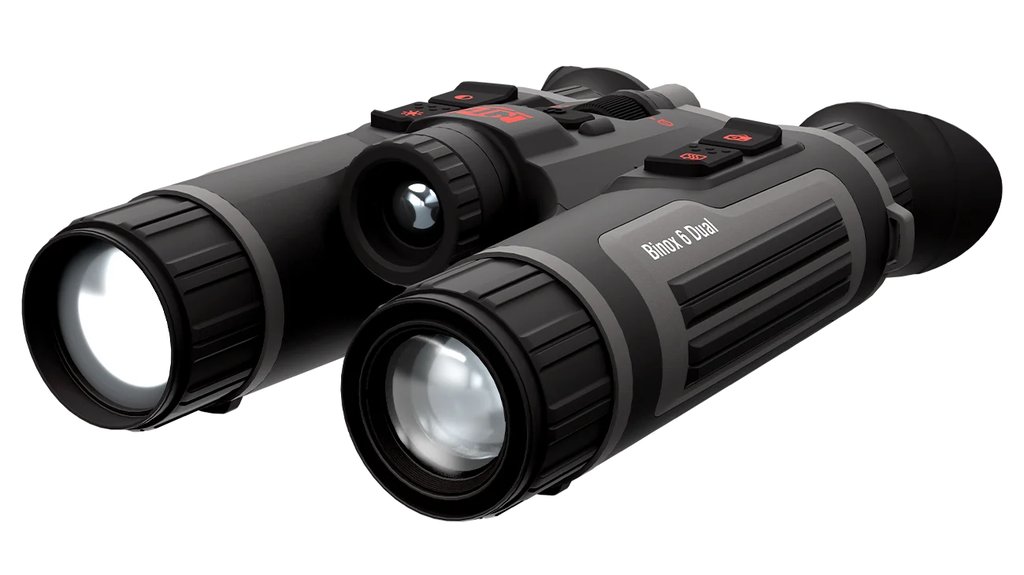
Quick answer: top picksBest for finding sounders: ATN Binox-6 640x512 3-24x - resolution to see the whole group.
Best on a tighter budget: ATN Binox-6 384x288 5.5-44x - big zoom at a lower tier.
Best for recovery too: either Binox-6 - both track a downed hog's heat for fast recovery.
Why the 640 helps you get ahead of hog damage
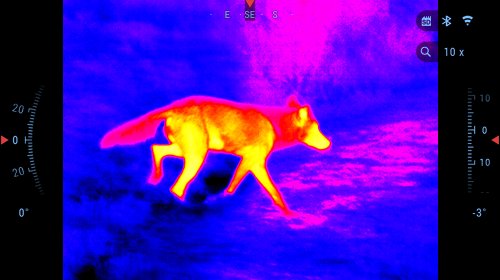
Staying ahead of hog damage is a locating game before it is a shooting game, and the 640 wins at locating. Sounders move nightly between bedding, water, and feed, so you need to sweep a lot of ground and pick out a whole group - not just one pig - at a distance. The 640 sensor packs more dots into the picture, the HD-versus-standard-definition jump, so an entire sounder stays readable as you zoom, and a NETD of 15mK or better keeps those bodies crisp against cooling soil, the measure of how faint a temperature difference it can register. Detection out to around 3,100 meters lets you find a group working a fence line early enough to plan an intercept.
Reading group behavior is the second job the resolution earns. Hogs betray their intentions - a boar posturing, sows herding piglets, the whole group drifting toward a wallow - and seeing that clearly tells you where to be and when. Two-eyed viewing lets you watch the sounder patiently without eye fatigue, and after the shot the same binocular becomes a recovery tool, following a downed pig's heat signature so nothing is lost in the dark. That full cycle - locate, read, recover - is why a hog hunter benefits from the sharper sensor.
Best for finding sounders: ATN Binox-6 640x512 3-24x
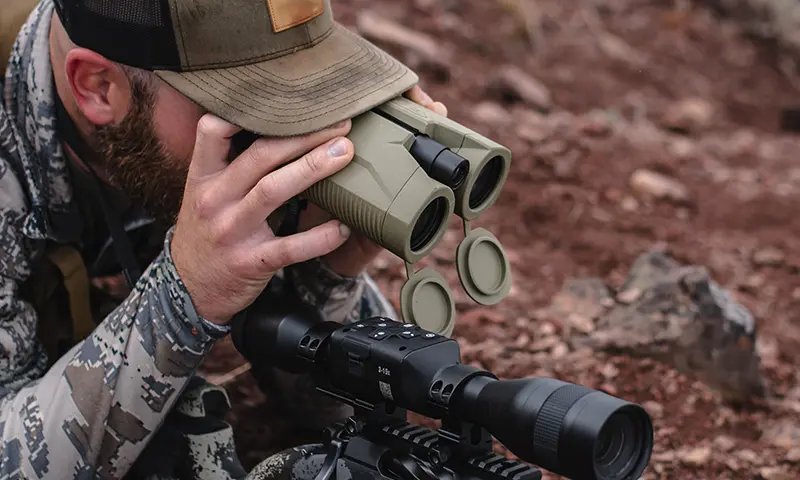
The ATN Binox-6 640x512 is the tool for locating and reading whole groups. Its 640 sensor keeps every pig in a sounder distinct as you zoom, the 3-24x range sweeps wide then confirms, and detection past 3,100 meters finds a group far out. After the shot, it doubles as a recovery aid, and because it works by day it also scouts damage, trails, and wallows before a hunt.
Why seeing the whole group matters
Shooting into a bunched sounder blind risks the wrong animal and lost pigs. The 640's detail lets you separate individuals, choose your target, and know where the others are, so your shot is deliberate and your follow-ups are informed - the difference between denting a herd and truly controlling it.
Who it's for - and who it's not
It's for the hunter or landowner fighting hog damage who needs to find and read groups across real acreage. It's not for someone on a firm budget glassing closer ground, where the cheaper 384 with its bigger zoom is the smarter spend.
Best on a tighter budget: ATN Binox-6 384x288 5.5-44x
The ATN Binox-6 384x288 5.5-44x is the value alternative when acreage is smaller or the budget is firm. It gives up some resolution but adds an even bigger 5.5-44x zoom and a lower price, so it still finds and reaches groups well. For closer ground, it's a strong, affordable way to locate sounders and recover pigs.
Turning a located sounder into damage control
Finding the group is step one; controlling it is the goal. Once you locate a sounder, glass it long enough to understand it - count pigs, note the leaders, and watch its direction of travel toward feed or water. Use that read to set an intercept downwind, and prioritize shots that let you connect on multiple animals rather than bumping the whole group after a single pig. Real control comes from removing numbers, and a clear picture of the group is what makes that possible.
After the shooting, the binocular keeps working. A downed hog holds heat for a while, so the Binox-6 makes recovery fast and certain, and a final sweep confirms whether survivors circled back. By day, the same tool scouts the damage itself - fresh rooting, muddy wallows, and trails between bedding and feed - so your next night's plan is built on evidence, not guesswork. That locate-read-recover-scout loop is how you actually get ahead of a hog problem.
How to choose hog-hunting binoculars
Choose for locating and reading whole groups across your ground, then match the tier to your acreage and budget. Resolution and comfort come first for hogs.
- Sensor resolution - a 640 keeps every pig in a sounder identifiable at zoom.
- Detection range - more range locates groups across real acreage early.
- Two-eyed comfort - patient viewing to read behavior and aid recovery.
- Zoom range - enough reach to confirm targets at the distances hogs appear.
- Day use - thermal works around the clock, so it also scouts damage by day.
On big properties the locating advantage compounds night after night. Sounders shift their patterns as pressure and food change, so a binocular that lets you sweep wide and read a group at distance keeps you adapting instead of guessing - you learn which fields the pigs are hitting this week and set up accordingly. Over a season, that intelligence is worth as much as any single shot, and the 640's clarity is what makes the reading reliable enough to act on.
The two-eyed design also pays off in stamina, which matters when hog hunting means hours of scanning. Glassing with both eyes is far less tiring than squinting through a single tube, so you stay sharp deep into the night when a sounder finally moves. A hunter who can still read the ground clearly in the small hours is the one who fills the truck, and comfortable optics are a bigger part of that than most people admit.
Recovery deserves its own mention because it saves both meat and time. A hog that runs after the shot leaves a heat trail and holds warmth where it beds down, so a quick sweep with the Binox-6 often puts you on a downed pig in minutes rather than a frustrating grid search by flashlight. On a group shot, that speed matters even more - you can locate several animals in the confusion and confirm exactly how many you took before the ground cools.
Finally, treat the binocular as your scouting instrument between hunts. Because thermal reveals warm animals and recent sign differently than the naked eye, a daytime or evening walk with the Binox-6 shows you where hogs are actually living - the shaded bedding, the muddy wallows, the trails worn between them. Building your night plan on that firsthand intelligence, rather than on guesswork, is what turns occasional luck into consistent results against a destructive, fast-breeding pest.
It is worth matching the binocular to how much ground you actually patrol. On sprawling acreage where sounders can be anywhere, the 640's reach and clarity let you cover the property efficiently and decide where a night is worth spending; on smaller parcels the cheaper 384 may be all you need. Being honest about your acreage keeps you from overspending or, worse, buying too little glass to find the pigs doing the damage in the first place.
How we picked these ATN binoculars
We compared only ATN's current Binox-6 binoculars and judged them for hog work specifically - locating sounders, reading group behavior, and aiding recovery across real acreage. We weighed sensor resolution and NETD, detection distance, two-eyed comfort, zoom, and day use. The honest trade-off is resolution and range for price: the 640 sees whole groups best but costs more than the 384, which is the smarter buy on smaller ground or a firmer budget. This is an in-house comparison of ATN's own binoculars, not an independent lab test, so weigh it against your acreage and hog pressure.
Frequently Asked Questions
What are the best thermal binoculars for hog hunting?
The ATN Binox-6 640x512 3-24x. Its 640 sensor keeps every pig in a sounder identifiable, detection reaches around 3,100 meters to locate groups across your ground, and two-eyed viewing helps you read behavior and recover downed hogs.
Why does resolution matter for hogs specifically?
Hogs run in bunched groups, so separating individuals to pick a target and know where the others are takes detail. The 640's resolution keeps the whole sounder readable, which makes shots deliberate and follow-ups informed.
Can thermal binoculars help recover a downed hog?
Yes. A downed pig holds heat for a while, so the Binox-6 follows that signature for fast, certain recovery, and a final sweep tells you whether survivors circled back.
How far can the Binox-6 640 locate a sounder?
Detection reaches around 3,100 meters, so you can find a group working a fence line early. You'll count and identify individual pigs at closer distances using the zoom.
Do these work in daylight to scout hog damage?
Yes. Thermal reads heat, not light, so the Binox-6 works around the clock and helps you scout fresh rooting, wallows, and trails by day to plan the next hunt.
640 or 384 Binox for hogs?
Choose the 640 to see whole groups clearly across real acreage. Choose the 384 on smaller ground or a firmer budget, since its bigger zoom and lower price still locate and recover pigs well.
Are binoculars better than a monocular for hog groups?
For reading a moving group, yes. Two-eyed viewing is far less tiring, so you can watch a sounder long enough to understand it before committing, which is exactly what controlling hogs requires.
Get ahead of the damage by finding the whole group. See the ATN Binox-6 640x512 and compare it across the ATN thermal binoculars lineup to match resolution to your acreage. Locate sounders, read the group, and recover every pig you take.
Created: July 8, 2026 · 10:49:48 UTC