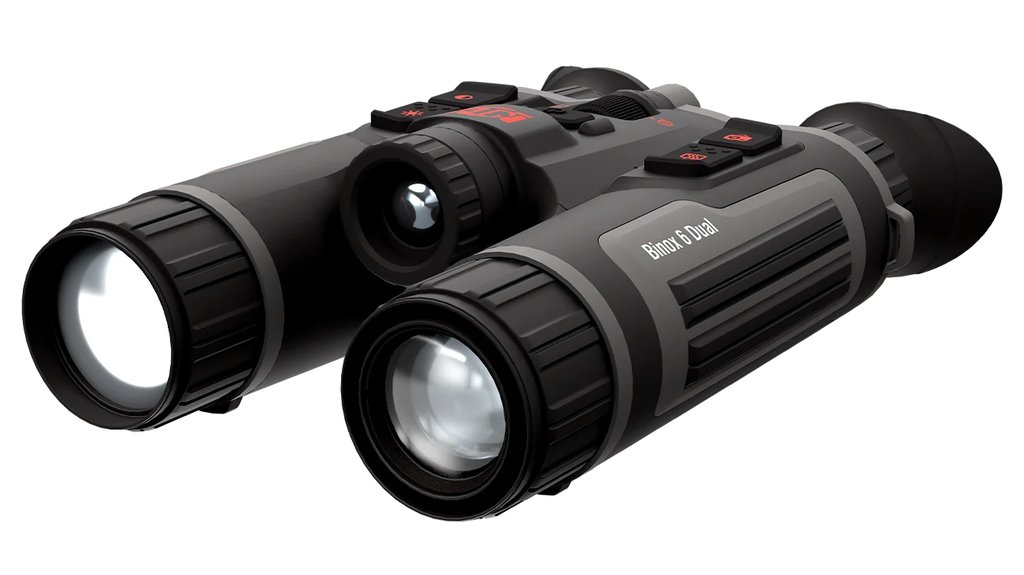
Terrain decides the best thermal binoculars for coyote hunting more than any spec on paper. A dog worked through cedar breaks and brushy draws gives you seconds at close range; a dog crossing a section of open wheat stubble is a heat mark a quarter-mile out that you study before it ever hears your call. This comparison puts two ATN 6th-generation models head to head by the ground you hunt: the ATN Binox-6 Dual 384x288 5.5-44x for wide-open country, against the Binox-6 Dual 640x512 3-24x for tight cover. Both live on the ATN thermal binoculars page.
The verdict is terrain-driven. For open, long-sight coyote country — big fields, cut pasture, desert flats — the ATN Binox-6 Dual 384x288 5.5-44x is the better tool, because its 44x reach turns a distant heat mark into a readable animal. For close, brushy stands where dogs appear fast and near, the Binox-6 Dual 640x512 3-24x wins on picture clarity. Both range to 1000 m and both carry a 15 mK sensor.
How the 384x288 5.5-44x works on open country
The ATN Binox-6 Dual 384x288 5.5-44x is built to reach, and reach is what open coyote ground demands. On a big field you often spot heat long before you can tell what made it, and the deciding question is whether you can zoom in enough to read posture and gait from far off. This model climbs to 44x, nearly double the flagship's top magnification, so a warm mark on a distant fence line resolves into a coyote working the edge instead of staying an unknown dot. Its 384x288 thermal core carries fewer heat-reading points than a 640 — picture a lower dot count filling the frame — but at the slow, deliberate pace of long glassing you have time to study a signature, and the built-in 1000 m rangefinder confirms distance before you decide to move on the dog. Detection to roughly 2750 m gives you early warning across the flats.
How the 640x512 3-24x works in close cover
The ATN Binox-6 Dual 640x512 3-24x is built for clarity up close, which is exactly what brushy, broken terrain rewards. In cover a coyote shows up near and moving, and you get very little time to be sure of it before it hangs up or bolts. The 640x512 core packs roughly four times the heat-reading points of a 384 sensor — the leap from standard definition to HD — so a dog slipping through cedars reads as a recognizable animal at a glance, cleanly separated from a bedded deer or a stray in the same thicket. Its 3-24x range favors a wider view for catching movement in tight quarters rather than extreme zoom you can't use at short range. The same 15 mK sensitivity and built-in 1000 m rangefinder ride along, and its 4K day camera lets you scout the cover in daylight first.
When to choose the 384x288 5.5-44x
Choose the 384x288 5.5-44x when most of your coyote hunting happens on open ground where shots and sightings stretch long. If you glass agricultural fields, cut pasture, sagebrush flats or river bottoms with wide sightlines, the extra magnification is the feature that earns its place, letting you identify and range dogs far out before they close. It is also the lighter of the two by a hair. The trade is resolution: pushed to its highest zoom the picture softens sooner than the 640's would, so it is not the model for someone who needs pin-sharp identification of a dog exploding past at 30 yards in the brush.
When to choose the 640x512 3-24x
Choose the 640x512 3-24x when your stands sit in cover and dogs come in close and quick. In cedar breaks, tree lines, brushy draws and mixed farm-and-woodlot ground, the finer sensor is what lets you confirm a coyote fast and avoid a bad call on a look-alike animal. Its lower top magnification is not a drawback here, because you are working near targets where a wide, clear field beats raw zoom. If you also want one binocular that doubles as a daylight scouting camera and an all-round observation tool, the 640's 4K day mode tips it further in your favor. The trade is reach: it will not pull a far-flats signature as tight as the 384 can.
Our recommendation
For the coyote hunter defined by terrain, the ATN Binox-6 Dual 384x288 5.5-44x is our pick, because open country is where most coyote calling and glassing plays out and its reach is the trait that terrain rewards most. If your ground is tight and brushy, flip the decision and take the 640x512 3-24x for its cleaner close-range picture. Neither is a wrong answer — both range, both carry the 15 mK sensor, and both are 4-in-1 — so let the land make the call. See both, and the rest of the current 6th-gen line, on the ATN thermal binoculars page.
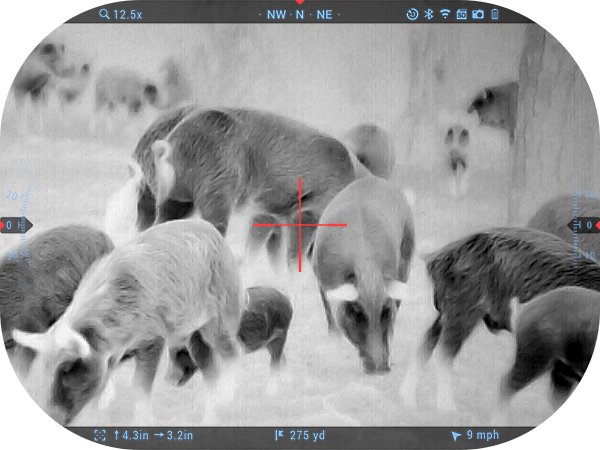
How we compared them
This is an in-house comparison of two models from ATN's own current 6th-generation Binox-6 range, not an independent lab test. We set the two side by side on the one variable that changes most from hunt to hunt — terrain — and judged each on the traits that terrain stresses: magnification and detection range for open, long-sight ground; thermal resolution and NETD for fast, sure identification in close cover; plus the shared rangefinder, battery life and weight. The 384x288 5.5-44x earns the nod for open-country hunters on reach, while the 640x512 3-24x is the honest pick for close-cover callers on picture quality. Neither suits the opposite terrain as well: the 384 softens at extreme zoom, and the 640 won't pull distant signatures as tight. Weigh the two against the land you actually hunt before you buy.
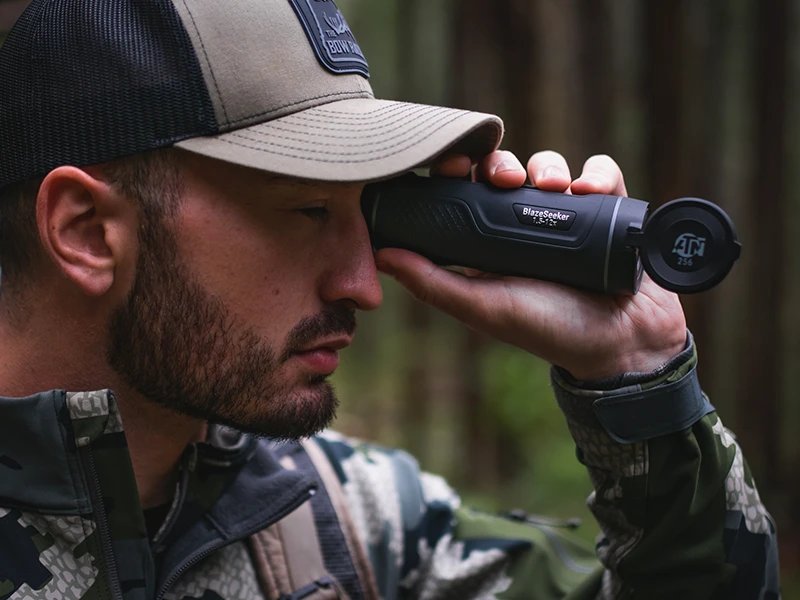
Frequently Asked Questions
Does terrain really change which thermal binocular I should buy?
Yes. Open ground puts a premium on magnification and detection range so you can identify and range coyotes far off, while close cover rewards a finer sensor for fast, sure identification at short distance. The ATN Binox-6 Dual 384x288 5.5-44x leans toward open country and the 640x512 3-24x toward cover. Matching the optic to the land is the single biggest factor.
Which ATN Binox-6 is better for open fields and flats?
The ATN Binox-6 Dual 384x288 5.5-44x is better for open country. Its magnification reaches 44x, nearly double the flagship's, so a distant heat mark resolves into a readable coyote before it closes. It keeps the built-in 1000 m rangefinder to confirm those longer distances, which matters most on wide ground.
Which one is better for brushy, close-in stands?
The ATN Binox-6 Dual 640x512 3-24x is better in cover. Its 640x512 core gives a much cleaner picture, so a coyote appearing close and fast is identified at a glance and not confused with a look-alike animal. Its wider, lower-magnification view also suits catching movement in tight quarters.
Do both models range and identify coyotes ethically?
Yes. Both carry a built-in laser rangefinder reading to 1000 m at about a yard, plus a 15 mK thermal sensor, so both let you confirm distance and identify a small target before a shot. The difference is how they perform across terrain, not whether they can range. Confirmed range is standard on both.
Is more magnification always better for coyotes?
No. High magnification helps on open ground where targets are far, but in close cover too much zoom narrows your field and makes tracking a nearby moving dog harder. The 384's 44x favors distance while the 640's 3-24x favors a wider, clearer close view. Pick based on your typical sighting distance.
Can either binocular also scout during the day?
Both are 4-in-1 devices with day, night, twilight and thermal modes, and the 640x512 model pairs its thermal core with a 4K day camera for sharp daylight scouting. That lets one unit map a property in daylight and hunt the same ground after dark. It is a useful edge for the 640 when you scout as much as you hunt.
How long will each last on a full night out?
Both models run about 8 hours on two standard 18650 cells, enough for most full nights of coyote hunting. Because the batteries are swappable and standard, you can carry a charged spare pair for long sessions or extended trips. There are no proprietary packs to source.
Let the land make the call. If you hunt coyotes on open, long-sight ground, the ATN Binox-6 Dual 384x288 5.5-44x gives you the reach to read distant dogs and range them cleanly. If your stands sit in brush and cover, the 640x512 3-24x delivers the sharper close-range picture instead. Compare the full specs on both and see the rest of the current 6th-gen family on the ATN thermal binoculars page, then choose the one that matches your terrain.
Created: August 10, 2026 · 09:39:31 UTC