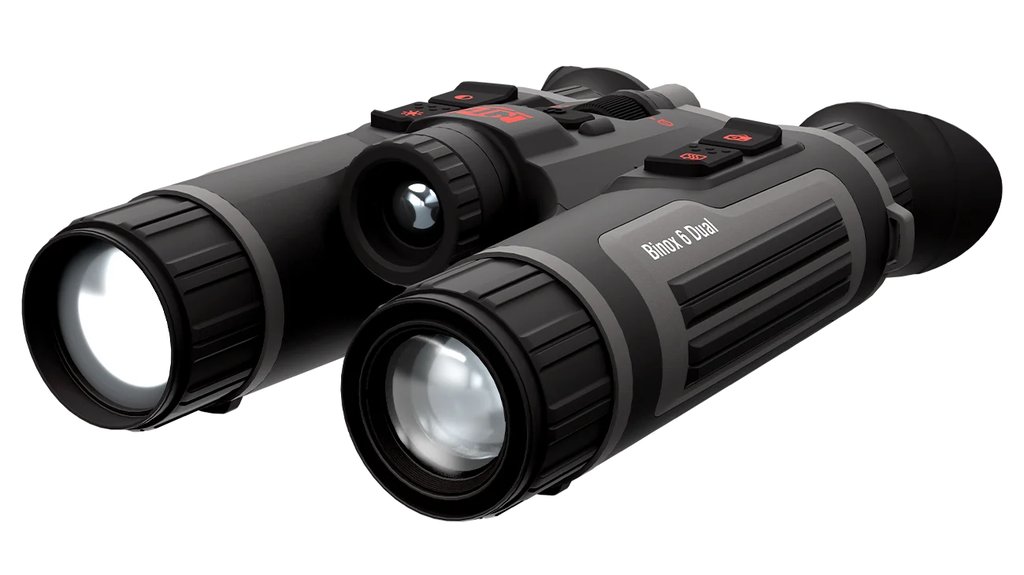
The best thermal binoculars for coyote hunting depend on the job you hand them: spotting a dog slipping in on your call, glassing a distant field edge before first light, or scouting a new property in daylight and dark. Coyotes are small, quick, and rarely give you a second look, so the right optic is the one built around your actual hunting style. This roundup matches ATN's current 6th-generation thermal binoculars to those use cases, with the ATN Binox-6 Dual 640x512 3-24x leading the pack for its 4-in-1 vision and built-in ranging.
For coyote hunting, the top pick is the ATN Binox-6 Dual 640x512 3-24x: a 640x512 thermal core with day, night, twilight and thermal in one body, plus a built-in laser rangefinder, so you find the dog, confirm the distance, and take an ethical shot without swapping optics. The Binox-6 Dual 384x288 5.5-44x is the reach-focused alternative for hunters who glass wide-open country and want more zoom.
Quick answer: top picksBest overall for coyote hunting: ATN Binox-6 Dual 640x512 3-24x — the sharpest, most versatile scanner, with a rangefinder for confident shots.
Best for long-range glassing: ATN Binox-6 Dual 384x288 5.5-44x — up to 44x zoom for studying signatures far out on open flats.
Best for daylight-to-dark scouting: ATN Binox-6 Dual 640x512 3-24x again — its 4K day camera makes it a true round-the-clock spotter, not just a night tool.
Why ATN's 6th-gen Binox-6 line fits coyote hunting
Coyote hunting rewards an optic that does more than glow in the dark. You need to pick a lean dog out of clutter, tell it apart from a fox or a stray, and know the range before you commit, often within a few restless seconds. ATN's 6th-generation Binox-6 line is built for exactly that mix. Both models pair a NETD rating of 15 mK or better — NETD is the smallest temperature difference the sensor can register, where lower numbers mean a crisper, less grainy heat picture — with a built-in 1000 m laser rangefinder that reads to about a yard. On top of that, the Binox-6 is a 4-in-1 device: day, night, twilight and thermal live in one housing, so a single unit scouts in daylight and hunts after dark. Here is how the two coyote-ready models line up.
Best overall for coyote hunting: ATN Binox-6 Dual 640x512 3-24x
The clearest picture of a small, moving target
The ATN Binox-6 Dual 640x512 3-24x is the top all-round choice for coyote hunting because it shows you the most detail on the target that matters least in size. Its 640x512 thermal core packs roughly four times the heat-reading points of a 384x288 sensor — think of the jump from a standard-definition screen to HD — so a coyote reads as a recognizable animal instead of a warm smudge. That clarity is what lets you separate your target dog from a house cat or a deer bedded in the same draw, and it does it fast, while the animal is still committing to your call.
Range confirmation and 4-in-1 versatility
The built-in laser rangefinder reads to 1000 m at about a yard of accuracy, so you stop guessing holdover on a small chest and start placing shots you can stand behind. Detection out to roughly 3100 m means you catch heat far enough away to set up before the dog arrives — that is detection, not identification, but it buys you time. And because the Binox-6 layers a 4K day camera, night, twilight and thermal into one body, the same unit you scout with at noon is the one you call with at midnight. Add GPS, a compass, SharpIR image enhancement and a laser IR illuminator, and it becomes a full field tool rather than a single-trick viewer.
Who it's for and who it isn't
It's for the hunter who wants one optic that covers everything — calling in cover, confirming range, and scouting in daylight — and who values a clean, identifiable picture above raw zoom. It's not for someone who almost never calls in close and instead spends every hunt glassing distant, wide-open flats; that hunter is better served by the higher-magnification model below. Check the full specs on the Binox-6 Dual 640x512 page.
Small touches that matter on a live stand
Beyond the headline sensor, the details are what keep a coyote hunt moving. SharpIR image enhancement cleans up the picture on humid or dusty nights when raw thermal tends to smear, and the DeFog and Wide Dynamic Range modes hold detail when a warm animal crosses a cold background. The GPS and compass let you drop and return to productive stands without fumbling a phone, and the laser IR illuminator feeds the night-vision channel when you want a familiar visible-light view of ground you already know. None of these replace the core job of finding and ranging a dog, but together they mean fewer fumbled setups and more time actually watching for coyotes.
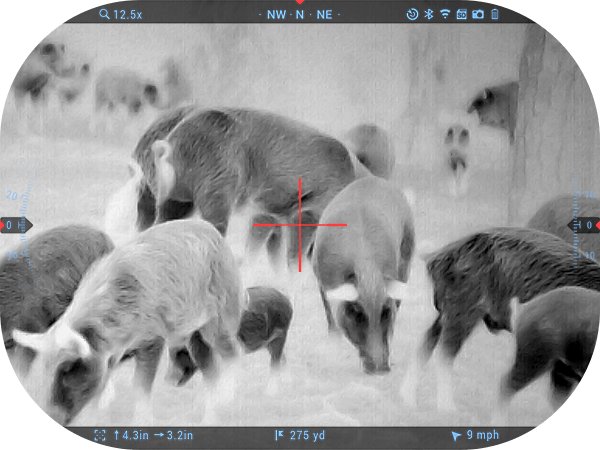
Best for long-range glassing: ATN Binox-6 Dual 384x288 5.5-44x
More zoom for reading distant signatures
The ATN Binox-6 Dual 384x288 5.5-44x is the pick when your coyote hunting is mostly long glassing across open ground. Its magnification climbs to 44x, far higher than the flagship's 24x, so a heat signature a quarter-mile out stops being a dot and starts showing posture and movement you can read. On big agricultural fields, cut pasture and desert flats, that reach is what tells you whether the blob near the fence line is a coyote working the edge or a cow standing still. It keeps the same 15 mK sensitivity and the same built-in 1000 m rangefinder, so the picture stays clean and every distant target can still be ranged before you move on it.
The trade-off you accept for reach
You give up sensor resolution to get that zoom. The 384x288 core has fewer heat-reading points than the 640, so pushed to its highest magnification the image softens sooner than the flagship's would. For long, deliberate glassing that is a fair trade — you're studying stationary or slow signatures at distance, not snap-identifying a dog sprinting past at 40 yards. It's for the open-country hunter who prizes reach; it's not for the caller who works thick cover and needs the finest possible picture up close.
How to choose the best thermal binoculars for your coyote hunting
Start with where and how you hunt coyotes, then match the optic to it. Both Binox-6 models range, both are 4-in-1, and both carry the 15 mK sensor — so your decision comes down to picture quality versus reach, and whether you want a true daylight scouting camera in the same body.
- Call in cover or mixed terrain — the 640x512 3-24x gives the cleanest, fastest identification when a dog commits close.
- Glass wide-open country — the 384x288 5.5-44x reaches further, so distant signatures resolve into readable animals.
- Scout day and night — the 640's 4K day camera makes it a round-the-clock spotter, not just a night viewer.
- Confirm every shot — both models range to 1000 m at about a yard, so you never guess distance on a small target.
- Hunt full nights — both run about 8 hours on swappable 18650 cells; carry a charged spare pair to cover the whole outing.
- Want one device for everything — the 4-in-1 design means the same binocular covers hogs, property checks and general night observation too.
How we picked these ATN thermal binoculars
This is an in-house comparison of ATN's own current 6th-generation Binox-6 range, not an independent lab test, and we ranked the models by how well each suits a real style of coyote hunting rather than by spec sheet alone. We weighed the things that decide a coyote hunt: thermal resolution and NETD for clean identification of a small, low-mass target; the built-in rangefinder for ethical shot distance; detection range and magnification for how you scan; and battery life for a full night out. The 640x512 3-24x earned the overall spot because its finer picture and 4-in-1 day-to-dark coverage fit the widest range of hunters. The 384x288 5.5-44x wins for pure open-country reach but trades away some resolution to get there, so it isn't the pick for close-cover callers. Measure these traits against your own ground before you decide.
Frequently Asked Questions
What makes a thermal binocular good for coyote hunting specifically?
A coyote is a small, lean, fast target, so the optic needs a sensitive sensor that resolves it cleanly and a way to confirm range before you shoot. Detection distance to catch heat early and a wide-enough field to track a circling dog matter too. The ATN Binox-6 line covers all of that with a 15 mK sensor and a built-in 1000 m rangefinder.
Which ATN Binox-6 model is the best all-round coyote optic?
The ATN Binox-6 Dual 640x512 3-24x is the best all-round choice. Its 640x512 thermal core gives the clearest identification of a small animal, and its 4-in-1 day, night, twilight and thermal design lets one unit scout in daylight and hunt after dark. The built-in rangefinder confirms distance for ethical shots.
When should I choose the 384x288 5.5-44x instead?
Choose the Binox-6 Dual 384x288 5.5-44x if most of your coyote hunting is long-range glassing on open country. Its 44x magnification reaches much further than the flagship's 24x, so distant signatures resolve into readable animals. You trade some sensor resolution for that reach, which is a fair swap for slow, deliberate glassing.
Do both models have a built-in rangefinder?
Yes. Both the 640x512 and the 384x288 include a built-in laser rangefinder that reads to 1000 m at roughly a yard of accuracy. Confirmed range is essential for an ethical shot on a small target like a coyote, so ATN builds it into both models. You never have to carry a separate rangefinder.
How far away can these binoculars spot a coyote?
Detection range reaches roughly 3100 m on the 640 model and 2750 m on the 384, but detection means catching a heat source, not identifying it as a coyote. You will positively identify and shoot a coyote at much closer distances. The long detection figure mainly buys you time to see heat coming and set up.
Can I use one Binox-6 for both day and night scouting?
Yes. The Binox-6 is a 4-in-1 device with a 4K day camera alongside night, twilight and thermal modes, so a single unit works around the clock. You can scout a property in daylight, mark spots with the built-in GPS, and return to hunt the same ground after dark. That versatility is a core reason it suits coyote hunters.
How long does the battery last on a night hunt?
Both Binox-6 models run about 8 hours on two standard 18650 cells. That covers most full nights of coyote hunting, and because the cells are swappable you can carry a charged spare pair for long sessions. Standard batteries also mean easy replacements without proprietary packs.
Match the binocular to how you hunt coyotes and the choice gets simple. For clean identification, ranging and true day-to-dark versatility, the ATN Binox-6 Dual 640x512 3-24x is the best all-round pick. If your nights are spent glassing wide-open ground, the 384x288 5.5-44x adds the reach you want. Compare both, read the full specs, and see the rest of the current line on the ATN thermal binoculars page, then pick the one that fits your ground.
Created: August 10, 2026 · 09:39:31 UTC