There is a reason serious coyote callers glass with two eyes when they can. A monocular tires your one eye fast, and after a long sit that fatigue costs you movement you should have caught. The best thermal binoculars for coyote hunting fix that by splitting the work across both eyes, so you can hold a fence line for an hour and stay sharp. The pair that does it best in ATN's line is the ATN Binox-6. It glasses like a comfortable pair of field binoculars, but it also ranges the coyote, records the stand, and sees in full daylight or full dark.
The best thermal binoculars for coyote hunting are the ATN Binox-6 Dual 640x512 3-24x. Two-eyed viewing beats a monocular for long, comfortable glassing sessions, and the Binox-6 pairs a sharp 640x512 sensor with a built-in laser rangefinder and up to 3100m of detection. For a caller who scans wide country and wants the range before the shot, it is the top choice.
Quick answerBest overall: ATN Binox-6 Dual 640x512 3-24x — the sharpest, longest-reaching two-eyed glass with a built-in rangefinder.
Best for high-zoom glassing: ATN Binox-6 Dual 384x288 5.5-44x — more magnification for picking apart distant terrain, at a friendlier price.
Bottom line: for comfortable, all-night coyote glassing with the range built in, the Binox-6 640 is the pick.
Why choose thermal binoculars over a monocular for coyotes?
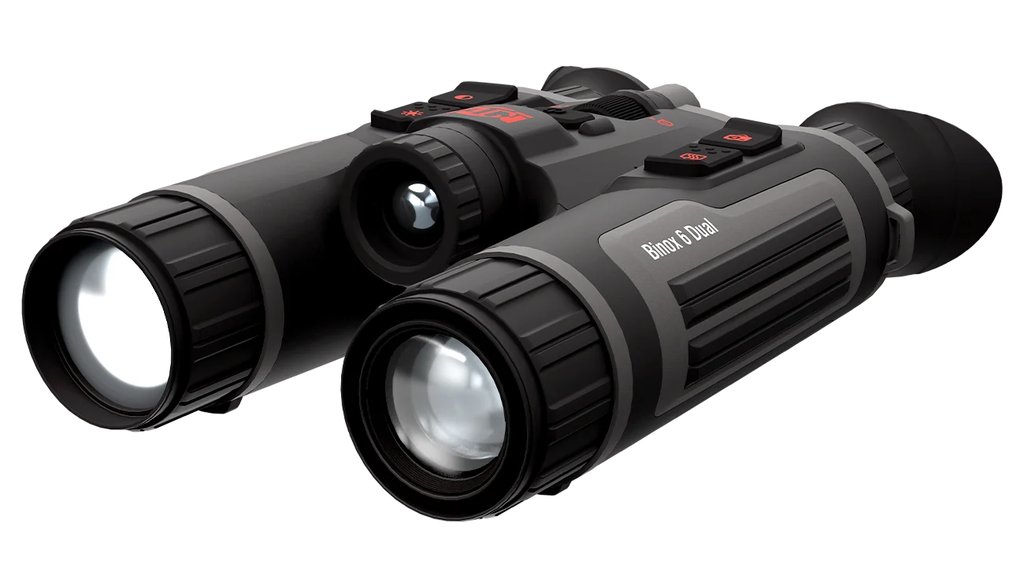
Thermal binoculars beat a monocular for coyote hunting whenever you spend long stretches glassing, because two eyes share the load and stay comfortable far longer than one. On a cold stand where you might watch a draw for forty-five minutes waiting for a coyote to commit, that comfort turns into more animals spotted — a tired eye drifts and misses movement. The ATN Binox-6 goes past comfort, though. It is a 4-in-1 optic: day, night, thermal, and twilight all in one housing, so a dawn stand that starts dark and ends in daylight never needs a swap. It carries a built-in laser rangefinder good to 1000 yards, so the instant you spot a coyote you get the distance without lowering the glass. It has a 4K day sensor, GPS and compass, Picture-in-Picture, and dual replaceable 18650 batteries for a full night. That combination — two-eyed comfort plus ranging plus all-condition vision — is why binoculars, not a monocular, are the tool for the caller who really works the country. You spot, you range, you plan the shot, all without moving your hands off the glass.
How do the two ATN Binox-6 models compare?
Best overall: ATN Binox-6 Dual 640x512 3-24x
The ATN Binox-6 Dual 640x512 3-24x is the best thermal binoculars pick for coyote hunting because it puts the sharpest sensor, the longest reach, and a built-in rangefinder into one comfortable two-eyed package. It is the flagship of the pair, and it earns that spot on coyote country.
A 640 sensor that reads coyotes far out
The 640x512 sensor is the most detailed here — more dots in the picture, so a coyote picked up at the far end of a 3100m detection range still resolves into a recognizable animal when you zoom. Its <=15mK thermal sensitivity is the finest in the family, which means a cleaner picture on the humid, foggy nights coyotes love. Start at a broad 3x to scan and push to 24x to study a distant dog without losing the frame.
Range it, then plan the shot
The built-in laser rangefinder is the feature that changes how you hunt. Spot a coyote, tap the range, and you know the distance instantly — no fumbling for a separate unit while the dog moves. Add the 4-in-1 day/night/thermal/twilight modes and dual 18650 batteries good for about eight hours, and you have glass that works a whole dawn-to-dark stand. Who it is for: the caller who glasses wide, open country and wants range and clarity in one. Who it is not for: the hunter who needs a pocket-sized handheld or the absolute lightest tool — binoculars weigh more than a monocular.
The extras that earn their place on a stand
Beyond the sensor and the rangefinder, the Binox-6 stacks features that matter on a real coyote stand. Picture-in-Picture lets you keep a zoomed window on a distant dog while still watching the wider scene, so you do not lose track of a second coyote circling downwind. GPS and a compass help you mark where you spotted animals and find your way back to a productive draw in the dark. A Smart IR illuminator, DeFog mode, and Wide Dynamic Range keep the picture usable when conditions turn against you, and the 64 GB of storage plus the ATN Connect 6 app let you save and share the whole sit. Dual replaceable 18650 batteries mean you carry a charged spare set and swap in seconds rather than nursing a dying charge. It is a lot of capability in one housing, which is the argument for binoculars over a simpler handheld when you hunt seriously.
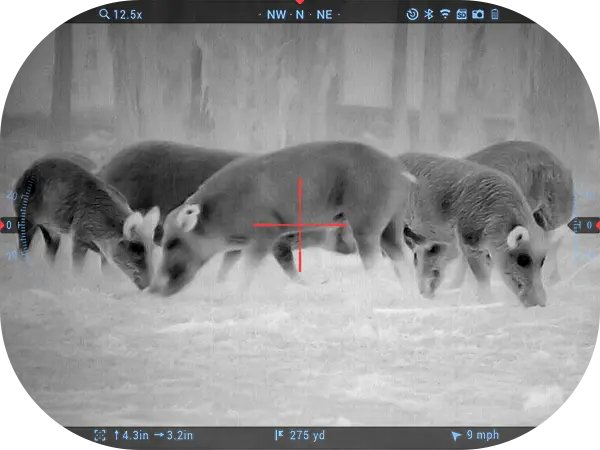
Best for high-zoom glassing: ATN Binox-6 Dual 384x288 5.5-44x
When your coyote country is huge and you spend more time picking apart distant terrain than scanning close, the ATN Binox-6 Dual 384x288 5.5-44x is the better fit. It steps down in sensor resolution but climbs way up in magnification, all the way to 44x.
More reach into the glass
That 5.5-44x range lets you study a far ridgeline or field corner in real detail, and it sits below the 640 model in price. It keeps the same <=15mK sensitivity, the same built-in rangefinder, and the same 4-in-1 vision. The trade is a slightly narrower base view and fewer dots in the picture than the 640. Who it is for: the hunter working expansive terrain who values high zoom. Who it is not for: the caller who needs the finest resolution or a wider scanning view up close — that is the 640's job.
Between the two, the deciding question is whether you spend more time scanning or more time studying. If you sweep wide country and want to catch coyotes moving anywhere in the field, the 640's broader 3x base and sharper sensor serve you better. If your dogs consistently show up far out and you want to pick them apart at long distance before committing, the 384's 44x reach into the glass is the tool. Both share the finest <=15mK sensitivity in the line, so neither gives up cold-weather picture quality — the choice is really about zoom style, not capability tier.
How to choose thermal binoculars for coyotes
Pick the Binox-6 that matches your terrain and how long you sit. Run through these before you decide:
- Sensor resolution — the 640 gives you the sharpest picture for reading coyotes far out; the 384 trades some clarity for a lower price and more zoom.
- Magnification vs field of view — the 3-24x scans wide then zooms; the 5.5-44x reaches deeper into distant terrain but starts narrower. Match it to how far your coyotes hang up.
- The built-in rangefinder — both range to 1000 yards, and ranging the moment you spot a dog beats reaching for a separate unit every time.
- Comfort for long sits — two eyes fight fatigue far better than a monocular, so binoculars pay off on stands where you glass for a long stretch.
- Battery and weight — dual 18650 cells run about eight hours and swap in seconds; accept a little more weight than a handheld in exchange for the comfort and features.
Line up both variants across the ATN thermal binoculars range to see which reach and resolution suit your ground.
How we picked these ATN thermal binoculars
We judged these binoculars on one job: comfortable, long-session coyote glassing that also ranges the animal before the shot. We compared sensor resolution, thermal sensitivity (NETD), magnification, detection range, the built-in rangefinder, refresh rate, battery, and weight against real coyote-country distances, and only considered the current 6th-gen ATN line so nothing is discontinued. The honest trade-off: binoculars weigh more than a monocular and cost more, so they are not the pick if you want the lightest, cheapest handheld. This is an in-house comparison of ATN's own binoculars, not an independent lab test — weigh the specs against how you actually glass before buying.
Frequently Asked Questions
What are the best thermal binoculars for coyote hunting?
The ATN Binox-6 Dual 640x512 3-24x. Two-eyed viewing stays comfortable through long stands, and the Binox-6 adds a sharp 640x512 sensor, a built-in laser rangefinder, and up to 3100m detection. For scanning wide country and ranging a coyote before the shot, it is the top pick.
Are thermal binoculars better than a monocular for coyotes?
For long glassing sessions, yes. Two eyes share the load and fight the fatigue that makes a single-eye monocular tiring after a while, so you catch more movement over a long sit. Binoculars weigh more, though, so a monocular still wins if you want the lightest, most pocketable tool.
Do the ATN Binox-6 have a built-in rangefinder?
Yes. Both models carry a built-in laser rangefinder good to 1000 yards. The moment you spot a coyote you can range it without lowering the glass or grabbing a separate unit, which helps you plan an ethical shot quickly.
How far can the Binox-6 detect a coyote?
The 640 model detects heat out to about 3100m and the 384 model to about 2750m under good conditions. Detection is picking up the signature; positive ID and the shot happen much closer, but that reach lets you locate a distant dog early and watch it work in.
Can I use the Binox-6 during the day too?
Yes. The Binox-6 is a 4-in-1 optic with day, night, thermal, and twilight modes plus a 4K Ultra HD day sensor. A dawn stand that starts in the dark and ends in daylight never needs a swap, which makes them useful well beyond just night calling.
What is the difference between the 640 and the 384 Binox-6?
The 640 has the sharper sensor, longer 3100m reach, and a wider 3-24x scanning range. The 384 trades some resolution for much higher magnification, up to 44x, and a friendlier price. Choose the 640 for clarity and the 384 for deep zoom into distant terrain.
How long do the batteries last?
About eight hours on the dual replaceable 18650 batteries, enough for a full night of calling. Because they are replaceable, you can carry a charged spare set and swap them in seconds rather than waiting on a recharge.
If you glass wide coyote country and want the comfort of two eyes plus the range built right in, take a close look at the ATN Binox-6. It spots, ranges, and records the whole stand in one optic. Compare both variants across the ATN thermal binoculars range and pick the reach and resolution that fit the ground you hunt.
Created: July 7, 2026 · 14:32:46 UTC