Coyotes are cagey. They circle downwind, hang at distance, and read the ground before they commit - so spotting one early and reading what it's doing is half the game. For the best thermal binoculars for coyote hunting, the ATN Binox-6 640x512 is the pick: a high-resolution binocular with the detail to catch a wary dog working your stand and the comfort to glass patiently for it.
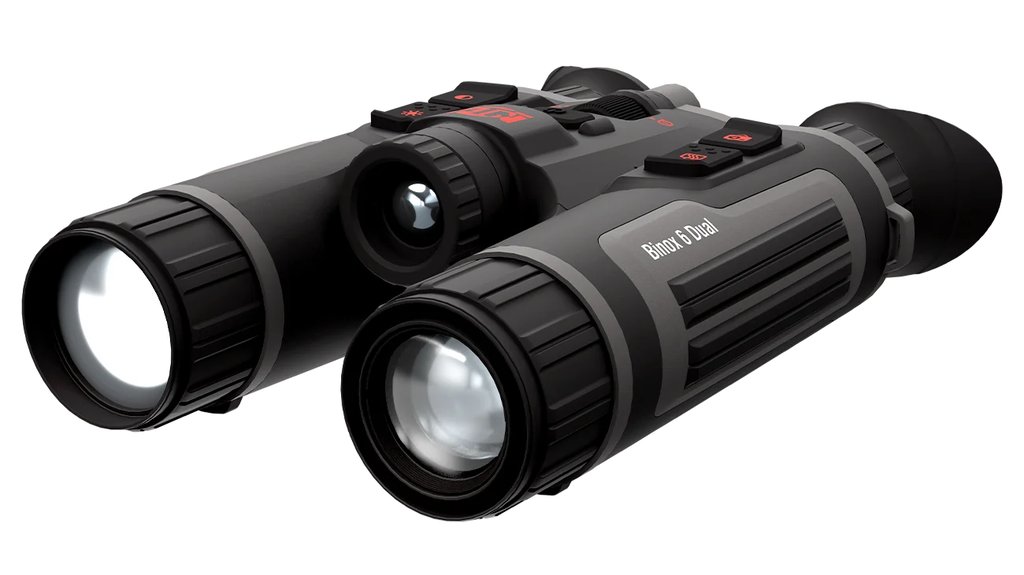
Best cheaper option: ATN Binox-6 384x288 5.5-44x - a lower tier with huge zoom if the budget is tighter.
Best for long stands: either Binox-6 - both keep both eyes open for patient glassing.
Why the ATN Binox-6 640 is the coyote pick
The ATN Binox-6 640 is the coyote pick because reading a wary dog at distance takes resolution. A coyote works the edge of a field and stops far out to scent-check, so you need a sharp enough picture to tell a coyote from a fox or a loose dog and to read whether it's about to commit or bolt. The 640 sensor packs more dots into the image - the HD-versus-standard-definition jump - so the animal stays a defined shape as you zoom, while a NETD of 15mK or better keeps it crisp on a cold, low-contrast night, the measure of how faint a temperature difference it can see.
Comfort matters as much on a calling stand. A responding coyote can take its time, and watching patiently with both eyes beats straining through a single tube that tires you into looking away at the wrong moment. The Binox-6's two-eyepiece design lets you hold on a circling dog until it commits, and detection out to around 3,100 meters means you catch it working in with time to get on the rifle.
Best for coyotes: ATN Binox-6 640x512 3-24x
The ATN Binox-6 640x512 gives a caller the detail and comfort coyotes demand. The 640 sensor reads a dog clearly at distance so you can confirm it's a coyote and judge its behavior, the 3-24x range covers wide scanning up to confident identification, and detection past 3,100 meters spots a dog working in early. Two-eyed glassing keeps you patient on a long stand, which is exactly when a cautious coyote finally commits.
Why detail wins on wary dogs
A coyote that hangs at 250 yards is a small, low-contrast target. The 640's resolution keeps its shape and movement readable at that distance, so you can tell it's a coyote and see whether it's relaxed or about to spook - the difference between a planned shot and a blown stand.
Who it's for - and who it's not
It's for the caller who wants to read wary coyotes at distance and glass patiently. It's not the pick for a hunter on a firm budget or scanning closer ground, where the cheaper 384 with its bigger zoom is the smarter spend.
Best cheaper option: ATN Binox-6 384x288 5.5-44x
The ATN Binox-6 384x288 5.5-44x is the value alternative for callers on a tighter budget. It gives up some resolution but adds an even bigger 5.5-44x zoom and comes in at a lower tier, so you can still reach out and confirm a dog. For a caller who hunts closer stands or wants the most reach for the money, it's a strong, affordable choice.
Reading a stand for coyotes
Use the binocular to work the stand before you ever raise the rifle. Sweep the whole area at low zoom as you start the sequence, then watch the downwind side hardest, because a cautious coyote will try to circle there to scent-check you. When a dog appears, zoom in to confirm it and read its direction and posture - relaxed and coming, or nervous and hanging - so you know whether to wait or get ready to shoot.
Let the conditions and the wind guide you. Cool, dry nights give a coyote the sharpest contrast against the background, so it pops even at distance, while warm, humid evenings call for slower glassing and a palette change. Keep the wind in your favor as you set up, re-glass often, and be ready to transition smoothly from the binocular to your scope. Patient, two-eyed reading is what turns a circling dog into a clean shot.
How to choose coyote hunting binoculars
Choose for the resolution to read a wary dog and the comfort to watch patiently, then match the tier to your budget.
- Sensor resolution - a 640 keeps a distant coyote identifiable at zoom.
- Detection range - more range catches a dog working in early.
- Two-eyed comfort - patient glassing holds on a circling coyote without strain.
- Zoom range - enough reach to confirm a dog at the distances coyotes hang.
- Battery life - a full evening of runtime for multiple stands.
A caller's routine with sharp binoculars
A high-resolution binocular changes how you run a stand because it lets you gather information before you ever move the rifle. As you work the call, keep the Binox up and sweep slowly, paying special attention to the downwind approach where a coyote will try to circle and scent-check you. When a dog appears, the 640's detail lets you judge at a glance whether it is relaxed and coming or nervous and hanging, which tells you whether to hold and keep calling or get on the gun now. That read, made while the coyote is still far out, is what separates a filled stand from a spooked one.
Comfort is what makes that patience sustainable across a night of stands. Straining through a single tube tires your eye and pushes you to look away at the worst moment, while relaxed two-eyed glassing lets you hold on a circling dog for as long as it takes. Pair that with cool, dry conditions for the sharpest contrast and a steady rest when you push the zoom, and the Binox-6 640 turns the hardest part of calling - reading a wary coyote at distance - into something you do confidently every set.
Ultimately these binoculars earn their place by doing the hardest part of a hunt - finding and reading game in the dark, comfortably, with both eyes. Judge them by whether they cover the distances you actually hunt, and for most hunters and land managers they do with room to spare. Keep the lenses clean, run a fresh battery, give the picture a moment to settle after power-up, and brace when you zoom, and they will routinely reveal animals a naked-eye scan walks right past. That is what separates a tool you reach for every night from a bargain that ends up forgotten in a drawer.
Value for a caller is ultimately about outcomes, and sharper glass changes them. Being able to confirm a legal target, read a dog's intent, and time your shot means fewer blown stands and more coyotes down. Over a season, the 640's resolution translates directly into dogs you would otherwise have misjudged or spooked, which is exactly the return a serious caller wants from a binocular they carry every night.
How we picked these ATN binoculars
We looked only at ATN's current 6th-generation line and judged these thermal binoculars against the keyword's real use, not a spec sheet. The criteria were sensor resolution and NETD, magnification or pairing, detection range, weight and comfort, and battery life. The honest trade-off is resolution and range for price: the 640 reads wary dogs best but costs more than the 384, which is the smarter buy on a tighter budget or closer ground. This is an in-house comparison of ATN's own range, not an independent lab test, so weigh the picks against your own ground and shots.
Frequently Asked Questions
What are the best thermal binoculars for coyote hunting?
The ATN Binox-6 640x512 3-24x. Its 640 sensor keeps a wary coyote identifiable at distance, detection reaches around 3,100 meters, and comfortable two-eyed glassing lets you watch a circling dog patiently.
Do I need a 640 sensor for coyotes?
For reading dogs at distance, yes - the 640's detail helps you confirm a coyote and judge its behavior far out. On a tighter budget or closer stands, the cheaper 384 with its bigger zoom still performs well.
How far can the Binox-6 640 spot a coyote?
Detection reaches around 3,100 meters. You'll identify a coyote at closer distances using the zoom, but the long detection range catches a dog working a field edge early.
Why binoculars instead of a monocular for calling?
Two-eyed glassing is far less tiring, so you can patiently watch a circling coyote for as long as it takes to commit. A monocular is fine for quick looks but wears out your eye on a long stand.
Can I aim and shoot with the binoculars?
No, they're for finding and reading coyotes, not aiming. Spot and confirm the dog with the Binox-6, then use your rifle scope to make the shot.
640 or 384 Binox for coyotes?
Choose the 640 for the best detail on wary dogs at distance. Choose the 384 if your budget is tighter or your stands are closer, since its bigger zoom and lower price still find coyotes well.
Do they work in daylight for coyotes?
Yes. Thermal reads heat, not light, so the Binox-6 spots coyotes day or night, useful for daytime dogs moving in shade or cover as well as night calling.
Does the Binox-6 640 work in daylight for coyotes?
Yes. Thermal reads heat, not light, so it spots coyotes day or night - useful for daytime dogs moving in shade or cover as well as night calling.
Read the wary dog before it reads you. See the ATN Binox-6 640x512 and compare it across the ATN thermal binoculars lineup to match detail and comfort to your stands. Watch the downwind side, glass patiently, and turn a circling coyote into a clean shot.
Created: July 8, 2026 · 10:49:39 UTC