The best thermal binoculars are the ones you can hold to your eyes for an hour without your vision quitting on you. Single-eye devices are fine for a quick look, but when you settle in to glass a field or a ridge, two eyes win: less fatigue, real depth perception, and a picture your brain reads naturally. That comfort is the difference between a tool you reach for once and one you keep glued to your face all night. The ATN Binox-6 is our all-around best because it is more than a heat viewer, it is a 4-in-1 optic that sees in daylight, dusk, dark and thermal, ranges its own targets, and records what you see. Rather than juggling a separate spotter, rangefinder and camera, you carry one device that does all three jobs. This guide ranks the 640 flagship as the overall best and the high-zoom 384 as the specialist, so you can pick the one that fits how you glass.
Best for high-magnification study: ATN Binox-6 Dual 384x288 5.5-44x — a much higher top-end zoom for examining distant, stationary subjects.
Both are true 4-in-1 binoculars with a 4K Ultra HD day sensor, a built-in laser rangefinder, SharpIR image cleanup, six palettes, GPS and compass, dual replaceable batteries and IP67 waterproofing. The one real trade-off is resolution versus top-end magnification.
Why ATN's Binox-6 is the all-around best
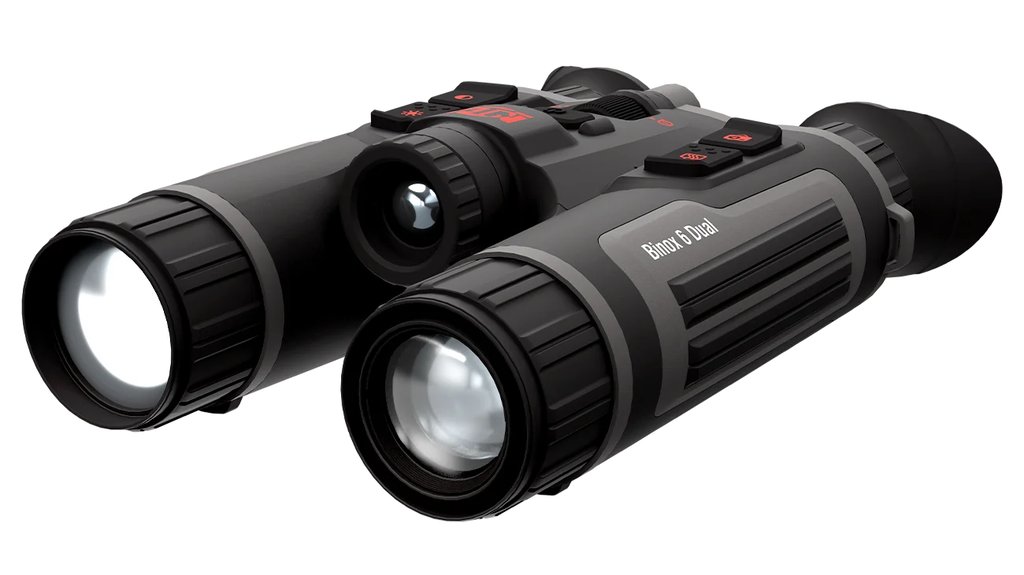
The Binox-6 is the all-around best because it packs four ways of seeing into one comfortable, two-eye device. Its 4-in-1 system switches between Day, Night, Thermal and Twilight vision, so a single optic carries you from bright afternoon glassing through the fading light of dusk into full dark. During the day and at twilight, a 4K Ultra HD CMOS sensor delivers a crisp full-color image, which is the difference between standard definition and 4K on your screen, so you can actually identify what you are looking at rather than guessing. When darkness falls, the thermal channel turns body heat into a clear target. A built-in laser rangefinder reads distance to 1000 yards with plus-or-minus one meter accuracy, so you know how far away something is at a button press. SharpIR AI enhancement cleans the image, DeFog mode cuts mist, Wide Dynamic Range balances bright and dark, and a Smart IR illuminator helps in the darkest conditions. GPS and compass log where you spot things, Picture-in-Picture shows two views at once, and Dual View Switching flips between them. With dual replaceable 18650 batteries, 64 GB of storage, a 50 Hz refresh and IP67 waterproofing, it is built to glass all night, every night.
Best overall: ATN Binox-6 640x512
The ATN Binox-6 Dual 640x512 is the best thermal binocular overall because its 640 sensor delivers the clearest, most versatile picture of the line. A 640x512 sensor holds far more detail than a 384 unit, so when you zoom to read what you spotted, the image stays sharp instead of breaking into blocks. The 3-24x magnification opens with a genuinely wide base view for fast scanning and reaches to 24 power for a closer look, and detection range runs to 3100m so heat shows up from a long way off. That combination, a wide view to find heat and enough resolution to identify it once you zoom, is why the 640 handles the widest range of situations without ever feeling like the wrong tool for the moment. It is the variant that does not force you to choose between scanning speed and picture quality.
The comfortable all-nighter
This is the variant that does everything well. Two eyes on the glass mean you can glass for hours without eye strain, the 4-in-1 view keeps you in one device as the light changes, and the built-in rangefinder turns spotting into a distance readout in a heartbeat. About 8 hours of battery across swappable cells covers a full night, and at 730 g it hangs comfortably from a harness. Who it's for: anyone who wants one thermal binocular to scan, identify and range across every situation. Not for: a specialist who only ever studies distant, stationary subjects at extreme zoom.
Detail you can trust when you zoom
The 640 sensor is the reason this variant earns the top spot. More dots in the picture means the image holds together as you push the magnification, so the moment you spot a heat signature and zoom to figure out what it is, you get an answer instead of a fuzzy guess. SharpIR AI enhancement adds to that, cleaning up the raw thermal signal the way a good photo app rescues a grainy shot. Pair the clarity with the <=15mK NETD, which keeps contrast alive in damp, foggy air, and you have glass that performs on the nights that beat cheaper optics. Wide Dynamic Range keeps a blazing-hot animal from washing out against a cold field, so neither the subject nor its surroundings disappear.
More than an optic
The extras turn the 640 from a viewer into a field tool. GPS and a compass let you drop a marker on where you spotted something, so you can return to a productive spot on the next outing. Picture-in-Picture floats a zoomed inset over the wide view, and Dual View Switching flips between the thermal and day channels without digging through menus. Everything you see records to 64 GB of onboard storage, and the ATN Connect 6 app streams it to your phone and keeps the firmware current. That combination is why the 640 is not just the best-looking image in the line, but the most useful device overall.
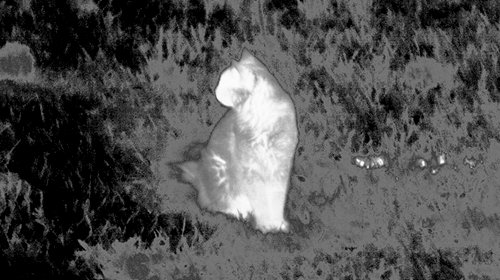
Best for high-magnification study: ATN Binox-6 384x288
The ATN Binox-6 Dual 384x288 is the best pick for high-magnification study because its 5.5-44x range climbs far higher than the 640's top end. When your work is sitting still and examining distant, stationary subjects, that extra zoom lets you study detail from a ridge or a field edge that the 640 simply cannot reach in magnification. It trades some sensor resolution for the added power, but on faraway subjects that reach often matters more. If you routinely glass big, open country and spend more time observing than chasing, that top-end zoom becomes the feature you use most, and the slightly lower resolution rarely holds you back on a subject that is standing still long enough to study carefully.
Same platform, more zoom
This variant keeps the full Binox-6 toolkit: the 4-in-1 view, the 4K day sensor, the built-in 1000-yard rangefinder, SharpIR, DeFog, Wide Dynamic Range, the Smart IR illuminator, GPS and compass, dual swappable batteries and IP67 waterproofing. A fast F/0.9 thermal objective helps it gather heat, and detection range is 2750m. Its 5.5x low end is narrower than the 640's 3x, so it is more of a deliberate glass than a fast sweeping scanner. Who it's for: observers who prize maximum zoom on distant subjects. Not for: anyone who wants the widest, fastest scanning view.
When the extra zoom is worth it
The 384's high magnification pays off in wide-open country where subjects sit far out and hold still long enough to study. Glassing a distant field edge, a far ridge, or an opposite hillside, that 44x top end lets you judge size, count animals and read behavior at ranges where the 640 would run out of zoom. The trade is fewer dots behind the picture, so pushed all the way in the image is softer than the 640's, but for a still subject you are examining rather than a running one you are tracking, the extra reach usually wins. Because it shares the same weight, battery and weatherproofing as the 640, choosing it costs you nothing but that top-end clarity.
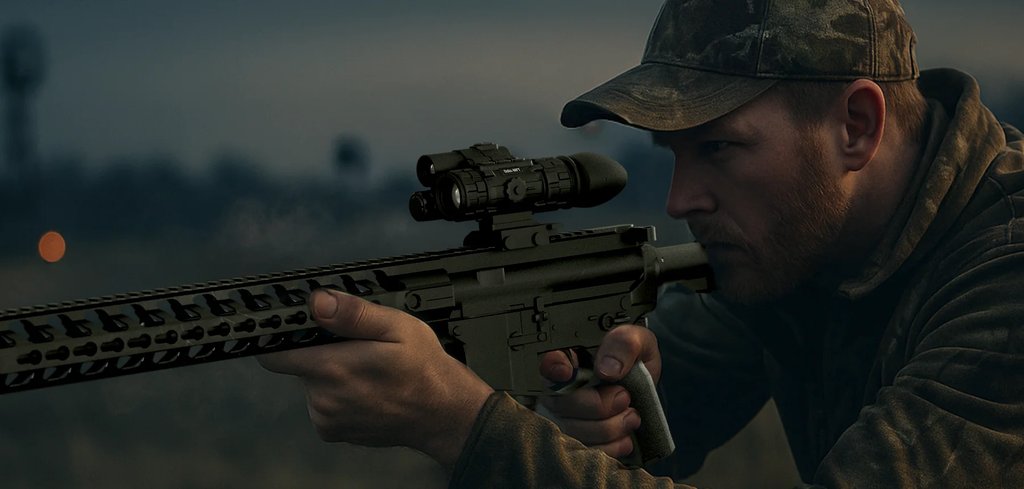
What sets great thermal binoculars apart
Great thermal binoculars separate themselves from the merely adequate in three quiet ways: image quality when you zoom, how well they hold up in bad weather, and how long you can actually use them. Anyone can make a device that shows a blob of heat in perfect conditions. The Binox-6 earns its place because the picture stays honest when you push it. A 640 sensor and SharpIR keep detail together at magnification, a low <=15mK NETD keeps contrast from washing out in humid or foggy air, and Wide Dynamic Range balances a hot animal against a cold background so neither disappears. DeFog mode cuts through the mist that would blind a lesser optic. Those are the moments that decide whether you identify a subject or just wonder about it.
The other half is endurance and ergonomics. A brilliant image is worthless if the device is dead an hour into the night or too uncomfortable to hold. The Binox-6 answers both: dual replaceable 18650 batteries give about 8 hours and swap in seconds, IP67 waterproofing shrugs off rain and snow, and the two-eye design keeps long sessions from wearing you out. Add GPS, a compass, Picture-in-Picture and the ATN Connect 6 app, and you get a device that not only sees well but records, marks and shares what it sees, all through software that keeps improving. That combination of picture, toughness and staying power is exactly what earns the top spot.
Understanding the specs that matter
A few specs tell you almost everything about how a thermal binocular will perform, and the Binox-6's numbers are worth understanding rather than skimming past. Take them one at a time and the choice gets clear.
- Sensor resolution — This is the count of heat-sensing pixels, and it works exactly like megapixels on a camera. A 640x512 sensor has far more dots than a 384x288, so you can zoom in further before the picture turns into blocks. It is the single spec that most affects how clearly you can identify what you spotted.
- NETD — This measures how small a temperature difference the sensor can detect, in millikelvin. A lower number is better, and the Binox-6's <=15mK rating means it separates faint heat from a cool background even in humid, foggy or rainy air, when a higher-NETD unit would show mush.
- Magnification — Base magnification sets how wide your view is, and a wider view makes it easier to scan and follow a moving subject. Higher zoom reaches farther but narrows that view, so the 640's 3x low end scans fast while the 384's 44x top end studies distant subjects.
- Detection range — This is how far the unit can pick up heat at all, 3100m on the 640. It is a spotting distance, not an identification distance; you will recognize what a subject is at a shorter, closer range.
- Refresh rate — A 50 Hz refresh redraws the image fifty times a second, which keeps a moving animal smooth instead of smeared, so you can track and judge it while it walks.
- Battery — Dual replaceable 18650 cells give about 8 hours and swap in seconds, so a long night never ends because of a dead battery.
How to choose the best thermal binoculars
Choose your thermal binoculars by matching resolution and magnification to how you glass, then lean on the shared features that make long sessions easy. Both Binox-6 variants run the same 4-in-1 platform, so the real question is picture detail versus top-end zoom.
- Resolution — Higher resolution (640 vs 384) puts more dots in the picture, so you can zoom in further before it turns blocky. The 640 is the clearer all-round choice.
- Magnification — Base magnification sets your field of view; higher max zoom reaches farther but narrows the view. The 640's 3x scans wide; the 384's 44x studies distant subjects.
- Detection range — Longer detection range means you pick up heat from farther away: 3100m on the 640, 2750m on the 384.
- The 4-in-1 view — Day, Night, Thermal and Twilight modes in one device mean you never swap optics as the light fades from afternoon to dark.
- Rangefinder — Both carry a built-in laser rangefinder to 1000 yards, so you range without a separate tool.
- NETD and weather — A low <=15mK NETD keeps the image clean in humid or foggy air, and IP67 waterproofing plus DeFog handle real weather.
For nearly everyone, the 640 is the answer, striking the best balance of clarity, scanning speed and reach. Choose the 384 only if your use is defined by studying very distant subjects at high power. Compare both on ATN's thermal binoculars page, and if you hunt, our companion piece on thermal binoculars for hunting digs deeper.
How the two Binox-6 variants stack up head to head
The 640 and 384 Binox-6 variants differ in exactly two things that matter: sensor resolution and top-end magnification, and they pull in opposite directions. The 640 gives you more dots in the picture, so detail survives as you zoom and you can identify a subject at a moderate distance with confidence. The 384 gives you far more zoom, up to 44 power, so you can enlarge a faraway subject much more, but with fewer dots behind that image. Think of it as the difference between a sharp photo you can crop and a photo you can blow up bigger but softer. For a general user who wants clarity and quick scanning, the 640 wins. For a specialist who parks on a ridge to study distant subjects at extreme magnification, the 384 has a real edge.
Everything else is a wash, which makes the decision cleaner than it looks. Both weigh essentially the same, around 1.6 lbs, both run the same 4-in-1 view, the same 4K day sensor, the same built-in rangefinder, the same <=15mK NETD, the same dual swappable batteries and the same IP67 build. So you are not weighing a long list of compromises; you are answering one question. Do you value the clearest, most versatile all-round picture, or the highest possible zoom on distant targets? Most people answer the first way, which is why the 640 is our overall pick, but the 384 remains the right tool for a real, if narrower, job.
Who thermal binoculars are really for
Thermal binoculars suit anyone who spends real time watching in low light, not just hunters. Predator and hog hunters lean on them to locate and count game before a stalk, but the same two-eye comfort and 4-in-1 versatility serve scouting a property before season, checking livestock or a perimeter after dark, watching wildlife without disturbing it, and search work where finding a warm body fast is the whole job. Because the Binox-6 sees in daylight and twilight as well as full dark, it is not a one-trick device you only pull out at midnight; it earns its keep from the afternoon glass through the last hour of legal light and beyond.
The reason binoculars, specifically, matter for these users comes down to time behind the glass. If you only ever take quick looks, a monocular is lighter and cheaper. But the moment your use involves settling in and watching, minutes stretch to hours, two eyes stop being a luxury and become the difference between staying sharp and giving up early. Add the built-in rangefinder, GPS marking and onboard recording, and the Binox-6 stops being just an optic and becomes the tool you plan the outing around. That breadth of use, comfort over long sessions, and all-in-one capability is why it tops the list rather than any single spec.
It also helps that the Binox-6 grows with you. Because it runs the ATN Connect 6 app and receives firmware updates, the device you buy today keeps improving without a hardware swap, and it slots into the same ecosystem as other ATN optics if you add one later. For a buyer weighing a real investment, that longevity matters as much as any spec on the sheet: you are not buying a gadget that feels dated in a season, you are buying into a platform built to stay current. Between the picture quality, the toughness, the all-in-one feature set and that staying power, the Binox-6 is the thermal binocular we point people to first.
How we picked these ATN thermal binoculars
A quick word on method, because "best" should mean something. The shortlist is drawn only from ATN's latest 6th-generation range, and each model was judged on the same measuring stick: resolution and NETD for image clarity, detection range and refresh rate for spotting and tracking, plus weight and battery for a full night out — all viewed through the lens of best thermal binoculars. When one pick trades sharpness for reach or price, that is stated openly. This is a manufacturer comparing its own current line, so the honest trade-offs and the "who it's not for" notes matter more than any single label.
Frequently Asked Questions
What are the best thermal binoculars for 2026?
The ATN Binox-6 Dual 640x512 are the best thermal binoculars for 2026. They combine a sharp 640 sensor, a 4-in-1 Day/Night/Thermal/Twilight view, a built-in laser rangefinder and two-eye comfort, with a 3100m detection range and dual swappable batteries that last the night.
Why choose binoculars over a thermal monocular?
Two eyes on the glass reduce fatigue and restore natural depth perception, which matters when you glass for long stretches. A monocular is lighter and more pocketable for quick looks, but for extended scanning and comfortable observation, binoculars like the Binox-6 are easier on your eyes.
What does the 4-in-1 view do?
The Binox-6 switches between Day, Night, Thermal and Twilight vision in one device. In daylight and at dusk it shows a sharp 4K color picture so you can identify subjects, and after dark the thermal channel reveals heat. You never swap optics as the light changes.
Do these binoculars have a rangefinder?
Yes. Both the 640 and 384 Binox-6 variants include a built-in laser rangefinder that reads distance to 1000 yards with plus-or-minus one meter accuracy on an eye-safe 905nm laser. You spot something, press a button, and know exactly how far away it is.
640 or 384 resolution, which should I get?
Choose the 640 for the clearest all-round picture and fast, wide scanning, which suits most people. Choose the 384 only if you specialize in studying very distant, stationary subjects, because its 5.5-44x reaches a much higher top-end zoom. The 640 zooms in cleaner; the 384 zooms in farther.
How long do the batteries last?
The Binox-6 runs about 8 hours on its dual 18650 batteries, enough for a full night. Because the cells are replaceable, you can carry charged spares and swap them in seconds, so a long session never ends because of a dead battery.
Are thermal binoculars waterproof?
The ATN Binox-6 is IP67 waterproof, so rain and snow are no problem, and its DeFog mode plus a low <=15mK NETD keep the picture clean in humid, foggy air. Thermal performs well in poor visibility because it reads heat rather than reflected light.
Do thermal binoculars work in daylight?
Yes. The Binox-6 is a 4-in-1 optic, so its 4K day sensor gives a sharp full-color image in daylight and at dusk, and its thermal channel takes over in the dark. That means it is not a nighttime-only tool; you can use it around the clock and through every light level in between.
If you want thermal glass you can live behind for hours, the ATN Binox-6 Dual 640x512 is the all-around best. Two eyes make long sessions comfortable, the 4-in-1 view follows the light from afternoon to full dark, and the built-in rangefinder answers the distance question instantly. If your world is studying far-off subjects at maximum zoom, the 384 variant reaches higher. Compare both on ATN's thermal binoculars page, match the sensor to how you glass, and step into the dark with the picture you can trust.
Created: July 7, 2026 · 08:31:01 UTC