The best military grade thermal monocular 2026 is not one device for everyone. Seasons change what you ask of a thermal optic. A humid summer night hides heat in warm ground clutter; a still winter dawn puts a bright target against a cold, quiet background; spring and fall sit somewhere in between. That shift is exactly where the two ATN units in this comparison split apart. The ATN Odin MFT LRF adds a built-in laser rangefinder to the same 4-in-1 tactical body as the standard ATN Odin MFT, and that one difference matters more in some conditions than others.
Verdict: the ATN Odin MFT LRF is the stronger military grade thermal monocular for 2026 when your work changes with the seasons, because its built-in laser rangefinder gives you an exact distance in any light or terrain. Choose the standard ATN Odin MFT if you want the same 640x480 tactical core, a lighter body, and you range by known landmarks instead.
ATN Odin MFT LRF vs ATN Odin MFT at a glance
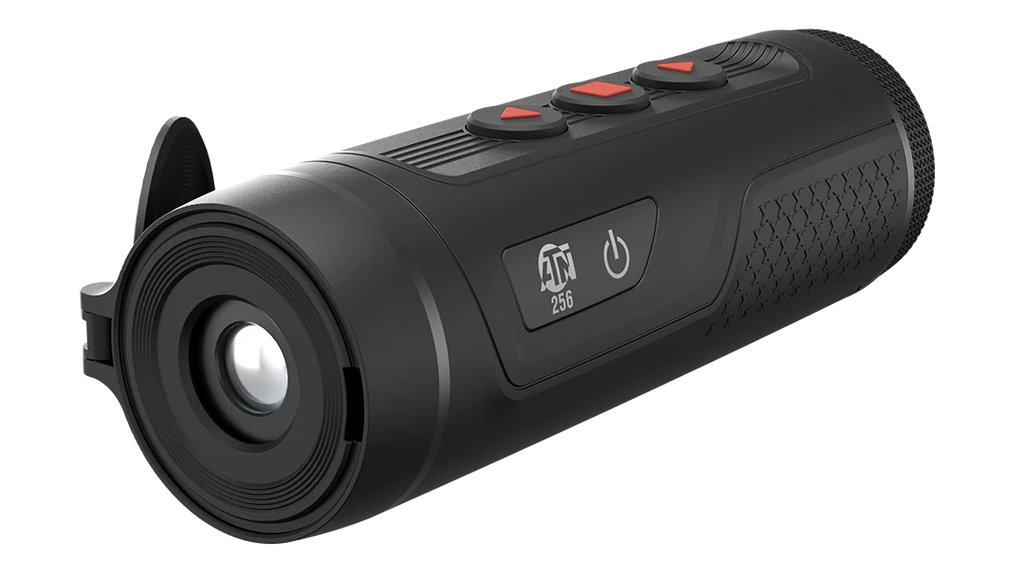
Both units share the same 640x480 thermal core, the same 1-8x magnification, and the same 4-in-1 body that works as a clip-on, weapon sight, helmet monocular, or handheld. The table below lays the two side by side so the real difference stands out: the LRF model carries an integrated laser rangefinder, and it weighs a touch more for it.
A quick read of the shared specs before we split them. The 640x480 resolution is the pixel count of the thermal sensor; think of it like the difference between a standard and a high-definition screen, where more pixels let you tell a person from a post at a longer distance. The ≤15 mK NETD is thermal sensitivity: it is the smallest temperature gap the sensor can see, and a low number like 15 millikelvin means a cleaner, higher-contrast picture when heat differences are faint. The 1700 m detection range is how far the unit can pick up a warm signature at all, which is spotting that something is there, not confirming what it is.
How the ATN Odin MFT LRF works
The ATN Odin MFT LRF works by pairing a 640x480 thermal core with a laser rangefinder built into the same housing, so a single press tells you the exact distance to whatever you are looking at, out to 1000 m with about a meter of accuracy. That number feeds the on-board ballistic calculator, which holds nine profiles, so when the unit is running as a weapon sight the aim point is already corrected for the range it just measured. In cold-weather work, where a bright target can sit against a flat white background with no reference points, that laser range is often the only reliable way to judge distance. It also carries SharpIR AI image enhancement to sharpen edges, Picture-in-Picture for a zoomed inset, and Recoil Activated Video when mounted on a rifle.
How the ATN Odin MFT works
The ATN Odin MFT works the same way at its core, minus the laser. It runs the identical 640x480 sensor, the same ≤15 mK sensitivity, and the same 1-8x zoom in a 4-in-1 body that clips onto a rifle, mounts to a helmet, or drops into a hand. Without the rangefinder module it is about 40 grams lighter and adds a Zeroing Freeze feature that locks the reticle while you make adjustments. You still get the nine-profile ballistic calculator, but you feed it distances yourself, estimated from known landmarks or a separate rangefinder. In dense summer cover with plenty of reference objects at known ranges, that trade is easy to live with.
When to choose the ATN Odin MFT LRF
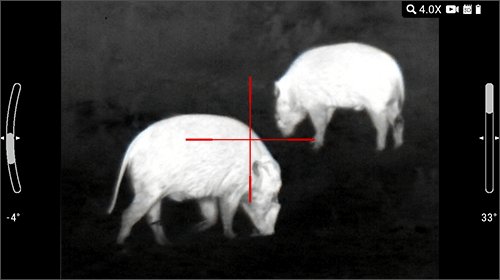
Choose the ATN Odin MFT LRF when the range matters and the season fights you. Winter and late fall are its home turf: cold, open ground gives you few landmarks to gauge distance from, and a laser range removes the guesswork in a second. It is also the better pick if you run the unit as a weapon sight across changing conditions, because an exact distance plus the ballistic calculator keeps your hits honest whether the target is at 150 or 600 meters. The extra 40 grams is the price of that certainty. If your role puts you on cold, featureless terrain or demands first-round accuracy, the LRF earns its keep.
When to choose the ATN Odin MFT
Choose the standard ATN Odin MFT when you want the lightest version of this tactical core and you can judge distance without a laser. Warm-season work in cover, where trees, fence lines, and field edges give you plenty of range references, plays to its strengths. It is also the pick if you value the Zeroing Freeze workflow and want to shed every gram off a helmet-mounted setup. You keep the full 640x480 image, the ≤15 mK sensitivity, and the same 4-in-1 flexibility. What you give up is the one-press distance readout, which in dense summer terrain you may simply not need.
Our recommendation
For a monocular you will carry across all four seasons, the ATN Odin MFT LRF is our pick as the best military grade thermal monocular for 2026. The built-in rangefinder is the one feature you cannot bolt on later, and it pays off most in the cold, open conditions where distance is hardest to eyeball. If your work stays in warm cover with reliable landmarks, the standard ATN Odin MFT gives you the same image at a lighter weight. Either way you are inside ATN's current 6th-gen line; compare both, plus the rest of the family, on the ATN thermal monoculars category page before you commit.
How we compared them
We compared these two ATN units against what a year-round tactical user actually asks of a monocular, and we only looked at the current 6th-gen Odin MFT line. The criteria were the ones that change with the season: sensor resolution and ≤15 mK NETD for how clean the image stays when heat contrast drops, detection range for how early you spot something, the presence or absence of the laser rangefinder for judging distance on open ground, refresh smoothness for tracking movement, and weight and battery for how long you can stay out. Honest trade-off: the two share so much that this really comes down to whether you need laser ranging, and whether 40 extra grams is worth it. Who it is NOT for: if you never run the unit as a sight and always work in landmark-rich terrain, the LRF is more device than you need, and the standard model is the smarter buy. This is an in-house comparison of ATN's own range, not an independent lab test; check the specs against your own mission profile.
Frequently Asked Questions
What makes the ATN Odin MFT LRF the best military grade thermal monocular for 2026?
It combines a 640x480 thermal sensor, ≤15 mK sensitivity, and a 4-in-1 tactical body with a built-in laser rangefinder. That last feature gives you an exact distance to any target in a single press, which is the piece the standard Odin MFT lacks and the one that matters most on open, seasonal terrain.
How is the ATN Odin MFT LRF different from the standard ATN Odin MFT?
The two share the same sensor, sensitivity, magnification, and detection range. The LRF adds an integrated laser rangefinder accurate to about a meter out to 1000 m and weighs roughly 40 grams more. The standard model is lighter and adds a Zeroing Freeze feature but ranges by landmark instead of laser.
Why does the season change which monocular I should pick?
Cold, open winter terrain gives you few landmarks to judge distance from, so the laser rangefinder on the LRF is a real advantage. Warm-season work in cover has plenty of range references, so the lighter standard Odin MFT can hold its own without the laser.
Can either ATN Odin MFT be used as a weapon sight?
Yes. Both are 4-in-1 units that work as a clip-on, a weapon sight, a helmet monocular, or a handheld. Both also carry a nine-profile ballistic calculator, but the LRF feeds it an exact measured range automatically while the standard model relies on distances you estimate yourself.
What does the ≤15 mK NETD figure mean in the field?
NETD is the smallest temperature difference the sensor can detect, measured in millikelvin. A low number like 15 mK means the image stays clean and high-contrast even when heat differences are faint, such as a cooling animal at dawn. Both Odin MFT units share this figure.
How long do these ATN monoculars run on a charge?
Both units run about eight hours on a single 18650 battery, or roughly an hour on a CR123. Because the battery is user-replaceable, you can hot-swap a spare to extend your time in the field across a long night.
Ready to lock in the right tactical thermal for the year ahead? If your work takes you onto cold, open ground where an exact distance is hard to eyeball, step up to the ATN Odin MFT LRF and let the built-in rangefinder do the math. If you stay in warm cover and want the lighter body, the standard Odin MFT delivers the same image. See both alongside the rest of the current 6th-gen family on the ATN thermal monoculars page and match the unit to how your season really plays out.
Created: August 10, 2026 · 09:39:31 UTC