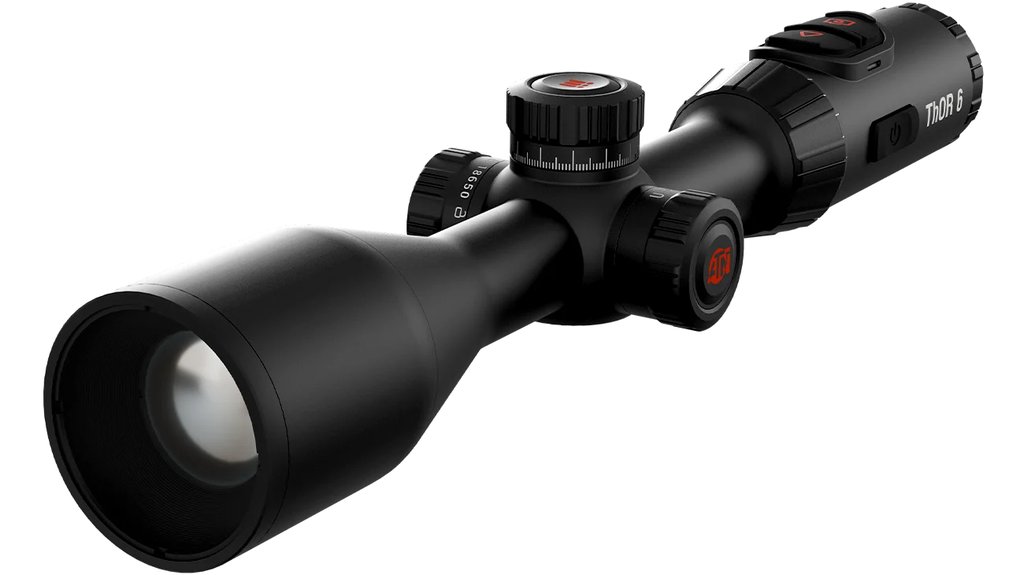
Picking the best long range thermal scope from ATN's ThOR 6 line is easiest when you test each variant against the terrain you shoot. Open prairie, a timber edge and a river bottom each reward a different balance of reach, field of view and weight. This comparison lines the three ThOR 6 variants up terrain by terrain. The light baseline is the ThOR 6 384x288 2.5-20x, compared against its two 640 siblings from ATN's thermal scope line.
Verdict: on open prairie the 3-24x's reach wins, at a timber edge the 2-16x's wide low end and 640 clarity win, and in a tight river bottom the light 384 is the easiest to work. No single variant tops every terrain — match the scope to the ground.
Why terrain, not spec sheets, decides
The three ThOR 6 variants do not have a single ranking that holds everywhere, because ground changes which spec you lean on. Wide-open country turns detection range and top-end zoom into the deciding traits, so a longer-reaching body pulls ahead. A busy boundary between field and cover flips that — now a wide low end and fast target confirmation matter more than raw reach. Tight, brushy ground erases distance almost entirely and rewards whatever is lightest and quickest to swing. The specs never change between these places; what changes is which of them you are actually using. The three terrain sections below take that idea one landscape at a time, then close with the single scope to pick if your ground refuses to stay one type.
On open prairie: reach is king
Flat, far ground is where detection range matters most, and the ThOR 6 640x512 3-24x leads with 3650m and the tightest high-end zoom. The ThOR 6 640x512 2-16x follows closely at 3100m, and the ThOR 6 384x288 2.5-20x covers prairie work to 2300m — plenty for many shooters, though the shortest of the three.
The prairie verdict
If your prairie sight lines genuinely stretch past a couple thousand metres, the 3-24x is the clear terrain winner. If they do not, the 2-16x's slightly shorter reach is invisible in practice and it costs less.
On the ground
You set up on a rise with nothing but flat grass rolling out ahead. A heat signature blooms at the horizon; on the 3-24x you crank toward the 24x top end, the 640 sensor holds the shape together, and its 3650m detection means you spotted it long before it closed. There is no cover to break your view, so the whole night is about seeing farther than anything can approach — exactly the flagship's job. The 2-16x would still catch that signature at 3100m, only sitting a touch smaller in the frame at the extreme. On wide-open prairie, reach and top-end magnification are the whole game, and that is where the 3-24x lives.
At a timber edge: the low end wins
Where field meets timber you scan a busy, close boundary before a shot opens up, and a wide low end beats raw reach. The 2-16x takes this terrain: its 2x bottom end keeps the whole edge in view, and the full 640 sensor confirms an animal the moment it steps into the open. The 3-24x's tighter low end makes scanning the near edge fiddlier.
The timber-edge verdict
The 2-16x is the terrain winner here, pairing the widest scanning field with 640 identification. The 384 is a fine lighter alternative if you do not need the top sensor; the flagship's strengths are simply wasted at a close edge.
On the ground
You tuck in where a cut field runs up against dark timber, watching the seam for movement. On the 2-16x you leave it near the 2x bottom end and the whole edge sits in the frame at once, so nothing slips through the gap while you wait. The moment an animal steps from the treeline the 640 sensor firms it up instantly and you make the call as it clears into the open. On the 3-24x that same near edge is harder to hold — the tighter low end narrows what you can watch at a glance. The 384 keeps the whole edge in view too and is lighter to swing along the line, just without the top sensor. Here the wide field beats every metre of reach.
In a river bottom: light and quick wins
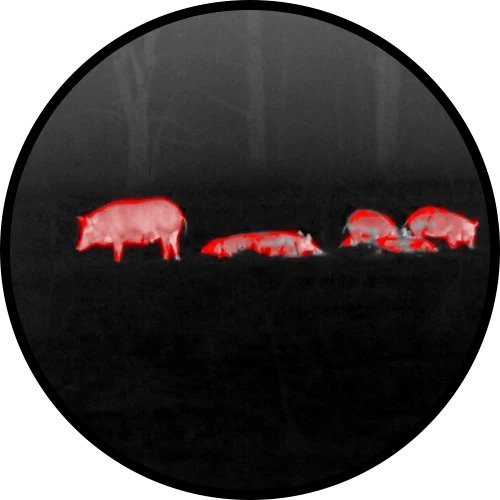
Tight, brushy river bottoms mean short sight lines and a lot of moving and repositioning, which rewards the lightest rig. The ThOR 6 384x288 2.5-20x at 790 g / 1.74 lbs is the easiest to work here, and its 2300m detection far exceeds the distances a bottom actually gives you.
The river-bottom verdict
The 384 wins this terrain on weight and handling; its six palettes also help in the cluttered thermal picture heavy cover produces. The 2-16x is a solid step up if you want 640 clarity and hot-swap power, but the 3-24x's reach is dead weight down in the brush.
On the ground
Down in the bottom you are threading brush, ducking limbs and repositioning every few minutes as the channel bends — you carry the rifle far more than you rest it. The 384 at 790 g / 1.74 lbs is the body you feel least through all that movement, and swinging it onto a close signature is quick. Sight lines here rarely reach a fraction of its 2300m detection, so nothing about its reach holds you back, while six palettes help you pull a warm shape out of the heat-cluttered tangle of a river bottom. Shoulder a 640 variant at 830 g / 1.83 lbs and the forty-gram difference starts to tell over a night of constant motion. In tight cover the lightest, quickest scope wins, and that is the 384.
Matching one scope to varied terrain
Most hunters do not shoot a single kind of ground — a season runs from open prairie to timbered edges to brushy bottoms, sometimes in one night. If you have to pick one ThOR 6 to carry across all of it, the 640x512 2-16x is the least-wrong answer: its 3100m detection covers all but the most extreme prairie shots, its wide 2x low end keeps a timber edge in full view, and while it gives up the 384's forty-gram weight saving in the bottom, its swappable 18650 offsets that with open-ended runtime. The 3-24x is the specialist you reach for when the ground is genuinely all wide open, and the 384 is the one you carry when the whole night will be spent moving through cover. When the terrain varies more than it stays fixed, the 2-16x is the scope that never feels badly matched — and SharpIR AI, the 50 Hz refresh and the <=15mK NETD keep the picture identical wherever the rifle points.
Which variant wins your terrain?
- Open prairie — the 3-24x if you truly shoot far, otherwise the 2-16x.
- Timber edge — the 2-16x, for its wide low end and 640 clarity.
- River bottom — the 384, lightest and quickest to work in tight cover.
- Mixed ground — the 2-16x is the best single compromise across all three.
- Constant across terrain — SharpIR AI, 50 Hz refresh and <=15mK NETD never change.
How we compared them
This is an in-house, ATN-vs-ATN comparison of the ThOR 6 line tested against terrain, not an independent lab review, so use it to weigh the variants against your ground and confirm the numbers against your real distances. We held the comparison to the specs terrain actually exposes — detection range, magnification band and field of view, sensor resolution and weight — across only the current 6th-generation line. The honest trade-offs are terrain-driven: the reach that wins the prairie is wasted in the bottom, and the light body that wins the bottom gives up range on the prairie. Who this is not for: a buyer wanting one flat answer instead of matching the scope to where the rifle points.
Frequently Asked Questions
Which ThOR 6 is best for open prairie?
The 640x512 3-24x, with a 3650m detection range and the tightest high-end zoom, if your prairie sight lines genuinely stretch that far. If not, the 2-16x's 3100m is effectively identical in practice.
Why is the 2-16x better at a timber edge?
Its wide 2x low end keeps the whole boundary in view while you scan, and the 640 sensor confirms an animal the instant it steps clear — where the 3-24x's tighter low end makes scanning the near edge harder.
Is a 384 sensor good enough in a river bottom?
Yes. Sight lines in a bottom are short, so the 384's 2300m detection is far more than you need, and its lighter 790 g body is the easiest to move and swing in tight cover.
Which variant handles mixed terrain best?
The 640x512 2-16x. It is the strongest single compromise — near-flagship reach, a wide scanning low end and 640 clarity — so it rarely feels wrong on any ground.
Does the shared tech change between terrains?
No. SharpIR AI, the 50 Hz refresh and the <=15mK NETD are identical across all three variants, so image quality stays constant; terrain only changes which reach, field of view and weight you want.
Do heavy scopes matter in tight terrain?
They do. In a river bottom you reposition constantly, and the 384's forty-gram weight saving over the 640 variants is a real advantage when you are moving more than sitting.
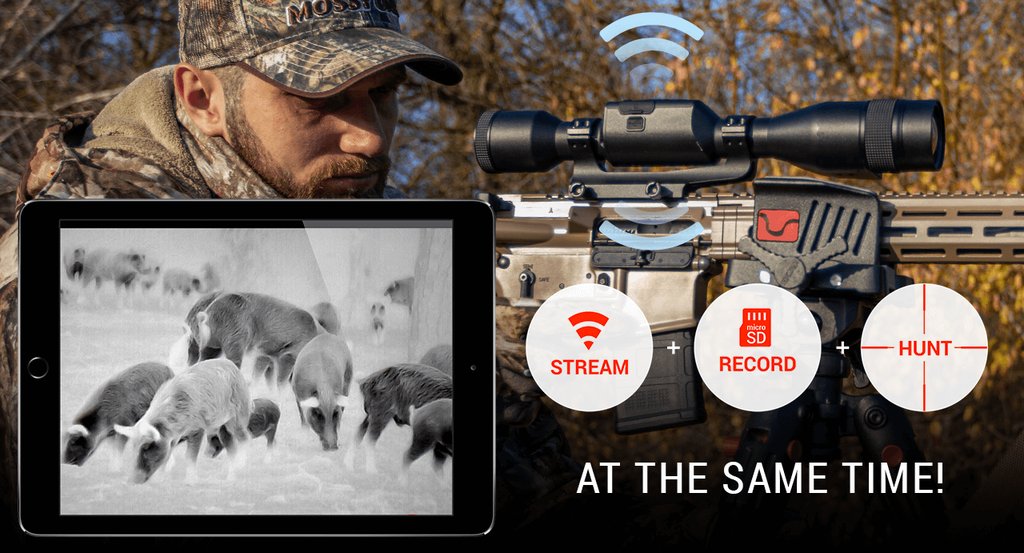
Matched a variant to your ground? Look closer at the light, quick ThOR 6 384x288 2.5-20x, or line it up against the rest of ATN's thermal scopes to weigh reach, field of view and weight across your terrain. Whichever you pick, the shared SharpIR AI and Connect 6 app keep the experience consistent everywhere you hunt.
Created: August 5, 2026 · 19:53:40 UTC