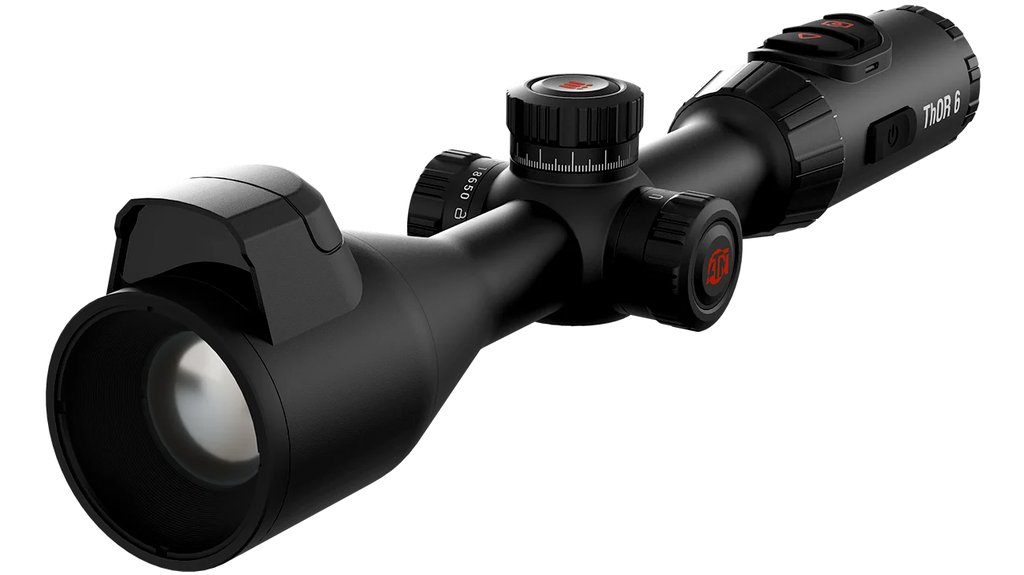
What you hunt at distance should pick your glass, because a coyote at 400 yards, a hog crossing a far field and a slow property watch each ask something different of a scope. This roundup sorts ATN's 6th-generation thermal scopes by the job they do best, to land you on the best long range thermal scope for your quarry. The do-most anchor is the ThOR 6 640x512 2-16x, and every pick is an ATN model.
Best for far, open predator work: ThOR 6 640x512 3-24x — the longest 640 detection in the line.
Best for light-duty distance work: ThOR 6 384x288 2.5-20x — lighter and more affordable for closer long shots.
Why the job, not the biggest number, should decide
It is tempting to chase the longest detection range on the box, but the animal you pursue is a better guide. Coyotes come to a call across open ground and demand quick target acquisition and reliable identification at distance. Hogs move in groups and cover, so you need to sort one animal from a warm pile fast. Watching property at range is patient work that rewards battery life and a wide scan over raw magnification. Every ThOR 6 here shares the fundamentals for long-range work — a 640-class sensor tech, SharpIR AI, a 50 Hz refresh, an <=15mK NETD and roughly 9 hours of runtime — so the right pick is simply the one built for your quarry.
Best for coyotes and hogs at range: ThOR 6 640x512 2-16x
The ThOR 6 640x512 2-16x is our pick for the hunter who works both coyotes and hogs at distance. The full 640 sensor identifies an animal cleanly out to a 3100m detection range, the wide 2x low end sorts one hog from the group fast, and the replaceable 18650 batteries keep you in the stand for the long calls coyotes demand.
How it fits the job
For a called coyote you need to acquire and confirm quickly; the wide low end and Hot Point Tracking do exactly that. For hogs, the 640 clarity lets you pick your animal out of a moving sounder before you commit. It is the do-most scope for the two jobs that fill most nights.
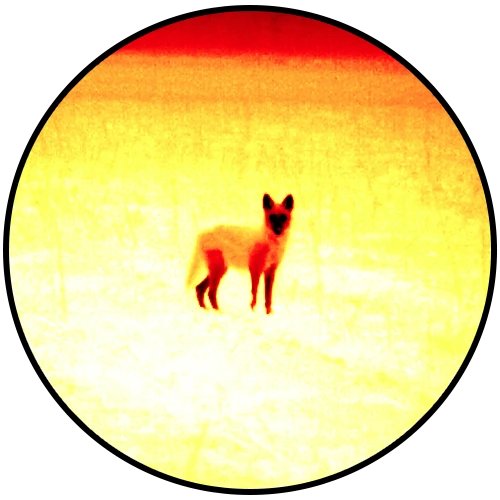
Best for far, open predator work: ThOR 6 640x512 3-24x
When the job is predators on wide-open ground, the ThOR 6 640x512 3-24x and its 3650m detection range let you spot and identify far out. The tighter high-end zoom is built for the long, deliberate shots open predator hunting produces.
How it fits the job
Open predator work is a game of seeing first. The extra reach means you pick up an incoming coyote earlier and have time to read it and set up. On closer or brushier jobs that reach is wasted, which is why it is the specialist rather than the everyday pick.
Best for light-duty distance work: ThOR 6 384x288 2.5-20x
If your long shots are real but not extreme, the ThOR 6 384x288 2.5-20x handles the job at 790 g / 1.74 lbs and detection to 2300m. Six palettes help you read your quarry against varied ground, and the lighter body suits jobs where you carry more than you sit.
How it fits the job
For a hunter whose distance work tops out at mid-long range, the 384 does everything needed without the flagship outlay or weight. It is the sensible pick when the job does not truly demand a 640 sensor.
Property watch and the patient job
Not every long-range job is a chase. Watching a property line for whatever crosses it is slow, deliberate work, and it asks different things of a scope than a called coyote does. Here you are not sprinting to acquire — you are sitting, sweeping, and staying ready for hours, so battery life and a comfortable wide scan matter more than the last stretch of magnification. The 2-16x's wide low end lets you hold the whole approach in the frame and read movement early, while the replaceable 18650 batteries mean a night-long watch never ends on a dead cell. The 640 sensor still earns its place when something finally shows: you can confirm what it is at distance before you decide whether it is your job at all. For pure watch duty the 384 covers the same task at less weight, but when the property is large and the crossings are far, the 640 clarity is what turns a distant heat mark into a confident identification rather than a guess.
What a real coyote and hog night looks like
You set up on the downwind edge of a field with a call going, and the first job is patient scanning — a wide low end on the 2-16x lets you sweep the whole tree line without living at high zoom. A coyote commits and comes fast at an angle; now acquisition is everything, and Hot Point Tracking keeps the warmest mark flagged while you settle the reticle and confirm it is your target before you commit. Later the same night you move to a sounder of hogs feeding along a creek. This is the opposite problem: not one animal in the open but a warm, shifting pile where you must pick a single hog cleanly. The 640 sensor holds enough detail as you push zoom that the individual animals separate instead of blurring into one heat blob, and the 50 Hz refresh keeps them crisp as they mill. One rig, two very different jobs, and the pick is the scope that does both without a compromise you notice in the field.
Reading different animals in thermal
Quarry does not all glow the same. A coyote is lean and long, so it reads as a compact, hot outline that moves with purpose — easy to spot against open ground but quick to leave it, which is why fast acquisition matters more than magnification. A hog is a dense, broad heat mass, often one of several packed close together, so the challenge is separation rather than detection; the 640 clarity is what lets you assign a shot to one animal in the group. Deer sit in between — a large, softer signature that a lower NETD keeps distinct from cool brush at distance. The trick with a sounder or a group is to let the full 640 sensor and the <=15mK NETD do the sorting for you, reading posture and spacing rather than treating the pile as a single target.
Why acquisition speed matters
A called coyote gives you seconds, not minutes, and a spooked sounder scatters just as fast. The 2x low end on the 2-16x means you can find and frame the animal without hunting for it at high zoom, and Hot Point Tracking flags the mark so your eye goes straight to it. Pair that with the 50 Hz refresh and a moving target stays smooth instead of stuttering, so the window between seeing and confirming closes fast — which is often the difference between a shot and a story.
Confirming the target before you commit
Speed is only half the job; certainty is the other half. On mixed ground a warm shape at distance could be your quarry or it could be stock, a pet, or something you have no business shooting, and thermal strips away the colour and detail your eye normally leans on. This is exactly why the 640 sensor matters on the do-most 2-16x: as you push zoom it holds enough shape and posture that you can read what the animal actually is rather than guessing from a blob. Recoil Activated Video then captures the moment for review afterwards, so a called-in night is not just shots taken but a record you can learn from. Fast to see, sure before you fire, and logged for later — that is the workflow the quarry rewards.
How to match a long range thermal scope to your quarry
- Chasing coyotes? Prioritise fast acquisition and a wide low end for called-in animals.
- After hogs? Lean on 640 clarity to pick one animal from a moving group.
- Watching property? Value battery life and a patient scan over raw magnification.
- Buy the reach the job needs — open predator work justifies 3650m; mixed work rarely does.
- Record with RAV — Recoil Activated Video captures every long shot for review.
How we picked these ATN thermal scopes
This is an in-house comparison of ATN's own thermal scopes sorted by use case, not an independent lab review, so use it to match glass to your quarry and confirm the specs against how you actually hunt. We judged detection range, sensor resolution, magnification band, field of view, weight and battery against three jobs — coyotes and hogs at range, far open predator work, and lighter distance work. Only the current 6th-generation ThOR 6 line was considered. The honest trade-off: the do-most scope is not the longest-reaching, and the specialist reach pick is overkill for mixed jobs. Who it is not for: a buyer who wants one number to rank scopes by, ignoring what they point the rifle at.
Frequently Asked Questions
What is the best long range thermal scope for coyote hunting?
The ThOR 6 640x512 2-16x. Its wide low end and Hot Point Tracking let you acquire a called coyote fast, while the 640 sensor confirms the target out to 3100m.
Do hogs need a different scope than coyotes?
The same 2-16x handles both well, but hogs specifically reward 640 clarity so you can pick one animal out of a moving sounder before you shoot.
When is the 3-24x the better job pick?
For far, open predator work where seeing first matters most. Its 3650m detection gives you time to read and set up on an animal you would otherwise catch too late.
Is the 384 enough for long-range property watch?
For patient watch work, yes — its 2300m detection and light body suit the job, and battery life matters more here than raw reach.
Should I just buy the longest detection range?
Not unless your job uses it. Open predator work justifies 3650m; coyote-and-hog nights and property watch are better served by the balance of the 2-16x or the value 384.
Can I record the shot for later review?
Yes. Every ThOR 6 here includes Recoil Activated Video and works with the Connect 6 app, so long shots are captured for review regardless of the job.
Ready to pick for your quarry? Start with the do-most ThOR 6 640x512 2-16x, or compare the full range of ATN thermal scopes to match reach and clarity to the job you run. Every model carries SharpIR AI and the Connect 6 app, so whatever you hunt, you are set up to see it and confirm it at distance.
Created: August 5, 2026 · 19:53:40 UTC