The best long range thermal monocular is the one that fits how you use it, whether you are ranging game across a canyon, sweeping a field edge or dropping a light scanner in a pack. This roundup sorts ATN's 6th-gen thermal monoculars by use case, led by the extreme-resolution BlazeHunter XD LRF with its built-in laser rangefinder.
Best for fast wide scanning: ATN BlazeTrek 6 640x512 1.5-12x — light, wide field for sweeping ground.
Best value scanner: ATN BlazeTrek 6 384x288 2.25-18x — strong zoom at the value tier.
Why your use case picks the monocular, not the spec sheet
Your use case picks the monocular because the same spec that helps one hunter is dead weight to another. A canyon hunter ranging shots needs resolution and a rangefinder; a walk-and-stalk hunter needs a light, wide scanner. ATN's 6th-gen line splits neatly along those uses: the BlazeHunter XD LRF for identification and ranging at extreme distance, and the BlazeTrek 6 pair for light, fast scanning. Resolution is the pixel count of the detector; more pixels turn a distant blob into an animal you can identify before you commit.
It helps to be honest about how you actually hunt, not how you imagine you might. If most of your time is spent moving and glassing to locate game inside a few hundred yards, resolution past a 640 sensor is detail you rarely use, and the weight it adds slows you down. If instead you set up and pick apart distant country, waiting to identify and range a specific animal before a long shot, then the extra pixels and the built-in rangefinder are the whole point. Matching the tool to the real job, rather than the biggest spec, is what keeps a monocular from being either too heavy or too limited for the way you work the field.
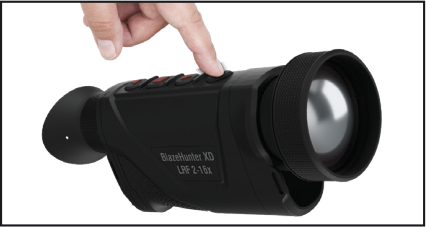
ATN BlazeHunter XD LRF 1280x1024 2-16x — for ranging long shots
The ATN BlazeHunter XD LRF 1280x1024 2-16x is built for the use case where you spot and range game at extreme distance, thanks to its 1280x1024 extreme-definition sensor, 3,400-meter detection range and a laser rangefinder accurate to about a meter. That sensor carries over a million more pixels than a 640 detector, so where a lighter scanner shows a warm smudge, the XD LRF shows an animal you can identify and range in one motion.
Why ranging changes the use case
Knowing the exact distance is what turns a long spot into a confident shot, because holdover depends on it. The built-in rangefinder means you never guess or carry a second device, and the dual-battery system runs 10-plus hours for the long glassing sessions that long-range hunting demands.
Features that serve the long-range hunter
- 1280x1024 sensor — identifies game at distances a 640 scanner cannot resolve.
- Built-in laser rangefinder — ranges to about a meter so holdover is precise.
- 3,400-meter detection range — spots heat far across open country.
- 10+ hour dual battery — runs through the longest glassing sessions.
Why ranging and resolution work together here
The rangefinder and the 1280 sensor are more useful together than either would be alone. A rangefinder tells you the distance, but you still need enough resolution to be sure you are ranging the animal and not a warm rock or a branch in front of it. The XD LRF's extreme-definition sensor resolves the target clearly enough to place the ranging reticle with confidence, then hands you an exact distance to about a meter. That pairing is what makes a long shot a considered decision rather than a guess, and it is the core reason this monocular fits the ranging use case so precisely.
Who it's for: long-range hunters who need to identify and range game at extreme distance. Who it's not for: hunters who want the lightest, simplest scanner for close, fast work.
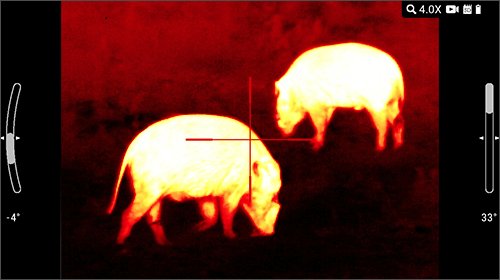
ATN BlazeTrek 6 640x512 1.5-12x — for fast wide scanning
The ATN BlazeTrek 6 640x512 1.5-12x fits the use case of the walk-and-stalk hunter who scans constantly and travels light. At 0.7 lb with a wide 22.8-degree field of view, it sweeps ground fast and stays comfortable in one hand for hours, while its 640 sensor keeps detail sharp out to 1,000 meters. Field of view is how much you see at once, and a wide one is the scanner's real advantage.
Why light and wide beats reach for scanning
When your job is to find game, not range it across a canyon, speed and comfort matter more than maximum reach. The BlazeTrek 6 640 covers the distances most spot-and-stalk hunts happen at, and its light body means you actually keep glassing instead of setting it down.
How the wide field speeds the scan
A wide 22.8-degree field of view means each sweep covers more ground, so you clear a hillside or a field edge in fewer passes and pick up movement sooner. For a mobile hunter that speed compounds over a night: less time per sweep means more country covered and more chances to spot game before it spots you. The six selectable color palettes help here too, letting you switch to whichever contrast makes a warm body jump out against the specific background you are scanning, from tree line to open grass. Fast, wide and easy to read is the walk-and-stalk hunter's whole game.
Who it's for: mobile hunters who scan often and want a light, wide, high-res tool. Who it's not for: those who must range and identify targets past 1,000 meters.
ATN BlazeTrek 6 384x288 2.25-18x — the value scanner
The ATN BlazeTrek 6 384x288 2.25-18x serves the value use case, keeping the same 0.7 lb body and feature set as the 640 with a 384 detector and a strong 18x zoom for pulling in distant heat. Think megapixels on a camera: fewer dots still make a clear picture at normal scanning range, and the difference only shows far out. It is the practical entry into long-range scanning.
For the use case of a hunter who mostly locates game and closes the distance on foot, the 384 model does the core job without extra bulk. Its 18x zoom lets you confirm a distant heat shape before committing to a stalk, and its light body means it rides easily in a bino harness or jacket pocket between sweeps. What it gives up is the resolution to identify game at the far edge and the built-in ranging of the flagship, which simply are not part of the walk-and-stalk job for most hunters.
Who it's for: value buyers who want a light scanner with strong zoom. Who it's not for: those who need top resolution or ranging at extreme distance.
How to match the monocular to your use case
Start from what you do with it, then pick the tier that serves that job. Be honest about the distances you actually range and identify at, and about how much weight you are willing to carry all night, because those two answers usually settle the choice on their own.
- Range and identify long shots: the BlazeHunter XD LRF 1280x1024.
- Scan fast and travel light: the BlazeTrek 6 640x512.
- Value scanning with zoom: the BlazeTrek 6 384x288.
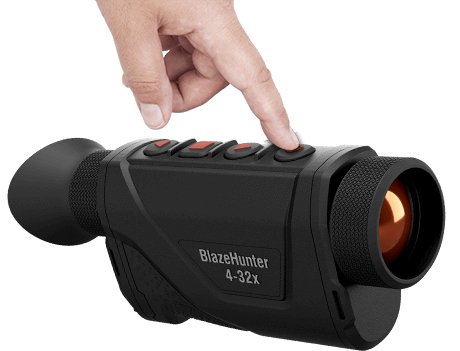
How we picked these ATN thermal monoculars
We sorted these by the job each one does best, weighing sensor resolution, NETD sensitivity, detection range, magnification, weight and battery against real use cases: ranging long shots, scanning fast on the move, and value glassing. Only ATN's current 6th-gen line was considered. This is an in-house comparison of ATN's own monoculars, not an independent lab review, so match the tool to your task before buying. Honest trade-off: the XD LRF's resolution and ranging add weight a light scanner does not carry, while the BlazeTrek 6 models top out at 1,000 meters, so the best pick is the one built for how you actually use it.
Frequently Asked Questions
Which ATN monocular ranges targets?
The BlazeHunter XD LRF. Its built-in laser rangefinder measures distance to about a meter of accuracy, so you get an exact number for holdover without carrying a separate rangefinder on long shots.
Do I need a 1280 sensor for long range?
If you must identify and range game at extreme distance, the 1280x1024 sensor resolves detail a 640 cannot at those ranges. For general scanning inside 1,000 meters, the 640 BlazeTrek 6 is plenty.
What monocular is best for spot-and-stalk hunting?
The BlazeTrek 6 640x512. At 0.7 lb with a wide field of view, it scans fast and stays comfortable in hand for hours, which suits mobile hunters who glass constantly on the move.
Is the value 384 model good enough for long range?
It is capable at closer long-range work. The 384 sensor and 18x zoom pull in distant heat well at normal scanning distances, though the 640 and 1280 models resolve more detail farther out.
How long do these monoculars run on a charge?
The BlazeTrek 6 models run roughly 6.5 to 8 hours on internal batteries, while the BlazeHunter XD LRF uses a replaceable dual-battery system good for 10-plus hours, built for long glassing sessions.
Are these the current ATN monoculars?
Yes, all three are part of ATN's current 6th-generation line. Buying one means you are not settling for outgoing stock, and it keeps its usefulness and support over time.
The best long range thermal monocular is the one that matches your job. If you range and identify game at extreme distance, the ATN BlazeHunter XD LRF 1280x1024 is built for it; if you scan fast and travel light, compare the BlazeTrek 6 models across the ATN thermal monocular range. Start from how you hunt, pick the tool that serves it, and every glassing session gets easier.
Created: August 5, 2026 · 19:53:40 UTC