The best long range thermal monocular for you depends on the season you scan in, because cover, cold and the distances you glass all shift through the year. This roundup lines up ATN's current 6th-gen thermal monoculars by season, from tight spring cover to open winter ground, led by the high-resolution BlazeTrek 6 640x512.
Best maximum reach: ATN BlazeHunter XD LRF 1280x1024 2-16x — extreme resolution plus a built-in rangefinder.
Best value: ATN BlazeTrek 6 384x288 2.25-18x — strong magnification at the value tier.
Why the season decides your long-range monocular
The season decides your monocular because a scanner that shines glassing open winter fields can be more than you need in dense summer cover. A long-range thermal monocular is a handheld device for spotting heat signatures at distance, and through the year you want either wide, fast scanning up close or maximum reach across open ground. ATN's 6th-gen monoculars cover both ends: the BlazeTrek 6 for light, wide-field scanning and the BlazeHunter XD LRF for the longest reach with ranging. Detection range is the farthest distance the device picks up a heat signature, and that number matters most in the open seasons.
Weight and battery matter differently by season too. In summer you may cover miles on foot, so a light 0.7 lb scanner you can raise one-handed all night keeps you glassing without fatigue. In the cold months you tend to sit longer and glass farther, which favors a scanner with the reach to reach across a bare field and the runtime to last a long, freezing session. Because a heat signature reads more strongly against cold ground, winter is also when a lower-resolution scanner can punch above its tier, while summer's softer contrast is where the extra pixels of a 640 or 1280 sensor separate a real animal from background clutter.
ATN BlazeTrek 6 640x512 1.5-12x — the all-season scanner
The ATN BlazeTrek 6 640x512 1.5-12x is the best all-season long-range scanner because its 640x512 sensor and wide 22.8-degree field of view let you sweep ground fast and still resolve detail out to its 1,000-meter detection range. Field of view is how wide an area you see at once, and a wide one is what makes a scanner quick in spring and summer cover where game appears and moves fast.
Why it carries through every season
At just 0.7 lb it glasses for long stretches without wearing your arm out, and its low base magnification keeps a wide view for scanning while the 12x zoom pulls in distant heat for a closer look. That combination of light weight, wide field and 640 resolution makes it the monocular you reach for whatever the season throws at you.
Features that keep it scanning
- 640x512 sensor — resolves detail across seasons, not just a warm blob.
- Wide 22.8-degree field of view — fast scanning in close early-season cover.
- Six color palettes — pick the contrast that reads best in each season's conditions.
- 0.7 lb weight — comfortable to glass with for hours.
Recording and sharing what you spot
The BlazeTrek 6 640 carries 32 GB of internal storage and built-in Wi-Fi with ATN Connect 6, so a season of scans can be recorded and reviewed. When you spot game and want to confirm the direction for a hunting partner, you can stream the view to a phone rather than trying to describe a faint heat shape in the dark. Over a year that record also helps you learn a property, showing where deer, hogs or predators cross and when, which turns each night of scanning into scouting you can act on next season.
Who it's for: hunters who scan across every season and value a light, wide, high-res monocular. Who it's not for: anyone who needs to range targets or reach well past 1,000 meters.
ATN BlazeHunter XD LRF 1280x1024 2-16x — for maximum reach
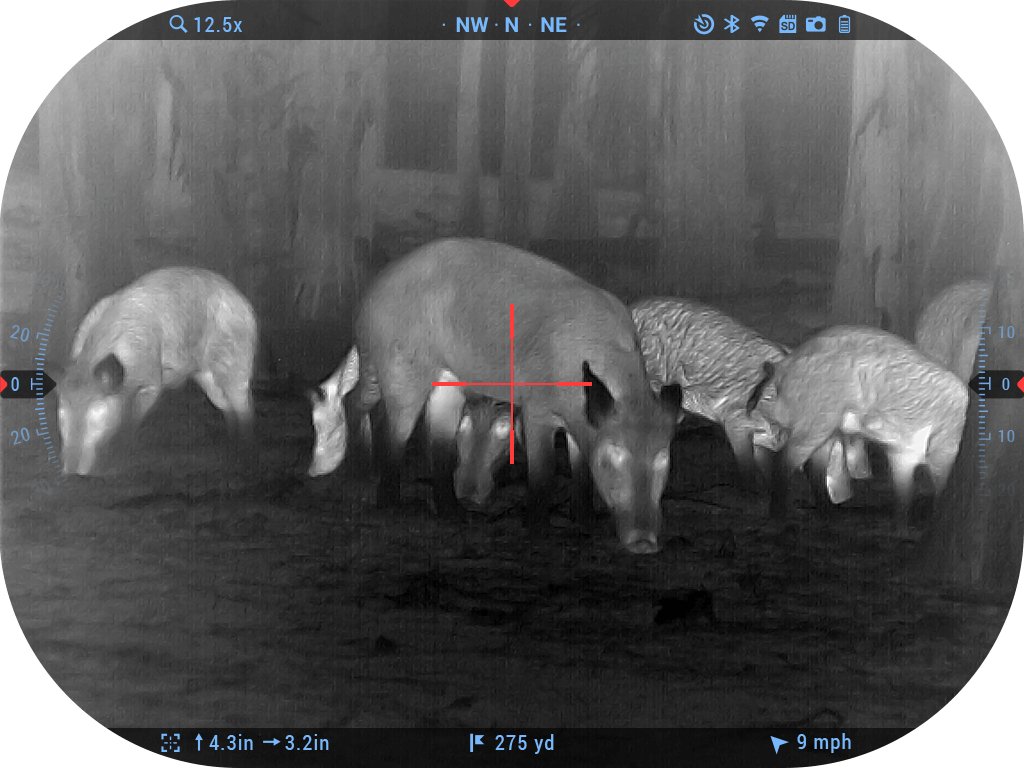
The ATN BlazeHunter XD LRF 1280x1024 2-16x is the reach champion, with an extreme-definition 1280x1024 sensor, a 3,400-meter detection range and a built-in laser rangefinder accurate to about a meter. That sensor packs over a million more pixels than a 640 detector, so it resolves game at distances where lighter scanners show only a smudge, exactly the edge you want glassing open late-season ground.
When the season calls for its reach
On open winter fields where shots and spots stretch far, the XD LRF turns a distant heat blob into an identifiable animal and tells you exactly how far it is. It weighs more at 1.1 lb and runs a dual-battery system for 10-plus hours, so it is built for long, serious glassing sessions rather than quick light scanning.
Why its runtime suits long winter sessions
The XD LRF runs a replaceable dual-battery system good for 10-plus hours, which is exactly what long, cold glassing sessions demand. Where the lighter BlazeTrek 6 models run on internal cells, the XD LRF lets you carry charged spares and swap them, so a whole night of ranging and identifying never ends because the power ran out. In the open seasons, when you settle in and glass a field for hours, that endurance is as important as the sensor, and it is why this scanner is built for the serious, distance-focused hunter rather than the quick mover.
Who it's for: long-range hunters who need the highest resolution and true ranging in open country. Who it's not for: hunters who want the lightest possible scanner for close, fast cover.
ATN BlazeTrek 6 384x288 2.25-18x — the value pick
The ATN BlazeTrek 6 384x288 2.25-18x is the value scanner, sharing the same light 0.7 lb body and feature set as the 640 model with a 384x288 detector and a strong 18x zoom. Think SD versus HD video: both look clear at normal glassing range, and the higher-res sensor only pulls ahead far out. For a first long-range monocular, it delivers real reach-in magnification at the value tier.
Its slightly longer runtime, around eight hours on the internal cell, is a quiet seasonal advantage too. Where the 640 model trades a little endurance for its higher-resolution sensor, the 384 keeps you scanning a touch longer on a charge, which suits a hunter who wants a grab-and-go tool for regular short outings across the year. Paired with its strong 18x zoom for pulling in distant heat, it covers most seasonal scanning at a value that makes it an easy first long-range monocular.
Who it's for: value buyers who want a light scanner with strong zoom. Who it's not for: those who need the sharpest picture at the longest distances.
How to choose your long-range thermal monocular
Pick by the season and distance you glass most, then by how much resolution and ranging you need.
- Scan all year, light and wide: the BlazeTrek 6 640x512.
- Maximum reach and ranging in open ground: the BlazeHunter XD LRF 1280x1024.
- Value scanner with strong zoom: the BlazeTrek 6 384x288.
How we picked these ATN thermal monoculars
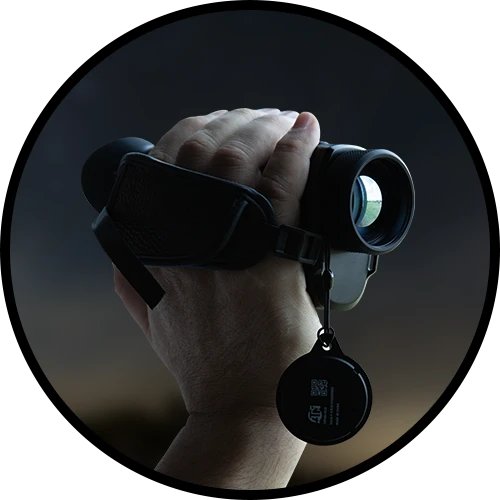
We judged these scanners by how well each fits the way seasons change, weighing sensor resolution, NETD sensitivity, detection range, magnification, weight and battery against the cover and distances of spring through winter. Only ATN's current 6th-gen line was considered. This is an in-house comparison of ATN's own monoculars, not an independent lab review, so match the tier to the ground you glass. Honest trade-off: the XD LRF is heavier and more reach than close-cover scanning needs, while the value 384 resolves less far, so the best long-range monocular is the one built for the seasons and distances you actually hunt.
Frequently Asked Questions
What makes a thermal monocular good for long range?
Sensor resolution and detection range. More pixels resolve a distant heat signature into an identifiable animal, and a longer detection range means you spot it sooner. The BlazeHunter XD LRF leads on both, while the BlazeTrek 6 640 balances reach with light, wide scanning.
Which ATN monocular is best for all-season scanning?
The BlazeTrek 6 640x512. Its 640 sensor, wide field of view and 0.7 lb weight make it fast in close early-season cover and still sharp out to 1,000 meters, so one scanner covers the whole year.
Do I need the built-in rangefinder?
If you glass and shoot at long, open distances, a rangefinder removes the guesswork on holdover. The BlazeHunter XD LRF ranges to about a meter of accuracy, which matters most on open late-season ground.
Is the value 384 monocular worth it?
Yes, for closer glassing. The BlazeTrek 6 384 keeps the same light body and feature set with a 384 sensor and strong 18x zoom, so it is a capable first long-range monocular at the value tier.
How much does weight matter when scanning?
A lot, over a long session. The 0.7 lb BlazeTrek 6 models are easy to glass with for hours, while the 1.1 lb BlazeHunter XD LRF trades some of that comfort for far greater reach and resolution.
Are these current-generation monoculars?
Yes, all three are part of ATN's current 6th-generation line, so you are not buying outgoing stock. That helps the scanner hold its usefulness and support across seasons.
The best long range thermal monocular is the one built for the seasons and distances you glass. For a light, wide, high-res scanner that carries all year, the ATN BlazeTrek 6 640x512 is the pick; if you need maximum reach and true ranging on open ground, compare it against the XD LRF and the value 384 across the ATN thermal monocular range. Match the tier to your season, and you will spot game sooner and clearer.
Created: August 5, 2026 · 19:53:40 UTC