The best helmet mounted thermal monocular has to do one thing above all: run hands-free on your head so both hands stay on your rifle, your steering wheel, or the terrain in front of you. The ATN Odin MFT 640x480 1-8x is built for exactly that. It mounts to a Wilcox NVG shoe like a night vision goggle, reads heat at a low NETD, and doubles as a weapon sight, clip-on, or handheld unit when you take it off the helmet. This guide covers why it leads for helmet use, where the rangefinding LRF version and the compact BlazeSeeker 6 fit, and how to choose.
Best with ranging: ATN Odin MFT LRF 640x480 1-8x — same platform plus a built-in laser rangefinder to 1000m.
Best budget companion: ATN BlazeSeeker 6 256x192 1.2-9.6x — light, pocketable handheld for close-range scanning.
Bottom line: the Odin MFT is the helmet pick; add the LRF for ranging or the BlazeSeeker as a cheap second unit.
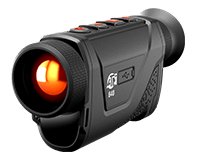
Why ATN's 6th-gen Odin MFT leads for helmet use
The Odin MFT leads because it was built as a helmet-first, do-everything optic rather than a handheld with a mount bolted on. It carries a Wilcox NVG shoe interface, so it drops straight into the same helmet mount a night vision goggle uses and rides at eye level, hands free. That is the whole point of helmet use: your hands stay on the wheel, the rifle, or the ground while your eyes read heat. It runs a 640x480 sensor at a very low NETD, so the head-up picture is clean even in humid or foggy air, and NV retention mode keeps that image feeling natural as you move. Just as important, it is a 4-in-1 tool: helmet goggle, weapon sight, clip-on, and handheld monocular all in one body. Shake-to-wake standby keeps it ready without draining the battery, and it takes 18650, CR123, or USB-C power so you are never stuck. A monocular you can wear, aim with, clip on, or hold in one hand is exactly what earns it the top spot for helmet-mounted work.
Helmet use asks for one more thing that many optics forget: a picture that behaves naturally when your head is moving. A laggy or grainy image on your head is worse than none, because it fights your balance and tires your eyes. The Odin's fast 50 Hz refresh keeps a moving scene smooth rather than smeared, and its bright, high-resolution OLED display gives you a crisp view even when you are walking or riding rough ground. Combined with the low NETD, that means the head-up picture stays clean and steady exactly when you need it, which is the whole reason to wear a thermal in the first place.
How the picks compare at a glance
Best overall for helmet use: ATN Odin MFT 640x480 1-8x
The ATN Odin MFT 640x480 1-8x is the best helmet pick because it mounts and behaves like a goggle while doing far more. The Wilcox NVG shoe interface puts it right where a night vision goggle would sit, so it rides at eye level and leaves both hands free. At 1x you get a natural, head-up view for walking, driving, or scanning; dial toward 8x when you want to study something farther out.
Hands-free by design
NV retention mode keeps the picture feeling natural as your head moves, which matters when you are walking or riding with the optic on your head. Shake-to-wake standby means it powers back up the instant you need it without you fumbling for a button. The result is a wearable thermal that gets out of your way.
One optic, four jobs
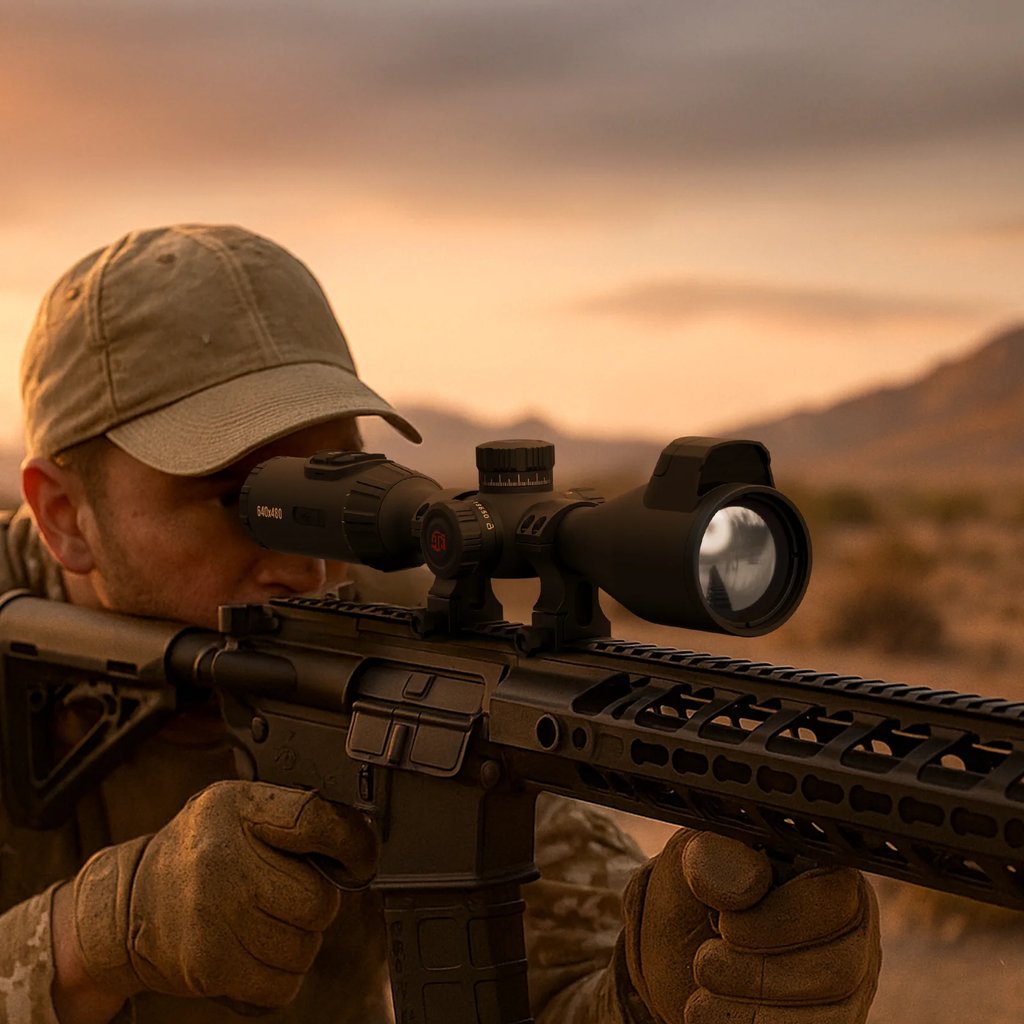
Take it off the helmet and it becomes a weapon sight with a ballistic calculator and customizable reticles, a clip-on ahead of a day scope, or a handheld monocular. The 640 sensor and low NETD keep every one of those roles sharp, and the long detection range means heat lights up well out. That flexibility is rare in a helmet-mount optic.
Who it's for: hunters, tactical users, and search-and-rescue crews who need a hands-free thermal that also mounts on a rifle. Who it's not for: someone who only wants a simple handheld scanner — the light BlazeSeeker 6 fits that better.
Best with ranging: ATN Odin MFT LRF 640x480 1-8x
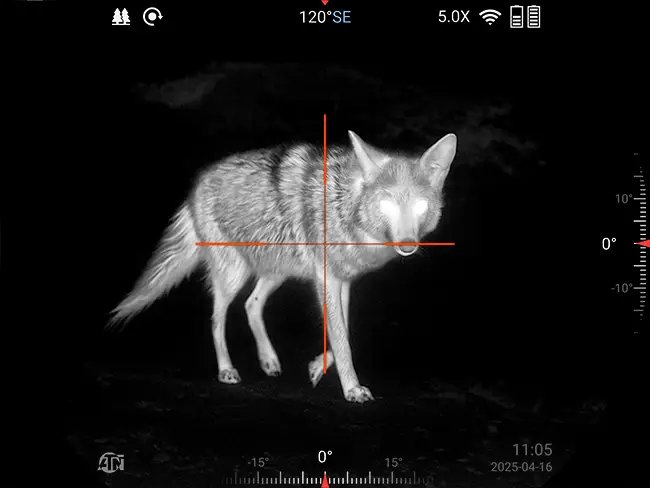
The ATN Odin MFT LRF 640x480 1-8x is the pick when you want distance on demand. It is the same 4-in-1 platform — helmet goggle, weapon sight, clip-on, handheld — with the same 640 sensor and low NETD, but it adds a built-in laser rangefinder accurate to within a meter out to 1000m. When you switch it to weapon-sight duty, that range feeds the ballistic calculator so your holdover is handled.
Instant distance for the shot
Knowing exact range changes a shot from a guess to a plan. The LRF version gives you that number at a button press, then the ballistic calculator moves your point of aim to match. It weighs a touch more for the added hardware, which is a fair trade for the capability.
Who it's for: shooters who use the Odin as a sight or clip-on and want ranging built in. Who it's not for: pure helmet users who never need to range and would rather save the weight with the standard 640.
Best budget companion: ATN BlazeSeeker 6 256x192 1.2-9.6x
The ATN BlazeSeeker 6 256x192 1.2-9.6x is the light, affordable handheld to pair with an Odin. At 270 grams it slips in a pocket, and its wide 24 by 18 degree field of view makes it easy to sweep a treeline or a field edge fast. It is not a helmet optic, but as a cheap second scanner it is hard to beat.
Light and quick to grab
When you want to scan quickly without pulling the helmet unit off your head, a pocketable monocular earns its keep. The BlazeSeeker 6 runs the same ATN Connect 6 app, has SharpIR AI, and shoots video, so it is a capable little unit for close-range work at a budget tier. Hand it to a partner who does not have their own thermal, or keep it in a chest pocket for a quick sweep when you hear something move. Because it is inexpensive and light, it is the kind of second unit you can afford to have along, and it keeps your primary Odin free for the job it does best.
Who it's for: anyone who wants a cheap, light handheld scanner alongside their helmet optic. Who it's not for: helmet or weapon use — that is the Odin's job.
How to choose a helmet mounted thermal monocular
Start with how you plan to wear and use it. The Odin models are the true helmet optics here; the BlazeSeeker is a handheld companion. Run through these points:
- Mounting — a real helmet optic needs a Wilcox NVG shoe interface like the Odin MFT; a plain handheld does not mount to a helmet.
- Resolution — the 640 Odin gives more dots in the picture for a cleaner head-up view than a 256 sensor.
- Ranging — pick the LRF version if you want instant distance for shots; skip it to save weight.
- Multi-role — the Odin doubles as a weapon sight, clip-on, and handheld, so one optic covers many jobs.
- Weight on your head — lighter is more comfortable for long wear; the standard Odin is the lightest of the two helmet units.
- Power options — 18650, CR123, and USB-C support on the Odin means you are never stranded for a battery.
Still weighing it up? Browse the full thermal monoculars lineup to compare. For hands-free helmet use, the Odin MFT is the pick.
How we picked these ATN multi-role thermal optics
Full transparency on how this shortlist was built. Every option here is from ATN's current 6th-generation line only — no discontinued models padding the list. Each was weighed on the specs that decide a real hunt: sensor resolution, thermal sensitivity (NETD), detection range, refresh rate, and battery life, then sanity-checked against how it actually performs for hands-free helmet use. Where a model gives something up, that trade-off is called out plainly rather than hidden. These are the maker's own optics, so treat this as an honest in-house comparison of the range — not an independent lab review — and cross-check the specs against your own needs.
Frequently Asked Questions
Can the Odin MFT really mount to a helmet?
Yes. It has a Wilcox NVG shoe interface, so it drops onto the same helmet mount a night vision goggle uses and rides at eye level. That lets you use it hands-free while your hands stay on your rifle or the terrain. It also has Picatinny mounting for weapon use.
What does 4-in-1 mean on the Odin MFT?
It works as a helmet-mounted goggle, a weapon sight, a clip-on ahead of a day scope, and a handheld monocular. One optic covers all four roles, so you are not buying separate gear for each. That flexibility is a big part of why it leads for helmet use.
Do I need the LRF version?
Only if you want ranging built in. The LRF model adds a laser rangefinder accurate to within a meter out to 1000m, which feeds the ballistic calculator when you use it as a sight. If you never need distance on demand, the standard 640 saves a little weight.
Is the BlazeSeeker 6 a helmet optic?
No. The BlazeSeeker 6 is a light handheld monocular for close-range scanning, not a helmet-mount unit. It works well as a cheap, pocketable companion to a helmet optic like the Odin, but it does not mount to a helmet itself. Use the Odin for hands-free wear.
How is the picture kept clear at night?
The Odin runs a 640 sensor at a very low NETD, which keeps the thermal image clean even in humid or foggy air, and NV retention mode keeps the head-up view feeling natural as you move. Lower NETD means a cleaner picture in tough conditions. That matters most when the optic is on your head and you are moving.
What powers the Odin MFT?
It runs on 18650 or CR123 batteries or over USB-C, with about 8 hours from an 18650. Because it takes multiple power types, you are rarely stuck without a way to keep it running. Shake-to-wake standby also helps preserve charge between uses.
Want a thermal you can wear, aim with, clip on, or hold? The ATN Odin MFT 640x480 1-8x mounts to a Wilcox shoe for hands-free helmet use and swaps into a weapon sight, clip-on, or handheld in seconds, all on a clean 640 sensor. Add the LRF version when you want instant ranging, or pair a light BlazeSeeker 6 as a budget scanner. Explore the full thermal monoculars lineup, match the setup to how you work, and get your hands-free thermal ready for the next mission or night out.
Created: July 7, 2026 · 08:31:01 UTC