When a thermal monocular rides on your helmet, four features decide how well it works hands-free: how much detail the sensor resolves, whether it can range a target, how long the battery lasts, and how far the zoom reaches. This roundup ranks ATN's 6th-gen monoculars feature by feature, and one model tops the most columns — the ATN BlazeHunter XD LRF 1280x1024 2-16x, the flagship built around an extreme-definition sensor and a built-in laser rangefinder.
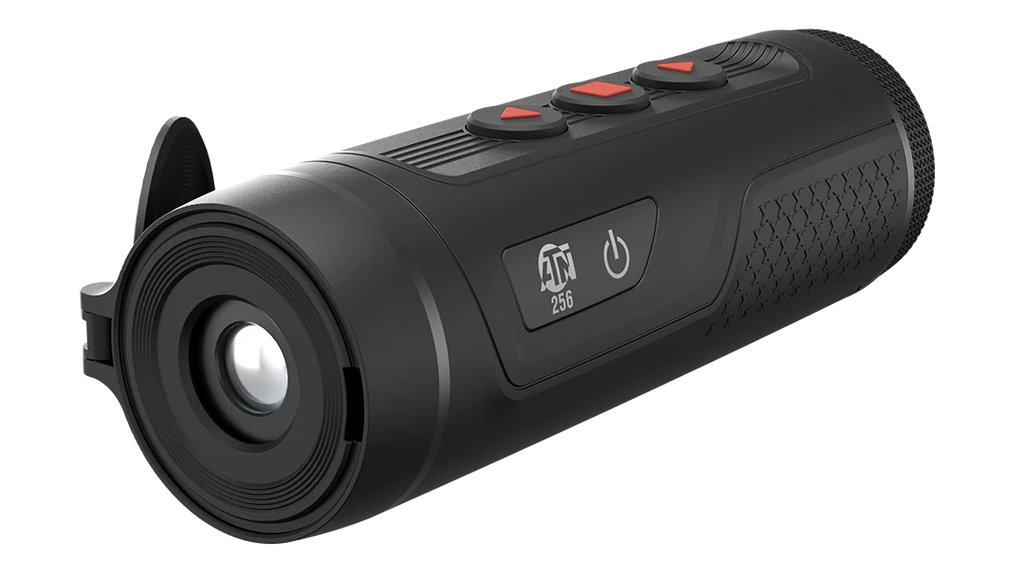
Best on weight and field of view: ATN BlazeTrek 6 640x512 1.5-12x — the lightest, widest-viewing body for effortless helmet scanning.
Best value feature set: ATN BlazeTrek 6 384x288 2.25-18x — a light body with the highest top-end zoom for the money.
Why ATN's 6th-gen monoculars share such a strong feature base
ATN's 6th-gen monoculars share a strong feature base because the whole line is built on the same sensitive sensor platform, so even the value model brings features that used to be flagship-only. Every unit here runs a low NETD, the smallest temperature difference the sensor can separate; a lower millikelvin number means finer contrast, which matters most when you are scanning cold ground hands-free and need warm shapes to pop. From that common floor, the models pull apart on the four features that decide helmet use: resolution, ranging, battery, and magnification.
ATN BlazeHunter XD LRF 1280x1024 2-16x — the feature leader
The ATN BlazeHunter XD LRF 1280x1024 2-16x leads on more key features than any other monocular here, which is why it earns the top spot in a feature-first ranking. It is the flagship, and it shows in the two specs that change what hands-free scanning can do: resolution and ranging.
Resolution — the standout feature
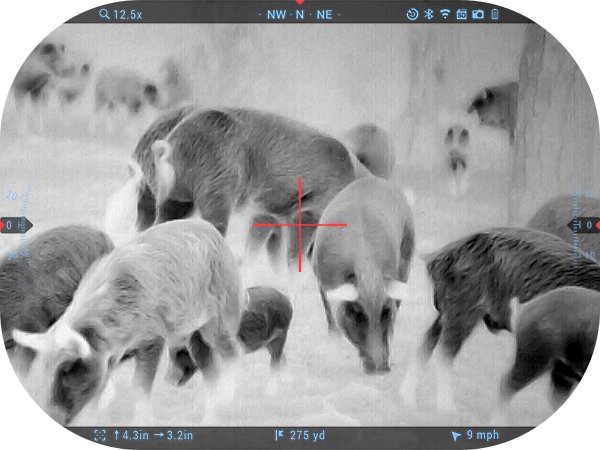
The 1280x1024 sensor is the headline feature. It packs well over a million more pixels than a standard thermal chip, the same leap you feel moving from a standard-definition screen to full HD. On a helmet, that detail means a distant heat signature reads as an animal you can identify, not a warm blob you have to stop and study. A Full-HD OLED display shows every one of those pixels, and SharpIR AI enhancement tidies the frame further.
Built-in rangefinder — the feature others lack
The onboard laser rangefinder is the feature that sets this model apart from the rest of the line. It reads out to 1,000 m with roughly one-meter accuracy, so a single glance through a helmet-mounted monocular gives you both the picture and the exact distance to your target. No second device on the belt, no fumbling to range hands-free.
Battery — built for all-night scanning
Two replaceable 18650 cells give 10-plus hours total, the longest runtime here, and because they swap out you can carry spares and keep scanning through a full night. Detection range reaches 3,400 m, Hot Point Tracking flags the hottest object, and Wi-Fi with ATN Connect 6 handles streaming and file transfer.
Who it is for: hunters who want the most resolution, real ranging, and the longest battery in a head-mountable monocular. Not for: those chasing the lightest, widest body — at about 1.1 lb it asks a little more of your neck than the BlazeTrek pair.
ATN BlazeTrek 6 640x512 1.5-12x — best weight and field of view
The ATN BlazeTrek 6 640x512 1.5-12x wins the two features that decide comfort on a mount: it is the lightest body here and it has the widest field of view. Where the flagship leads on reach and ranging, this one leads on the everyday feel of hands-free scanning.
Weight — the feature you feel every hour
At about 0.7 lb it is featherweight for a 640-class monocular, and on a helmet that difference shows up as no neck strain after hours of walking and glassing. Light weight is easy to overlook on a spec sheet and impossible to ignore in the field.
Field of view — the feature for fast scanning
Its 22.8-degree horizontal field of view is the widest in the group. Field of view is how much ground you take in per glance; a wider one clears a hillside in fewer sweeps and catches movement at the edges of the frame. Backed by a high-resolution 640x512 sensor, a 1.5x natural base, six color palettes, and Wi-Fi with Connect 6, it is the easiest of the three to live behind on a head mount.
Who it is for: scanners who prize a light, wide-viewing, comfortable hands-free package. Not for: anyone who needs the flagship's resolution, ranging, or long-range reach.
ATN BlazeTrek 6 384x288 2.25-18x — best value feature set
The ATN BlazeTrek 6 384x288 2.25-18x wins on value: it carries the highest top-end magnification in the group at a friendlier price while keeping the light BlazeTrek body. If you want a helmet-ready monocular without paying for flagship resolution, this is the feature balance to look at.
Magnification — the value model's edge
The 2.25-18x range tops out higher than the 640 model, so when a target sits far enough that you want a closer look, this model reaches it. The 384x288 sensor is ample at typical scanning distances, and at about 0.7 lb the body stays just as kind to your neck as the pricier BlazeTrek.
Honest notes on the value features
In good contrast and at moderate range, most people would struggle to separate its picture from the 640 model. The difference only shows at distance and in low-contrast heat, where more pixels win. Battery runs around 8 hours on internal power, and the same Hot Point Tracking, six palettes, 32 GB storage, and Connect 6 features carry across.
Who it is for: value-minded scanners who want top-end zoom and a light helmet-ready body. Not for: anyone whose work depends on maximum resolution or built-in ranging.
How to choose a helmet-mounted thermal monocular by feature
Pick the feature that limits you most and rank from there. Resolution and ranging separate the flagship; weight and field of view define comfortable hands-free scanning; battery decides how long you last; magnification decides how close you can look.
- Resolution — more pixels mean cleaner detail at distance; the 1280x1024 sensor leads, 640 is strong, 384 is fine up close.
- Built-in rangefinder — only the BlazeHunter XD LRF ranges targets itself, saving a second device on hands-free scans.
- Battery runtime — replaceable cells and 10-plus hours beat sealed internal power on all-night sessions.
- Field of view and weight — a wider view and a lighter body make head mounting comfortable and scanning fast.
- Magnification — a higher top end helps read distant or brush-hidden heat, but a low base keeps walking natural.
How we picked these ATN thermal monoculars
We ranked ATN's current 6th-gen monoculars for helmet use by scoring the specific features that govern hands-free scanning: sensor resolution, built-in ranging, battery runtime, field of view, magnification, NETD, and weight, each judged against real head-mounted use rather than a spec bench. Only current-generation models were considered. The honest trade-off is that the feature leader is not the lightest — the BlazeHunter XD LRF wins resolution, ranging, and battery but weighs more than the BlazeTrek pair, so if all-hours comfort tops your list the lighter 640 may serve you better. None of these ship as a dedicated helmet kit, so plan to add a head or helmet mount. This is an in-house comparison of ATN's own range, not an independent lab test; weigh each feature against how you actually scan.
Frequently Asked Questions
Which feature makes the ATN BlazeHunter XD LRF the best helmet mounted thermal monocular?
Its combination of a 1280x1024 sensor, a built-in laser rangefinder, and 10-plus hours of replaceable-battery runtime is what puts it on top. No other model in the line ranges targets itself or resolves as much detail, which matters when you are identifying and measuring heat hands-free.
How much does resolution really matter for helmet scanning?
A lot at distance, less up close. The 1280x1024 sensor turns a far-off warm blob into a shape you can identify, while the 640x512 and 384x288 models are plenty at typical scanning ranges. If you scan open country from a helmet, resolution is the feature that pays off most.
Why is a built-in rangefinder useful on a head-mounted monocular?
Because it lets one glance give you both the thermal picture and the exact distance to your target, with no second device to raise or fumble. The BlazeHunter XD LRF reads to 1,000 m with about one-meter accuracy, which keeps hands-free scanning genuinely hands-free.
Which model has the best battery life for all-night use?
The BlazeHunter XD LRF, with 10-plus hours on two replaceable 18650 cells you can swap for spares. The BlazeTrek 6 384 runs about 8 hours and the 640 about 6.5 hours on internal power, so for the longest sessions the flagship's swappable cells are the safer feature.
Do these monoculars come with a helmet mount?
No. They are handheld thermal monoculars that pair with a standard head or helmet mount you supply, letting you scan hands-free while walking or glassing. Their light weight makes head wear comfortable; match the mount to your helmet or headgear.
Is the extra magnification on the 384 model worth it?
It can be if you often want a closer look at distant or brush-hidden heat, since its 2.25-18x tops out higher than the 640 model. Just remember more pixels, not more zoom, is what keeps a distant image sharp, so pair the extra reach with realistic expectations at long range.
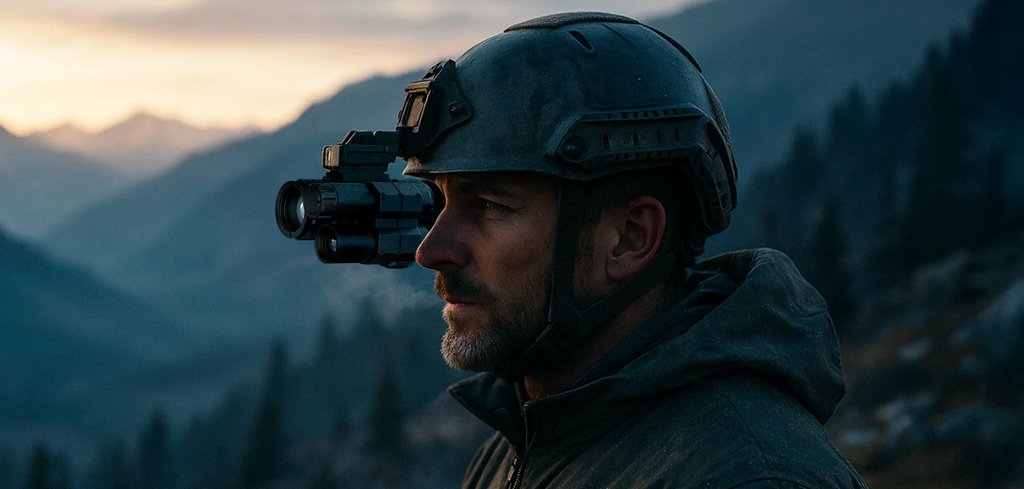
The best helmet mounted thermal monocular is the one whose key features match how you scan. If resolution, built-in ranging, and long battery life top your list, the ATN BlazeHunter XD LRF 1280x1024 2-16x led our feature ranking. If light weight and a wide field of view matter more, the BlazeTrek 6 640 is the comfortable hands-free pick. Compare the full ATN thermal monocular lineup, decide which feature you cannot compromise on, and pair your choice with a head or helmet mount for true hands-free scanning.
Created: August 5, 2026 · 19:53:40 UTC