The way you build your rig — dedicated night gun, swap-over day scope, or grab-and-go handheld — points straight at the right thermal monocular. This plain guide explains what a best helmet mounted thermal monocular is, how it works and how to choose one, using the BlazeTrek 6 from ATN's current 6th-generation thermal monoculars as a worked example. No jargon, no hard sell — just what you need to understand before you buy.
In one line: a thermal monocular is an optic that sees heat instead of light, turning the warmth of an animal, a person or an engine into a bright shape on screen — so it works in total darkness, light fog and full daylight alike.
What is a thermal monocular?
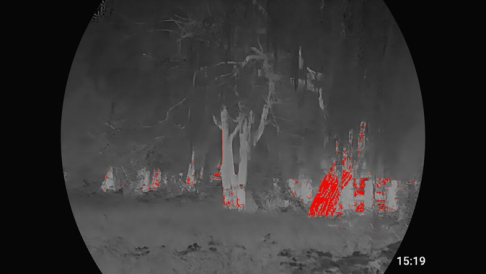
A thermal monocular is a device that builds its picture from heat rather than visible light. Every object gives off infrared energy based on its temperature, and the sensor reads those tiny differences and paints them as a live image. Because it needs no ambient light at all, it shows a warm-blooded animal glowing against cool ground in the blackest part of the night — something no amount of magnification on a normal optic can do.
How does it work, step by step?
- The germanium objective lens gathers infrared (heat) energy from the scene and focuses it onto the sensor.
- The thermal sensor, or microbolometer, measures the temperature of every point in view many times a second.
- On-board processing — ATN's SharpIR AI — cleans up the signal, sharpens edges and reduces noise in real time.
- The result is mapped to a colour palette (White Hot, Black Hot, Iron Red and others) so your eye can read it instantly.
- The finished image is shown on a bright internal display at a 50 Hz refresh, smooth enough to follow a moving animal.
What can you use a thermal monocular for?
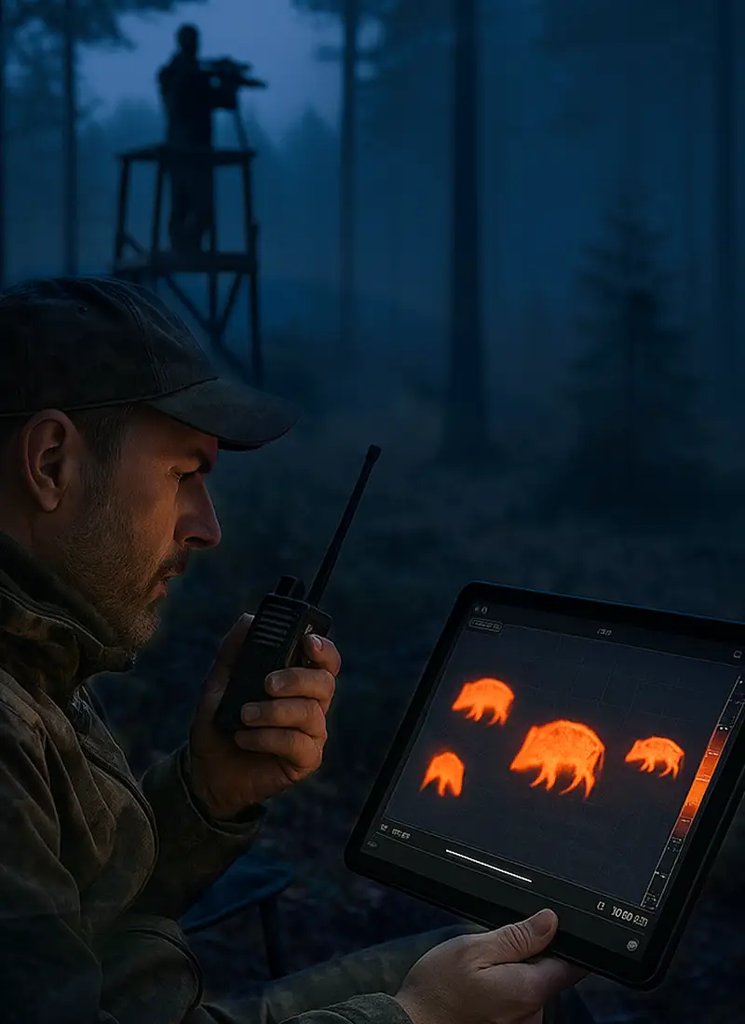
- Hunting after dark — finding and identifying hogs, coyotes and other game when a normal optic sees nothing.
- Scanning and scouting — sweeping a field or tree line to locate heat before you ever raise a rifle.
- Property and livestock checks — spotting intruders or missing animals across a dark pasture.
- Search and recovery — following a blood trail or finding downed game by residual body heat.
Key features to understand
- Sensor resolution — a 384x288 sensor — meaning more detail on the target and a cleaner image deep into the zoom range.
- NETD (thermal sensitivity) — an <=18mK NETD rating, which is the tell for how it behaves in damp, foggy or rainy air: the lower the number, the cleaner the picture when conditions turn ugly.
- Detection range — a detection range out to 1000m, so you pick up heat long before an animal is in range of a shot.
- Refresh rate — a 50 Hz refresh rate, so a running animal stays smooth instead of smearing into a blur.
- Battery life — about ~8 hours of runtime, enough to cover a full sit without a swap.
What to look for before buying
- Buy the resolution that matches how far you look — 640 for reach and detail, 384 to save weight and money.
- Check the detection range against your real distances, not the biggest number on the box.
- Favour a low NETD if you hunt humid or foggy country.
- Make sure the batteries are user-replaceable so a long night is a battery swap, not a dead unit.
- Look for on-board recording and an app if you want to review or share footage.
Common mistakes to avoid
- Chasing magnification over resolution — zooming a weak sensor just makes a bigger blur.
- Skipping the zero — a thermal optic must be sighted in like any scope; do not trust it out of the box.
- Ignoring conditions — mid-afternoon heat soak can flatten contrast, so learn when your ground reads best.
- Forgetting spare batteries — cold nights drain cells faster than you expect.
Example: the BlazeTrek 6
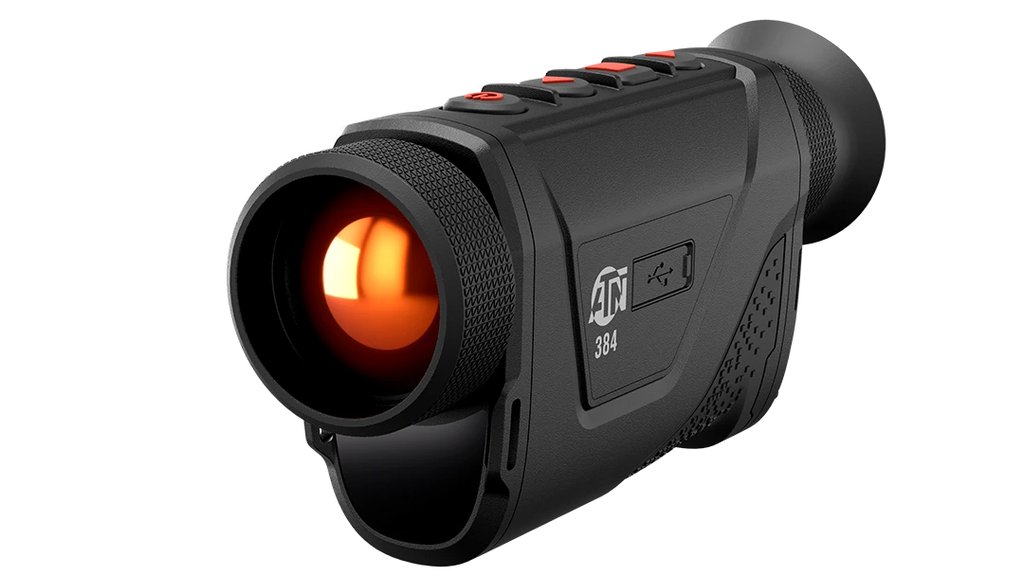
The BlazeTrek 6 is a clean example of a modern thermal monocular done right. It carries a 384x288 sensor — meaning more detail on the target and a cleaner image deep into the zoom range It reaches out to 1000m, runs 2.25-18x (up to 8x digital zoom) magnification, and adds SharpIR AI so the image stays sharp as you zoom. With about ~8 hours of runtime, enough to cover a full sit without a swap and an IP67 weather seal, it is a tool you can trust for a full season, not just a fair-weather gadget.
Is a thermal monocular worth it?
For anyone who hunts, works or watches property after dark, yes. A thermal monocular does something no other optic can — it turns a black field into a readable scene. It is a real investment and it rewards a little study, but the payoff is seeing game you would otherwise walk right past. If your nights are occasional and casual, a simpler tool may do; if the dark is where you work, it earns its keep quickly.
How this guide was put together
This guide is an in-house explainer from ATN, not an independent review, so read it as a plain starting point and measure the specs against your own needs. We built it around the questions hunters actually ask before buying a thermal monocular: what the numbers mean, what changes a real night, and where money is well spent. The criteria we lean on are sensor resolution, thermal sensitivity (NETD), detection range, refresh rate, weight and battery life. We only cover the current 6th-generation line. The honest limits: a thermal monocular is a serious tool with a learning curve, and it is not the pick for someone who only needs an occasional look in the dark or wants the cheapest possible gadget.
Frequently Asked Questions
Is the BlazeTrek 6 good for hunting?
Yes. The BlazeTrek 6 pairs a 384x288 sensor with SharpIR AI image cleanup, so heat shows up as a clear shape rather than a fuzzy blob. That is exactly what you want for the work this article covers.
Can I use a thermal monocular during the day?
Yes. Thermal reads heat, not light, so it works in full daylight, deep shade and total dark alike. The only thing that limits it is very hot ground that washes out the temperature difference in the middle of the afternoon.
Does rain or fog stop it from working?
Heavy rain and thick fog shorten the range because water scatters heat, but they do not blind it. A low NETD rating like the <=18mK is what keeps the picture usable when the air turns damp.
How long does the battery last on a night hunt?
Plan on roughly ~8 hours per charge, and the packs are user-replaceable, so a spare set in a pocket covers an all-night stand with no downtime.
Is it waterproof and tough enough for real hunting?
Yes. It carries an IP67 rating, which means dust cannot get in and it shrugs off rain and splashes. It is built to ride on a rifle or in a pack through a rough season.
Do I need Wi-Fi or a phone to use it?
No. Everything works standalone. The ATN Connect 6 app is a bonus for streaming, changing settings and pulling video off the unit, but the optic is fully functional on its own in the field.
Quick reference specsBlazeTrek 6 at a glance: 384x288 sensor, <=18mK NETD, 2.25-18x (up to 8x digital zoom), detection to 1000m, ~8 hours battery, 320 g / 0.7 lb, 50 Hz refresh, IP67 weatherproof, SharpIR AI and ATN Connect 6 app.
Want to see one in person? Take a closer look at the BlazeTrek 6, or browse ATN's full range of thermal monoculars to compare sensors and sizes. Understanding the basics is half the battle — the other half is getting glass in your hands and learning the dark.
Created: July 28, 2026 · 12:53:47 UTC