Picking the best cheap thermal scope for hog hunting comes down to one question: how do you actually put pigs on the ground? Two ATN ThOR 6 models sit at the value-smart end of the lineup, and they pull in opposite directions. The 640x512 2-16x is built for hunters who ambush groups up close in cover; the 640x512 3-24x is built for hunters who reach out across open ground. Same sensor family, same sensitivity — different jobs. Below we put the two head to head by use case so you buy the one your style of pig hunting rewards, instead of overpaying for reach you'll never use or coming up short when a sounder crosses a far field.
For most hog hunters chasing groups in and around cover, the value pick is the ATN ThOR 6 640x512 2-16x: its wide low-end field of view catches a whole sounder fast at the ranges pigs are usually taken, so you spend less and shoot more. Step up to the 640x512 3-24x only if you genuinely hunt long, open fields where extra reach pays off. Both share the 640 sensor; the 2-16x simply matches the way most people hunt hogs.
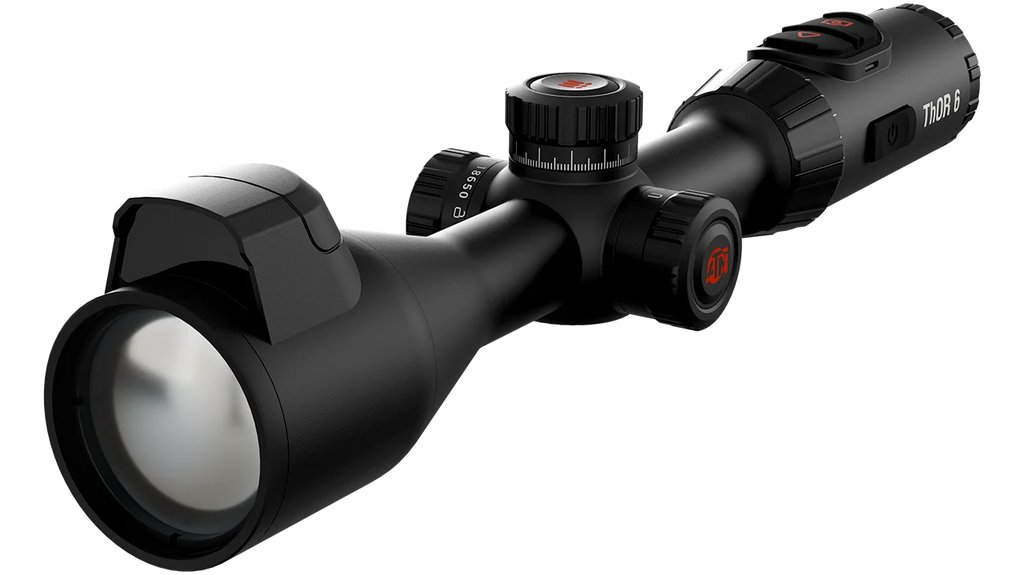
How the ThOR 6 640x512 2-16x works for hog hunting
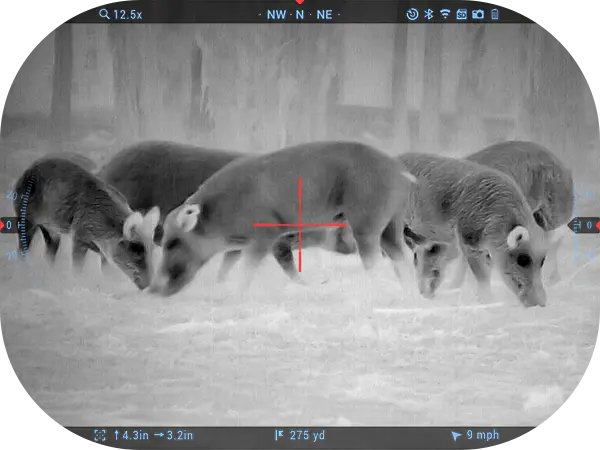
The 640x512 2-16x is tuned for the moment a sounder appears close and you have seconds to act. Its 2x low end opens a wide field of view, which is the single most useful thing when hogs boil out of a creek bottom or a brush edge at short range — you see the whole group at once and can swing between pigs without hunting for them through a tight window. The 640x512 sensor carries a dense grid of heat-reading dots, so even at that wide setting a pig is a sharp, identifiable animal rather than a blur, and the ≤15 mK sensitivity keeps it separated from warm summer ground. The 35mm lens keeps the package fast and bright for the close work it's built for. Recoil Activated Video captures the follow-up automatically, which matters because the first shot usually turns one target into a scattering handful.
How the ThOR 6 640x512 3-24x works for hog hunting
The 640x512 3-24x is tuned for distance and deliberate shots. Its bigger 50mm F/1.0 lens gathers more heat and drives detection out to around 3650 m, so when a sounder crosses a bare field a long way off you spot it early and have time to range, settle and set up before the pigs are on top of you. The extra top-end magnification lets you confirm the shot on a distant animal, and the same 640x512 sensor keeps the enlarged image clean rather than grainy. It shares every feature that makes the line good on hogs — Hot Point Tracking to hold the hottest signature as animals move, Picture-in-Picture for a precise aiming window over a wide view, SharpIR to sharpen low-contrast scenes — but its whole reason to exist is the long, open shot the 2-16x isn't built to take.
When to choose the 2-16x
Choose the 640x512 2-16x if most of your pigs come inside a couple hundred yards, in timber, creek bottoms, food plots or brushy edges. That's how the majority of hog hunting actually happens: groups appear close, move fast, and reward the hunter who can pick up the whole sounder instantly and take a quick, well-placed shot. The wide low end is your friend there, and because the 2-16x costs less than the flagship, it's the smarter value for that use — you're not paying for long-range reach you'd rarely touch. It's also the easier scope to run for a newer hunter, since a wide field is more forgiving when a group is milling and adrenaline is high.
When to choose the 3-24x
Choose the 640x512 3-24x if you genuinely hunt long, open country — big agricultural fields, pasture, or clear-cuts where hogs show up far out and you want to reach them. Here the flagship's 50mm lens, longer detection and taller magnification stop being luxuries and start being the difference between a shot and a watch. If your ground is mostly wide and your shots are mostly long, the extra spend buys usable capability rather than bragging rights. The 3-24x steps up in price over the 2-16x, so it only pays off when your typical shot distance genuinely calls for it; on close cover, that reach sits idle while the narrower low-end field slows you down.
Our recommendation
For the best cheap thermal scope for hog hunting, most hunters should take the ATN ThOR 6 640x512 2-16x. It matches the way pigs are usually hunted — close, fast, in and around cover — and it keeps the full 640x512 sensor and ≤15 mK sensitivity while costing less than the long-range flagship, which is exactly what "best value" should mean. Reserve the 3-24x for the hunter whose ground is truly open and whose shots are truly long; on that terrain it's worth the step up in price. If you want the lightest, most affordable way into the line and shoot at mixed ranges, the ThOR 6 384x288 2.5-20x is a sensible value step down. Compare all of them on the ATN thermal scopes page and match the scope to your use case, not to a spec sheet.
How we compared them
This is an in-house comparison of two scopes from ATN's own current 6th-generation ThOR 6 line, not an independent lab test, and we framed it around real hog-hunting use cases rather than a lowest-price race. We held the shared strengths constant — both use the same 640x512 sensor, the same ≤15 mK sensitivity, the same ~9-hour swappable battery and the same feature set — and judged them only where they differ: field of view and lens size for close work, detection range and top magnification for long shots. We recommend the 2-16x for most hunters because its wide low end fits how pigs are usually taken and it costs less, while the 3-24x earns its higher price only on genuinely open ground. Neither is the pick if you expect a thermal scope to do the ranging and thinking for you — you still read the terrain and confirm the shot. Weigh both against your typical distance before you buy.
Frequently Asked Questions
Which ThOR 6 is the better value for typical hog hunting?
The 640x512 2-16x for most hunters. Pigs are usually taken close and in cover, where its wide low-end field of view lets you catch a whole sounder fast and pick a shot. It keeps the full 640x512 sensor and ≤15 mK sensitivity while costing less than the long-range flagship, so it delivers more value where most hog hunting actually happens.
Is the extra magnification of the 3-24x worth it for hogs?
Only if you hunt long, open ground. On big fields and pasture where hogs appear far out, the 3-24x's 50mm lens, longer detection and higher top magnification let you spot, range and confirm a distant shot. If your pigs come in close through cover, that reach sits idle and the narrower low-end field actually slows you down, so the 2-16x is the smarter buy.
Do both scopes use the same sensor?
Yes. Both the 2-16x and the 3-24x use the same 640x512 thermal sensor with ≤15 mK sensitivity, so image quality and target identification are essentially the same. The real difference is the optics around it: the 2-16x has a wider field of view for close work, and the 3-24x has a bigger lens and more reach for long shots.
Why does field of view matter so much for hogs?
Hogs travel in groups and appear suddenly, especially in cover, so a wide field of view lets you take in the whole sounder at once and swing between animals without losing them. That is why the 2-16x, with its wider 2x low end, suits close hog hunting. A narrow, high-magnification view is harder to work when a group is milling at short range.
What if I hunt both close cover and open fields?
If your shots are genuinely split between short and long, the 3-24x is the safer single choice because its zoom range covers both, though you pay more. If most of your hunting is still close with the occasional long shot, the 2-16x plus good stand selection usually serves better for the money. Match the pick to where you spend most of your nights.
How does the 384x288 2.5-20x fit into this?
It is the value step down from both 640 models. The ThOR 6 384x288 2.5-20x is the lightest and most affordable current ThOR 6 and keeps the same ≤15 mK sensitivity and Recoil Activated Video, but uses a 384x288 sensor. It suits a hunter who wants into the line for less and shoots at mixed ranges rather than the far edge of open fields.
Do both scopes handle follow-up shots on a group?
Yes. Both include Recoil Activated Video, which captures the shot and its aftermath automatically, and Hot Point Tracking, which holds the hottest signature as animals move. Those features matter on hogs because the first shot usually scatters the sounder, and you often want a fast follow-up on a second pig.
Match the scope to how you hunt pigs. If your groups come close and fast in cover, the ATN ThOR 6 640x512 2-16x is the value pick — the full 640 sensor with the wide field of view most hog hunting rewards, for less than the flagship. If your ground is open and your shots are long, the 3-24x is worth the step up in price. See both, and the lighter 384x288 value step, on the ATN thermal scopes page and buy the one your use case actually calls for.
Created: August 10, 2026 · 09:39:31 UTC