Finding the best cheap thermal monocular for hog hunting comes down to one honest question: which handheld will actually let you pick a pig out of warm brush without emptying your wallet? Hogs feed at night, move in groups, and blend into sun-warmed ground, so you need a scanner that reads heat cleanly and fits in one hand while you walk a field edge. This roundup sorts the affordable end of ATN's current 6th-gen handheld line by how you actually hunt-close cover, open fields, or long glassing sessions-so you can match the tool to your ground instead of guessing off a spec sheet.
Best for long range and detail: ATN BlazeHunter XD LRF 1280x1024 2-16x-extreme-definition sensor plus a laser rangefinder for open country.
Best for lowest cost and zoom: ATN BlazeTrek 6 384x288 2.25-18x-the most affordable pocket handheld here, with more magnification for reaching out.
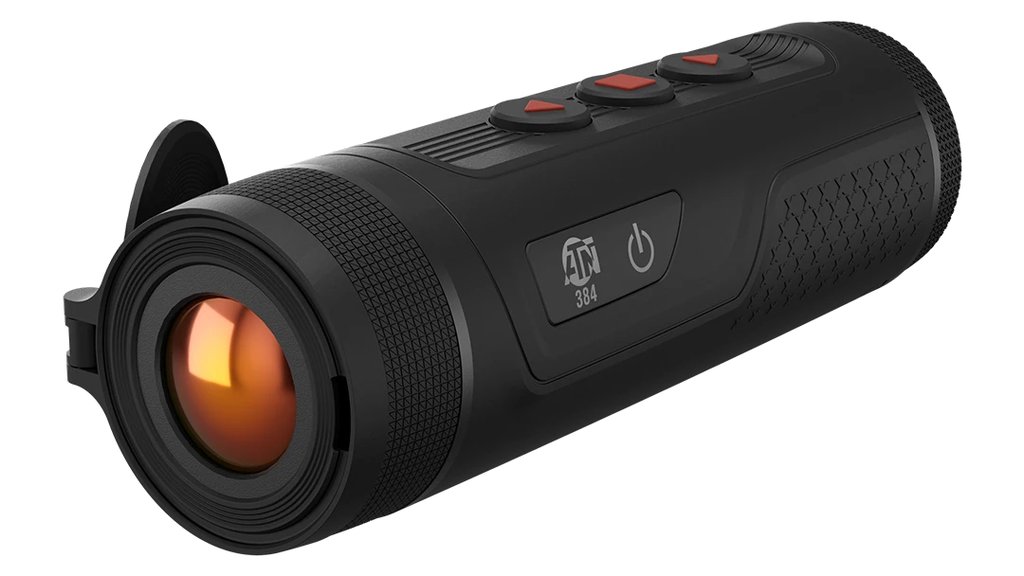
Why ATN's 6th-gen monoculars suit cheap hog hunting
ATN's 6th-gen handhelds fit budget hog hunting because they pack a genuinely sharp sensor and smart image processing into a light, one-hand body you can carry all night. A thermal monocular reads heat rather than light, so a hog glows against cooler dirt the instant it steps into the open-no moon, no flashlight, no spooking the sounder. Every model here uses SharpIR AI enhancement to clean up the picture, six color palettes so you can pick the contrast that suits your ground, and Hot Point Tracking to keep a warm target marked while it moves. The table below lays the three side by side on the numbers that decide a hog scan.
ATN BlazeTrek 6 640x512 - best value overall
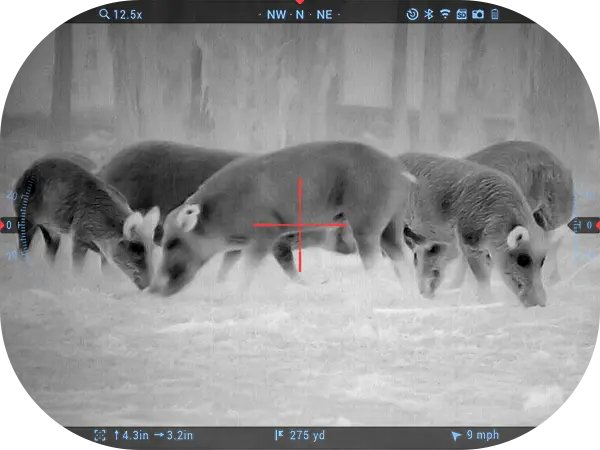
The ATN BlazeTrek 6 640x512 is the best all-round value for hog hunting because it pairs a high-resolution 640 sensor with a wide field of view and a light 0.7-pound body-the combination that matters most when you are sweeping a field edge for pigs. You get a crisp picture that clearly separates a hog from warm ground, a fast way to catch movement across a broad arc, and a handheld you can hold steady one-handed for a long sit.
What the 640 sensor buys you
Think of the 640x512 sensor like stepping from a standard photo to a sharper one-more dots drawing the pig means cleaner edges and easier calls on what you are looking at. Its ≤18 mK NETD, the smallest temperature gap it can tell apart, keeps a warm hog separated from sun-heated dirt on a summer night. At normal hog distances that resolution shows a shape you can identify, not just a vague blob.
Why the wide field of view matters for pigs
The BlazeTrek 6 640's wide 22.8-by-18.3-degree view lets you scan a big slice of ground in one pass, which is exactly how you catch a sounder crossing a field. Starting at 1.5x keeps that view broad for spotting; you zoom in only once you have found the group. A wider FOV means fewer sweeps, less arm fatigue, and a better chance you see the pigs before they see you.
Who it's for-and not for
The ATN BlazeTrek 6 640x512 1.5-12x is for the hog hunter who wants the sharpest affordable scanner for walking and glassing mixed cover, and it is not for someone who needs to range and identify pigs way out in wide-open country. For that job, step up to the BlazeHunter XD.
ATN BlazeHunter XD LRF 1280x1024 - best for long range and detail
The ATN BlazeHunter XD LRF is the pick when your hog ground is open and the shots are long, because it carries an extreme-definition 1280x1024 sensor and a built-in laser rangefinder in one handheld. That sensor holds fine detail far past where the smaller units soften, and the rangefinder tells you the exact distance to a pig so you can hold correctly before the shot.
What the extreme-definition sensor and ranging do
With over a million more pixels than a 640 sensor, the BlazeHunter XD draws a hog you can identify at distances where lesser handhelds show only a smudge, and its ≤15 mK sensitivity squeezes out extra contrast in flat summer heat. The laser rangefinder, accurate to a meter out to 1000 m, and a 3400 m detection reach mean you spot heat early and know the range before you commit. Its replaceable dual-battery system runs 10-plus hours-you hot-swap cells and keep hunting.
Who it's for-and not for
The BlazeHunter XD LRF is for the hunter working big open fields who wants long-range identification plus ranging in a single tool, and it is not for the budget-first buyer-it is the flagship here and heavier at 1.1 pounds. If you mostly work close cover, the lighter BlazeTrek 6 640 is the smarter spend.
ATN BlazeTrek 6 384x288 - best for lowest cost and zoom
The ATN BlazeTrek 6 384x288 is the lowest-cost way into a capable ATN hog scanner, and it adds more magnification-up to 18x-in the same pocket-sized 0.7-pound body. It gives up some sensor resolution to the 640 model but keeps the same SharpIR processing, six palettes, and Hot Point Tracking, so it still turns pigs into clear bright shapes at sensible range.
Where the value pick fits
At close-to-mid hog distances the 384x288 sensor shows a pig plainly, and its higher top-end zoom lets you confirm a target you have already spotted. Its ≤18 mK sensitivity separates a warm animal from the ground just like its bigger sibling. The trade is finer detail at long range-you would notice the 640's extra clarity out past a few hundred yards, but inside typical pig range this handheld does the job for the least money.
Who it's for-and not for
The ATN BlazeTrek 6 384x288 2.25-18x is for the hunter who wants the cheapest honest entry and values extra zoom over maximum resolution, and it is not for someone glassing wide fields who needs to identify pigs at distance. That reader wants the 640 or the BlazeHunter XD.
How to choose the best cheap thermal monocular for hogs
Choose by the ground you actually hunt, not by the biggest number on the box. Match the sensor and field of view to your distances and cover, then let the rest follow:
- Sensor resolution - more pixels means a clearer pig at range; the 640 splits the difference between price and clarity, the 1280x1024 is for the longest shots.
- Field of view - a wider view (start low on magnification) helps you catch a moving sounder in one sweep; the BlazeTrek 6 640 is built for this.
- NETD sensitivity - a lower mK number separates a warm hog from sun-heated dirt; all three here are sensitive enough for summer nights.
- Ranging - if you shoot open country, a built-in laser rangefinder like the BlazeHunter XD's removes guesswork on holdover.
- Battery and weight - a light body you can hold one-handed all night matters; replaceable cells let you swap spares on long sits.
How we picked these ATN thermal monoculars
We ranked these against the way a hog hunter really uses a handheld scanner: sensor resolution, NETD sensitivity, field of view, detection range, magnification, battery runtime and weight, all judged at genuine close-to-mid pig distances rather than in isolation. Only ATN's current 6th-gen line is in play here. The honest trade-offs are simple-the value 384x288 gives up fine long-range detail for the lowest cost, the 640 balances clarity and price, and the BlazeHunter XD asks for more money and a bit more weight in exchange for extreme resolution and ranging. None of these is the pick if you want a weapon-mounted optic; a monocular is a spotting and scanning tool, not a sight. This is an in-house look at ATN's own handhelds, not an independent lab test, so weigh the specs against your own fields and distances before you buy. Browse the full current range on the ATN thermal monoculars page.
Frequently Asked Questions
What is the best cheap thermal monocular for hog hunting?
For most hog hunters the ATN BlazeTrek 6 640x512 is the best value: it pairs a sharp 640 sensor with a wide field of view and a light one-hand body. It reads a pig against warm ground clearly at normal hog distances. Step up to the BlazeHunter XD only if you need long-range detail and ranging.
Do I really need a 640 sensor, or is the 384 enough for pigs?
The 384x288 is enough for most hunters working close-to-mid range in mixed cover, and it is the lowest-cost option here. Move to the 640x512 if you want cleaner identification and a wider field of view for scanning. Both use the same image processing and separate a warm hog from the ground well.
Can a thermal monocular spot hogs in warm summer weather?
Yes. A live hog is still warmer than the surrounding ground, and every model here has a NETD of 18 mK or lower, which is the smallest temperature gap the sensor can tell apart. That sensitivity keeps a pig separated from sun-heated dirt on a summer night.
How far can these monoculars detect a hog?
The BlazeTrek 6 models detect heat out to about 1000 m, and the BlazeHunter XD LRF reaches 3400 m. Detection means spotting that something warm is there, not fully identifying it. Practical identification range is shorter and depends on sensor resolution and magnification.
Can I mount a thermal monocular on my rifle?
These are handheld scanning and spotting tools, not weapon sights, so they are meant to be carried in the hand for finding and identifying game. If you want a thermal optic on the rifle, ATN's thermal scope line is the right tool. Many hunters carry a monocular to scan, then aim with a mounted optic.
How long does the battery last on a night hunt?
The BlazeTrek 6 640 runs about 6.5 hours and the 384 about 8 hours on their internal rechargeable batteries, which covers most night sits. The BlazeHunter XD uses a replaceable dual-battery system good for 10-plus hours, so you can hot-swap cells and keep hunting.
If you want the best cheap thermal monocular for hog hunting, start with the ATN BlazeTrek 6 640x512 1.5-12x-a sharp, wide-view scanner light enough to carry all night and priced in the sweet spot. If your ground is wide open and the shots run long, look at the BlazeHunter XD LRF for its ranging and extreme resolution instead. Either way, compare the full current handheld lineup on the ATN thermal monoculars page and match the sensor and field of view to the pigs and terrain you actually hunt.
Created: August 10, 2026 · 09:39:31 UTC