Everybody wants their first thermal to be cheap, and everybody worries a cheap one will be junk. When hunters search for the best cheap thermal monocular for coyote hunting, the fear underneath is buying a blurry toy that never actually finds a dog. The good news: the lowest rung on ATN's 6th-gen ladder is not a toy. The ATN BlazeSeeker 6 is the least-expensive way into real 6th-gen thermal, and it is genuinely built for the close, brushy work where a lot of coyotes get called. Cheap here means low sticker, not low capability.
Step up if you want more reach: ATN BlazeTrek 6 384x288 — sharper sensor and longer range for open ground, at a higher price.
Bottom line: if you want the cheapest way into real 6th-gen thermal for calling coyotes in cover, start with the BlazeSeeker 6.
Why is a cheap 6th-gen ATN monocular still worth buying?
A budget ATN monocular is worth buying because the core engine is shared across the whole 6th-gen family, so the cheap one is not running crippled software. The BlazeSeeker 6 gets the same SharpIR AI image enhancement that sharpens the picture as you scan, the same Hot Point Tracking that flags the hottest object so a coyote does not vanish into a warm background, and the same 50 Hz refresh that keeps motion smooth. Where a budget model saves you money is in the parts that cost the most to build up: sensor resolution and detection range. That is a fair trade for a close-range caller, because you do not need a 640 sensor or a mile of reach to kill a coyote that answers a distress call at eighty yards. So the money you save is money you would not have used anyway. That is what separates a smart cheap buy from a bad one — you are giving up the reach you will not miss, not the features that make thermal actually work at night.
It helps to be honest about what each spec buys you on a coyote stand. That 50 Hz refresh rate is the difference between a smooth, watchable picture and a stuttering one when a dog is trotting or breaking into a run. Coyotes rarely walk in slow and stand still; they circle downwind, hang up, then commit in a hurry. A slower refresh smears that motion and makes you second-guess what you are seeing, while 50 Hz keeps the animal crisp as it moves, so you can pick up the flag of a tail or the bounce of a running dog and stay on it. On a cheap optic, a smooth picture is worth as much as raw resolution.
The 256x192 sensor is the smallest in the line, and this is where SharpIR earns its place. A budget sensor has fewer pixels to work with, so a raw feed can look grainy and soft. SharpIR AI processing cleans up that image on the fly, pulling edges out of the noise so a coyote reads as a coyote and not a warm blob. It will not magically turn a 256 sensor into a 384, and nobody should pretend it does, but it makes the cheap sensor look meaningfully better than its raw numbers suggest — which is exactly what a budget hunter needs. Paired with the <=20mK thermal sensitivity, the picture holds usable contrast even when the temperature gap between a coyote and cool ground is small. That <=20mK figure is an honest number for a budget sensor: it is not the finest in the line, but it is fine enough to separate a warm animal from cold brush on a still night, and that is the job.
How does the cheap pick compare to the step-up?
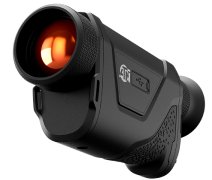
Best cheap pick: ATN BlazeSeeker 6 256x192
The ATN BlazeSeeker 6 256x192 is the best cheap thermal monocular for coyote hunting because it puts the lowest price tag on a handheld that still does the one job that counts: it finds heat in the dark and shows it to you clearly. For a first thermal, or a truck-glovebox backup, this is the easy yes.
A wide view built for the close game
The BlazeSeeker's wide 24 x 18 degree field of view is its secret weapon on a cheap budget. When you are calling in thick cover and a coyote can slip in from any angle at close range, a wide view lets you catch movement without frantically panning around. The 1.2x base magnification keeps that whole scene in front of you. This is a monocular that wants to work the brush, the creek bottoms, and the field edges where called coyotes actually appear. Where a narrow, high-magnification optic forces you to sweep back and forth like a soda straw, the wide view lets you sit on one arc of cover and let the dog walk into it — the magnification range runs 1.2-9.6x, so you start wide to find the animal and zoom in only when you need to confirm it. That order of operations, find wide then confirm tight, is exactly what a called-in stand rewards.
Light, tough, and honest about its limits
At 0.6 lb it is the lightest thermal here and disappears in a pocket. It runs about eight hours, charges over USB-C, and is IP67 waterproof. The <=20mK thermal sensitivity and 256x192 sensor keep it honest: this is a close-to-mid range tool, happiest inside a couple hundred yards, and it will not resolve a distant dog the way a bigger sensor does. The 345m detection number is worth understanding for what it really means: detection is the range at which the optic can show you that something warm is out there, not the range at which you can positively identify it as a coyote. In practice you will spot a heat signature out toward that figure and confirm it is a dog a good deal closer, which is fine for calling — you are working animals that are coming to you, not shooting across a canyon. Who it is for: the hunter who wants the cheapest real entry into 6th-gen thermal and mostly calls in cover. Who it is not for: anyone glassing wide-open fields who needs to reach out past a few hundred meters — that hunter should save up for the BlazeTrek.
The battery and charging story matters more than it sounds for a coyote hunter, because coyote work is night work and the good stands are often the late ones. About eight hours on a charge covers a normal night, but the USB-C port is what makes it a true all-nighter tool: a small power bank in a coat pocket tops it off between stands or runs it straight, so you are never forced to quit a hot night because a sealed battery died. It is the same runtime and the same charging setup the pricier models in the line use, so the cheap pick is not shortchanged on endurance. IP67 sealing means the dew, drizzle, and wet grass you actually hunt in are non-issues; wipe the lens and keep going.
The features you keep even at the low price
A cheap price does not mean a bare-bones tool. The BlazeSeeker carries all six color palettes, so you can flip from White Hot to Black Hot to Iron Red when the background is fighting you — useful when a cold-bodied coyote blends into cool ground on a frosty night. Hot Point Tracking marks the hottest thing in frame so movement does not get lost, and the 800x600 OLED display shows a clean picture. You still get 32 GB of storage and the ATN Connect 6 app with its AI assistant for viewing and recording on your phone. These are the parts that make thermal genuinely usable, and they survive the budget. What you gave up to save money was reach and resolution, not the working guts of the optic.
Palettes that beat a bad background
The single most useful trick a cheap thermal can give a coyote hunter is the ability to change how heat is drawn on the screen, and the BlazeSeeker's six color palettes deliver it. A coyote does not always stand out against its background — on a frosty night the ground can be nearly as cool as the animal, and on other nights sun-warmed dirt or rocks throw off enough heat to clutter the picture. This is where flipping palettes pays off. White Hot is the everyday default and reads fast. Black Hot inverts it and can make a warm dog pop against a busy, mottled background where White Hot washes together. Iron Red maps heat to warm colors and can pull a marginal coyote out of a cool field when the plain black-and-white views are struggling. Being able to cycle these on the fly, on a budget optic, means you are not stuck with one look when the conditions turn against you — you adapt the display to the dog instead of squinting through a bad one.
The truck-and-pocket backup
There is a second reason the cheap pick makes sense even for hunters who already own a scope: at 0.6 lb and pocket-sized, the BlazeSeeker 6 is the handheld you actually carry. A lot of coyote hunting is scanning first, shooting second — you glass a field edge or a fence line, find the heat, then bring the rifle up. A light monocular is the tool for that scanning half, and because it weighs almost nothing you keep it out and use it instead of leaving it in the truck. It rides in a coat pocket on a walk-in, lives in the glovebox as a backup if a primary optic goes down, and doubles as a way to check that a downed dog is really down before you walk out to it. Cheap and light is what makes a thermal get used, and a thermal that gets used pays for itself.
A night in the creek bottom: how the cheap pick actually plays out
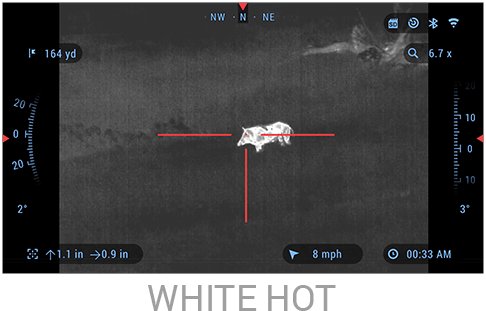
Picture a still night on a brushy field edge dropping into a creek bottom — the kind of tight, cluttered stand where called coyotes love to appear and where a long-range setup is wasted. You settle in with the caller running a distress sound and the BlazeSeeker up, sitting wide at low magnification so the whole arc of cover in front of you is on the screen at once. A dog answers close, and instead of coming straight down the lane you are watching, it circles to get the wind and tries to slip in from the side through the brush. That is the moment the wide 24 x 18 degree field of view wins: the coyote steps into the edge of the frame while you are still looking center, the smooth 50 Hz picture keeps it sharp as it moves through the cover, and Hot Point Tracking helps hold your eye on the warmest thing in the scene so it does not melt into the background. You zoom in a touch to confirm it is a coyote and not a house cat or a fox, then set up the shot. Nothing about that sequence needed a mile of reach or a flagship sensor — it needed a wide, smooth, honest picture at close range, which is exactly what the cheap pick is built to give.
Step-up option: ATN BlazeTrek 6 384x288
If your stands are open and coyotes tend to hang up out of range, the ATN BlazeTrek 6 384x288 is the next step. It costs more than the BlazeSeeker, but its 384x288 sensor and up-to-1000m detection give you cleaner target ID and far more reach.
When the extra spend is worth it
More resolution means more dots in the picture, so you can zoom to confirm a coyote at distance without the image breaking up. If you spend most nights on cut fields watching long fence lines, that reach earns its keep. The BlazeTrek's <=18mK sensitivity is also a touch finer than the BlazeSeeker's, which shows on humid, foggy nights when contrast gets muddy. Who it is for: the caller working open country. Who it is not for: the strictly close-range hunter on a tight budget — the cheaper BlazeSeeker already covers that game and there is no reason to pay for reach you will not use.
How to buy cheap without buying wrong
Cheap goes bad when you save money on the wrong thing. Keep these straight and a budget monocular will not let you down:
- Match cost to range — if you call in brush and creek bottoms, the BlazeSeeker's short reach is fine and the savings are free money.
- Do not skimp on the engine — the parts that make thermal usable at night (AI processing, 50 Hz refresh, Hot Point Tracking) come standard even on the cheap model, so a low price does not mean crippled.
- Value the wide view — for close, unpredictable coyotes in cover, the 24 x 18 degree field of view catches movement a narrow scope would miss.
- Mind weight and battery — at 0.6 lb and about eight hours, the BlazeSeeker rides all night without wearing you out.
- Know when to spend more — open fields and long shots are the one place a cheap short-range sensor holds you back; that is when you step up, not before.
The trap most first-time buyers fall into is spending on the wrong axis. It is tempting to chase the biggest detection number you can afford, but for a close-cover caller that money buys reach you will never lean on, while the specs that actually decide whether a stand works — refresh rate, field of view, image processing, weight — are already handled on the cheap model. Buy for the hunting you truly do, not the hunting you imagine. If nine nights out of ten are brush, creek bottoms, and short field edges, the BlazeSeeker 6 is not a compromise; it is the right tool, and the price is a bonus rather than a sacrifice. Save the upgrade money for the day your hunting genuinely changes.
Compare the whole range of ATN thermal monoculars so you buy exactly as much reach as your hunting needs — and not a budget more.
How we picked these ATN thermal monoculars
Our test for a cheap pick was simple: what is the least you can spend and still get a monocular that reliably finds and shows coyotes at close range? We weighed sensor resolution, thermal sensitivity (NETD), field of view, detection range, weight, and battery life against real close-cover calling, and only looked at the current 6th-gen ATN line so nothing here is outdated. We deliberately judged each spec against the way coyotes are actually called rather than against a spec-sheet ideal — a wide field of view and a smooth 50 Hz refresh count for more on a brushy stand than an extra hundred meters of detection that a close dog will never use, so those are the specs we let drive the pick. We also held the cheap model to the standard of whether it keeps the working guts of a real thermal (SharpIR processing, Hot Point Tracking, the app, the storage) rather than stripping them to hit a price, because a budget optic that gives those up is a false economy. The honest trade-off with the cheap BlazeSeeker: it gives up resolution and reach, so it is not the tool for long open-field shots, and a hunter who mostly glasses wide country will feel that ceiling. This is an in-house comparison of ATN's own monoculars rather than an independent lab test, so weigh these specs against how close your coyotes actually come before you buy.
Frequently Asked Questions
What is the best cheap thermal monocular for coyote hunting?
The ATN BlazeSeeker 6 256x192. It is the lowest-cost way into ATN's 6th-gen line and still carries the AI image processing, 50 Hz refresh, and wide field of view that make thermal genuinely useful. It shines on close, brushy stands where most called coyotes appear.
Is a cheap thermal monocular good enough for coyotes?
For close-to-mid range calling, yes. The BlazeSeeker 6 finds heat in the dark and shows a clear picture out to a few hundred meters, which covers most brush and creek-bottom stands. The catch is long open-field work, where a bigger sensor and more reach matter.
Why is the BlazeSeeker 6 cheaper than the BlazeTrek 6?
The savings come from sensor resolution and detection range, not the core features. The BlazeSeeker uses a 256x192 sensor with 345m detection, while the BlazeTrek steps up to 384x288 and 1000m. Both share the same processing, refresh rate, and app, so the cheap one is not running crippled software.
How wide is the BlazeSeeker 6's field of view?
It has a wide 24 x 18 degree field of view. That extra width is a real advantage on close stands, letting you catch a coyote slipping in from the side without constantly panning. It is one reason this cheap monocular punches above its price for brush hunting.
How long does the BlazeSeeker 6 run on a charge?
About eight hours on its internal rechargeable battery, enough for a full night of calling. It recharges over USB-C, so a small power bank keeps you going on marathon sessions. That runtime matches the pricier models in the line.
Can I use the BlazeSeeker 6 in the rain?
Yes. It is rated IP67 waterproof, so light rain, heavy dew, and wet grass are not a concern. Keep the lens wiped clean and it will hold a usable picture through damp conditions.
Does the cheap model still connect to the ATN app?
Yes. The BlazeSeeker 6 links over Wi-Fi to the ATN Connect 6 app with its AI assistant, so you can view the thermal feed on your phone and pull off recordings. It also has 32 GB of onboard storage for saving your stands.
What magnification does the BlazeSeeker 6 have?
It runs a 1.2-9.6x magnification range. The low 1.2x base is deliberate: it keeps the wide 24 x 18 degree field of view in play so you can scan a whole arc of cover at once, then zoom toward 9.6x to confirm an animal is a coyote before you commit. For close-cover calling, starting wide and zooming only to confirm is exactly the workflow this range is built for.
If you have been holding off on thermal because of the price, the ATN BlazeSeeker 6 is the easiest way to finally get in the game for coyotes without overspending. Have a look, then browse the wider range of ATN thermal monoculars if your stands run long and you decide you want more reach down the road. For close-cover calling, the cheap pick is all the thermal a lot of hunters ever need.
Created: July 7, 2026 · 14:32:46 UTC