The best value in a coyote thermal depends less on the spec sheet and more on how you run your hunt — from a truck, on foot, or parked in a stand. So when hunters ask about the best cheap thermal binoculars for coyote hunting, the useful answer is a head-to-head of ATN's two Binox-6 models judged by setup, not by a raw price tag. Both share the ≤15 mK sensor, the built-in rangefinder and the 4-in-1 modes, so this ATN-vs-ATN comparison sorts out which one delivers more value for the way you actually get on dogs.
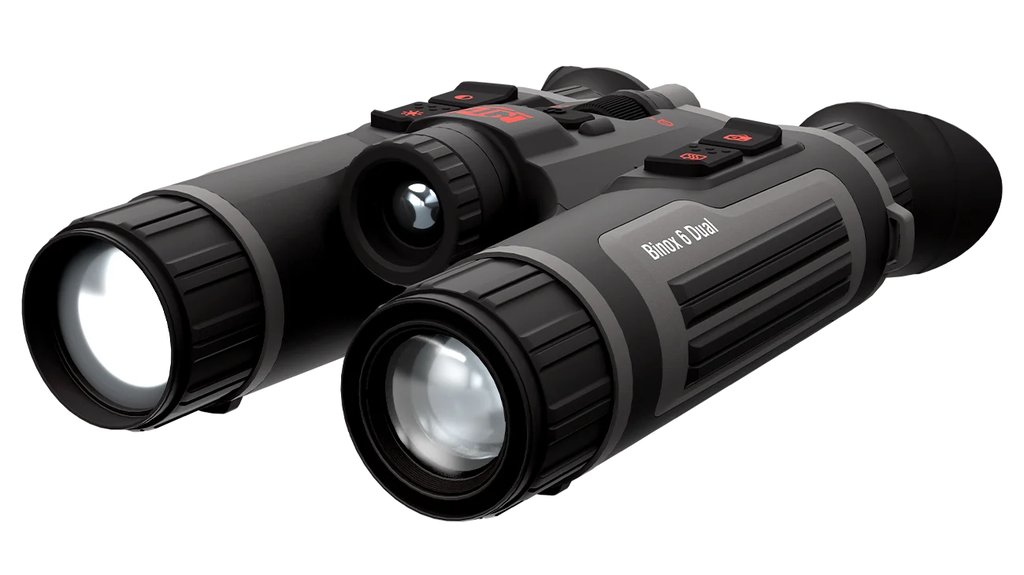
The two ATN options, side by side
How the Binox-6 Dual 640x512 3-24x works for a mobile setup
The ATN Binox-6 Dual 640x512 3-24x is built to sweep. Its wide 3x low end takes in a large slice of a field at once, so when you're scanning from a slow-rolling truck or moving between spots on foot, you cover ground fast and catch a coyote's heat signature at the edge of your sweep. The 640x512 sensor — roughly four times the heat-reading pixels of a 384, like standard definition to HD — then lets you zoom in and confirm the dog quickly before it moves. Tap the built-in rangefinder and you've got distance without a second device. For a mobile, cover-a-lot-of-ground style, that speed is where its flagship price pays back.
How the Binox-6 Dual 384x288 5.5-44x works for a static setup
The ATN Binox-6 Dual 384x288 5.5-44x is the value tool for hunters who plant themselves and glass. Set up on a rise overlooking open country, you don't need the widest field — you need reach to study far-off signatures, and the 44x top end delivers exactly that. The 384 sensor still resolves a coyote cleanly at the distances you'd shoot, and the built-in rangefinder confirms whether a distant dog is even worth calling. Because you're stationary, the slightly narrower 5.5x base isn't a handicap. You get long-glass capability and ranging at the lower price, which is why it's the smart-money static-stand pick.
When to choose the 640x512 3-24x
Choose the 640 when your hunt is mobile and fast — scanning from a truck or UTV, still-hunting between stands, or working ground where you need to sweep wide and confirm quickly. The 3x field finds dogs faster, the finer sensor IDs them before they read you, and the extra detection reach gives you time to react. It's the better tool when speed and certainty matter more than saving money. It's not the value pick for a hunter who parks in one spot and glasses far all night — you'd be paying for a wide field you rarely use.
When to choose the 384x288 5.5-44x
Choose the 384 when your setup is static and long-range — a fixed stand, a tripod on a rise, or any spot where you glass distant open country for hours. The 44x top end lets you scrutinize a signature at the far edge before committing, and the lower price makes it the value winner for that style. The 384 sensor is plenty to confirm a coyote at real shooting distances. It's not the best choice for run-and-gun mobile hunting, where the 640's wider, faster field earns its keep.
Our recommendation
For the best cheap thermal binoculars for coyote hunting judged by value, our overall pick is the ATN Binox-6 Dual 640x512 3-24x, because more coyote hunters run a mobile, scanning setup than a purely static one, and the 640's speed and certainty prevent the costliest mistake — losing a dog to a slow or uncertain ID. It's the lowest cost per confident season for an active hunter. If you truly hunt from one fixed spot and glass long, the 384x288 5.5-44x is the better value, keeping the rangefinder and adding reach for less. Compare both on the ATN thermal binoculars page and pick for how you actually run your stands.
How we compared them
This is an in-house comparison of two models from ATN's own current 6th-generation Binox-6 line, not an independent lab review. We held the shared features constant — ≤15 mK sensitivity, the built-in 1000 m rangefinder, the 4-in-1 day/night/thermal/twilight modes and the roughly 8-hour swappable battery — and compared only what changes value across setups: the width of the low-end field for fast scanning, the top-end zoom for static glassing, sensor resolution for identification speed, and detection range. We weighted mobile scanning slightly heavier because more hunters run that style, which tips our overall pick to the 640, while naming the 384 the value leader for static long-glass setups. Neither is right if you want a bargain viewer with no ranging. Match these traits to how you hunt, not to the sticker alone.
Frequently Asked Questions
Which ATN Binox-6 is better value for scanning from a truck?
The Binox-6 Dual 640x512 3-24x is the better value for mobile truck or UTV scanning because its wide 3x low end sweeps a large area quickly and the finer sensor confirms a coyote before it moves. Speed and certainty matter most when you cover ground, which is where the 640 earns its price. For a static setup the 384 makes more sense.
Is the cheaper 384 model fine for a fixed stand?
Yes. For a static stand or tripod setup the Binox-6 Dual 384x288 5.5-44x is the value winner, since its 44x top end excels at studying distant signatures and you don't need the widest field when stationary. It keeps the built-in rangefinder and ≤15 mK sensitivity. That makes it the smart-money choice for long-glass hunting from one spot.
Does setup really change which optic is the better buy?
Yes. A mobile, run-and-gun hunter benefits from the 640's wide, fast field, while a static long-glass hunter gets more value from the 384's reach and lower price. Buying the model that fits your setup avoids paying for capability you won't use. That is why we compare by setup rather than by sticker.
Do both models have the rangefinder for confirming coyote distance?
Yes. Both the 640x512 and the 384x288 include a built-in laser rangefinder reading to 1000 m at about ±1 m. Whether you're sweeping from a truck or glassing from a stand, you can confirm the exact distance to a coyote. That keeps shots on a small target ethical in either setup.
Can I use one binocular for both mobile and static hunting?
You can, but each model leans one way. The 640 handles occasional static glassing fine, and the 384 can scan on the move, so pick the one matching your dominant style. Both are 4-in-1 and versatile enough to cover the other setup when needed. Choose based on how you hunt most nights.
Why is the 640 the overall pick if the 384 is cheaper?
Because more coyote hunters run mobile, scanning setups where the 640's speed and certainty prevent lost dogs, making it the lowest cost per confident season for an active hunter. The 384 is the better value only for hunters who genuinely stay static and glass long. Value depends on matching the tool to your setup.
The best value between these two ATN thermal binoculars comes down to how you run your hunt. If you scan on the move — truck, UTV, or still-hunting between stands — the ATN Binox-6 Dual 640x512 3-24x is the faster, surer pick. If you park and glass long open country, the 384x288 5.5-44x keeps the rangefinder and adds reach for less. See both, side by side, on the ATN thermal binoculars page and choose for your setup.
Created: August 5, 2026 · 19:53:40 UTC