The smartest way to buy the best cheap thermal binoculars for coyote hunting is to match the optic to the distances you actually shoot — not to overspend on reach you'll never use, and not to underbuy and lose dogs at the edge of your range. Coyote work breaks cleanly into three bands: the in-close 0-150 yard call, the 150-300 yard mid range where most dogs get shot, and the 300-yard-plus glassing zone on open ground. This roundup ranks ATN's current thermal binoculars by range band, so your money goes exactly where your shots do.
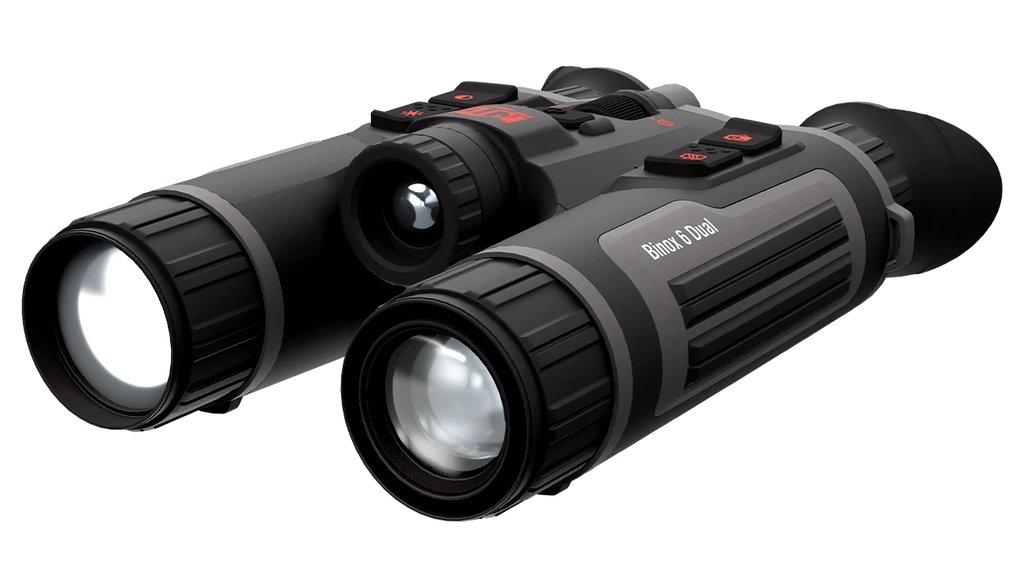
Best for the in-close band: ATN Binox-6 Dual 640x512 3-24x — wider 3x field and finer sensor for dogs that commit inside 150 yards.
Both share: ≤15 mK sensitivity, built-in 1000 m rangefinder, 4-in-1 day/night/thermal/twilight — so one cheap-per-season buy covers your whole shooting envelope.
Why range band, not sticker price, should drive the buy
Value in a coyote thermal is about buying the right capability for your distances. If most of your dogs die inside 200 yards, paying for a unit optimized for extreme reach is wasted money; if you glass big flats, an optic with a narrow zoom leaves you blind at distance. Either mismatch makes even a well-priced binocular a poor value. The Binox-6 line handles this because both models carry the two must-haves in every band — a ≤15 mK sensor that reads a small coyote cleanly, and a built-in 1000 m rangefinder to confirm distance whether the dog is at 90 yards or 350. NETD, the smallest temperature difference the sensor can resolve, stays low on both, so the picture holds up close and far.
Where the two models differ is the shape of the zoom. The 384's 5.5-44x reaches deep into the far band, while the 640's 3-24x opens wider for the in-close band. Both being 4-in-1 — day, night, twilight, thermal — means neither forces a second optic. Here's the band-by-band picture.
Mid band (150-300 yards): where most coyotes get shot
This is the band that should anchor your buy, because it's where the majority of called coyotes actually get taken, and it's where the ATN Binox-6 Dual 384x288 5.5-44x is at its best value. In the 150-300 yard window the 384 sensor resolves a coyote cleanly, the zoom sits comfortably in its sweet spot, and the built-in rangefinder confirms the exact distance so your holdover is honest rather than a guess. You get everything a mid-range shot needs at the lower price. It's for the hunter whose stands mostly produce shots in this middle band. It's not for someone whose dogs consistently commit inside 100 yards, where the 640's wider field is easier to work.
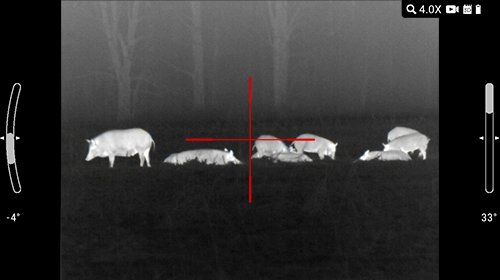
In-close band (0-150 yards): fast, wide, and forgiving
When coyotes come all the way in, the priorities flip: you need a wide field to track a dog that's moving and circling, and a sensor that reads detail instantly. That's where the ATN Binox-6 Dual 640x512 3-24x earns a step up. Its 3x low end is noticeably wider than the 384's 5.5x base, keeping a close dog in the frame, and the finer 640 sensor confirms the ID before the coyote reads you. The 384 still works in close — it just asks for a steadier hand at its tighter base zoom. Choose the 640 for stands that produce lots of in-your-lap encounters; it's not necessary if your shots mostly stretch past 150 yards.
Far band (300 yards and out): glassing open country
On big picked fields and desert flats, the far band is about studying a distant heat signature and deciding whether to work it, and here the 384x288 5.5-44x's tall 44x top end is the value leader. That extra magnification lets you scrutinize a far-off signature and confirm it's a coyote before you burn a stand, while the rangefinder tells you if it's even worth setting up on. The 640 reaches too — its 3100 m detection and 24x are plenty — but for pure long glassing the cheaper 384 gives you more top-end reach for the money. This band rewards the value pick.
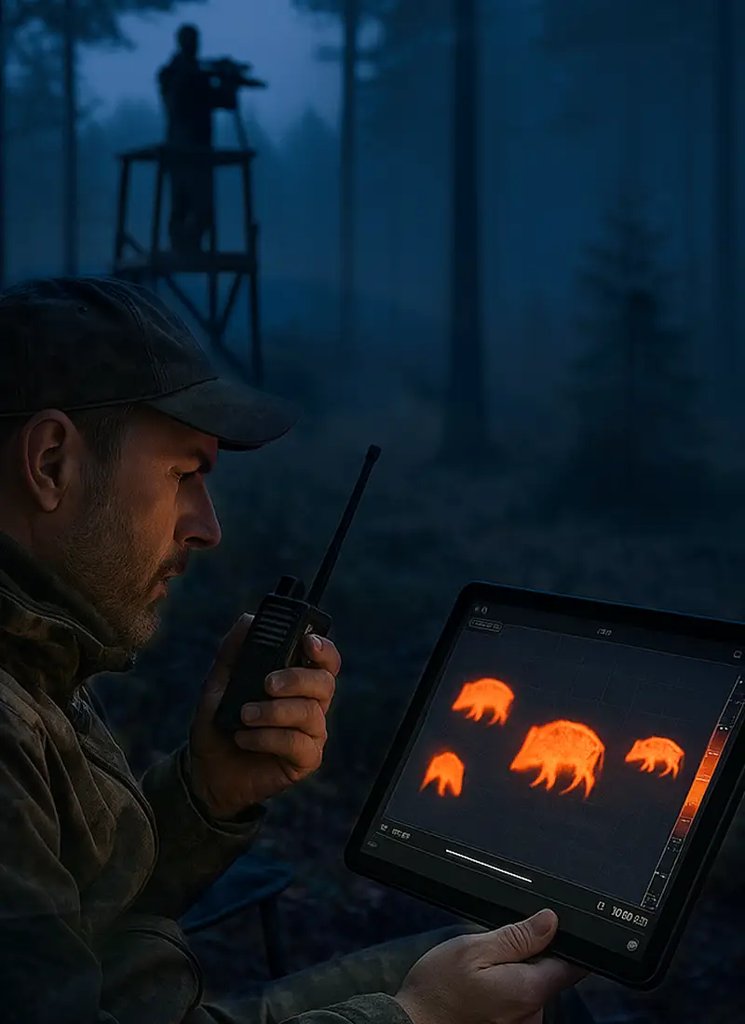
How the rangefinder ties the three bands together
The reason a single Binox-6 can cover close, mid and far coyote work is that the built-in rangefinder makes the whole distance envelope one continuous tool rather than three separate guesses. In the in-close band, ranging matters less for holdover than for confirming a fast-moving dog hasn't drifted past your safe backstop. In the mid band it does the real work — a confirmed 240 yards versus an assumed 200 is the difference between a clean shot and a miss over the back. In the far band it acts as a filter: lase a distant signature and if it reads past your rifle's honest window, you save the stand for a dog that's actually workable. Because the reading appears on the same display as the heat image on both models, you never break your view of the coyote to check a separate device.
There's a practical scanning rhythm that gets the most from either model across the bands. Start wide at the low end of the zoom to sweep the whole field and catch movement, then zoom in only once you've located a signature to identify and range it. On the 384x288 5.5-44x you'll spend more of that sweep at the base and zoom hard for far targets; on the 640x512 3-24x you'll enjoy a wider initial sweep and less zooming in close. Either way, the discipline of scan-wide-then-confirm is what keeps you from tunnel-visioning on one spot while a second dog circles in from the flank — a common way to blow a double.
How to choose by your typical shot distance
Buy for the band where most of your coyotes actually die, and let the shared rangefinder and sensitivity cover the rest.
- Most shots 150-300 yards — the 384x288 5.5-44x is the value anchor; it owns the mid band at the lower price.
- Dogs commit inside 150 yards — step up to the 640x512 3-24x for the wider field and finer close-range detail.
- Long glassing past 300 yards — the 384's 44x top end gives the most reach per tier of spend.
- Mixed distances — the 384x288 5.5-44x flexes across all three bands, which is why it's the overall value pick.
- Range in every band — both models confirm distance with the built-in 1000 m rangefinder, so no band leaves you guessing holdover.
How we picked these ATN thermal binoculars
This is an in-house comparison of ATN's own current 6th-generation Binox-6 line, not an independent lab review, and we organized it by shooting distance because that's what actually determines value for a coyote hunter. We evaluated each model's zoom range against the in-close, mid and far bands, its sensor resolution and ≤15 mK NETD for identifying a small target at those distances, the built-in rangefinder for confirming range in every band, and battery life for a full night out. We named the 384x288 5.5-44x the best value overall because it covers all three bands well at the lower price, and pointed to the 640 only for hunters who live in the in-close band. Neither is right if you want a no-range bargain viewer. Match these specs to the distances your stands actually produce.
Frequently Asked Questions
How do I know which range band matters most for my coyote hunting?
Look at where your called coyotes actually offer shots. Most hunters find the majority die in the 150-300 yard mid band, some come inside 150 yards, and open-country hunters glass past 300. Buy the optic that best serves your dominant band, then rely on the shared rangefinder for the rest.
Is the cheaper 384x288 model good enough for long shots?
Yes. The Binox-6 Dual 384x288 5.5-44x has a 44x top end that excels at studying distant signatures, and its built-in rangefinder confirms far distances accurately. Its ≤15 mK sensitivity keeps a coyote readable out past 300 yards. That combination makes it the value leader for the far band.
Why is the 640 better for close coyotes?
The 640x512 3-24x opens to a wider 3x low end, keeping a close, circling dog in the frame, and its finer sensor confirms identification instantly at short range. When coyotes commit inside 150 yards, that wider field and detail matter more than top-end zoom. For close work it is worth stepping up.
Do both models range across every band?
Yes. Both include a built-in laser rangefinder reading to 1000 m at about ±1 m, so you can confirm distance whether a coyote is at 90 yards or 350. Accurate range in every band is what keeps holdover honest on a small target. That is why ranging is standard on both models.
Will buying for the wrong band cost me value?
Yes. Overspending on extreme reach you never use, or underbuying so you are blind at your typical distance, both waste money. Matching the optic to your dominant range band is how you get the most value per tier of spend. That is the whole reason to shop by band rather than sticker price.
Can I cover all three bands with one binocular?
The 384x288 5.5-44x is built to flex across close, mid and far bands, so most coyote hunters can cover their whole envelope with it. If your hunting leans heavily to one extreme, the 640 helps in close, but for mixed distances the 384 handles everything. One capable unit is better value than two specialized ones.
Buy for the distance your coyotes actually die at, and the value follows. For most hunters the mid-band and long-glass flexibility of the ATN Binox-6 Dual 384x288 5.5-44x makes it the smart-money pick. If your dogs pile up inside 150 yards, the 640x512 3-24x gives you a wider, finer close-range view. Compare both across every band on the ATN thermal binoculars page and buy exactly the reach you need.
Created: August 5, 2026 · 19:53:40 UTC