First-time thermal buyers almost always overpay — they chase the biggest number instead of the tool they will actually use on a stand. If this is your first heat optic and you want the best cheap thermal binoculars for coyote hunting from the current lineup, start with the ATN Binox-6. 'Cheap' here means the lowest current-line entry point, not stripped-down junk: you still get a real 15mK sensor, a rangefinder, and two-eye comfort. This is the tool that teaches you how coyotes move at night without draining the truck fund.
Upgrade later: ATN Binox-6 640x512 3-24x — more resolution and reach once you know how far your coyotes make you look.
Bottom line: Learn on the 384; it is enough to become a better caller, and you will understand exactly what to buy next.
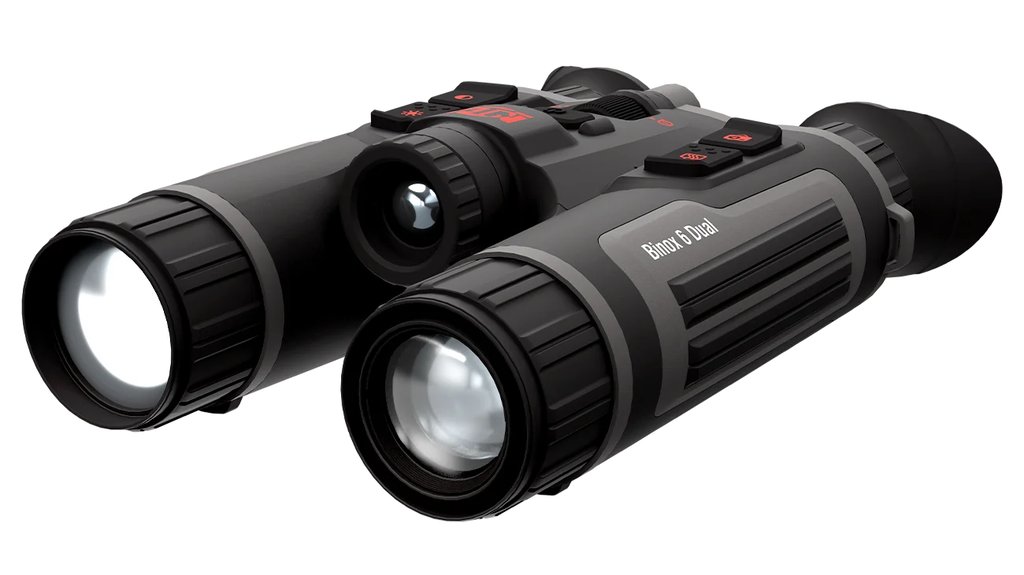
Why ATN's 6th-gen Binox-6 is a smart cheap starter
ATN's 6th-generation Binox-6 is a smart cheap starter because the affordable model is not a hollowed-out version — it shares the same 15mK sensor sensitivity and the same rangefinder as the pricier one, so a beginner is not learning bad habits on a bad picture. Cheap thermal often means a grainy image that makes a coyote look like a warm rock; here the low NETD keeps a dog reading as a dog even in damp pre-dawn air. Two-eye viewing is a genuine help for a new hunter, because it is far more forgiving on the eyes through a long, cold, unfamiliar sit than squinting through a single tube. You also get the ATN Connect 6 app, so you can play back your first stands and actually learn from them. Because we only consider the current line, the entry price still buys the newest generation — not last year's model marked down.
Best cheap starter: ATN Binox-6 384x288 5.5-44x
The ATN Binox-6 384x288 5.5-44x is the best cheap starter because it is the lowest-priced way into the current line while still being a complete thermal binocular — nothing important is missing. For a first-timer, the 384 sensor removes the biggest beginner mistake: overpaying for resolution you cannot yet use. The 5.5x base magnification is friendly for learning, because it already reaches into the edges where coyotes appear.
Easy to learn on
A new caller spends the first few hunts figuring out what a coyote even looks like as a heat signature versus a deer, a cow, or a warm stump. The clean 15mK picture and comfortable two-eye view make that learning curve gentler. You are watching, not fighting the tool.
Grows your skills, not your regret
Because the app records your stands, you can review a missed dog and see what tipped it off. By the time you outgrow the 384 — if you ever do — you will know precisely why, which makes the upgrade decision easy instead of a guess.
Who it's for: the first-time thermal buyer who wants to learn night calling without overspending. Who it's not for: an experienced long-range caller who already knows they need max clarity at distance from day one.
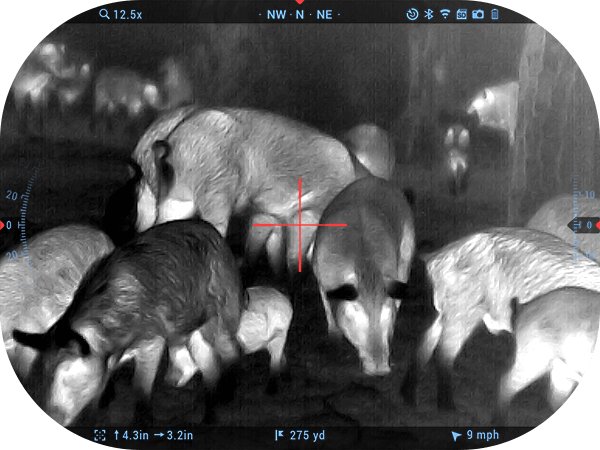
Upgrade later: ATN Binox-6 640x512 3-24x
The ATN Binox-6 640x512 3-24x is the natural upgrade because its 640 sensor gives more dots in the picture, so once your eyes are trained you can zoom further and still keep a clean image. The wider 3x base view and 3100m detection suit a caller who has grown into bigger, more open ground.
When you have outgrown the starter
After a season, you will know whether your dogs hang up far off or break close. If you find yourself constantly wishing for more reach and sharper long-range ID, that is the moment the 640 makes sense. It steps up in price, but you will be buying it for a reason you can name, not on impulse.
Who it's for: the caller who has learned the game and now hunts distance or open country. Who it's not for: a brand-new hunter who has not yet figured out their range needs — that money is better learned on first.
How to choose your first cheap thermal binoculars
Pick the tool that teaches you fastest for the least money, then upgrade on evidence, not on impulse:
- Do not chase resolution first — a beginner cannot use 640 clarity at extreme zoom yet, so the 384 is the honest starting point.
- Prioritize a clean image — both models share 15mK sensitivity, which is what actually makes a coyote readable, cheap model or not.
- Value the two-eye comfort — a binocular is easier on the eyes than a monocular through a long, unfamiliar sit.
- Use the app to learn — recording your first stands turns mistakes into lessons and tells you what to upgrade to.
- Keep spare cells — both run swappable 18650 batteries for ~8 hours, so a cheap spare set keeps a learning night going.
Beginner mistakes a cheap Binox-6 helps you avoid
The biggest reason new hunters waste money on thermal is not the tool — it is a handful of predictable mistakes, and the cheap Binox-6 is set up to steer you around them. The first mistake is buying too much resolution too soon. A beginner cannot yet tell a coyote from a fox at extreme zoom, so paying flagship money for detail you cannot read is a classic first-year regret; the 384 sidesteps it by putting your money on a clean, honest picture at the ranges you will actually hunt. The second mistake is expecting the thermal to do the work of woodcraft. Heat vision finds warm bodies, but it will not tell you the wind is wrong or that you skylined yourself walking in. New callers who lean on the gadget and skip the fundamentals blame the optic when the dog was really lost to a swirling breeze. The cheap model, honestly, teaches this lesson faster because you are not distracted by chasing max-range performance.
A third trap is running the wrong palette for the conditions and then deciding thermal 'does not work.' The Binox-6 carries six color palettes, and a new hunter should spend the first few nights simply switching between White Hot and Black Hot to learn which one makes a coyote pop against a given background — frosty stubble reads differently than warm plowed dirt. Finally, beginners forget to manage batteries and end a promising sit early; the swappable 18650 cells make a spare set cheap insurance. Every one of these fixes is free and built into the affordable model, which is why 'cheap' here does not mean 'handicapped.' It means the tool that lets you make and correct your rookie mistakes without a painful bill.
One more thing a first-timer should hear plainly: a cheap thermal binocular is a spotting tool, not a magic wand, and pairing it with realistic expectations is what makes it feel like a bargain rather than a letdown. Expect to spend your first outings just learning what heat signatures look like — a bedded deer glows differently than a standing coyote, a warm rock fools everyone once, and running animals blur until you learn to lead your sweep. The 384 gives you a clean enough picture to build that library of shapes in your head, and because the money did not all go into the sensor, you will not feel like you wasted a fortune while you are still learning. That patience, paired with the right entry-level tool, is what turns a rookie into a caller who consistently spots dogs before they spot back.
The rookie errors to skip
- Over-buying resolution — you cannot use 640 detail yet, so the 384 spends your money where a beginner benefits.
- Trusting the tool over the wind — thermal finds heat, not scent; play the breeze first, every stand.
- Ignoring palettes — switch White Hot and Black Hot to see which pops a coyote against your ground.
- Dead batteries — carry a spare 18650 set so a rookie sit does not end at the best moment.
How we picked these ATN thermal binoculars
We ranked these for the first-time buyer: the most useful, least-regret entry into night coyote calling. The criteria were entry price against real capability, thermal sensitivity (NETD) for a readable picture, resolution, base magnification, detection range, viewing comfort over a long sit, and battery life. Only the current 6th-generation Binox-6 line was in the running, so the affordable model is still the newest generation. The honest trade-off: the cheap 384 gives up resolution and long-range reach, and it is not the right first buy for an experienced caller who already knows they need distance. This is an in-house comparison of ATN's own binoculars, not an independent lab test — be honest about your skill level and your ground before you decide.
Frequently Asked Questions
Is a cheap thermal binocular good enough to start coyote hunting?
Yes. The Binox-6 384 is the lowest current-line entry point but keeps the 15mK sensor and the rangefinder, so a beginner gets a clean, readable picture. It is enough to learn how coyotes move at night without overpaying for features you cannot yet use.
Does 'cheap' mean the picture will be grainy?
Not here. The affordable 384 model shares the same 15mK thermal sensitivity as the pricier 640, and that sensitivity is what keeps the image clean. You give up some resolution at extreme zoom, not the basic clarity that makes a coyote readable.
Why start with binoculars instead of a cheap thermal scope?
A binocular is built for two-eye scanning, which is far more comfortable for a new hunter through a long, cold sit and helps you find dogs faster. A scope is for aiming, not searching. Learning to spot heat first makes you a better caller.
Will I outgrow the 384 model?
Maybe, and that is fine. If after a season you find your coyotes hang up at long range and you keep wishing for more reach, the 640 is the logical step. Learning on the 384 tells you exactly whether you need it.
How do I learn faster with these binoculars?
Use the ATN Connect 6 app to record your stands, then review the footage to see what a coyote looked like versus other animals and what spooked a dog. Both models support Wi-Fi streaming and on-board recording.
Can I hunt a full night on one charge?
About 8 hours per charge, and both models use replaceable 18650 batteries. Carrying a cheap spare set lets you swap in seconds and keep a learning night going.
New to hunting at night? The ATN Binox-6 is the low-cost, full-featured way in — a real 15mK sensor, a rangefinder, and comfortable two-eye viewing so your first stands teach you instead of frustrate you. Browse the 384 starter and the 640 upgrade in ATN's thermal binoculars lineup, start where your skills are, and let the app-recorded stands tell you when it is time to move up.
Created: July 7, 2026 · 14:32:46 UTC