Ask ten people what they want from thermal binoculars and you'll get ten different jobs: one wants to scout a property line after dark, one wants an honest distance before committing to a stalk, one wants to pick apart a far ridge at high magnification, and one just wants to know what keeps tripping the dog at 2 a.m. Price gets thrown around a lot, but the smarter question is which pair does your specific job for the least money. That framing is why this roundup leads with the ATN Binox-6 Dual 384x288 5.5-44x — the more affordable of the two Binox-6 variants — and then shows exactly which task each pair owns. The ATN Binox-6 Dual 384x288 5.5-44x is the featured pick.
Short version: for most jobs the ATN Binox-6 Dual 384x288 5.5-44x is the best cheap thermal binoculars pick, because its value tier, built-in rangefinder and up-to-44x magnification cover scouting, ranging and long glassing without overspending. Step up to the ATN Binox-6 Dual 640x512 3-24x only when a job demands the finest detail at distance.
Quick answerBest value overall: ATN Binox-6 Dual 384x288 5.5-44x — the more affordable variant, with high magnification and a rangefinder that handle scouting, ranging and long glassing for less.
Best for detail-critical jobs: ATN Binox-6 Dual 640x512 3-24x — the sharper 640 sensor for identifying and confirming fine detail at distance when the task can't tolerate a soft picture.
Why ATN's 6th-gen thermal binoculars cover so many jobs
A single pair of thermal binoculars can handle wildly different jobs because both Binox-6 variants pack several tools into one body. Each is a 4-in-1 unit — day, night, thermal and twilight — so the same binocular scouts in daylight and hunts heat after dark. A built-in laser rangefinder reads distance out to 1000 m, turning a spotting tool into a ranging tool. Both carry a NETD rated at 15 mK or lower; NETD is the smallest temperature difference the sensor can resolve, and a lower number means a cleaner picture with less grain, which matters whether you're sorting a warm body from cool brush or a heat source from a cool wall. SharpIR AI sharpens edges in real time and a 4K day sensor gives you a genuine daytime binocular for the jobs that don't involve heat at all.
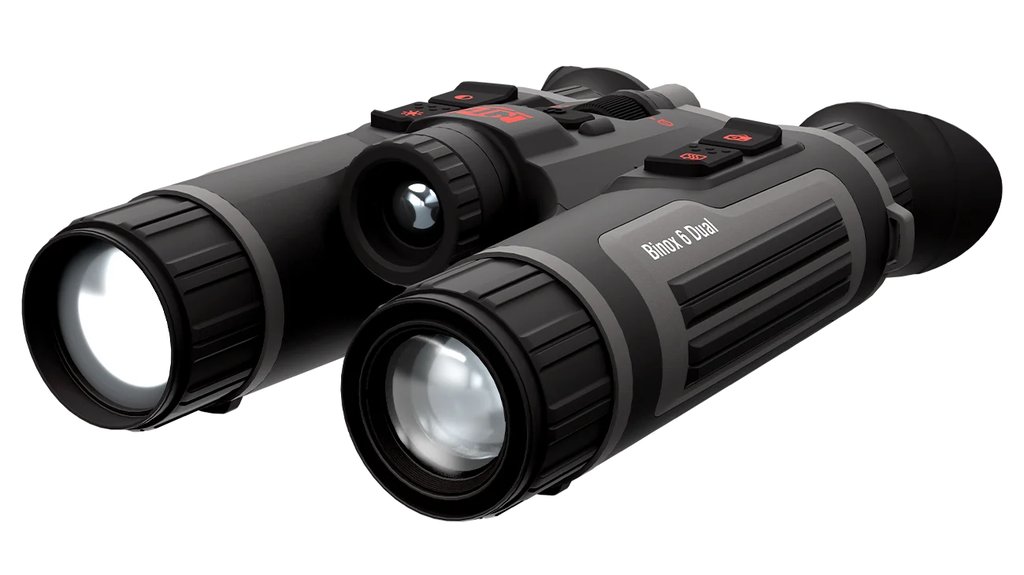
ATN Binox-6 Dual 384x288 5.5-44x — best value for most jobs
This is the pair I point people to first when money is the sticking point but the job list is long. The ATN Binox-6 Dual 384x288 5.5-44x runs a 384x288 thermal sensor, which keeps it in a value tier, and pairs it with the highest top-end magnification in the family at 44x. For a whole slate of common tasks, that combination does the work without asking you to reach for the flagship. The trick most buyers miss is that the priciest sensor isn't automatically the right one; the right one is whichever pair clears your actual job for the least money, and for scouting, ranging and general glassing this variant clears every bar. The 384 sensor still gives a picture clean enough to trust, and the extra magnification on top is capability you can use every time you glass a far edge.
Scouting and observation
For walking a property, checking field edges or watching a food source, this pair is plenty. The ≤15 mK NETD gives a clean enough picture to tell a live animal from warm ground, and at 720 g it's light enough to carry all evening. Switch to the 4K day mode when there's light and you have a normal binocular for daytime scouting — one tool covering the whole observation job.
Ranging before a decision
Spotting is only half the task; knowing how far off something is decides your next move. The built-in laser rangefinder reads distance to 1000 m with tight accuracy, so you can range that heat signature before you commit to a stalk, a longer look, or a walk you don't need to make. Having ranging baked into an affordable pair is exactly what makes it punch above its price.
Glassing distant ridgelines at high magnification
This is where the 44x top end pulls ahead. When the job is picking apart a far ridge or a distant tree line, high magnification lets you inspect a signature without closing the ground. A 2750 m detection range covers the distances most glassing actually happens at, and SharpIR AI keeps the enlarged image from turning to mush. High zoom is only worth having if the picture survives it, and that combination of AI cleanup and a low NETD is what stops a signature from smearing into the background as you push the magnification to its limit. Range the target with the built-in finder as you glass and you know instantly whether it's inside sensible distance or just a curiosity across the valley.
Who it's for / not for
It's for the person whose jobs are scouting, ranging and long-range glassing and who wants that capability at the value end of the lineup. It's not the pick when a job hinges on the finest possible detail at distance — identifying a species or reading fine features far out is where the 640 lead does better.
ATN Binox-6 Dual 640x512 3-24x — best for detail-critical jobs
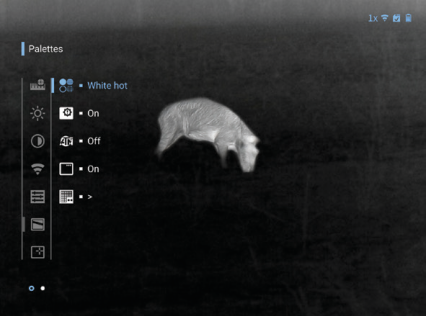
When the job won't forgive a soft picture, the ATN Binox-6 Dual 640x512 3-24x steps up. Same 4-in-1 design, same rangefinder, same 6th-gen processing — but a full 640x512 thermal sensor. Think of the resolution jump like going from an SD picture to HD: more pixels means finer detail, so a distant animal reads as itself instead of a warm blob you have to interpret.
Identifying, not just spotting
For jobs where you must know exactly what you're looking at — confirming a species, reading whether a signature is one animal or two, checking fine features far out — the extra pixels of the 640 sensor do the deciding. A 3100 m detection range gives it a little more reach than the value pick, and the sharper picture holds together as you zoom to inspect. If your job is identification at distance, this is the ATN Binox-6 Dual 640x512 3-24x you want.
Who it's for / not for
For the buyer whose tasks demand crisp identification far out and who will pay the higher tier to get it. Not for the value-first shopper whose jobs are covered by the 384 5.5-44x, which delivers scouting, ranging and high-mag glassing for less.
How to choose cheap thermal binoculars by the job
Name the job first, then buy the pair that owns it. Spending more only pays off when the task genuinely needs the sharper picture.
- Scouting and property watch — the 384 5.5-44x is light, clean enough and affordable for routine observation.
- Ranging before a move — both carry a 1000 m laser rangefinder, so let budget decide between them.
- High-magnification glassing — the 384's 44x top end reaches out on far ridges for less money.
- Identification at distance — the 640 3-24x gives the fine detail to confirm what you're seeing.
- Day-and-night duty — both are 4-in-1 with a 4K day sensor, so one tool covers every light for its job.
How we picked these ATN thermal binoculars
This is an in-house comparison of ATN's own current binocular lineup, not an independent lab review. We considered only the 6th-gen Binox-6 family and scored each pair by a practical yardstick: which real-world job does it do best for the money it costs?
- Value for the task — whether the pair covers the intended job without paying for detail the job doesn't need.
- Magnification range — how far you can inspect a signature, where the 384's 44x top end earns its place.
- Ranging — a built-in laser rangefinder to 1000 m so spotting turns into a real distance for decisions.
- NETD (thermal sensitivity) — both ≤15 mK, the smallest temperature difference the sensor sees, for a clean picture on every job.
- Weight and battery — carry comfort for long observation and ~8 hrs on swappable 18650 cells.
Honest trade-offs: the 384 5.5-44x is the value winner for most jobs, but its 384 sensor gives up fine detail at extreme range, so a pure identification task is better served by the 640. The 640 3-24x costs more and reaches a bit farther, yet its lower top-end magnification means it inspects a far ridge at less power than the 384. Neither pair is right for someone who only ever needs a daytime binocular — these are thermal tools. Match the pair to your actual job list before buying.
Frequently Asked Questions
Which ATN Binox-6 is the best cheap thermal binoculars for most jobs?
The ATN Binox-6 Dual 384x288 5.5-44x. It sits in the value tier of the pair, carries a built-in laser rangefinder, and reaches up to 44x magnification, so it covers scouting, ranging and long glassing without paying for detail those jobs don't require.
Do I need the 640 sensor, or is the 384 enough?
It depends on the job. If your tasks are scouting, ranging and general glassing, the 384x288 pair is enough and saves money. If a job hinges on identifying fine detail at distance, the 640x512 sensor gives more real pixels and a sharper picture, which is worth the step up.
How does a built-in rangefinder change what the binoculars can do?
It turns a spotting tool into a decision tool. Both Binox-6 variants read distance to about 1000 m, so once you see a heat signature you know exactly how far off it is before committing to a stalk, a longer look, or a walk. That ranging is built in, not a separate device to carry.
Can I use these for property watch at night and scouting by day?
Yes. Both variants are 4-in-1 units with a 4K day sensor plus thermal, night and twilight modes, so the same pair watches a property line after dark and scouts field edges in daylight. One tool handles the whole job around the clock.
What magnification do I need for glassing distant ridges?
Higher magnification helps you inspect a signature without closing the ground. The 384x288 5.5-44x tops out at 44x, which is the highest in this pair, so it is the stronger choice for picking apart far ridgelines and tree lines from a distance.
How long will the batteries last during a job?
Both variants run about 8 hours on two 18650 cells, and you can swap in fresh cells in the field. That is enough for a long night of property watch or a full day of scouting without losing your eyes at the wrong moment.
If your job list is scouting, ranging and long-range glassing and you want the best cheap thermal binoculars for the money, start with the more affordable ATN Binox-6 Dual 384x288 5.5-44x — a value pick with a rangefinder and up-to-44x reach. When a task demands the finest detail at distance, the ATN Binox-6 Dual 640x512 3-24x steps up with the sharper 640 sensor. Compare both, spec by spec, on the ATN thermal binoculars collection and buy the pair that owns your actual job.
Created: August 5, 2026 · 19:53:40 UTC