A pair of thermal binoculars proves itself differently in January than it does in July. Snow flattens contrast and hides bedded deer against a cold, even background; summer heat fills the whole field with warm ground that a weak sensor can't cut through; fall glassing puts you on a ridge at gray light trying to sort real animals from warm rocks. If you want the best cheap thermal binoculars — meaning real capability without paying for reach you'll never use — you need a pair that keeps a clean picture as the calendar turns. The lead here is the ATN Binox-6 Dual 640x512 3-24x, and I've judged it by how it holds up season to season, not by a spec sheet in isolation.
Short version: the ATN Binox-6 Dual 640x512 3-24x is the best cheap thermal binoculars pick because its high-resolution sensor, built-in laser rangefinder and 4-in-1 vision keep a clean, readable picture on winter snow, through summer heat and at fall gray light. The Binox-6 Dual 384x288 5.5-44x is the more affordable value option that trades some sensor detail for reach.
Quick answerBest overall: ATN Binox-6 Dual 640x512 3-24x — the sharpest, most versatile picture, with a rangefinder and day/night/thermal/twilight modes that carry across every season.
Best value: ATN Binox-6 Dual 384x288 5.5-44x — the more affordable variant in the pair, with higher top-end magnification for reaching out on open ground when your budget stays tighter.
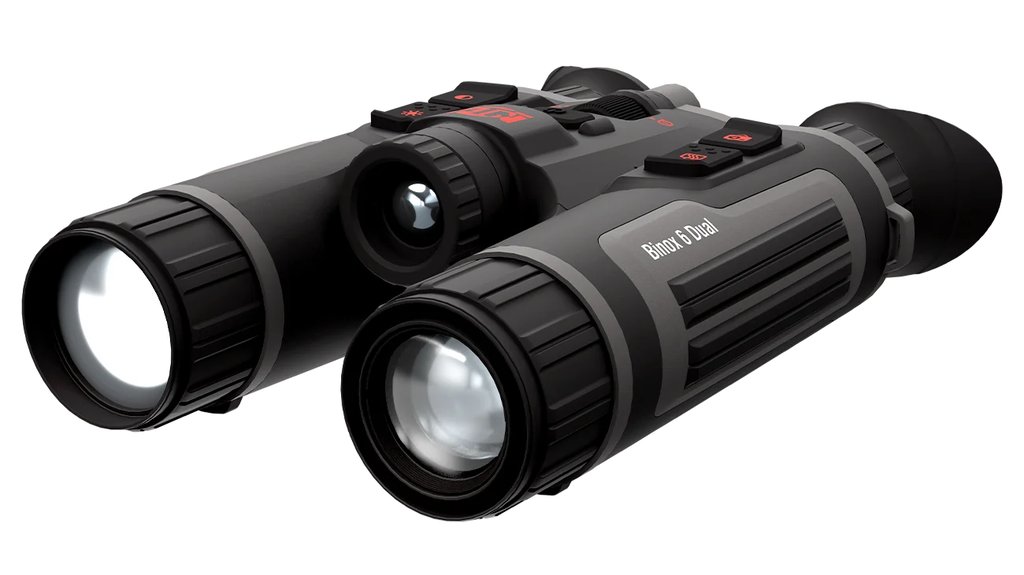
Why ATN's 6th-gen thermal binoculars hold up all year
The picture a pair of thermal binoculars gives you is a chain: the sensor gathers heat, the electronics clean it up, and the display shows the result. Both Binox-6 variants strengthen every link. Each carries a NETD rated at 15 mK or lower — NETD is the smallest temperature difference the sensor can tell apart, and the lower that number, the cleaner and less grainy your image looks. That matters most in winter, when a bedded animal sits only a few degrees above frozen ground. SharpIR AI sharpens edges in real time so a distant shape keeps its outline, DeFog and Wide Dynamic Range fight the murk of damp fall mornings, and a built-in laser rangefinder good to 1000 m tells you exactly how far off that heat signature really is. The 4-in-1 design — day, night, thermal and twilight — means one pair earns its keep morning, noon and after dark.
ATN Binox-6 Dual 640x512 3-24x — best overall cheap thermal binoculars
This is the pair I reach for first when the season could be anything. The ATN Binox-6 Dual 640x512 3-24x mates the full 640x512 thermal sensor with a fast 35 mm F/1.0 germanium lens, and that combination is where its picture earns its reputation. A 640x512 sensor is like stepping from an SD picture up to HD: more pixels means finer detail, so a coyote across a cut field reads as a coyote and not a warm smudge you have to guess at. For a pair this affordable to still deliver that resolution is the whole point of calling it a smart-money buy.
Winter: pulling heat off cold snow
Snow is the ultimate test of a thermal sensor because the whole world drops to nearly the same cold temperature. The 640 sensor's low NETD keeps the small temperature separation you need to lift a bedded deer out of a white field, and SharpIR AI holds its shape as you dial up the 3-24x zoom. When you spot something, the built-in laser rangefinder puts an honest distance on it so you know whether that dark shape a quarter-mile off is worth the walk in the cold.
Spring and summer: cutting through warm ground
Summer flips the problem: now the whole field is warm and you're trying to find something warmer still. The clean picture from the 640 sensor, paired with a 3100 m detection range, lets you scan broad, heat-soaked ground and still catch the sharper signature of a live animal. Flip to the 4K day mode when the light is good and you have a full daytime binocular in the same body — one tool covering the long summer days.
Fall: gray-light glassing before the hunt
Fall pre-hunt scouting usually happens at the edges of daylight, when your eyes struggle most. The twilight mode bridges that gap, and DeFog with Wide Dynamic Range keeps the image usable in damp, low-contrast morning air. GPS and the onboard compass let you mark exactly where you glassed an animal so you can plan an approach for opening day.
Who it's for / not for
It's for the scout who wants one affordable pair that never quits as the seasons change and who values a sharp picture plus real ranging. Buy the ATN Binox-6 Dual 640x512 3-24x if that's you. It's not for someone whose only need is squeezing maximum magnification onto distant open plains — the 384 5.5-44x below stretches farther in reach.
ATN Binox-6 Dual 384x288 5.5-44x — best value thermal binoculars
The ATN Binox-6 Dual 384x288 5.5-44x steps down to a 384x288 thermal sensor to land in a friendlier price tier, and it's the lightest of the pair at 720 g. Fewer pixels than the 640 means slightly less fine detail at the extreme end of the range, but what you gain is a big jump in top-end magnification — up to 44x — that pays off when the season keeps you on wide-open ground.
What the seasons still get you at this tier
You keep the same 6th-gen brain across the calendar: the ≤15 mK NETD for cold winter contrast, SharpIR AI, the 4-in-1 day/night/thermal/twilight modes, and the same built-in laser rangefinder good to 1000 m. A 2750 m detection range still covers realistic scouting distances, and the high magnification lets you confirm a signature far out on summer plains or a fall ridgeline without closing the gap.
Who it's for / not for
For the budget-first scout who spends most of the year glassing open country and wants the extra reach of 44x magnification. Not for someone who needs the finest possible detail at long distance in every light — the 640 lead keeps a sharper picture far out.
How to choose your cheap thermal binoculars by season
Start with when and where you'll actually use them, then match the picture to it. What you need from the image shifts with the season and the ground you cover.
- Winter scouting — prioritize low NETD and resolution; the 640 3-24x lifts a cold animal off cold snow.
- Summer scanning — favor a clean picture over reach so a warm animal stands out against warm ground.
- Fall gray light — lean on twilight mode, DeFog and Wide Dynamic Range for low-contrast mornings.
- Open plains all year — the 384 5.5-44x trades some detail for higher magnification to reach far out.
- Planning and returns — GPS, compass and the built-in rangefinder let you mark and range spots on both variants.
How we picked these ATN thermal binoculars
This is an in-house comparison of ATN's own current binocular lineup, not an independent lab test. We looked only at the 6th-gen Binox-6 family and judged each pair against a single question: does the image stay clean and honest as the seasons change from snow to heat to gray fall light?
- Sensor resolution — more pixels means finer detail and farther identification, so the 640 leads for all-around clarity.
- NETD (thermal sensitivity) — both rated ≤15 mK, the smallest temperature difference the sensor sees, which matters most on cold winter ground.
- Detection range and ranging — how far you can spot heat, plus a laser rangefinder to put a real distance on it.
- Versatility — the 4-in-1 day/night/thermal/twilight design so one pair works across every season and light.
- Weight and battery — carry comfort on long scouting days and ~8 hrs of runtime on swappable 18650 cells.
Honest trade-offs: the 640 3-24x gives the sharpest, most versatile picture but sits at the higher tier of this pair, and its reach is more than a pure short-range watcher needs. The 384 5.5-44x gives up some fine detail far out in exchange for more magnification and a lower price. Neither is the right tool for someone who only wants a daytime binocular — these are thermal instruments. Check the specs against the seasons you actually scout before you buy.
Frequently Asked Questions
What makes thermal binoculars work well in winter snow?
A low NETD is the key. NETD is the smallest temperature difference the sensor can detect, and on snow everything sits at nearly the same cold temperature. The ≤15 mK rating on the ATN Binox-6 lets you separate a bedded animal from frozen ground, and SharpIR AI keeps its outline sharp as you zoom.
Which ATN Binox-6 is the best cheap thermal binoculars pick overall?
The ATN Binox-6 Dual 640x512 3-24x. Its full 640 thermal sensor gives the sharpest, most versatile picture, and the built-in laser rangefinder plus 4-in-1 day/night/thermal/twilight modes make it useful across every season without paying for capability you won't use.
Does higher resolution matter more than magnification?
For the actual picture, resolution usually wins. Magnification only enlarges what the sensor already captured, so zooming a low-resolution image just enlarges a blurry shape. The 640x512 sensor gives more real detail to work with, which is why it reads cleaner far out than the 384 does at extreme range.
Can I use these thermal binoculars during the day?
Yes. Both Binox-6 variants are 4-in-1 units with a 4K day sensor, so they work as a full daytime binocular as well as in thermal, night and twilight modes. That is a big part of why one affordable pair can serve you all year.
How far can the ATN Binox-6 detect an animal?
The 640x512 3-24x has a detection range of about 3100 m and the 384x288 5.5-44x about 2750 m. Both also carry a built-in laser rangefinder good to roughly 1000 m, so once you spot heat you can put an accurate distance on it.
How long do the batteries last on a scouting day?
Both variants run roughly 8 hours on two 18650 cells, and you can swap fresh cells in the field. That covers a long day of glassing across a whole season without leaving you without eyes at the worst moment.
If you want the best cheap thermal binoculars that keep a clean picture from snowbound winter mornings through summer heat and into fall gray light, start with the ATN Binox-6 Dual 640x512 3-24x — the sharpest, most versatile pick in this pair, with ranging built in. If your budget stays tighter and you mostly glass open plains, the higher-magnification 384 5.5-44x is the value play. Compare both across the full 6th-gen range on the ATN thermal binoculars collection and match the sensor and reach to the seasons you actually scout before you commit.
Created: August 5, 2026 · 19:53:40 UTC