Season changes how coyotes behave, so the best-value ATN night vision scope for you depends on when you hunt them most. Winter dogs come tight to a call through cover on cold, still nights; summer and early-fall dogs work you across wide-open, sun-baked ground at longer, more cautious range. Two ATN X-Sight 5 variants cover those two worlds without either being a stretch: the compact 3-15x and the longer-reaching 5-25x. This comparison matches each to a season so you spend on the reach you'll actually use, and don't pay for range you won't.
How the X-Sight 5 3-15x works for coyotes
The ATN X-Sight 5 3-15x is built around a wide, quick-handling picture that suits close, active calling. It reads the night through an ATN 4K+ sensor (4056x3040) and its Enhanced Night Vision Mode, with IR support, so on a cold winter stand you can pick a coyote out of the brush and confirm it's a coyote before you touch the trigger. The low 3x setting keeps a broad field of view, which is what you want when a called dog commits hard and appears close and off-angle — you get on it fast rather than searching a narrow high-power window. Its onboard ballistic calculator gives you a correct hold on a small vital zone, and at 1.87 lb it's the lighter of the two, so a rifle you carry between stands on a frozen night stays nimble.
How the X-Sight 5 5-25x works for coyotes
The ATN X-Sight 5 5-25x trades a little handling for reach, which pays off on open summer ground where coyotes stay wary and stop far out. It uses the identical ATN 4K+ sensor and Enhanced Night Vision Mode, so identification quality is the same; the extra top-end magnification lets you resolve a distant dog's frame and place a precise shot when a call-shy coyote hangs up across a cut field. The same ballistic calculator, Recoil Activated Video and 120/240 fps slow-motion review come along, so you lose nothing but a few tenths of a pound and some low-end field of view. For a hunter whose season is mostly wide, warm-weather stands, that reach is where the value sits.
When to choose the 3-15x
Choose the 3-15x if your coyote calendar is built around winter and cover. Cold, still nights bring dogs in tight and quick, and timbered edges, creek bottoms and small fields reward a wide view and a light rifle over raw magnification. If most of your shots land inside about 150 yards and you value finding a close dog fast, the 3-15x is the smart-money pick — you're not paying for high-power reach you'd rarely dial to. It's also the friendlier scope for a new caller learning to run stands, since a wider picture is more forgiving when a coyote shows up where you didn't expect.
When to choose the 5-25x
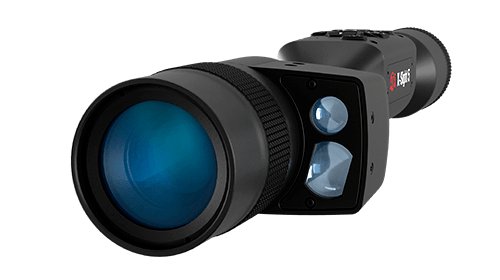
Choose the 5-25x if summer and open country dominate your season. On big flats, pivots and pasture, called coyotes tend to circle wide and stop at distance, and the extra magnification lets you confirm and shoot a dog that never gets close. The added weight is minor, and everything else — sensor, night mode, ballistic calculator, video — matches the 3-15x, so you're buying reach and nothing you'd have to relearn. If your longer shots stretch past what a 15x top end handles comfortably and you also want distance solved for you, the X-Sight 5 LRF 5-25x is the natural step up, adding a built-in laser rangefinder that feeds the ballistic calculator automatically.
Our recommendation
For most coyote hunters, the best-value pick is the ATN X-Sight 5 3-15x, because the seasons and terrain where people call the most — winter, cover, close committing dogs — favor a light, wide, quick-handling scope over top-end reach. It gives you the same 4K+ identification and ballistic help as its bigger sibling for less weight and a friendlier field of view. Move up to the 5-25x only if your calendar is genuinely dominated by open, longer-range summer stands, and consider the LRF 5-25x if you also want automatic ranging. Either way you're staying in ATN's current X-Sight 5 line; see both on the ATN smart HD day and night weapon sights page and match the scope to the season you hunt hardest.
How we compared them
This is an in-house comparison of two variants from ATN's own current X-Sight 5 line — ATN's newest digital day and night weapon sights — not an independent lab test, and we framed it by season because that's what actually decides which reach a coyote hunter needs. We weighed the two on the things that matter across a year of stands: sensor resolution for identifying a small target after dark (identical here), magnification range against the distances winter cover versus summer flats produce, weight and field of view for how fast you get on a committing dog, and the shared ballistic calculator and video tools that steady the shot. We recommend the 3-15x for the majority because most calling happens close and in cover; the 5-25x is the honest pick when open, longer summer stands dominate. Neither is right if you expect heat-based detection through brush — these are digital day/night scopes that need ambient light or an IR source, so weigh that against your terrain before choosing.
Frequently Asked Questions
Which X-Sight 5 is the better value for winter coyote hunting?
The X-Sight 5 3-15x is the stronger value for winter, when coyotes come tight to the call through cover on cold nights. Its wider low-end field of view helps you find a close dog fast, and its lighter weight keeps the rifle quick between stands. You give up only top-end reach you'd rarely use in timber and small fields.
When is the 5-25x worth the step up for coyotes?
The 5-25x earns its keep when summer and open country dominate your season and coyotes hang up at distance. The extra magnification lets you confirm and shoot a wary dog across a wide field where the 3-15x would run short. Everything else, from the 4K+ sensor to the ballistic calculator, is identical, so you're buying reach and a little weight, nothing to relearn.
Are these thermal scopes or night vision scopes?
Both are digital day and night vision scopes, not thermal. They use a high-resolution ATN 4K+ sensor with an Enhanced Night Vision Mode and IR support to see after dark, which means they need some ambient light or an IR illuminator rather than reading heat. The upside is they also serve as full-detail daytime scopes for scouting and zeroing.
Does the season really change which scope I should buy?
It does, because season shifts coyote behavior and shot distance. Winter dogs on still, cold nights commit close through cover, favoring the wide, light 3-15x; summer dogs on open ground stay wary and stop far out, favoring the longer 5-25x. Buying to your dominant season means paying for the reach you'll actually use.
Can I hunt both close and long with just one of these?
Yes. The 3-15x still reaches moderate distance and the 5-25x still zooms down for closer work, so either covers a mix. The recommendation is about where you spend most of your nights: pick the 3-15x if that's cover and close calling, the 5-25x if it's open ground and longer holds. If you want distance automated on top, look at the LRF 5-25x.
Do both models help me identify a coyote in the dark?
Yes, and identically, since they share the same 4K+ sensor and Enhanced Night Vision Mode. With an IR source, both render enough detail to tell a coyote from a fox, a deer or a stray before you shoot. Always confirm your target after dark; the resolution on both is there to let you do that safely.
How long do these run on a night stand?
Both run up to 14 hours on their internal Li-ion battery, which easily covers an evening-to-late-night hunt in any season. For dark-to-dawn sessions, carry a power bank to top up, since the display, IR and video draw steadily. Lowering brightness between stands extends runtime on both.
Match the scope to the season you hunt coyotes hardest. If your year is mostly winter cover and close, committing dogs, the value pick is the ATN X-Sight 5 3-15x. If it's open summer flats and longer holds, step up to the 5-25x — or the LRF 5-25x if you want range solved for you. Compare both variants and their full specs on the ATN smart HD day and night weapon sights page and buy the reach your season actually calls for.
Created: August 10, 2026 · 09:39:31 UTC