Calling coyotes is a game of spotting them first. A dog answers a call, but it rarely walks straight in — it circles downwind, hangs at the edge of a field, and studies the setup before it commits. If you cannot see that shape working the dark, you never get the shot. A handheld thermal is the cheapest way to buy that early warning, and you do not need a flagship to get it. The best budget thermal monocular for coyote hunting is the ATN BlazeSeeker 6 256x192: a pocket-sized scanner with a wide field of view, built to catch a coyote's glow at the ranges a called dog actually gives you. This roundup is organized by price tier, so you can see exactly what the entry-level pick does, and what stepping up buys.
Step up for reach: ATN BlazeTrek 6 384x288 2.25-18x — sharper 384 sensor and far longer 1000m detection for spotting and following coyotes across bigger open ground.
Both are 6th-gen ATN monoculars with SharpIR AI, a 50 Hz refresh, and IP67 build. Start with the BlazeSeeker 6 for value; move up to the BlazeTrek 6 when you hunt wide country.
Why ATN's 6th-gen BlazeSeeker 6 is the budget coyote pick
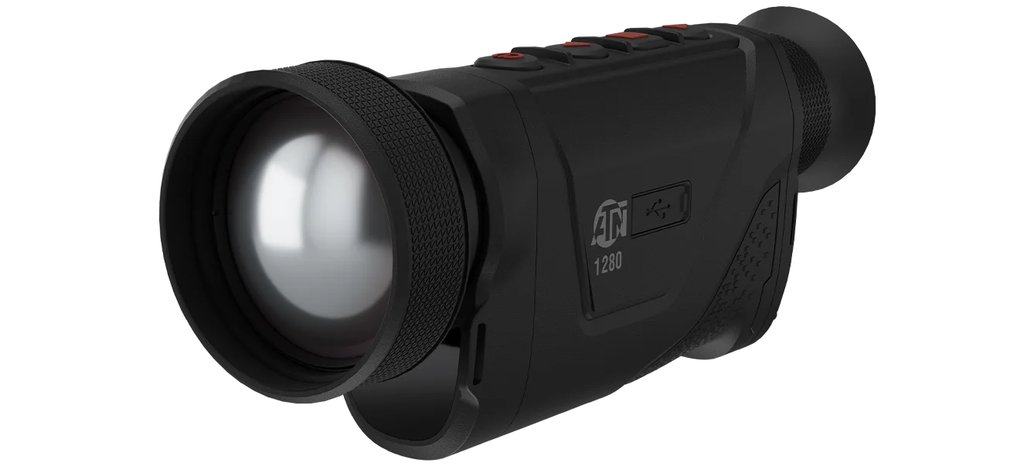
A budget coyote scanner has to do one job well: catch a wary dog before it catches you, at a price that leaves money for the rest of your rig. The BlazeSeeker 6 is built exactly for that. It weighs about 270 grams — roughly 0.6 lb — so it rides in a jacket pocket and you actually carry it on every stand instead of leaving a heavier unit at home. Its wide 24 by 18 degree field of view is the real advantage for calling: a big window lets you sweep a whole treeline or field edge in a single pass and pick up a coyote slipping in from the side, which is exactly how they come to a call. Behind that sits a 256x192 sensor with <=20mK sensitivity, enough to read a dog's warm shape against a cool field, and SharpIR AI enhancement firms up the edges so the picture does not go to mush. A 50 Hz refresh keeps a trotting coyote smooth rather than smeared, and six color palettes let you pull the animal out of whatever conditions the night hands you. It is current 6th-gen hardware with the ATN Connect 6 app and an AI assistant, so the entry-level price still buys ATN's newest processing, not an old core. For the predator hunter who wants to spend on the rifle and the call, it is the most useful handheld ATN makes for the money.
Best budget pick for coyotes: ATN BlazeSeeker 6 256x192 1.2-9.6x
The ATN BlazeSeeker 6 256x192 1.2-9.6x is the best budget thermal monocular for coyote hunting because it does the calling hunter's core job — finding a dog working the dark — better than anything at its price. It is light, it is wide, and its heat-based picture is sharp enough to tell a coyote from a stump before you ever raise the rifle.
Why the wide field of view wins on a call
A called coyote almost never appears where you expect. It swings downwind to scent-check the sound, so the first warm shape you catch is usually off to one side and moving. The BlazeSeeker 6's wide 24 by 18 degree field of view lets you sweep that whole arc in one motion and pick the dog up early, then keep it in frame as it circles. The low 1.2x base magnification is what keeps that window so wide — a big-picture view is worth more than raw zoom when you are hunting for the animal in the first place. When you do find it, you can push in to 9.6x, plus up to 8x digital, to confirm the pointed ears and low tail. For scanning and tracking, a wide window beats a narrow high-zoom tube every time.
Enough sensor to read a dog from a deer
Positive ID keeps you legal and safe, even at a budget price. The 256x192 sensor packs enough dots to show a coyote's low, pointed profile as clearly different from a deer's tall body, and <=20mK sensitivity reads the heat difference between the animal and a cool field so the outline stays defined. SharpIR AI cleans up the edges as you zoom, and the 800x600 OLED holds that detail steady in your eye. It is not the finest picture ATN makes, but for confirming a called dog at practical range, it does the job.
Light enough to carry every stand
Coyote hunting means moving — you set up, call a stand, and if it is dead you pack up and drive to the next one. At about 0.6 lb the BlazeSeeker 6 is easy to hold rock-steady while you scan and light enough that carrying it across a dozen stands never becomes a chore. Its internal rechargeable battery runs about 8 hours, which covers a full night of stand-hopping, and it tops up over USB-C between outings so there are no loose cells to fumble in the cold. The IP67 waterproof housing shrugs off dew, frost, and light rain on those still winter mornings.
Who it's for, who it's not
This is for the predator hunter who wants a light, wide-view thermal to find and follow coyotes at practical calling distances without overspending. It is not the pick if you routinely hunt wide-open ground where dogs hang up several hundred yards out — for that reach and finer detail, step up to the BlazeTrek 6 below.
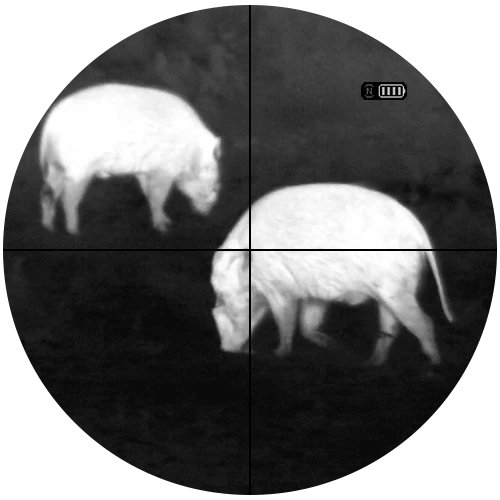
Step up for reach: ATN BlazeTrek 6 384x288 2.25-18x
When you hunt bigger country and coyotes hang up far off, the ATN BlazeTrek 6 384x288 2.25-18x steps up in price and reach. Its 384x288 sensor carries more dots, so a dog at distance reads with more detail, and its detection range stretches to about 1000m — nearly triple the BlazeSeeker 6's reach — so you catch heat well out across open fields.
Where the extra reach earns it
On agricultural ground, big pasture, or open river bottoms, a called coyote can commit from three or four hundred yards out, and that is where the BlazeTrek 6 pulls ahead. The 384 sensor lets you zoom in on a distant dog before the picture breaks down, and the longer 1000m detection means you spot the glow early enough to set up rather than getting busted. Its <=18mK sensitivity edges out the budget model's 20mK for a slightly cleaner read in fog and damp, and it shares the same 50 Hz refresh, six palettes, and ATN Connect 6 app. It is the reach-first choice in the pair.
Who it's for, who it's not
It is for the coyote hunter who works wide-open ground and needs to spot and identify dogs at longer distances. It is more monocular than most callers need if your stands are in tighter cover or brushy edges, where the lighter, wider BlazeSeeker 6 is the smarter value and easier to scan with.
A budget rig that still reads coyote behavior
The mistake budget hunters make is assuming a cheaper thermal cannot read what a dog is doing — and on a called coyote, reading behavior is half the hunt. A coyote coming to a call gives away its intentions if you can watch it: ears up and a stiff, purposeful trot mean it is committed, while a low crouch and frequent stops mean it is suspicious and about to hang up. The BlazeSeeker 6's wide window and 50 Hz refresh let you follow that story develop — you pick the dog up far out at low magnification, watch it swing downwind, and read the pause when it stops to scent-check. That pause is almost always your shot window. A budget optic that keeps the picture smooth and the outline clear through that sequence is doing everything the hunt asks of it; you do not need flagship resolution to know a committed dog when you see one.
Conditions change the read, and the palettes are how you keep up. On a still, humid night the whole field holds heat and a distant coyote can look soft, which is where you lean on White Hot for its clean contrast. After a hard frost the ground goes cold and a dog lights up sharply — a good time to switch to Black Hot or Iron Red so the bright signature does not bloom and swallow the detail. Having six palettes on an entry-level monocular means you always have one that reads the night in front of you, and learning to switch them by feel is a free upgrade that costs nothing but practice. That is the quiet argument for the BlazeSeeker 6: it hands the beginner and the budget hunter the same decision-making tools the expensive units use, just in a lighter, cheaper package.
A field scenario: a January stand at first light
Picture a cold January stand on the downwind corner of a picked cornfield, thirty minutes before shooting light. You settle in, start a distress sequence on the call, and begin sweeping the field edge with the BlazeSeeker 6. Two minutes in, a small warm shape breaks off the far treeline — the wide field of view catches it instantly at the edge of your sweep, where a narrow high-zoom tube would have missed it. You stop scanning and watch. The dog trots the treeline, then cuts into the field and swings toward the downwind fenceline, exactly as expected. You bump the zoom up to confirm the pointed ears and low, ground-hugging profile — a coyote, not a deer. It stops broadside at the corner post to check the air, and that pause is the window. You have already shouldered the rifle, the thermal spotting done, and the shot is a formality. The whole sequence — spot, identify, read, set up — happened on a monocular that cost a fraction of a flagship, because the job on a called dog at that range never needed more.
How to choose a budget coyote thermal monocular
For calling coyotes on a value budget, weigh how easily you can find and follow a dog against how far you actually need to reach. That single question sorts the two picks:
- Field of view — a wide 24 by 18 degree window catches a coyote circling in from the side and makes scanning fast; a narrow tube is slower to work a stand.
- Detection range — 345m covers close-to-mid calling; if dogs hang up several hundred yards out on open ground, the BlazeTrek 6's 1000m reach matters.
- Resolution — 256x192 is enough to identify a dog at practical range; 384x288 adds dots for finer detail farther out.
- Weight and carry — at 0.6 lb the BlazeSeeker 6 is genuinely pocketable, so you carry it across every stand.
- Thermal sensitivity — <=20mK keeps a dog readable in fog and damp; the step-up model's 18mK is a touch cleaner.
- Battery — about 8 hours of internal, USB-C rechargeable runtime covers a full night of stand-hopping.
How we picked these ATN thermal monoculars
We ranked these for the specific job of calling coyotes on a budget: finding a wary dog working the wind, confirming the ID, and following it to a shot window, all without overspending. That put field of view and carry weight at the top, because a scanner you actually bring and can sweep quickly matters most on a call, followed by detection range for the distances a called dog gives, resolution and NETD for identification, and refresh rate for tracking a mover. We speak only in value tiers here, never exact figures. Only ATN's current 6th-gen monocular line was considered, so nothing discontinued slipped in. The honest trade-offs: the budget BlazeSeeker 6 keeps its price down with a shorter detection range and a 256 sensor, so a dog at long distance looks softer than through the 384; if you routinely hunt wide-open ground, it is not the right tool and you should step up to the BlazeTrek 6. This is an in-house comparison of ATN's own monoculars, not an independent lab review, so line these numbers up against how open your coyote ground actually is before you decide.
Frequently Asked Questions
What is the best budget thermal monocular for coyote hunting?
The ATN BlazeSeeker 6 256x192 is the top budget pick. It weighs about 0.6 lb, has a wide 24 by 18 degree field of view for fast scanning, and reads heat out to 345m, which covers the ranges a called coyote actually gives you. It delivers real 6th-gen thermal scanning without a flagship price.
Is a 256x192 sensor good enough for coyotes?
For close-to-mid calling distances, yes. A 256x192 sensor gives enough dots to show a coyote's low, pointed profile as clearly different from a deer, and the <=20mK sensitivity keeps that outline readable against a cool field. If you routinely spot dogs several hundred yards out, the 384x288 BlazeTrek 6 offers more detail and reach.
How far can the BlazeSeeker 6 detect a coyote?
It detects a large heat source out to about 345m, which comfortably covers the distances a called coyote works in most setups. For wide-open ground where dogs hang up much farther out, the BlazeTrek 6 reaches roughly 1000m.
Why choose a monocular instead of a thermal scope for calling coyotes?
A monocular is for finding and following dogs; it is lighter, wider in view, and lets you scan comfortably without shouldering the rifle. Many predator hunters pair the two: scan the stand with the BlazeSeeker 6, then take the shot with a mounted optic. On a budget, the monocular is the cheapest way to add the crucial early-warning spotting.
Can I tell a coyote from a deer through the BlazeSeeker 6?
Yes. The 256x192 sensor and <=20mK sensitivity show a coyote's low, ground-hugging profile clearly against a deer's tall body and rack. Push the magnification up to confirm the pointed ears and low tail before you ever raise the rifle, and always positively identify the target first.
How long does the BlazeSeeker 6 battery last for a night of calling?
About 8 hours on its internal rechargeable battery, which covers a full night of moving between calling stands. You recharge it over USB-C between outings, so there are no loose cells to handle in the cold.
Does the BlazeSeeker 6 work in daylight for scouting?
Yes. Thermal reads heat rather than light, so it works by day for spotting coyotes bedded in cover, checking den sites, and general scouting. Bright sun does not harm the sensor; the heat contrast against sun-warmed ground is simply a bit lower than on a cold night.
Want to see a coyote before it sees you, without spending like it is your whole rig? The ATN BlazeSeeker 6 256x192 packs a wide 24 by 18 degree field of view and a heat-reading sensor into a 0.6 lb handheld, so you sweep a stand fast and pick a called dog out of the dark early. It is the value entry point for the predator hunter. When you graduate to wide-open country, step up inside the full thermal monoculars lineup to the longer-reaching BlazeTrek 6. Load your calls, pick your stands, and be ready when the first dog answers.
Created: July 7, 2026 · 11:11:27 UTC