Thermal used to mean choosing between a serious pile of cash or nothing at all. That gap has closed. You can now put real heat-vision in your pocket for a fraction of what it once cost, and still get a picture that finds warm animals in pitch dark. If you're after the best budget thermal monocular, the goal is simple: the lowest cost of entry that still scans cleanly, records your finds, and lasts a full night. The ATN BlazeSeeker 6 is built for exactly that, and this guide lines it up next to two step-up options so you can see what a little more spend buys you.
Best budget with more reach: ATN BlazeSeeker 6 256x192 1.7-13.6x — same wallet-friendly platform, a longer lens for a touch more distance.
Best step-up value: ATN BlazeTrek 6 384x288 2.25-18x — a higher-resolution sensor and longer range when your budget can stretch.
Why ATN's 6th-gen line makes budget thermal actually good
A budget thermal monocular shouldn't feel like a stripped-down toy, and ATN's 6th-generation Blaze line is proof it doesn't have to. The affordable models share the same brains as the flagship, so the picture and the features punch above the price. Every one runs SharpIR AI image enhancement, which cleans up edges so warm shapes read clearly instead of blurring together. You get all six color palettes — White Hot, Black Hot, Iron Red, Alarm, Green Hot and Sepia — so you can dial in whichever contrast makes an animal pop against tonight's background. Hot Point Tracking flags the hottest object in view, video and photo recording saves what you spot, and the 50 Hz refresh keeps moving critters smooth. Each is IP67 waterproof, charges over USB-C, holds 32 GB of clips, and connects to the ATN Connect 6 app with its AI assistant. In other words, going budget with ATN costs you sensor resolution and reach — not the feature set that makes thermal fun to use.
Best budget overall: ATN BlazeSeeker 6 1.2-9.6x
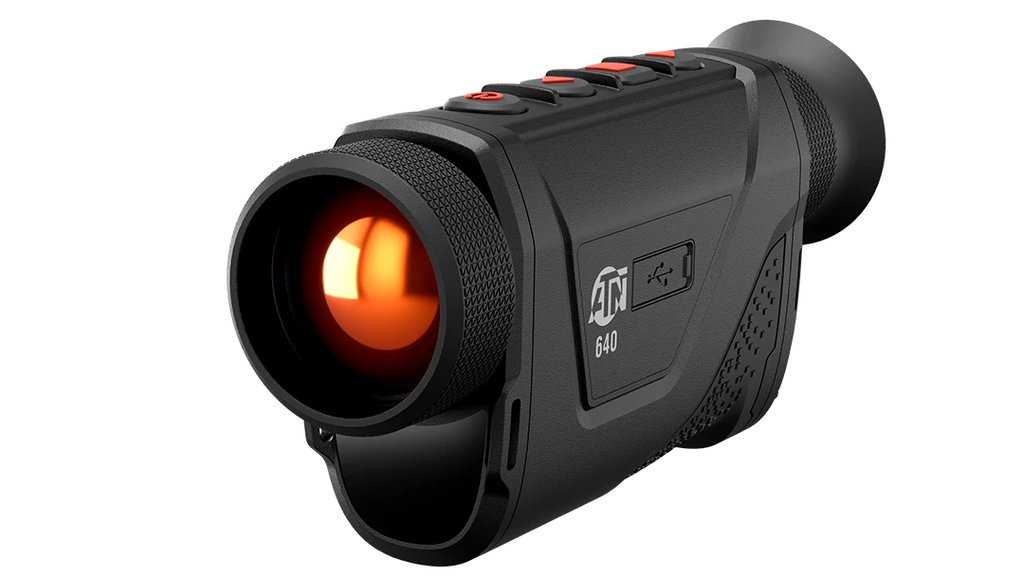
The ATN BlazeSeeker 6 256x192 1.2-9.6x is the best budget thermal monocular because it gives you the lowest cost of entry without feeling cheap in the hand or the picture. At about 0.6 lb with a very wide 24 x 18 degree field of view, it's the pocket scanner you'll actually carry every time.
The widest view in the lineup
That wide 24 x 18 degree field of view is the BlazeSeeker's secret weapon on a budget. Scanning is a numbers game — the more ground you take in per sweep, the faster you find heat — and the 1.2x base magnification opens the widest picture of the three. For close cover, feeders, food plots and the edge of the woods, that width finds movement you'd miss squinting through a narrow tube.
A sensor that does the essential job
The 256x192 sensor keeps the cost down while still reading heat cleanly at the distances most budget buyers care about. Its 345m detection range covers close-range encounters, and the whole point of a scanner is answering one question fast: is there a warm body out there? For that, this sensor is plenty. When you want a closer look, smooth digital zoom pulls you in to 9.6x to confirm.
Who it's for and who it isn't
It's for the first-time thermal buyer, the property scanner and anyone who wants maximum coverage for minimum spend. It's not the pick if you need distance identification or long reach — step up to the BlazeTrek 6 for that.
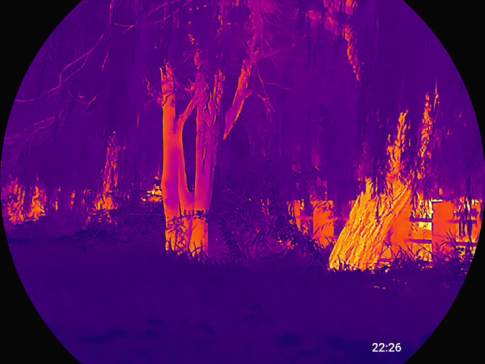
Best budget with more reach: ATN BlazeSeeker 6 1.7-13.6x
The ATN BlazeSeeker 6 256x192 1.7-13.6x is the same budget-friendly platform with a longer lens, for buyers who want a bit more distance without leaving the value tier. It trades a slice of that ultra-wide view for extra reach.
A longer lens, a touch more distance
Stepping up to a 1.7x base and a 10mm objective pushes the detection range out to 460m, so you can spot heat a good bit farther across open ground while keeping the same light 0.6 lb body. The field of view narrows slightly compared to the 1.2-9.6x, but for hunters who work fields more than thick cover, that reach is the better trade. Everything else — the palettes, recording, app and waterproofing — is identical.
Who it's for and who it isn't
It's for the budget buyer who spends more time on open ground and wants extra distance. It's not for you if your scanning is all close cover, where the wider 1.2-9.6x is the smarter pick.
Best step-up value: ATN BlazeTrek 6
When your budget can stretch a little, the ATN BlazeTrek 6 384x288 2.25-18x is the natural next rung. It costs more than the Seekers, but the jump in sensor and range is the biggest single upgrade in the line.
More dots, more distance
The 384x288 sensor packs noticeably more dots into the picture than the 256x192 — think stepping from standard definition toward HD — so you can zoom further before it turns blocky and identify game sooner. Its 1000m detection range roughly doubles the reach of the budget picks, and a lower <=18mK NETD keeps the image cleaner in fog and humidity. At about 0.7 lb it's still light enough to carry all night.
Who it's for and who it isn't
It's for the buyer who wants clearer, longer-range performance and can spend past the entry tier. It's not necessary if your needs are close-range scanning, where the BlazeSeeker 6 already delivers.
What a budget thermal monocular can and can't do
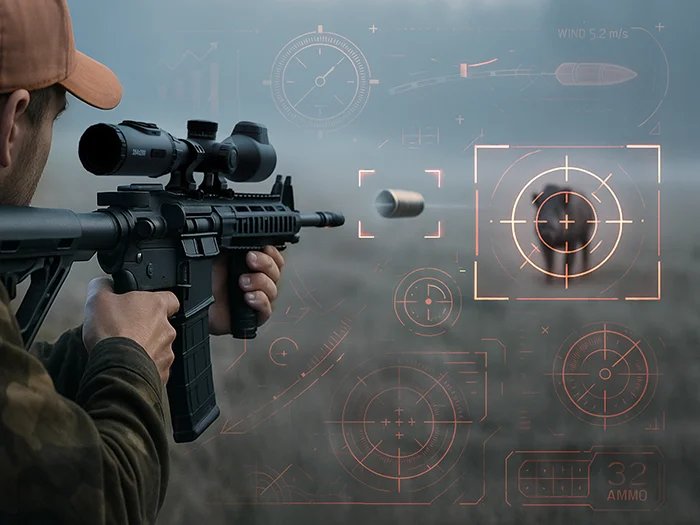
A budget thermal monocular can reliably detect warm animals in the dark, track them as they move, and record what you see — the core reasons anyone buys thermal. The BlazeSeeker 6 does all of that cleanly at close and moderate range, which covers the majority of real-world encounters around cover, feeders and field edges. What it can't do is match a flagship for reach and fine detail. A smaller 256x192 sensor has fewer dots in the picture, so it turns soft sooner when you push the zoom and won't let you pick out subtle features on an animal several hundred yards away. Knowing that boundary up front is how you buy budget and stay happy: you're getting a genuine detection tool, not a long-range identification system.
Getting the most from a budget sensor
- Scan slow and wide — let the wide field of view work; sweeping too fast is the fastest way to miss a warm body.
- Stay near the base magnification — a budget sensor looks its best zoomed out; save digital zoom for confirming, not searching.
- Try every palette — switching between White Hot, Black Hot and Iron Red can reveal an animal that blended in under one setting.
- Let SharpIR do its job — the AI enhancement cleans up edges, so a slightly noisy scene still resolves into a recognizable shape.
- Mind the weather — heavy rain and dense fog cut range on any thermal; a lower NETD helps, but expect shorter reach on the worst nights.
Room to grow
One quiet advantage of starting on ATN's budget tier is that the controls, palettes and app carry over to the pricier models. If you later step up to a BlazeTrek 6 or a flagship BlazeHunter XD, the muscle memory comes with you — the menus, the recording, the Hot Point Tracking all work the same way. You're not learning a throwaway device; you're learning the whole system on the most affordable rung.
How to choose a budget thermal monocular
On a budget, the trick is spending only where it changes your night. Work through these and the choice makes itself:
- How far do you really scan? — Close cover rewards the widest view (BlazeSeeker 1.2-9.6x); open ground rewards a touch more reach (1.7-13.6x) or a jump to the BlazeTrek 6.
- Do you need to identify or just detect? — A budget 256x192 sensor answers 'is something there'; if you must tell species apart at distance, more dots in the picture means stepping up in resolution.
- How wide a picture do you want? — A wider field of view makes scanning and tracking running animals easier, and the 1.2-9.6x is the widest here.
- How long are your outings? — All three cover a full night at about 8 hours, so battery isn't the deciding factor at this tier.
- What's your absolute ceiling? — If it's tight, the BlazeSeeker 6 is the lowest cost of entry; if it can flex, the BlazeTrek 6 is the value step-up.
Compare the exact variants side by side in the full thermal monoculars lineup, and if outright value is your yardstick, our cheap thermal monocular guide digs deeper into the lowest-cost options.
How we picked these ATN thermal monoculars
Before the picks, here is the yardstick they were measured against. The shortlist is drawn only from ATN's latest 6th-generation range, and each model was judged on the same measuring stick: resolution and NETD for image clarity, detection range and refresh rate for spotting and tracking, plus weight and battery for a full night out — all viewed through the lens of entry budget. When one pick trades sharpness for reach or price, that is stated openly. This is a manufacturer comparing its own current line, so the honest trade-offs and the "who it's not for" notes matter more than any single label.
Frequently Asked Questions
What is the best budget thermal monocular right now?
The ATN BlazeSeeker 6 256x192 1.2-9.6x is the best budget pick for 2026. It offers the lowest cost of entry into ATN's 6th-gen line while keeping a very wide field of view, full recording and about 8 hours of battery. It's ideal for close-range scanning around cover, feeders and field edges.
Does a budget thermal monocular still work well?
Yes. A budget model like the BlazeSeeker 6 uses the same SharpIR image enhancement, palettes and app as the flagship; you mainly trade sensor resolution and reach for the lower price. For detecting warm animals at close and moderate range, it does the core job cleanly.
How far can a budget thermal monocular see?
The BlazeSeeker 6 1.2-9.6x detects heat to about 345m and the 1.7-13.6x variant to about 460m. Detection means picking up body heat; you'll positively identify animals closer than that maximum. For 1000m reach, step up to the BlazeTrek 6.
What do I give up by buying budget instead of a flagship?
Mainly resolution and range. A budget 256x192 sensor has fewer dots in the picture than a 384x288 or higher, so it turns blocky sooner when you zoom and reaches less far. You keep the palettes, recording, waterproofing and app connectivity across the whole line.
Is the wider or the longer-lens BlazeSeeker better?
It depends on your ground. The 1.2-9.6x gives the widest view for fast close-range scanning, while the 1.7-13.6x trades some width for extra reach on open fields. Both are the same weight and price tier, so choose by how far you typically spot.
Can I record video on a budget thermal monocular?
Yes. The BlazeSeeker 6 records video and photos with 32 GB of onboard storage, and connects over Wi-Fi to the ATN Connect 6 app so you can stream and share clips from your phone. Recording is not reserved for the pricier models.
Is a budget thermal monocular good for beginners?
It's the ideal starting point. The BlazeSeeker 6 is light at about 0.6 lb, simple to operate, and forgiving to learn on, so you get comfortable reading heat signatures without a large investment. You can always step up later as your needs grow.
Getting into thermal doesn't have to drain the account. The ATN BlazeSeeker 6 gives you the lowest cost of entry with a wide, honest picture and all-night battery — the essentials, none of the fluff. If you want a bit more reach or a sharper sensor down the road, the rest of the ATN thermal monoculars line steps up cleanly from here. Start where your budget is comfortable, get out after dark, and let heat show you what the night's been hiding.
Created: July 7, 2026 · 08:31:01 UTC