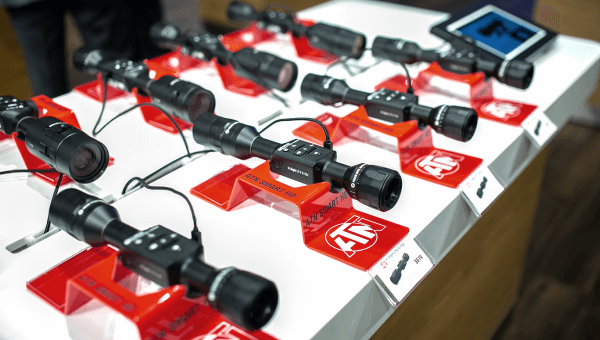
If you already own a rifle scope you trust, the smartest way into night predator work is a clip-on — and the best budget thermal clip on for coyote hunting is the ATN TICO 6 256x192. Instead of buying a whole second scope, you clamp a thermal module in front of the glass you've already zeroed and hunt. A calling stand for coyotes rarely stretches past 150 yards, so you do not need a huge sensor to close the deal — you need a mount that holds, a battery that lasts the sit, and a picture clean enough to tell dog from deer. The entry TICO 6 does all three without reaching for the top shelf. Here's why it's the value entry point and where you'd step up.
Step up in resolution: ATN TICO 6 384x288 1-12x — a sharper picture and longer reach when your stands open up past 150 yards.
Bottom line: if your coyotes come to the call inside 150 yards, the 256 saves money without costing you shots.
Why does ATN's 6th-gen TICO 6 make sense on a budget?
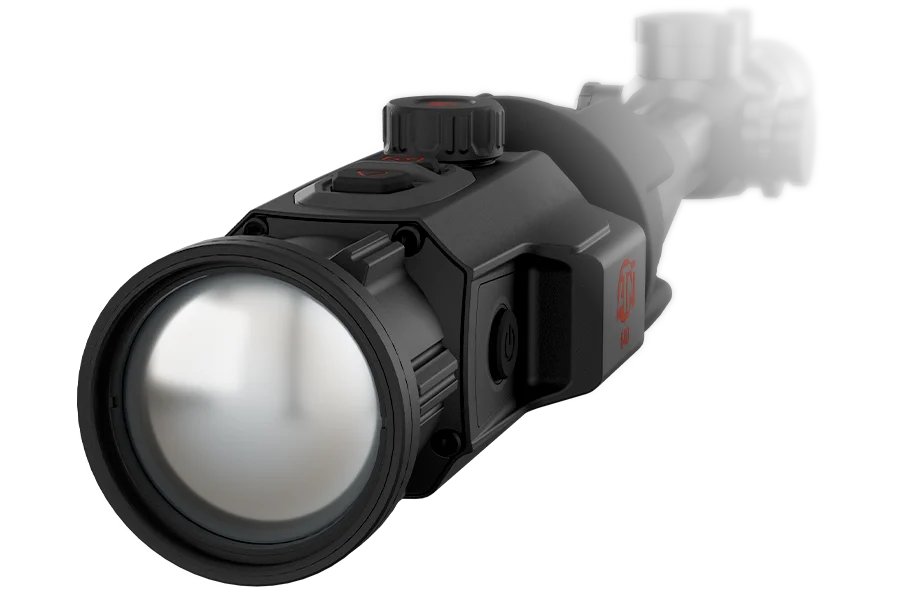
A clip-on is the cheapest honest path to thermal because you reuse gear you already own. You don't rebuy a scope, you don't relearn a reticle, and you don't re-zero every time — the TICO 6 mounts in front of your day optic, so your point of aim stays exactly where you left it. The budget 256x192 model keeps the parts that matter for called coyotes and trims the parts you don't need at close range. You still get the same SharpIR AI image cleanup, the same 50 Hz refresh that keeps a trotting dog from smearing, the same six color palettes, and the same swappable 18650 battery as the pricier TICO 6 bodies. What changes is the sensor size and the objective lens: a 256x192 core behind a 25mm lens instead of a 384 or 640 behind a bigger lens. That's the trade that lowers the price — and at typical stand distances you rarely miss the extra pixels. Only ATN's current 6th-gen line is on the table here; older discontinued clip-ons are not.
Best budget clip-on: ATN TICO 6 256x192 1-8x
The ATN TICO 6 256x192 is the value entry to ATN's clip-on family and the right call when coyotes are working your call inside 150 yards. It slides onto the front of your day scope with the included Quick Detach mount, so the rifle you already shoot well becomes a thermal rifle in seconds — same trigger, same stock, same zero.
Keeps your zero, keeps your reticle
Because the thermal picture passes through your existing scope, you aim with the reticle you already know. There's no second set of turrets to learn and nothing to re-zero at the truck. For a hunter who's confident on his day rifle but new to thermal, that's the whole appeal — you add night capability without changing how you shoot.
Sized right for the call
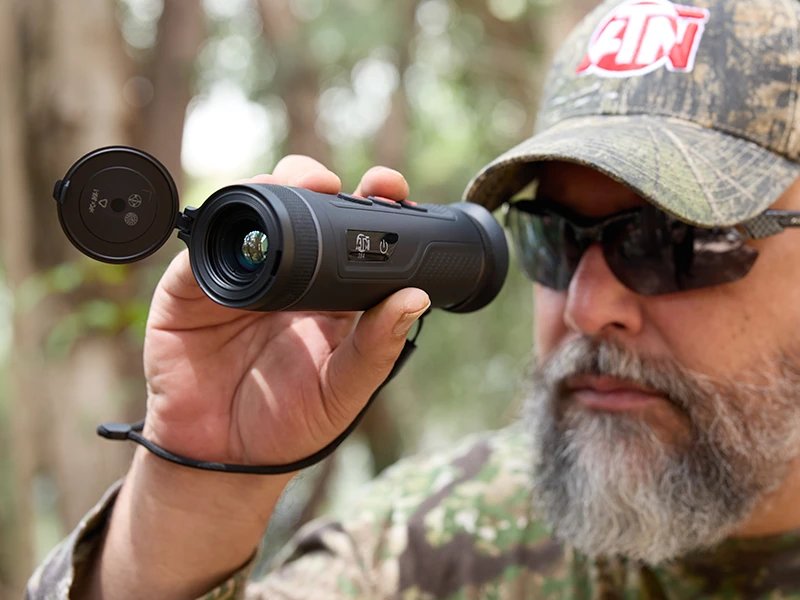
A 256x192 sensor and 1500 m detection range are plenty for the ranges calling actually produces. Coyotes commit to a dying-rabbit sound and close fast; most shots happen between 50 and 150 yards. Within that band the 256 shows a clean, huntable heat signature, and the <=20mK sensitivity still separates a warm dog from cool ground on a damp night. The removable eyepiece also turns it into a handheld monocular for scanning between stands. Who it's for: the caller who works tight stands and wants the lowest cost of entry. Who it's not for: anyone routinely reaching past 150-200 yards — step up to the 384.
Set-and-forget on a budget
The budget label doesn't mean fussy. The 25mm objective and 800x600 display keep the picture simple to read, so a first-timer isn't wrestling menus in the dark. Six color palettes let you flip to whatever separates a dog from the background best on the night — White Hot on open ground, Black Hot in brush, Iron Red when you want warm targets to pop. Recoil Activated Video means you can review a stand later to see exactly how the coyote came in, which is how you learn to call better. And because the whole unit is IP67 waterproof, a heavy dew or a light rain on a late-season sit doesn't end the hunt. None of that is stripped out to hit the low price.
When should you step up to the TICO 6 384x288?
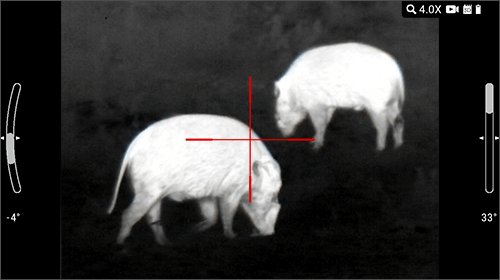
Step up to the ATN TICO 6 384x288 when your stands open up and your shots stretch. Its bigger sensor packs more dots into the same picture — think going from a lower-megapixel phone camera to a higher one — so the image holds detail as you push a higher-power day scope. The 384 also reads heat out to 2710 m and drops to <=18mK sensitivity, so a coyote hanging up at the field edge still stands out.
More reach, more clarity
On open ag ground or cut fields where dogs circle wide, the extra resolution and range of the 384 earn their keep. You can identify farther, zoom deeper into your day scope's power range before the image softens, and stay confident on a longer poke. It weighs only a few grams more, so the handling penalty is essentially zero. Who it's for: callers who see coyotes hang up past 150 yards. Who it's not for: the tight-woods hunter who never shoots far — the budget 256 already covers that.
The upgrade you can grow into
One nice thing about staying inside a single family: the controls, the app, and the mount all behave the same way. If you start on the budget 256 and later find your ground pushing you longer, moving to the 384 doesn't mean relearning the optic. You already know the palette shortcuts, the recording, and how the Quick Detach seats on your rail. That makes the budget model a low-risk starting point rather than a dead end — you buy in cheap, hunt a season, and if your stands demand more you step up without starting over. For a lot of new night hunters, that's the whole reason to begin with the 256.
How to choose a budget thermal clip-on for coyotes
Match the sensor to the distances your stands actually produce, not to a spec sheet. A clip-on lives or dies on three things: the mount, the sensor, and the battery. Walk it in this order:
- Mount and repeatability first — a clip-on is only as good as its return-to-zero. The TICO 6's included Quick Detach mount lets you pull it off and clamp it back on without chasing your point of impact.
- Sensor size vs. your range — 256x192 handles called coyotes inside 150 yards; 384x288 buys clarity and reach when stands open up. Buy the resolution your longest realistic shot needs.
- Detection range as headroom — 1500 m on the 256 is far beyond any coyote shot; it just means you spot heat early and have time to set up.
- Battery you can swap — the replaceable 18650 gives roughly 8 hours, and a spare in your pocket means an all-night sit never ends early.
- Refresh rate for movement — 50 Hz keeps a trotting or running dog crisp instead of smeared, which matters when a coyote commits fast.
A word on batteries and cold nights
Coyote season peaks in the cold, and cold is hard on any electronic optic's runtime. The budget TICO 6 helps here because its 18650 battery is user-replaceable rather than sealed — when a below-freezing night trims your hours, you swap in a warm spare from an inside pocket and keep hunting. Plan for two or three charged cells on a long January sit and you'll never end a stand early. It's a small habit that makes a cheap optic behave like a much more expensive one, because the thing that usually ends a night hunt is dead power, not a lack of features.
How we picked these ATN thermal clip-ons
This is an in-house comparison of ATN's own 6th-gen clip-on range, not an independent lab test. We ranked the models by what a budget coyote caller actually needs: a mount that returns to zero, a sensor sized to real stand distances, thermal sensitivity for damp nights, a swappable battery, and low weight so the rifle still handles. We weighed the 256x192 against the 384x288 on cost of entry versus reach. The honest trade-off: the budget 256 gives up resolution and detection range, so it's not the pick for hunters who regularly shoot past 150-200 yards — those hunters should step up to the 384. We keep only the current TICO 6 line in the running, and we'd tell you to check these specs against your own stands before buying.
Frequently Asked Questions
What is the best budget thermal clip on for coyote hunting?
The ATN TICO 6 256x192 1-8x is the best budget thermal clip on for coyote hunting. It's the lowest-cost model in ATN's 6th-gen clip-on line, mounts ahead of your existing day scope to keep your zero, and covers the close ranges called coyotes produce.
Do I need to re-zero my rifle when I use a clip-on?
No. A clip-on mounts in front of your day scope, so you aim through the reticle you already zeroed. The TICO 6's included Quick Detach mount is built to return to the same point of impact when you take it off and put it back on.
Is a 256x192 sensor good enough for coyotes?
Yes, for typical calling ranges. Most called coyotes commit inside 150 yards, and a 256x192 sensor with 1500 m detection range shows a clean, identifiable heat signature well beyond that. If your stands regularly open past 150-200 yards, step up to the 384x288.
Can the TICO 6 be used as a handheld scanner?
Yes. The eyepiece is removable, so the TICO 6 works as a handheld thermal monocular for scanning between stands, then clamps back onto your rifle as a clip-on. That dual role adds value to a budget setup.
How long does the battery last on a night hunt?
About 8 hours on the budget 256x192 model, running on a replaceable 18650 cell. Carry one charged spare and you can swap in seconds, so a full night of calling never ends because of power.
What day scope magnification pairs best with the budget TICO 6?
The 256x192 model is optimized to pair with a day scope in the 1-8x range. That covers the field of view you want for close, fast-committing coyotes; if you run higher magnification for longer shots, the 384x288 is the better match.
Ready to turn the rifle you already shoot well into a night predator setup? The ATN TICO 6 256x192 is the budget-friendly way in — clamp it on, keep your zero, and start dropping called coyotes after dark. If your stands run longer, browse the full lineup of ATN thermal clip-ons to size up to the 384 or 640. Either way you're buying into the current 6th-gen line, so you get SharpIR image cleanup, a swappable battery, and a mount that holds its zero. Pick the sensor that matches your longest realistic shot and get out there this season.
Created: July 7, 2026 · 14:32:46 UTC