Glassing a field for an hour with one eye squinting into a monocular is tiring, and fatigue is how you miss the animal standing at the treeline. Thermal binoculars fix that with two eyepieces so both eyes stay relaxed — but the good ones have a reputation for being expensive. The best budget thermal binoculars for hunting close that gap: real two-eyed comfort and hunting-grade detection without paying flagship money. The ATN Binox-6 Dual 384x288 is that value pick, with high magnification and a built-in rangefinder built in. This roundup covers it as the budget-minded choice and where the 640 step-up earns its keep.
The best budget thermal binoculars for hunting are the ATN Binox-6 Dual 384x288 5.5-44x. They deliver true two-eyed glassing comfort, a big 5.5-44x zoom range, 2750m detection, and a built-in laser rangefinder at a value tier — the features hunters actually use, without paying for the top-end 640 sensor. For long glassing sessions on a budget, they're the smart buy.
Quick answerBest budget pick: ATN Binox-6 Dual 384x288 5.5-44x — two-eyed comfort, high zoom, and a rangefinder at a value tier.
Best step-up: ATN Binox-6 Dual 640x512 3-24x — the same 4-in-1 platform with a sharper 640 sensor and longer detection when you can stretch the budget.
Bottom line: the 384 gives you serious hunting glass for less; the 640 buys more detail at range.
Why ATN's 6th-gen Binox-6 leads on value
Budget binoculars usually cut the features that matter to save money, but the Binox-6 Dual 384 keeps the ones a hunter uses and trims where it hurts least. It runs a 384x288 thermal sensor — fewer dots in the picture than the 640, so very fine detail at extreme range softens sooner, but plenty for spotting and identifying game at hunting distances. In return you get a huge 5.5-44x zoom range, so a distant animal fills the view, and 2750m detection, which is how far off you first pick up its heat. NETD of 15mK or lower keeps the picture clean in humid, foggy air where a faint animal barely separates from the background, and the 50Hz refresh keeps a moving herd smooth. On top of the thermal core sits a 4-in-1 system — day, night, thermal, and twilight — plus a built-in laser rangefinder and a 4K day sensor. That's a lot of glass for a value tier, which is exactly why it leads the budget conversation.
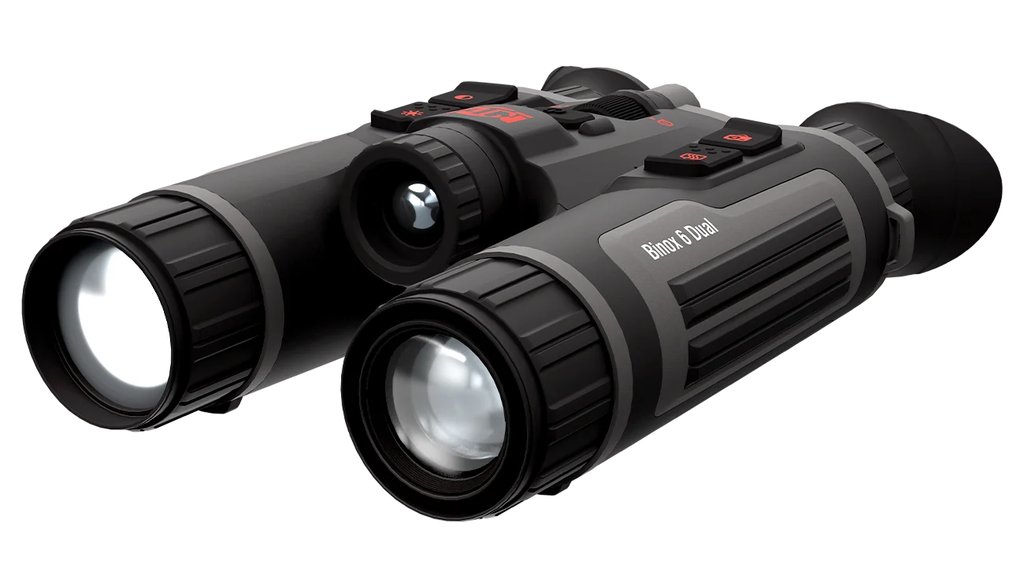
Best budget pick: ATN Binox-6 Dual 384x288 5.5-44x
The ATN Binox-6 Dual 384x288 is the value pick because it puts the money where a hunter feels it. You get two-eyed comfort for long glassing, a 5.5-44x zoom that reaches out across a field, and a built-in rangefinder that hands you the distance to whatever you spot — all without the flagship 640 price.
Comfort that pays off over hours
Both eyes open means no squint, no fatigue headache, and a steadier hold when you're scanning a field edge for an hour waiting for movement. That comfort is the whole reason to choose binoculars over a monocular, and it's the same here whether you buy the 384 or the 640.
The features you actually use
The built-in laser rangefinder reads distance so you're not guessing before a stalk, the 4-in-1 modes cover day through full dark, and DeFog plus Wide Dynamic Range keep the picture honest in bad weather. It runs about eight hours on dual replaceable 18650 batteries. Who it's for: hunters who want serious glassing on a budget. Who it's not for: someone who needs the finest detail at the extreme edge of detection, where the 640 wins.
What 'budget' does and doesn't mean here
Budget in this line doesn't mean stripped down — it means the resolution is where the savings come from, not the feature list. You still get the 4K day sensor for glassing in full light, the Smart IR illuminator for pitch dark, GPS and compass for marking where you spotted game, and Picture-in-Picture so you can keep a wide view while zooming a corner of the frame. Those are the things that make a session productive. The 384 sensor is the one place ATN trimmed to hit the value tier, and it's a smart place to trim, because at real hunting distances a 384 still shows you a deer or a hog clearly. You're not buying a lesser experience; you're buying the same experience with a sensor sized to a budget.
Why the big zoom range matters
The 5.5-44x range is unusually wide for a value binocular, and it changes how you glass. At the low end you take in a whole field to catch movement; at the top end you pull a distant shape close enough to tell a coyote from a stray dog before you ever move. Because you keep both eyes open the whole time, running through that zoom range doesn't tire you the way squinting through a monocular would. The rangefinder then confirms exactly how far that shape is, so by the time you decide to close the distance, you already know the number.
Best step-up: ATN Binox-6 Dual 640x512 3-24x
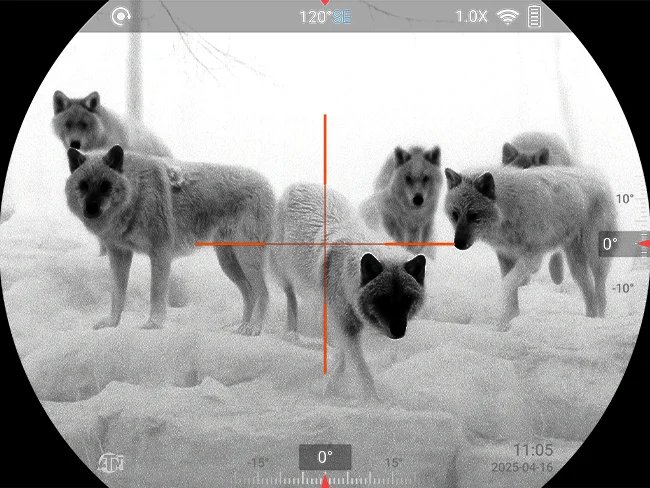
When the budget can stretch, the ATN Binox-6 Dual 640x512 3-24x adds the one thing the 384 gives up: resolution. The 640 sensor packs more dots into the picture, so fine detail holds together further out and you can identify at the edge of a longer 3100m detection range. It keeps the same 4-in-1 platform, rangefinder, and comfort — you're paying for a sharper image, not new tricks.
Where the step-up makes sense
If you glass big, open country where animals show up as distant specks, the extra resolution turns those specks into positive IDs sooner. Who it's for: hunters in wide terrain who want maximum detail at range. Who it's not for: a budget buyer who mostly glasses moderate distances and would rather bank the savings from the 384.
A morning of glassing on a budget
To see where the value lands, picture a cold morning glassing a cut field. You settle in with the Binox-6 384 before first light, both eyes open, sweeping slow at the low end of the zoom to catch any movement across the whole field. A shape shifts near the far fence. You climb the zoom toward the top of the 5.5-44x range and the shape resolves into a coyote working the edge. A tap of the built-in rangefinder puts the distance on the screen, so you already know whether it's within reach or worth closing on. As the light comes up you switch from thermal to the 4K day mode without lifting the binoculars from your eyes, and the coyote is still there in full color. None of that asked for the flagship sensor — the 384 carried the whole morning. That's the budget pick doing exactly the job you bought it for, and it's why the value tier is enough for most hunters most of the time.
How to choose budget thermal hunting binoculars
On a budget, protect the features that change your hunt and let go of the ones you won't miss. Two-eyed comfort, enough zoom, a rangefinder, and honest detection at your real distances matter more than chasing the highest sensor number your wallet can't reach.
- Two-eyed comfort — binoculars keep both eyes relaxed for long glassing, the main reason to pick them over a monocular.
- Resolution vs. budget — 384x288 identifies fine at hunting ranges for less; 640x512 buys sharper detail farther out.
- Zoom range — the 384's 5.5-44x reaches a long way, so distant game still fills the view.
- Built-in rangefinder — both models range for you, so you're not guessing distance before a stalk.
- NETD and battery — 15mK or lower keeps the picture clean in bad air, and about eight hours on swappable cells covers a session.
How we picked these ATN thermal binoculars
We judged these on value for a hunter — the most useful glass per tier of spend, not the highest spec on paper. The criteria were the ones that decide a budget binocular's worth: two-eyed comfort for long sessions, sensor resolution weighed against price, zoom range and detection for reaching game, NETD for a clean picture in humid air, the built-in rangefinder, plus weight and battery for a real hunt. We only considered ATN's current 6th-gen Binox-6 line, so nothing is outdated. Honest trade-off: the 384 gives up some fine detail at the extreme edge of range to hit a lower price — if you glass big open country for distant specks, the 640 is the better buy. This is an in-house comparison of ATN's own binoculars, not an independent lab test, so weigh it against the distances you actually glass.
Frequently Asked Questions
What are the best budget thermal binoculars for hunting?
The ATN Binox-6 Dual 384x288 5.5-44x. They deliver two-eyed glassing comfort, a big zoom range, 2750m detection, and a built-in laser rangefinder at a value tier, keeping the features hunters use while trimming the flagship 640 sensor cost.
Why choose binoculars over a thermal monocular for hunting?
Binoculars let you keep both eyes open, which is far more comfortable over a long glassing session and steadier to hold. That reduced fatigue is the main reason hunters pick a two-eyed device for scanning fields and edges.
Is the 384 sensor good enough for hunting?
Yes. A 384x288 sensor identifies game clearly at normal hunting distances; it just softens on very fine detail at the extreme edge of range compared to a 640. For most hunters glassing moderate ground, it's plenty.
Do the budget Binox-6 have a rangefinder?
Yes, the 384 model includes a built-in laser rangefinder that reads distance to what you spot. That means you get real distances before a stalk without buying a separate handheld rangefinder.
When is the 640 worth the extra money?
When you glass big, open country where animals appear as distant specks. The 640's higher resolution and longer 3100m detection let you turn those specks into positive IDs sooner. For moderate ranges, the 384 saves you money without a real loss.
How long do the batteries last?
About eight hours on dual replaceable 18650 batteries. Because the cells swap out, you can carry spares and glass through an evening and into the night without stopping to recharge.
Can I use these binoculars in daylight?
Yes. The Binox-6 is a 4-in-1 system with a 4K day sensor plus night, thermal, and twilight modes, so it glasses in full light as well as in the dark. Thermal itself reads heat, not visible light, so the thermal mode works day or night.
Are these too heavy to glass with for a long time?
No. At about 1.59 lbs the 384 model is light enough for extended glassing, and because you keep both eyes open, you avoid the fatigue that comes from squinting through a single eyepiece. That comfort is a big part of why binoculars suit long sessions.
If long glassing on a budget is the goal, the ATN Binox-6 Dual 384x288 gives you two-eyed comfort, big zoom, and a rangefinder without the flagship price. Want to weigh it against the sharper 640 step-up? Compare the full range of ATN thermal binoculars and match the sensor to the country you glass. Buy for the distances you actually hunt, and the value pick usually makes itself obvious.
Created: July 7, 2026 · 11:11:27 UTC