The best budget thermal binoculars for coyote hunting come down to one question most buyers skip: at what range do your coyotes actually show up? A dog slipping the fence line at 100 yards and a song-dog answering the call from half a mile out demand very different glass. So instead of a flat list, this ranks the value ATN Binox-6 Dual 640x512 3-24x and its high-zoom sibling by range band, matching sensor and magnification to the distance you hunt.
For budget-minded coyote hunting, the ATN Binox-6 Dual 640x512 3-24x is the best all-range value: a 4-in-1 day/night/thermal binocular with a built-in rangefinder that spots a coyote from close in to well past 300 yards. For the far edge, the high-magnification 384x288 5.5-44x reaches deeper into open country.
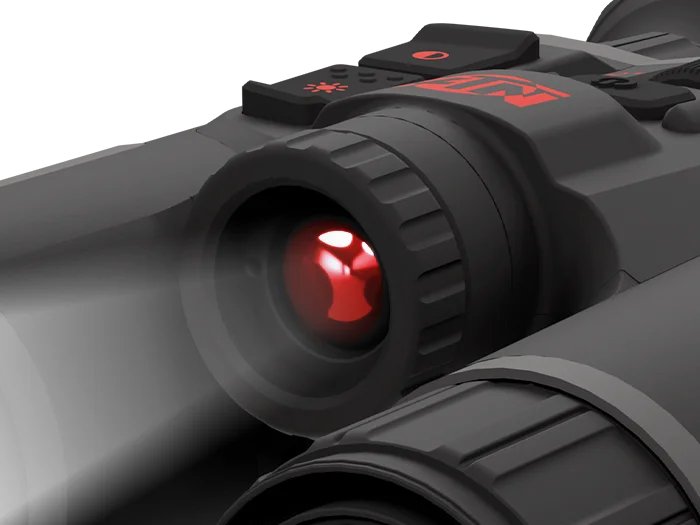
Quick answerBest overall value, all range bands: ATN Binox-6 Dual 640x512 3-24x - top thermal resolution and a built-in rangefinder for coyotes near and far.
Best for the far edge: ATN Binox-6 Dual 384x288 5.5-44x - up to 44x magnification to reach dogs at the outer limit of open country.
The pick for most callers: the 640x512, whose sharper sensor identifies a coyote from a fox or a stray dog before you commit.
Why ATN's 6th-gen Binox-6 is a smart value scanner
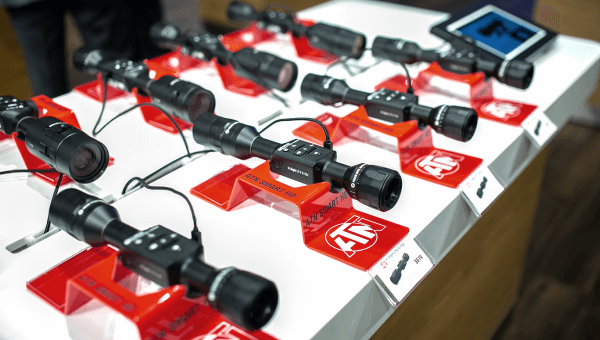
ATN's Binox-6 is a smart value scanner because it is 4-in-1: day, night, thermal and twilight vision in one binocular, plus a built-in laser rangefinder-so it replaces a stack of separate tools for coyote work. The thermal side lights up a dog's warm body against cold ground, and the two-eyed design is far easier to scan with for long sits than a one-eye monocular. For the money, that bundle of capability is why it earns the value nod.
ATN Binox-6 Dual 640x512 3-24x - the all-range value pick
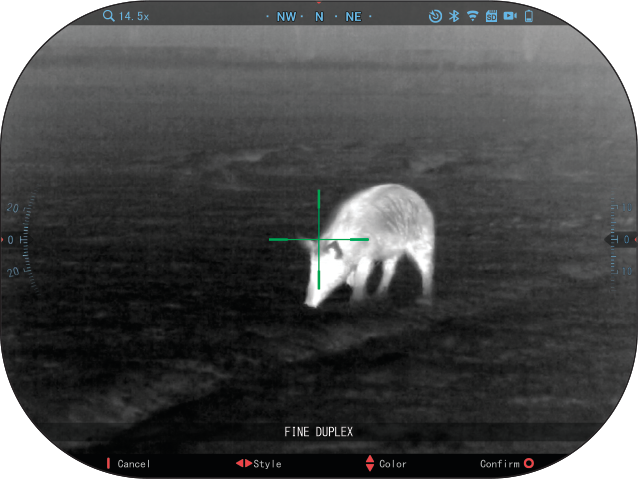
The ATN Binox-6 Dual 640x512 3-24x is the best value across range bands because its high-resolution thermal sensor keeps a coyote sharp whether it is skirting a fence at close range or standing off at 300-plus yards. The 3-24x range opens wide for scanning near ground and zooms to study a distant dog. Think of the 640x512 sensor like the difference between a standard-def and an HD picture-more dots means you can tell a coyote from a fox before you call the shot.
Close-in range band
Inside 150 yards, the 640x512's wide 3x low end lets you sweep a field edge fast and catch a coyote the instant it commits to the call. The ≤15 mK sensitivity separates a warm dog from cool grass cleanly, so you are never squinting at a vague smudge at close range.
Long range band
Out past 250 yards, the 24x top end and the built-in rangefinder work together: zoom to confirm it really is a coyote, then range it so any follow-up shot is honest. The 3100 m detection figure means the sensor flags heat far beyond where you'd ever shoot.
Who it's for-and not for
The Binox-6 640x512 is for the caller who hunts varied ground and wants one binocular for every range band. It is not for the hunter who only ever glasses the extreme far edge and would trade resolution for the higher 44x zoom.
ATN Binox-6 Dual 384x288 5.5-44x - the far-edge reacher
The ATN Binox-6 Dual 384x288 5.5-44x is the far-edge specialist because its magnification climbs to 44x, letting you study a coyote at the outer limit of a wide prairie or river bottom. It carries the same ≤15 mK sensitivity and built-in rangefinder, so identification and ranging at distance are still strong. You trade some sensor resolution for that extra reach-a fair swap if your dogs live way out.
Who it's for-and not for
It is for the open-country caller working the longest range band who wants maximum zoom. It is not for close-and-mid hunters, who get a sharper picture from the 640x512's higher-resolution sensor.
Why 4-in-1 binoculars are the value play for coyotes
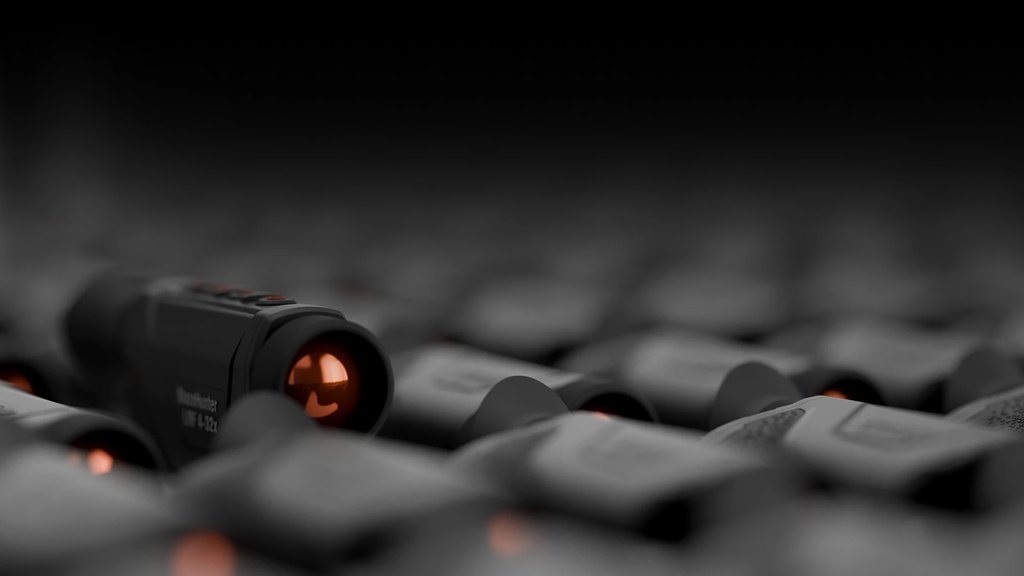
The 4-in-1 design is the value play for coyote hunting because one Binox-6 replaces a stack of gear you'd otherwise buy piecemeal. Day, night, thermal and twilight vision plus a laser rangefinder all live in a single unit, so instead of a thermal scanner in one pocket, a rangefinder in another, and day glass around your neck, you carry one tool that does the whole job. That consolidation is where the 'budget' in best-budget lives: not the lowest sticker, but the most capability per tier of spend for a serious coyote setup.
It also changes how you hunt a stand. You scan the field edge in thermal to catch a dog's heat, flip to the day or night channel to confirm what you're looking at, and lase the distance-all without setting anything down or fumbling between devices. For a caller working a cold dawn stand where seconds matter when a coyote commits, that single-unit flow is a real edge. The trade is that a do-everything binocular costs more than a bare-bones thermal-only scanner, so it suits the hunter who genuinely wants the full toolkit in one hand.
What thermal resolution buys a coyote caller
For a coyote caller, thermal resolution buys the one thing that decides a stand: clean identification before the shot. A song-dog, a red fox, and a neighbor's loose retriever all read as warm blobs at distance, and telling them apart is exactly where the 640x512 sensor pulls ahead-more pixels means a sharper outline and a confident call. Picture the jump from a standard-definition screen to a high-definition one; the extra dots are what turn a guess into a decision. On coyotes, where mis-identifying a target has real consequences, that clarity is the feature to prioritize.
Resolution works hand in hand with the ≤15 mK NETD sensitivity both models share. NETD is the smallest temperature difference the sensor can separate, and a low number means a coyote's warm coat lifts cleanly off cold winter ground instead of blending into it. Combine strong sensitivity with high resolution and you get the best-case coyote picture: a bright, sharp, unmistakable dog against a dark field. That pairing is why the 640x512 is the caller's pick when identification matters more than raw zoom.
How to choose by range band
- Mixed near-to-long ground - the 640x512 3-24x is the versatile value pick for most callers.
- Extreme far-edge open country - the 384x288 5.5-44x reaches deeper with its 44x top end.
- Any range - the built-in rangefinder confirms distance so a follow-up shot is honest.
- Long sits - the two-eyed design fatigues you far less than a single-eye monocular while scanning.
A stand at each range band
Picture two very different coyote stands and the same Binox-6 640x512 handling both. On a brushy fence-line set, dogs slip in tight and fast; you keep the zoom low, sweep wide, and the moment a warm shape breaks cover you already have it framed and identified. There's no fumbling to a higher power-the wide field does the work at close range, and the sharp sensor confirms it's a coyote and not a house cat before you make a move.
Now picture an open pasture set at gray light. A song-dog answers from the far corner, a small heat mark against cold ground. You zoom to 24x to study it, confirm the shape and gait, then lase the distance so any shot you take is honest rather than a guess. Same binocular, two range bands, one smooth workflow. That span-from a snap close call to a deliberate long confirmation-is exactly why the versatile 640x512 is the pick for callers who don't hunt just one kind of ground.
How we picked these ATN thermal binoculars
We ranked these on what a coyote caller feels at real distance-thermal resolution, NETD sensitivity, magnification range, detection range, the built-in rangefinder, battery runtime and weight-judged by range band rather than a spec sheet in isolation, and only within the 6th-gen Binox-6 line. The honest trade-off is that the higher-zoom 384x288 gives up sensor resolution for reach, while the 640x512 keeps the sharper picture but tops out at 24x. These are premium multi-purpose binoculars, so 'budget' here means best value for the capability, not cheapest possible. This is an in-house comparison of ATN's own binoculars, not an independent lab review-match the sensor and zoom to the range your coyotes actually show at.
Frequently Asked Questions
What are the best budget thermal binoculars for coyote hunting?
The ATN Binox-6 Dual 640x512 3-24x offers the best value across range bands. It combines top thermal resolution with a built-in rangefinder and 4-in-1 day/night/thermal/twilight vision, so it handles coyotes from close in to long range. It replaces several separate tools, which is where the value comes from.
Why binoculars instead of a thermal monocular?
Binoculars use both eyes, which is far less tiring on the long scanning sits coyote calling demands, and they give better depth perception when picking a dog out of cover. The Binox-6 also packs a rangefinder and day/night modes a simple monocular lacks. For dedicated scanning, two eyes win.
Do I need the 640 or is the 384 enough?
The 640x512 gives a sharper image and better identification at close-to-mid range, while the 384x288 trades some resolution for up to 44x magnification. If your coyotes show up at varied ranges, the 640 is the versatile pick; if you only glass the extreme far edge, the high-zoom 384 reaches deeper.
How far can these detect a coyote?
The 640x512 has a 3100 m detection range and the 384x288 2750 m, both far beyond any realistic shot. Detection means spotting the heat signature, not identifying detail, so practical ID and shooting range is shorter but still covers long open-country calling.
What does the built-in rangefinder add for coyotes?
It measures the exact distance to a dog out to about 1000 m, which lets you confirm range before a longer shot instead of guessing. That matters most when a coyote hangs up out in open ground. Both Binox-6 models include it.
How long does the battery last on a night of calling?
About 8 hours on two 18650 cells, which covers a full night of stands. Because the cells are replaceable, carrying charged spares lets you hot-swap and keep hunting through a long session.
Coyotes don't always show up at the same distance, so buy the binocular that covers every band. The ATN Binox-6 Dual 640x512 3-24x spots a close dog with its wide low end and confirms a far one with 24x zoom and a built-in rangefinder-all in one 4-in-1 unit. If your ground runs to the extreme far edge, compare the high-zoom option on the ATN thermal binoculars page and match the glass to where your song-dogs live.
Created: August 5, 2026 · 19:53:40 UTC