Calling coyotes is a game of eyes before it is a game of triggers. You need to catch a dog slipping the wind before it catches you, and a rifle scope alone gives you a soda-straw view of the world. That is why a spotting optic earns its place on a stand. If you want the best budget thermal binoculars for coyote hunting without stepping outside the current lineup, the ATN Binox-6 is the honest starting point. It gives you two-eye comfort, a heat picture that finds a coyote's coat against cold ground, and a rangefinder built in, so you spend the money on glass that scans instead of glass that only aims.
The best budget thermal binoculars for coyote hunting are the ATN Binox-6, with the 384x288 5.5-44x model as the value entry point. Its high base magnification and 2750m detection range let you pick a song-dog out of a field edge and hold it, while the built-in rangefinder gives you a firing solution before the dog commits. Step up to the 640 model only when you regularly reach past your comfortable calling range.
Quick answerBest budget pick: ATN Binox-6 384x288 5.5-44x — the value model, with strong reach-in magnification for picking apart brush lines.
Step-up pick: ATN Binox-6 640x512 3-24x — more dots in the picture and a wider base view for reading a whole hillside at once.
Bottom line: Start with the 384 for classic stand-calling; move to the 640 if your coyotes usually hang up at distance.
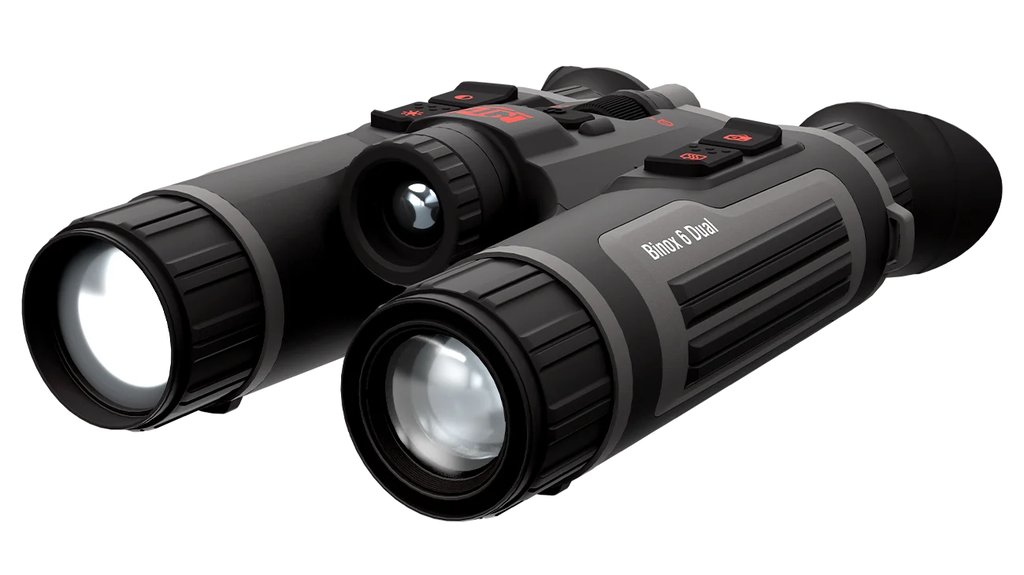
Why ATN's 6th-gen Binox-6 fits a budget coyote setup
ATN's 6th-generation Binox-6 fits a budget coyote setup because it packs the two things a caller actually needs into one body: a wide-scanning thermal picture and a laser rangefinder, so you are not buying two separate tools. A coyote is a small, low target that often shows itself for only a few seconds at a field edge. Two-eye viewing keeps your head relaxed through a long, cold sit, which matters more than most people admit when you are watching a draw for twenty minutes. Both current models share a low NETD of 15mK, which is the number that decides how clean the picture stays when the air turns damp before dawn. That sensitivity is why a coyote's body reads as a distinct shape and not a smudge on a frosty morning. Because we only look at the current line here, you are getting the newest sensor and processing, not a leftover model dressed up as a deal.
Best budget pick: ATN Binox-6 384x288 5.5-44x
The ATN Binox-6 384x288 5.5-44x is the best budget choice because its 5.5x starting magnification already reaches into a brush line where coyotes like to hang, so you are not fighting to make out a small dog at your effective calling range. The 384 sensor keeps the value price honest while still resolving a coyote's ears and tail against a cold pasture. Detection out to 2750m means you spot the heat long before you need to make a shot decision.
Why the magnification suits calling
Coyotes usually break cover at a specific edge — a fence line, a creek bottom, the seam between two fields. That higher 5.5x base magnification lets you park on that seam and read it in detail, then push in with digital zoom the moment a dog shows. You give up some field of view compared to the 640, but for a caller who already knows where the dog will appear, reach beats width.
The rangefinder earns its keep
The built-in laser rangefinder (good to 1000 yards, plus or minus a meter) means the instant a coyote steps out, you know the distance before it turns. On a windy stand where a dog circles downwind fast, that saved second is often the whole hunt.
Who it's for: the caller who wants the most usable coyote glass at the lowest current-line entry point. Who it's not for: anyone who routinely watches open country where dogs hang up well past normal calling range — that hunter wants the 640.
Step-up pick: ATN Binox-6 640x512 3-24x
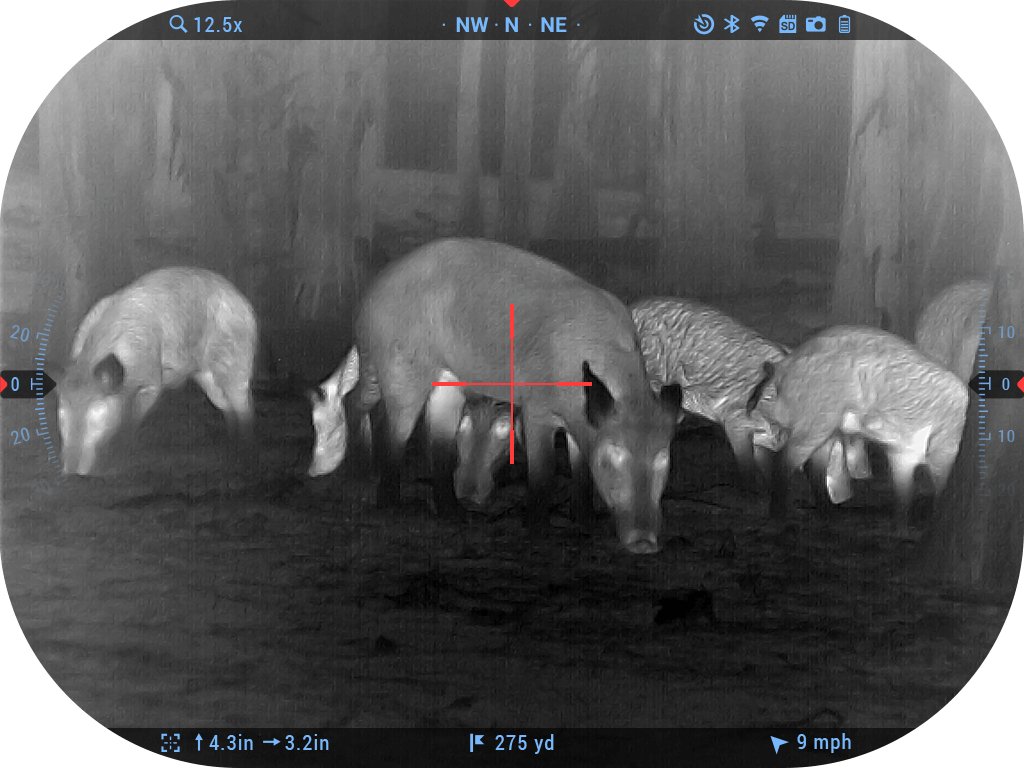
The ATN Binox-6 640x512 3-24x is the step-up because its 640 sensor puts more dots in the picture, so you can zoom further before the image turns blocky and still tell a coyote from a fox at distance. The wider 3x base view is built for reading a whole hillside in one sweep instead of one seam at a time. Detection climbs to 3100m for those wide-open stands.
When the extra resolution pays off
On big agricultural ground or cut pasture where dogs answer from far off and drift, the 640's clarity at zoom lets you confirm it is a coyote and not a house cat before you ever raise the rifle. That confidence at range is what you are paying more for. It costs more than the 384, but it is still a step within the same family, not a jump to a different class of tool.
Who it's for: open-country callers who need to identify and range dogs well beyond typical stand distances. Who it's not for: the tight-timber or close-calling hunter who will never use the extra reach and would rather keep the budget.
How to choose your budget coyote binoculars
Choose by how far your coyotes make you look, not by the biggest number on the box. Match the tool to your ground and your calling style:
- Scan your typical stand — if dogs show inside your comfortable calling range at known edges, the 384's reach-in magnification is plenty.
- Weigh field of view against reach — the 640's wider 3x base makes sweeping a hillside faster; the 384's 5.5x base gets you tighter on a known seam.
- Lean on the shared strengths — both give you 15mK sensitivity, ~8 hours of battery on swappable 18650 cells, and IP67 weather sealing for wet, cold sits.
- Use the rangefinder — both models range to 1000 yards, so you get a firing solution regardless of which you pick.
- Buy once — a binocular scans; a scope aims. Spending your budget on the glass that finds the dog is the smarter first purchase.
Getting the most out of a budget Binox-6 on a coyote stand
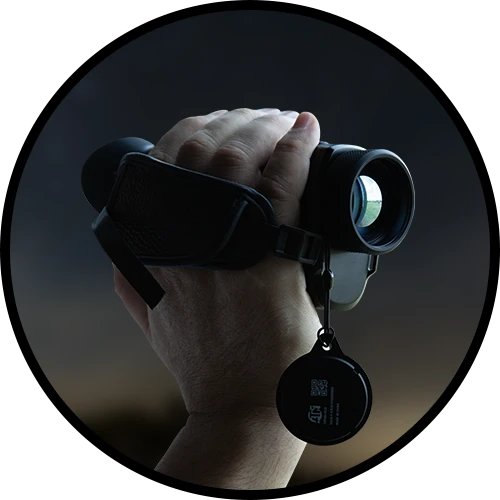
A budget binocular rewards good habits more than an expensive one covers for bad ones, so how you run it matters. On a calling stand, the workflow that turns the Binox-6 into a killer is simple, and it costs nothing extra. Set up before dark when you can, learn where the wind is going, and pre-range the obvious edges so you already know the distance to that fence corner or creek crossing before a dog ever shows. When you start the sequence, do not glue your eye to one spot — sweep slow and wide with the 3x-friendly base view, then push the zoom only when a warm shape appears. A coyote coming to the call rarely runs straight in; it swings downwind to scent-check the sound, so the first heat you catch is often off to the side, not out front where you are looking. Two-eye viewing helps you hold that peripheral awareness because your brain is not fighting a single tube.
The other budget-friendly habit is recording. The 384 model still saves your stands to the app, and a new caller learns faster by reviewing why a dog hung up than by guessing in the truck afterward. Watch the playback and you will see the moment the coyote caught your movement, or the second it winded you and spun. Over a season, that feedback loop is worth more than any spec on the box. None of it requires the flagship — it is all baked into the value model, which is exactly why the 384 punches above its price for a caller willing to put in the reps.
Small tweaks that save a cold stand
- Pre-range your edges — laser the fence line, the gap, the far corner before you call, so a firing solution is already in your head.
- Sweep, then zoom — find the heat at the wide base view first, then push in to confirm ears, tail, and gait before committing.
- Watch downwind — a called dog swings to scent-check, so glass the flanks, not just straight out from the caller.
- Carry a spare 18650 set — a swap takes seconds and keeps a promising all-night sit alive.
How we picked these ATN thermal binoculars
We ranked these against one job: finding and ranging coyotes on a cold-weather stand, on a budget. The criteria were thermal sensitivity (NETD), sensor resolution, base magnification and field of view, detection range, battery life on a long sit, and weight for handheld glassing. We only considered ATN's current 6th-generation Binox-6 line, so nothing here is an older model repackaged. The honest trade-off is real: the 384 gives up resolution and reach to hit the value price, and neither model is built for someone who mainly wants a spotter for open western coyotes at extreme distance. This is an in-house comparison of ATN's own binoculars, not an independent lab test — check the specs against your ground before you buy.
Frequently Asked Questions
Are the ATN Binox-6 384 binoculars enough for coyote hunting?
Yes, for most calling. The 384 sensor with 15mK sensitivity resolves a coyote's shape clearly at normal stand distances, and the 5.5x base magnification reaches into the brush lines where dogs hang. Step up to the 640 only if you routinely work open country at long range.
Do I need the built-in rangefinder for calling coyotes?
It helps more than you would expect. Coyotes often show for only a few seconds and circle downwind fast, so knowing the distance the instant a dog steps out saves the shot you would otherwise rush. Both Binox-6 models range to 1000 yards.
Why use thermal binoculars instead of a thermal scope for coyotes?
A binocular is built to scan comfortably with both eyes, which keeps your head relaxed through a long, cold sit. A scope gives a narrow view meant for aiming, not searching. Spotting the dog first is what wins the stand, so glass that finds heat is the smarter first buy.
What is the difference between the 384 and 640 Binox-6 for coyotes?
The 640 has more dots in the picture, so it holds detail at higher zoom and reaches to 3100m, and its wider 3x base view scans a whole hillside faster. The 384 has a tighter 5.5x base that reaches into known seams and comes in at the value price. Pick by how far your coyotes make you look.
Will the Binox-6 work in fog or damp pre-dawn air?
Yes. Both models share a low NETD of 15mK, which is the spec that keeps the thermal picture clean when the air turns humid before dawn. There is also a DeFog mode to help in the worst conditions.
How long does the battery last on a night hunt?
About 8 hours per charge, and both models run dual replaceable 18650 batteries, so you can carry a spare set and swap in seconds to cover an all-night sit.
Ready to stop guessing where the dogs are hiding? The ATN Binox-6 gives you a two-eye heat picture and a built-in rangefinder in one budget-minded package, so your next stand starts with you spotting the coyote first. Compare both the 384 and 640 models side by side in ATN's thermal binoculars lineup, match the reach to your ground, and put your money into the glass that actually finds the song-dog before it finds you.
Created: July 7, 2026 · 14:32:46 UTC