If you're buying your first thermal for calling, you don't need to spend flagship money to start finding coyotes - you need a forgiving, affordable tool you'll actually carry and learn. For the best budget thermal binoculars for coyote hunting, the ATN Binox-6 384x288 is the easy entry point: an affordable pair that's simple to run, comfortable on both eyes, and packs a big zoom so a beginner can grow into it.
The best budget thermal binoculars for coyote hunting are the ATN Binox-6 384x288 5.5-44x. They're an affordable, beginner-friendly first pair: comfortable two-eyed viewing, a real 384 sensor, and a huge 5.5-44x zoom, detecting heat past 2,700 meters - enough to learn on and find dogs without overspending.
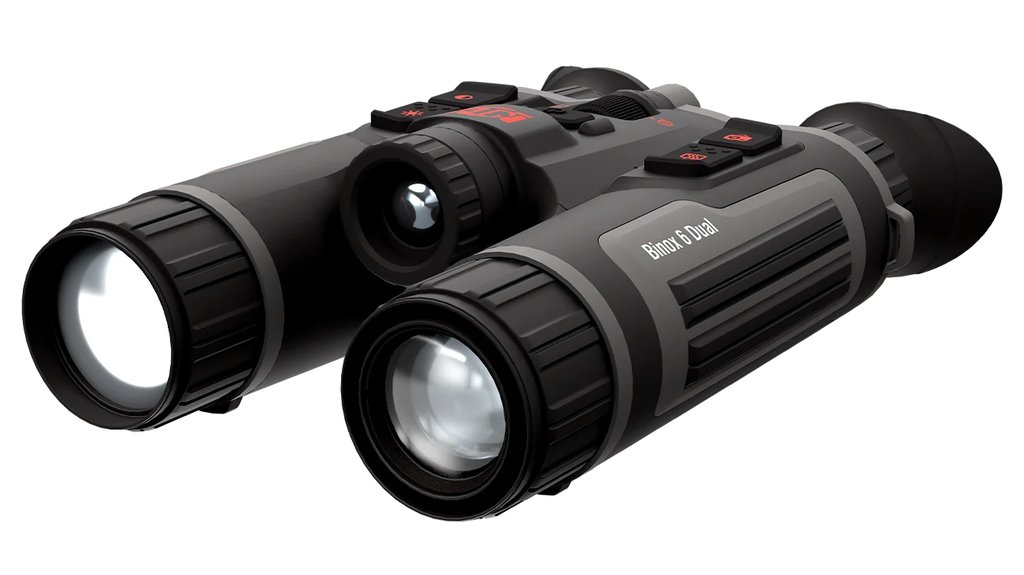
Quick answer: top picksBest first pair: ATN Binox-6 384x288 5.5-44x - affordable, easy to learn, big zoom.
When you outgrow it: ATN Binox-6 640x512 3-24x - more resolution for reading dogs at the longest range.
Either way: both are two-eyed, so scanning stays comfortable as you build experience.
Why a beginner should start with the Binox-6 384
A first thermal should be affordable, forgiving, and easy to run, and the Binox-6 384 is all three. It's the entry price in ATN's binocular line, so the cost of learning stays low, and it uses the same simple controls and app as the pricier models, so nothing about it is intimidating. The two-eyepiece design is the beginner-friendly part that matters most: keeping both eyes open feels natural, reduces strain, and makes it far easier to learn what a coyote actually looks like on a thermal sensor than squinting through a single tube would.
It still has the capability to grow with you. The 384 sensor detects a dog against cool ground with a NETD of 15mK or better - the smallest temperature difference it can register - and the big 5.5-44x zoom lets you scan wide as a novice and then push in to confirm a shape as your eye sharpens. Detection past 2,700 meters means you're not limited to the near fence line while you learn. It's an affordable tool you won't immediately outgrow, which is exactly what a first purchase should be.
Best first pair: ATN Binox-6 384x288 5.5-44x
The ATN Binox-6 384x288 is the easy, affordable way to start finding coyotes at night. Simple to operate, comfortable on both eyes, and light enough at 720 grams to carry on every stand, it lowers the barrier to entry without being a toy you'll replace next season. For a caller learning the ropes, it's a pair you can trust while you build the skill of reading dogs on thermal.
Learning to read a dog on a budget sensor
The fastest way to improve is repetition, and an affordable binocular you carry every night gives you that. Study how a coyote's compact, low signature differs from a deer or a stray dog, use the zoom to confirm, and each stand teaches you a little more. You don't need flagship resolution to build that eye - you need reps, and a budget pair gets you them.
Who it's for - and who it's not
It's for the new or budget-minded caller who wants an easy, affordable first thermal binocular. It's not for the experienced hunter who already knows they need to read dogs at the very longest range in fine detail - that's the 640.
When you outgrow it: ATN Binox-6 640x512 3-24x
The ATN Binox-6 640x512 3-24x is the natural next step once your calling gets serious and your ground opens up. Its 640 sensor packs more dots into the picture - the HD-versus-standard-definition jump - so a distant dog stays a recognizable shape, and detection reaches around 3,100 meters. Because it shares the same controls and app, moving up is a step, not a restart, and the learning you did on the 384 carries straight over.
First-timer tips for calling with binoculars
Keep it simple while you learn. Let the sensor settle after power-up, then sweep the whole stand slowly at a lower zoom so you take in the wide arc a coyote might circle through, pushing to higher magnification only to confirm a warm shape. Watch the downwind side hardest, since that's where a cautious dog tries to scent-check you, and get comfortable transitioning from the binocular to your rifle scope - the binocular finds, the scope shoots.
Build good habits early. Run a quick calibration when the picture turns grainy, keep the lens clean, and hunt cool, dry nights that give a coyote the sharpest contrast against the background. Brace your elbows when you zoom in so the image stays steady, and keep a fresh battery in the unit with a spare in a warm pocket. None of this is advanced - it's just the routine that turns an affordable first binocular into one that reliably finds dogs while you grow as a caller.
How to choose a first coyote binocular
Choose for affordability, ease of use, and room to grow. A first thermal is one you'll learn on, so simplicity and comfort matter as much as specs.
- Price of entry - a value 384 keeps the cost of learning low.
- Ease of use - simple controls and a comfortable two-eyed view speed up learning.
- Zoom range - a big top end lets you confirm dogs as your eye sharpens.
- Weight - a pair light enough to carry every stand is one you'll actually use.
- Upgrade path - a shared platform means moving up later is a step, not a restart.
Part of what makes an affordable binocular the right first buy is that it lowers the stakes of learning. A new caller is going to make mistakes - sweeping too fast, misreading a distant shape, zooming at the wrong moment - and doing that on a value pair rather than a flagship one takes the pressure off and lets you focus on building your eye. Every stand teaches you a little more about how coyotes move and read on thermal, and an inexpensive binocular you are not afraid to use hard in the field is the fastest way to accumulate those lessons.
It also fits naturally into a beginner's whole setup. Paired with whatever rifle optic you already shoot - a day scope, or a night scope down the road - the Binox-6 384 handles the finding while your sight handles the shooting, which is the safest and most effective way to run a stand. As a first thermal, it does the hardest part of coyote hunting, locating and confirming the dog, at a price that leaves room in the budget for the rest of your gear, and it keeps working as a scanner even after you upgrade your optics.
Confidence is the quiet benefit of starting affordable. A new caller who isn't worried about babying an expensive optic uses it more, experiments more, and learns faster - and reps are what build the eye for spotting a coyote slipping across a field. The Binox-6 384 is rugged enough to ride in a pack every night and affordable enough that you'll actually take it out, which together matter more for a beginner than any single spec on the box.
It rewards patience, too, which is the heart of calling. With a comfortable binocular you can sit a stand longer and keep scanning when a dog is slow to show, and the coyotes that hang back the longest are often the ones that finally commit. Learning to wait and watch through relaxed, two-eyed glass is a skill the Binox-6 384 helps a beginner build without fatigue or frustration.
How we picked these ATN binoculars
We compared only ATN's current Binox-6 binoculars and judged the budget option as a first pair for a coyote caller, where affordability, ease of use, and room to grow matter more than a spec race. We weighed price of entry, simplicity, two-eyed comfort, zoom range, weight, and the upgrade path. The honest trade-off is resolution for price: the 384 is easy and affordable to learn on but doesn't read dogs at the very longest range like the 640, which is the move once you outgrow it. This is an in-house comparison of ATN's own binoculars, not an independent lab test, so weigh it against your experience and ground.
Frequently Asked Questions
What are the best budget thermal binoculars for coyote hunting?
The ATN Binox-6 384x288 5.5-44x. They're an affordable, beginner-friendly first pair with comfortable two-eyed viewing, a real 384 sensor, and a big 5.5-44x zoom - enough to learn on and find dogs without overspending.
Are these good for a first-time thermal user?
Yes. They use simple controls and the same app as pricier models, the two-eyed view is intuitive and easy on the eyes, and the value price keeps the cost of learning low.
Will I outgrow the Binox-6 384?
Possibly, once your calling gets serious and your ground opens up. When that happens, the Binox-6 640 is the next step, and because it shares the same controls, the skills you built carry straight over.
Is a 384 sensor enough to learn on for coyotes?
Yes. It detects dogs at practical calling distances, and the big zoom helps you confirm them, which is exactly what a new caller needs to build an eye for reading coyotes on thermal.
How do I start finding coyotes with binoculars?
Sweep the stand slowly at a lower zoom, watch the downwind side hardest, and push in to confirm a warm shape. Then transition to your rifle scope for the shot - the binocular finds, the scope shoots.
Do these work in daylight too?
Yes. Thermal reads heat, not light, so the Binox-6 spots coyotes day or night, which also makes it a useful scouting tool between hunts.
Can I record what I see to review later?
Yes. The 6th-gen Binox line supports capture and app connectivity, so you can save your scans and review them, which speeds up learning as a new caller.
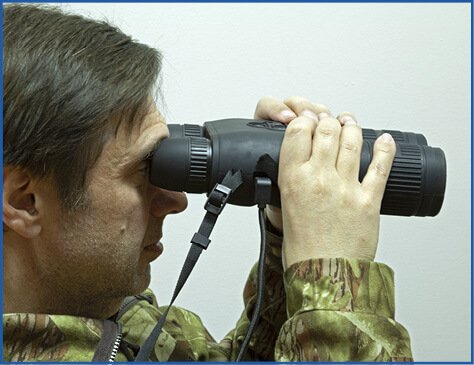
Start finding coyotes without overspending. See the ATN Binox-6 384x288 and browse the full ATN thermal binoculars lineup to find an easy first pair with room to grow. Learn on an affordable, comfortable binocular, build your eye stand by stand, and step up when you're ready.
Created: July 8, 2026 · 10:49:39 UTC