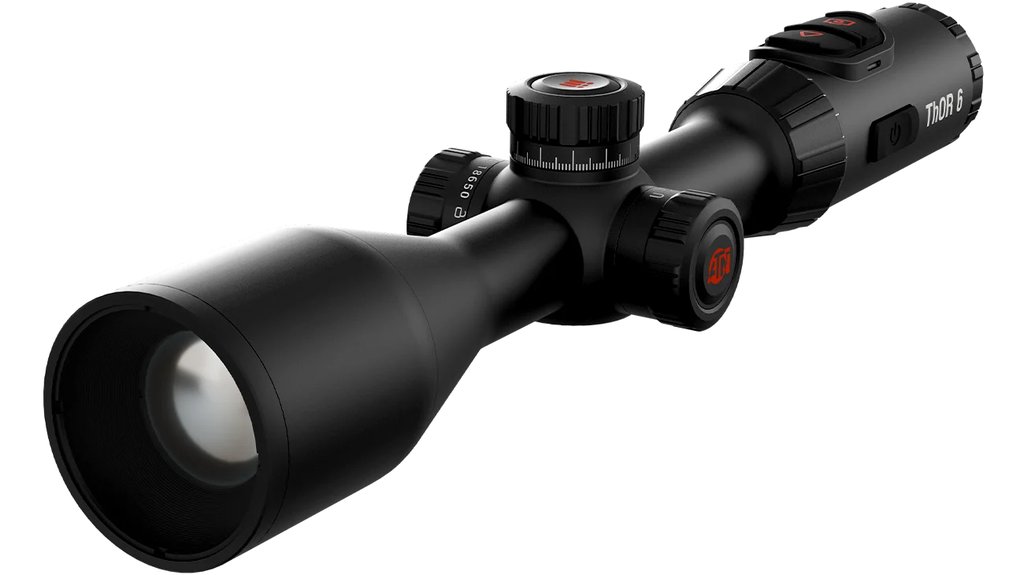
Deciding which ATN ThOR 6 is the best 640 thermal scope for you is really a decision about which features you value most. Rather than crown one winner, this comparison lines the three ThOR 6 variants up feature by feature — sensor, reach, weight, battery and palettes — so you can see exactly what you trade when you move between them. The value baseline is the ThOR 6 384x288 2.5-20x, compared against its two 640 siblings from ATN's thermal scope line.
Verdict: the two 640 variants win on outright clarity and reach, while the 384 wins on weight, palettes and value. If a 640 sensor is the feature you came for, the 3-24x reaches farthest and the 2-16x adds swappable batteries; if you want the lightest full-featured ThOR 6, the 384 is the honest pick.
How the three variants relate
Before the feature-by-feature walk, it helps to see how the three ThOR 6 bodies sit relative to one another. Two of them — the 3-24x and the 2-16x — share the same 640x512 detector and differ only in magnification band, reach and battery build; the third, the 384x288, drops to a 384 sensor but is the lightest and adds six colour palettes. So resolution splits the line two-against-one, while reach, weight and battery each cut a different way. That is why there is no flat winner: the best 640 thermal scope for you is whichever variant tops the one feature you refuse to compromise on. The sections below take the five features that actually separate the three in turn.
Feature 1: sensor resolution
This is the feature the keyword is built around. Both 640 variants carry a 640x512 detector, which reads finer temperature differences and holds detail as you zoom — the payoff at distance. The ThOR 6 384x288 2.5-20x steps down to a 384 sensor, which at realistic mid-range distances still produces a clean, usable picture but shows less fine detail once you push the magnification. If identification at range is your priority, this feature alone points you at a 640.
Where resolution earns its keep
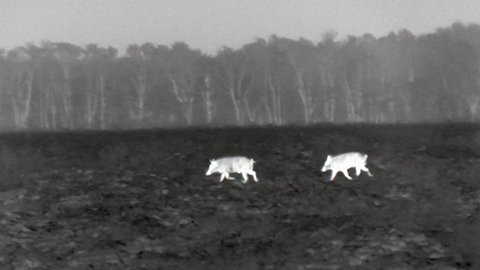
Picture a warm blob standing at the far edge of a pasture. On the 384x288 sensor you can tell something is out there, but sorting a coyote from a loose farm dog can wait until it moves. Feed the same scene to a 640x512 detector on the ThOR 6 640x512 2-16x and the extra pixels resolve ear shape, tail carriage and gait far sooner, so the call comes earlier and cleaner. With SharpIR AI sharpening the frame and NETD held at <=15mK on every variant, the sensor's pixel count is what decides how confidently you identify at that distance.
That same resolution gap shows again as you push the digital zoom. All three variants offer up to 8x digital on top of their optical band, but digital zoom only ever enlarges the pixels the sensor already captured — it adds no new detail. On a 640x512 detector there is simply more to enlarge, so a hog at the edge of the frame stays legible deeper into the zoom range; on the 384x288 the picture softens sooner as the pixels grow. If the way you hunt leans on stretching magnification to confirm a distant animal before the shot, that is a second, quieter reason the resolution feature points toward a 640 body over the 384.
Feature 2: reach and magnification band
The ThOR 6 640x512 3-24x leads on reach with a 3650m detection range and the tightest high-end zoom, built for open country. The ThOR 6 640x512 2-16x trades some reach (3100m) for a wider low end that scans better in cover. The 384 lands at 2300m, which is plenty for mid-range work but the shortest of the three. If you spend nights looking as far as you can see, this feature separates the flagship from the rest.
When the magnification band decides the shot
Imagine glassing a distant fence line where you already know game beds down. The 3-24x's 24x top end lets you dwell on that far corner and read posture before you ever shoulder the rifle, and its 3650m detection means the heat signature registers long before it is in range. Drop to the 2-16x and the 16x ceiling means a very distant target stays a little smaller in the frame, though its 3100m detection still catches the signature. The 384's 2.5-20x band is capable to 2300m — the honest limit of the three. Choose your top-end zoom by how far your ground actually opens up.
Feature 3: weight and carry
Here the 384 wins. At 790 g / 1.74 lbs it is the lightest of the three; both 640 variants sit at 830 g / 1.83 lbs. Forty grams sounds trivial on paper, but on a long stalk or a walk-in it is the unit you notice least. If your hunting involves a lot of moving on foot, this feature nudges you toward the lighter body.
Where the weight difference shows up
Think of a two-mile walk-in over broken ground to reach a stand, rifle slung the whole way. The 384x288's forty-gram advantage over the 640 variants is not something you feel at the truck, but it is something your shoulders register by the time you set up — and again on the walk out. It also changes how the rifle swings when you have to track a moving animal off-hand. None of that matters on a static high seat, where the 830 g / 1.83 lbs of the 640 bodies simply sits still. So this feature only earns its weight, so to speak, for the hunter who covers real distance on foot rather than sitting one spot all night.
Feature 4: battery and power
All three run roughly 9 hours on a charge, but the 2-16x adds a replaceable 18650 battery system — the standout power feature — so a spare set in a pocket turns an all-night sit into a quick swap rather than a hard stop. The 3-24x and the 384 are still all-nighters on a charge, but if uninterrupted runtime is the feature you rank highest, the 2-16x is the answer.
The moment the battery feature matters
Consider a cold, active night when hogs keep filtering through well past the hours you planned to sit. On the 3-24x or the 384 you are watching the charge indicator, weighing whether to call it or risk the scope dying mid-scan. On the 2-16x you thumb in a fresh 18650, and the roughly 9-hour clock resets — no pack-up, no drive home to charge, no missed window. Recoil Activated Video and Hot Point Tracking keep running through the swap. For anyone who hunts genuinely all-night sits, that hot-swap is the feature that keeps the scope in the fight.
Feature 5: palettes and shared tech
Every variant shares SharpIR AI image enhancement, a 50 Hz refresh, an <=15mK NETD, Recoil Activated Video, Hot Point Tracking and the ATN Connect 6 app, so the core experience is consistent across the line. The 384's extra flourish is six colour palettes, useful for dialling contrast in cluttered or heat-soaked conditions. On the shared features there is no wrong choice — the differences live in the four above.
When palettes and shared tech earn their place
Picture a humid, heat-soaked evening when the ground is still radiating warmth and a plain White Hot image goes muddy. On the 384x288 you can cycle its six palettes until a contrast setting cuts a warm animal cleanly out of the warm background — a small but real edge in that condition. Everything else that decides the night is shared: the 50 Hz refresh keeps a running hog smooth on all three, Recoil Activated Video captures the shot the same way, Zeroing Freeze and Picture-in-Picture behave identically, and the Connect 6 app links to any of them. So the shared tech is never the tie-breaker; it is the floor. The palettes are the one texture that quietly tips the 384 in cluttered heat.
Which feature should decide your pick?
- Choose the 384x288 2.5-20x if weight, palettes and value matter most and your ranges are moderate.
- Choose the 640x512 3-24x if outright reach and detail at distance are your top feature.
- Choose the 640x512 2-16x if you want the 640 sensor plus a wide low end and hot-swap batteries.
- Any of the three gives you the same SharpIR AI, 50 Hz refresh and <=15mK sensitivity, so the shared experience is a constant.
Which feature wins for you
Stack the five features against your own night and one usually rises to the top. If the deciding feature is identification at distance, resolution wins and both 640 variants pull ahead of the 384. If it is outright reach, the 3-24x's 3650m and 24x ceiling settle it. If it is scanning cover with a wide field before a shot opens, the 2-16x's low end takes over. If it is uninterrupted runtime, the 2-16x's swappable 18650 is decisive; and if it is all-day carry weight, the 384x288 at 790 g / 1.74 lbs is the honest answer. Because SharpIR AI, the 50 Hz refresh and the <=15mK NETD are shared, you are never trading away base image quality — only choosing which single feature you refuse to compromise on.
Ranking the features for your setup
A useful exercise is to force-rank the five features rather than call them all important. Write them in order for how you actually hunt — resolution, reach, weight, battery, palettes — and the top one or two will point at a variant almost every time. A predator caller working long, open fields will put resolution and reach first and land on a 640; a run-and-gun hog hunter covering ground will float weight and battery to the top and split between the light 384 and the hot-swap 2-16x. The trap is treating every feature as equal, because then the shared tech looks like the difference when it is really the constant. Decide the one feature you would never give up, and the best 640 thermal scope for you resolves itself.
It also pays to be honest about the features you have ranked low. A hunter who insists on the 3-24x's 3650m reach but only ever shoots inside a few hundred metres is buying a top-end zoom they will not use, while carrying the same 830 g / 1.83 lbs as the more versatile 2-16x. Equally, a shooter who takes the light 384 to save forty grams but spends every night on a fixed stand has optimised for a feature — mobility — that never comes into play. The five features only earn their place when they map to how the rifle is actually used; matched honestly, each variant becomes obviously right for one kind of hunter and needlessly compromised for another.
How we compared them
This is an in-house, ATN-vs-ATN comparison of the ThOR 6 line, not an independent lab review, so read it as a way to weigh features against each other and confirm the numbers against your own use. We held the comparison to the specs that change a night — sensor resolution, magnification band and detection range, weight, battery and NETD — across only the current 6th-generation line. The honest trade-offs are baked into the table: you cannot have the lightest body and the longest reach in the same unit, and the swappable-battery build is not the one with the tightest long-range zoom. Who this is not for: a buyer who wants a single flat 'best' answer rather than choosing by the feature they value most.
Frequently Asked Questions
Is the 640 sensor worth it over the 384 in the ThOR 6?
If you identify targets at distance, yes — the 640x512 sensor holds detail as you zoom where the 384 softens. For closer, mid-range work the 384 is lighter and still produces a clean picture.
Which ThOR 6 variant reaches the farthest?
The 640x512 3-24x, with a 3650m detection range and the tightest high-end magnification, making it the open-country specialist of the three.
What is the real difference between the two 640 models?
The 3-24x reaches farther and zooms tighter for open ground; the 2-16x has a wider low end for cover and adds a replaceable 18650 battery system. Same sensor, different jobs.
Do all three variants share the same features?
The core tech is shared — SharpIR AI, 50 Hz refresh, <=15mK NETD, Recoil Activated Video, Hot Point Tracking and the Connect 6 app. Sensor, reach, weight and battery are where they differ.
Which is lightest to carry all night?
The 384x288 2.5-20x at 790 g / 1.74 lbs, about forty grams lighter than either 640 variant — a real difference on long stalks.
If I want uninterrupted runtime, which do I pick?
The 640x512 2-16x, because its replaceable 18650 battery system lets you hot-swap cells for effectively unlimited time in the field, on top of the roughly 9 hours a single charge gives you.
Compared the features and know what you value? Look closer at the value ThOR 6 384x288 2.5-20x, or line it up against the rest of ATN's thermal scopes to weigh sensor, reach, weight and battery side by side. Whichever variant you pick, the shared SharpIR AI and Connect 6 app mean the same clean experience in the field.
Created: August 5, 2026 · 19:53:40 UTC