When hunters go looking for a beat thermal scope — the scope to beat, the one every other optic gets measured against — they are really asking one thing: which unit refuses to be beaten by the conditions? Darkness, fog, brush that hides an animal, a heat-washed summer field that flattens everything into one warm smear. This roundup lines up three ATN ThOR 6 optics and shows how each one beats the seasons and the elements, starting with the benchmark of the family.
Best all-season value — ATN ThOR 6 640x512 2-16x: beats most conditions with full 640 clarity and swappable batteries.
Best budget beater — ATN ThOR 6 384x288 2.5-20x: the most accessible option that still beats the dark, light and easy to carry.
Why ATN's 6th-gen ThOR 6 line is the one to beat
Every optic here comes from ATN's current 6th-generation ThOR thermal scope line. What makes a thermal hard to beat is that it works off heat, so it beats the very things that stop a normal optic cold. Full dark? It never needed light. Winter frost? A warm animal against a cold field is maximum contrast, so it stands out even more. Fog and brush that hide a body from the eye? Heat pushes right past them. The one condition that fights a thermal is a hot summer night when the ground has soaked up the day's heat and everything reads warm — and that is exactly where SharpIR AI image sharpening earns its keep, lifting the animal's edges back out of the smear.
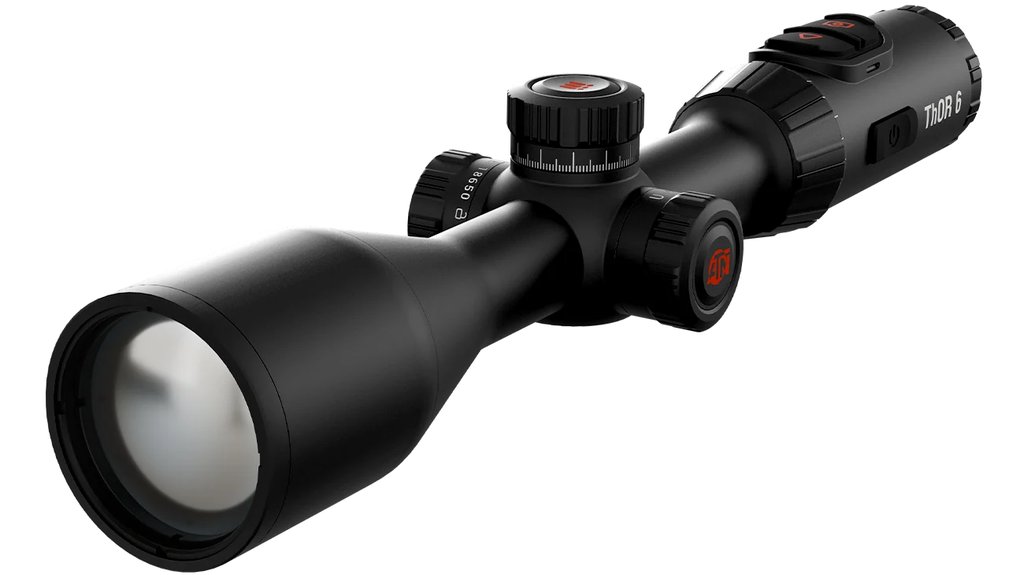
It is worth being clear about what "beating" the conditions actually means for a hunter on the ground. A thermal does not brighten the dark the way a night-vision tube does — it ignores light entirely and builds its whole picture from temperature differences. So the question of whether one scope beats another comes down to how much of that heat information it can gather and how cleanly it can render it. A bigger lens gathers more. A denser sensor renders more. Better processing keeps the picture honest when the background gets warm and the differences get small. Those three levers are why the models below beat different conditions, and why the benchmark of the family beats the most.
Below, each model is measured by which conditions it beats and how far it reaches while doing it.
ATN ThOR 6 640 3-24x — the benchmark others chase
This is the scope to beat. The ATN ThOR 6 640 3-24x is the flagship, and it sets the bar for a reason: a 640x512 sensor (roughly four times the pixels of a 384, the HD-versus-SD leap), a big 50mm lens, a 3650-meter detection range and a 3-24x band with 8x digital zoom. That package beats the widest range of conditions across the calendar.
Beats the dark and the distance
On the blackest, moonless winter night this scope reads warm animals clear across a field. Long detection plus high magnification means you spot far and confirm before the shot — the season's darkness never gets a vote.
SharpIR beats the summer heat-wash
The condition that beats lesser thermals — a hot summer night where the ground radiates and contrast collapses — is where SharpIR AI sharpening pulls the animal's outline back out of the warm background. Combine that with the 640 sensor and the flagship keeps a usable, ID-able picture when a coarser optic would give you a blob.
Who it's for: hunters who want the benchmark that beats every season on open ground. Who it's not for: short-range woods hunters who will never call on the long reach they are paying for.
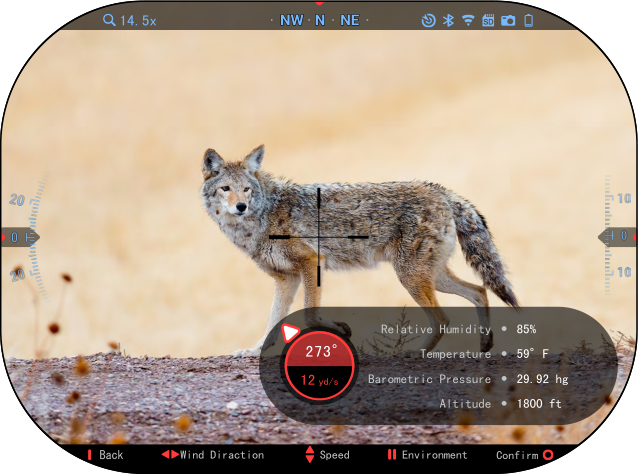
ATN ThOR 6 640 2-16x — beats most seasons for less
You do not always need the top of the range to beat the conditions. The 640 2-16x keeps the full 640x512 sensor and the same ≤15 mK sensitivity, but pairs a 35mm lens and a 2-16x band with a still-serious 3100-meter detection range. For the vast majority of season-round hunting, that beats what the night throws at you.
Swappable batteries beat the long night
Cold, long winter sits drain power. The 640 2-16x uses the replaceable 18650 battery system, so a set of spares beats the risk of a dead scope in the middle of a promising night — swap and keep hunting.
Same sensitivity, same clean edge
The ≤15 mK NETD means it pulls faint heat out of a cool spring or autumn field just as well as the flagship. You give up reach, not clarity — the picture is as clean, it simply does not travel as far.
Beats the fog and the brush
Light fog and a screen of brush are two of the most common things that beat a light-based optic, and they barely slow this one down. Heat cuts through haze that scatters visible light, and a warm body behind a thin curtain of branches still radiates. On a damp, low-lying field where the eye sees a grey wall, the 640 2-16x keeps painting the animal, which is exactly the kind of everyday condition most hunters need beaten far more often than they need extreme range.
Who it's for: all-season hunters who want benchmark clarity without top-tier reach. Who it's not for: anyone whose shots regularly live at the far edge of a big field.
ATN ThOR 6 384 2.5-20x — the budget beater that still owns the dark
The most accessible option in the family still beats the one thing every thermal is bought for: the dark. Its 384x288 sensor carries fewer dots than a 640 — SD to their HD — but the same ≤15 mK sensitivity, so it detects a warm animal readily on any night; it simply shows less fine detail at distance. At 1.74 lbs it is the lightest here, and it beats the budget worry while keeping current-gen features.
Six palettes beat shifting contrast
As seasons swing from frosty winter to heat-washed summer, six color palettes let you pick the look that beats that night's contrast, so an animal separates from the background whatever the temperature.
Who it's for: value-minded hunters at mid range who still want a scope that owns the dark. Who it's not for: long-range shooters who must identify small targets far out — that is a 640 job.
How to choose the ThOR 6 that beats your conditions
Pick by the condition that beats you most often. These are the features that decide the fight.
- SharpIR AI sharpening — shared across the line; the key to beating heat-washed summer nights.
- Detection range — the flagship's long reach beats big, open, dark fields; contained ground does not need it.
- Sensor resolution — 640 beats the far-distance ID problem; 384 detects just as well up close with less detail.
- NETD sensitivity — a shared ≤15 mK beats faint-heat conditions in mild spring and autumn.
- Replaceable battery — the 640 2-16x beats the long cold-night power drain.
- Weight — the 384 is lightest for walk-and-stalk hunters.
How we picked these ATN thermal scopes
We measured these by which real conditions they beat across the seasons — darkness, fog, brush concealment and the summer heat-wash that flattens contrast. Against that we weighed sensor resolution, NETD sensitivity, detection range, refresh rate, weight and battery life, and we kept the field to ATN's 6th-generation ThOR 6 line only, no older or discontinued models. Honest trade-offs: the flagship is the biggest spend and wants open ground to justify its reach, while the value 384 gives up pixel detail that far-distance identification needs. This is an in-house comparison of ATN's own range, not an independent lab test, so weigh it as a guide to which scope beats your hardest conditions and then check the specs against your own hunts. It is NOT for someone who only ever hunts short-range cover and would never call on the reach or the sharpening.
Frequently Asked Questions
What makes a thermal scope hard to beat?
That it reads heat, not light. Darkness, fog and brush that stop a normal optic do not stop a thermal, and current-gen features like SharpIR sharpening let it beat even a heat-washed summer night when contrast collapses.
Which ThOR 6 is the benchmark scope to beat?
The 640 3-24x flagship. Its 640 sensor, 50mm lens, 3650-meter detection and SharpIR sharpening beat the widest range of conditions across every season, which is why the rest of the line is measured against it.
Can a thermal scope beat a hot summer night?
Yes, with help. Summer heat soaks the ground and flattens contrast, but SharpIR AI sharpening pulls an animal's edges back out of the warm background, so a current-gen ThOR 6 keeps an ID-able picture.
Does winter beat or help a thermal scope?
It helps. A warm animal against a cold winter field is maximum contrast, so thermals actually perform at their best in the cold. Winter is a thermal's favorite season.
Is the value 384 model still worth buying?
Yes. It beats the dark just like its siblings thanks to the same ≤15 mK sensitivity, and it is the lightest, most accessible option. You give up fine detail at long range, not the core night capability.
Does fog beat a thermal scope?
Light fog and haze barely affect it, since it keys on heat rather than reflected light. Only very thick fog cuts range, and ordinary field fog is no obstacle.
Want the scope that refuses to be beaten by the season? Start with the 640 3-24x flagship benchmark that beats darkness, fog and summer heat-wash, step to the 640 2-16x to beat most conditions for less, or grab the light 384 to beat the budget while still owning the dark. Line them up with full specs on the ATN ThOR thermal scope page and pick your benchmark. Every one is current 6th-generation ATN hardware built to make the conditions work for you, not against you, on every night you hunt.
Created: August 5, 2026 · 19:53:40 UTC