The trait that separates a serious duty optic from a hobby scope is endurance: can it run a full watch and keep a steady picture the whole time? That is the angle for anyone searching army thermal scope who plans to sit long and scan wide rather than take one quick shot. A long watch punishes an optic in ways a short hunt never does. Batteries drain, eyes tire, and any lag or blur that a quick user would never notice becomes the thing that lets a heat source slip past unseen. The ATN ThOR 6 640x512 2-16x leads this roundup because its hot-swap batteries and wide scanning view are built for long, patient watches, backed by the longer-reaching 3-24x and the value 384 model. Every pick below is judged on how well it holds up across hours, not seconds.
A duty-style thermal has to last the watch. The ATN ThOR 6 640x512 2-16x leads on endurance with hot-swap 18650 batteries and a wide scanning view, while the 3-24x adds the longest reach and the 384 model holds the value spot. Endurance and scanning width matter as much as raw magnification on a long watch.
Quick answerBest overall: ATN ThOR 6 640x512 2-16x — hot-swap batteries and a wide 2x base view make it the endurance and scanning champion.
Best for long-range confirmation: ATN ThOR 6 640x512 3-24x — the extra reach and zoom identify distant heat sources.
Best value: ATN ThOR 6 384x288 2.5-20x — the full duty feature set on a smaller sensor for shorter watches.
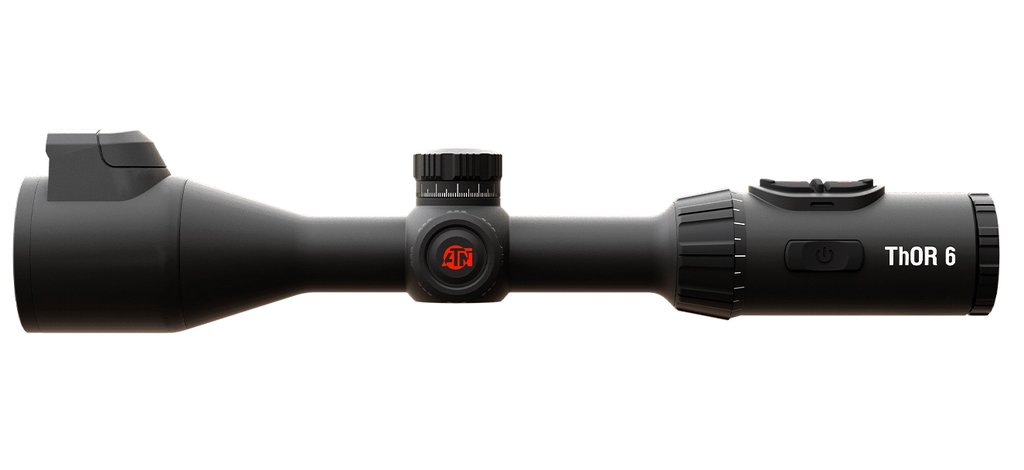
Why ATN's 6th-gen ThOR 6 suits a long watch
The ThOR 6 line suits long watches because it pairs a sensitive sensor with power you can renew in the field. Refresh rate is part of the story: at 50 Hz the image updates 50 times a second, so panning across a wide arc stays smooth and you do not lose a moving heat source to lag. A higher refresh means less blur when a target crosses your view, which matters most when you are scanning for hours and cannot afford to miss a flicker. Sensitivity is the other half: a low NETD rating means the sensor can separate small differences in heat, so a warm body still stands out against damp ground or cool brush late in the night when temperature gaps shrink. Put those together and you get an optic that stays useful in the last hour of a watch, not just the first. The 6th-gen platform also carries the software that a long sit leans on — onboard recording, a ballistic calculator, and connectivity — so the scope earns its keep between the moments a target actually appears, which on most real watches is most of the time. These are civilian sporting optics rather than issued military hardware, but the endurance-first design answers the same practical question a long watch asks of any thermal.
ATN ThOR 6 640x512 2-16x — best overall
Endurance you control
The replaceable 18650 battery system is the headline. Instead of a fixed pack that ends your watch when it dies, you carry spare cells and swap one in seconds. Your time on station is bounded only by how many batteries you packed, which is the whole point of an endurance optic. That matters in a way a spec sheet undersells: a sealed internal pack forces you to either break off the watch to charge or accept that the optic simply goes dark at a fixed hour. A hot-swap cell means the transition is a few seconds of downtime, not the end of the sit. 18650 cells are also common, rechargeable, and cheap to stock deep, so kitting out for an all-night watch is a matter of how many you charge before you leave rather than a hard ceiling built into the scope. For anyone whose plan is measured in hours rather than minutes, that single design choice is the difference between an optic that runs the watch and one that runs out mid-watch.
Wide scanning, sharp sensor
Starting at 2x gives the widest base field of view in the line, so you cover more ground per sweep on a long watch. That wide view rides on the same 640x512 sensor as the flagship, so when something warm enters the frame, you have the resolution to read it. The pairing matters because scanning and identifying usually pull in opposite directions — a wide view sees more but shows each thing smaller, while a narrow high-magnification view shows detail but misses whatever is off to the side. Here the wide sweep does not cost you sensor detail, so you spot heat sooner and still have the pixels to tell a coyote from a deer once you zoom. Full specs are on the ATN ThOR 6 640x512 2-16x page.
Smooth panning that keeps up with movement
Over a long watch you are moving the scope far more than you are shooting, and that is where the 50 Hz refresh earns its place on the 2-16x. Sweeping a wide arc at a lower refresh smears the image and turns a briefly-seen animal into a blur you cannot resolve; at 50 Hz the picture keeps pace with your pan, so a heat source that crosses the frame stays a crisp shape you can react to. Combined with the wide base view, the effect is that you can scan faster without giving up the ability to catch fast movers — which is exactly the workload a long, patient watch throws at an optic hour after hour.
Who it is for: the shooter who sits long, scans wide, and needs power that does not quit. Who it is not for: someone whose priority is the single longest-range shot, where the 3-24x pulls ahead.
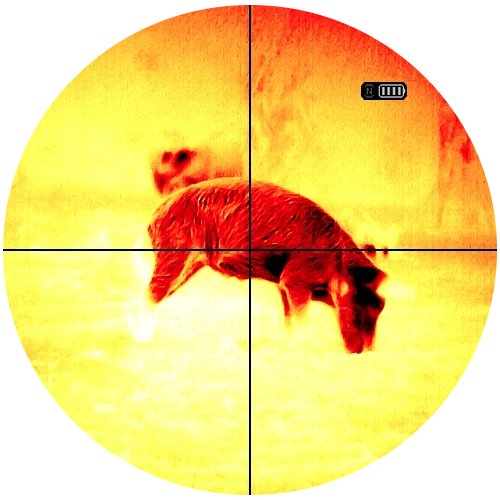
ATN ThOR 6 640x512 3-24x — best for long-range confirmation
Reach to identify distant heat
When a watch turns up a heat source far out, the 3-24x is the model that confirms it. A 3650 m detection range and 24x top-end zoom let you push out farther than the rest and resolve a distant dot into a recognizable shape. The extra reach changes how you can work an open watch: instead of waiting for a heat source to close the distance before you can tell what it is, you make the call earlier and on your terms. Detection range is only ever the distance at which heat first shows as a smudge, so the value of the higher magnification is that it takes that early smudge and gives you enough on-screen size to read posture, gait, and size — the cues that separate a legal target from something you leave alone. On a long watch across open country, that early, confident identification is worth more than a few extra minutes of raw runtime.
Picture-in-Picture for eyes-on and zoom
Picture-in-Picture keeps your wide scan while a zoom window works the detail, so you never lose situational awareness while you confirm. That dual view is what turns raw reach into usable information. Without it, cranking to 24x to study a distant heat source blinds you to everything else in the arc, which on a long watch is exactly when a second animal slips in from the flank. The inset window lets you commit to a close read of one target while the main picture still covers the ground around it, so you confirm the far contact and hold the wider watch at the same time.
Reach without giving up the watch
The 3-24x shares the same hot-swap 18650 power and 50 Hz refresh as the endurance pick, so choosing the long-range model does not cost you the traits that make an optic last a watch. You get the extra distance and zoom on top of, not instead of, renewable power and smooth panning. That balance is what makes it a duty-style long-range option rather than a specialist scope you can only run for a short session — the reach is there when a far contact appears, and the endurance is there for the many quiet hours in between.
Who it is for: open-country watchers who need distance. Who it is not for: close scanners who prefer the wider 2x base view.

ATN ThOR 6 384x288 2.5-20x — best value
Full features, lighter load
The 384x288 model carries every ThOR 6 tool at a lower weight of 1.74 lbs, which is a quiet advantage when you are holding a scope up across a long shift. It trades some far-distance detail for that lighter, cheaper package. Weight is one of those traits that reads as trivial on paper and becomes real only over hours — the arms and shoulders that shrug off two pounds for a quick hunt feel every ounce of it deep into a long watch, and a lighter optic is one you keep steady later into the night. Because it shares the same interface, recording, and hot-swap battery system as the 640 models, nothing about the watch changes except that you are holding a little less and carrying a smaller sensor. For many watchers that is a trade worth making.
Enough reach for most watches
A 2300 m detection range covers the distances most real watches cover. For shorter shifts and mid ranges, it is all the scope you need. It is easy to over-buy magnification and detection range for distances you will realistically never engage at, and the 384 model is the honest answer for a watcher whose ground is measured in a few hundred yards rather than the far edge of an open field. The smaller sensor shows heat as slightly less crisp at the extreme end of its range, but well inside that range it renders a clear, readable picture — and it does so while sipping less and weighing less, which are the traits a long watch actually rewards.
The same endurance backbone, less to carry
The value pick still runs on hot-swap 18650 cells and the same roughly nine-hour battery set as the flagship, so it is a genuine long-watch optic and not a stripped-down short-session scope. You keep the renewable power and the smooth 50 Hz panning; you give up only some far-range resolution and a little size. For a watcher building a first duty-style kit, that means the entry point into the line still lasts the watch — the endurance backbone is standard across all three, and only reach and detail scale with the model you choose.
Who it is for: budget-minded users and shorter watches. Who it is not for: long-range identification at the edge of the field.
How to choose a thermal scope for the long watch
Rank endurance and scanning alongside raw magnification:
- Endurance — hot-swap 18650 cells on the 2-16x mean your watch is not limited by a sealed pack.
- Scanning width — the 2x base view sweeps more ground per pass.
- Smooth motion — a 50 Hz refresh keeps panning crisp so moving heat does not blur.
- Long-range confirmation — the 3-24x reaches 3650 m for distant identification.
- Weight and value — the 384 model is lighter and cheaper for shorter shifts.
- Sensitivity — a low NETD rating separates faint heat from cool ground late in the night, when temperature gaps shrink.
- Onboard recording and connectivity — capturing the watch and pairing to a device lets you review contacts without breaking your position.
How we picked these ATN thermal scopes
We assessed only the current 6th-generation ThOR 6 line, weighting the traits a long watch punishes: battery endurance and hot-swap capability, field of view for scanning, refresh rate for smooth panning, NETD sensitivity, resolution, detection range, and weight. Rather than crowning the highest-magnification model by default, we asked which traits actually decide a multi-hour sit and let that reorder the picks — which is why an endurance-and-scanning model leads over a longer-reaching one. The plain trade-off is that these are civilian sporting optics, not issued military systems, and we make no defense claims. This is an in-house comparison of ATN's own range, not an independent lab review. If your reality is long sits and wide scanning, weigh endurance and field of view as heavily as magnification before you choose, and check each spec against the length of watch you actually stand.
Frequently Asked Questions
What makes a thermal scope good for a long watch?
Endurance, scanning width, and smooth motion are the three traits that decide a multi-hour sit. The ATN ThOR 6 640x512 2-16x leads here because hot-swap 18650 batteries extend runtime well past a fixed pack, a 2x base view covers more ground per sweep, and a 50 Hz refresh keeps panning crisp over hours. Raw magnification matters less than these once your plan is measured in hours rather than a single quick shot.
How long can the ThOR 6 run on a watch?
Each battery set gives roughly nine hours, but the 2-16x uses replaceable 18650 cells you can swap in seconds. That means your real runtime is limited by how many spare batteries you carry, not by a fixed internal pack. Because 18650 cells are common and rechargeable, stocking enough to run an all-night watch is inexpensive, and the swap itself costs only a few seconds of downtime rather than ending the sit.
Why does refresh rate matter when scanning?
Refresh rate is how many times per second the image updates. At 50 Hz the ThOR 6 redraws 50 times a second, so panning across a wide arc stays smooth and a moving heat source does not smear or lag out of view. On a long watch you move the scope far more than you shoot, so a higher refresh keeps fast movers as crisp shapes you can react to instead of blurs you miss. That advantage compounds over hours of continuous scanning.
Which model is best for confirming distant targets?
The ATN ThOR 6 640x512 3-24x, with a 3650 m detection range and 24x zoom. When a wide scan turns up something far out, its reach and Picture-in-Picture let you confirm the target without losing your wider view. The higher magnification takes an early distant smudge and gives it enough on-screen size to read posture and size, so you can make the call earlier and on your terms rather than waiting for the contact to close in.
Is the wider 2x view better than more magnification?
For scanning, often yes. A wider base field of view lets you clear more ground per sweep, so you spot heat sooner across a long watch. You can always zoom in to confirm; you cannot zoom out past the base view, which is why the 2-16x suits long watches. Since that wide view sits on the same 640x512 sensor as the flagship, you spot heat wide and still keep the resolution to read it once you close in.
Does the 384 model save meaningful weight?
It comes in at 1.74 lbs versus 1.83 lbs for the 640 models, a small but real difference over a long shift, plus a lower price. The trade is less fine detail at extreme distance, which most watches do not require. Weight reads as trivial on paper but tells over hours, so a lighter optic is one you hold steadier late in the night. It still runs the same hot-swap 18650 power, so it is a genuine long-watch scope rather than a short-session one.
Do all three models share the same endurance features?
Yes. All three run on the same hot-swap 18650 battery system, the same roughly nine-hour battery set, and the same 50 Hz refresh for smooth panning. What changes between them is reach, resolution, and weight, not the endurance backbone. That means whichever model you pick, you keep renewable power and smooth motion, and you scale only distance and detail to match the watch you stand.
If your idea of an army thermal scope is one that runs the whole watch, the ATN ThOR 6 640x512 2-16x is built for it, hot-swap power, a wide scanning view, and a sharp 640 sensor. Need to weigh endurance against reach before you commit? Compare the full family on the ATN thermal scope page and match battery, field of view, and magnification to the length of watch you actually stand.
Created: August 5, 2026 · 19:53:40 UTC