When people search army thermal scope, they are usually picturing a specific set of traits: a sensor that sees far, an image that holds up under recoil, and gear tough enough to trust after a hard day in the field. You cannot buy actual military-issue optics off the shelf, and this roundup does not pretend otherwise. What you can get is those same capabilities in a civilian-legal package. The ATN ThOR 6 640x512 3-24x leads this roundup because it delivers duty-grade resolution and reach in a scope any hunter can own. Below, the 6th-gen ThOR 6 line is judged on the traits that actually separate a serious thermal optic from a toy: how far it detects, how cleanly it resolves a target, and how it behaves shot after shot.
You cannot buy true military-issue optics, but you can own their key traits. The ATN ThOR 6 640x512 3-24x leads with a 640x512 sensor, 3650 m detection range, and recoil-proof video, backed by the 640 2-16x and the value 384 model. Judge an "army-grade" scope by resolution, reach, and durability, not marketing.
Quick answerBest overall: ATN ThOR 6 640x512 3-24x — the highest-resolution sensor and longest reach in the line, closest to the capability people mean by army-grade.
Best mission-length runtime: ATN ThOR 6 640x512 2-16x — same 640 sensor with hot-swap batteries for extended operations.
Best value entry: ATN ThOR 6 384x288 2.5-20x — the full duty feature set on a smaller sensor at the friendliest price.
Why ATN's 6th-gen ThOR 6 earns the army-grade comparison
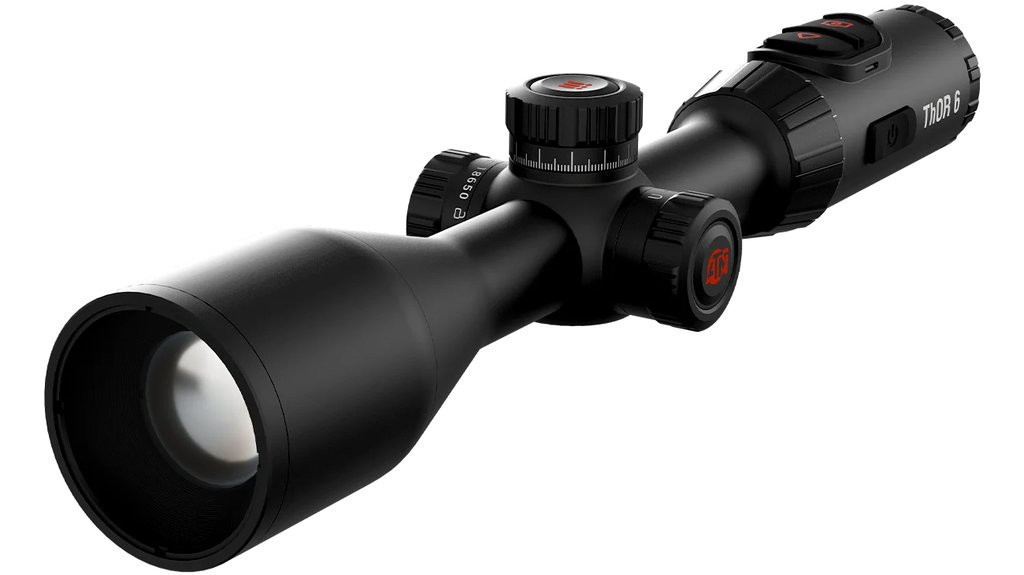
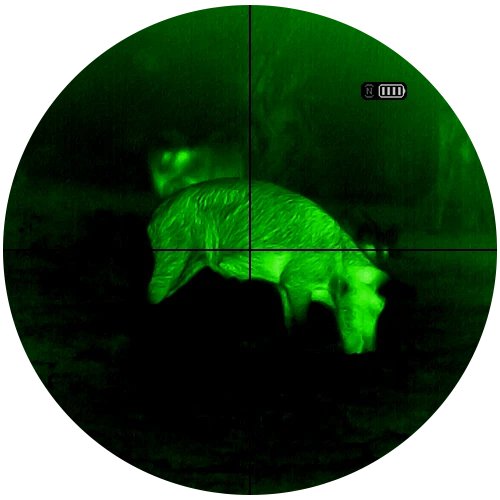
The ThOR 6 line earns the comparison because it is built around the same priorities a duty optic is: detect early, hold the image steady, and keep working. Its ≤15 mK NETD is the key spec. NETD is the smallest temperature difference the sensor can pick out, and a low 15 mK reading means a warm body separates cleanly from a cool background at long range, which is exactly what a scout or a hunter needs. Recoil Activated Video then captures the shot automatically, the way an issued system logs an engagement, so you can review a hit or a miss frame by frame instead of arguing about it. Just as important is what the ThOR 6 does not force on you: there is no restricted export paperwork, no unit armorer, and no waiting on a supply chain. The capability sits in a scope you can mount tonight and zero this weekend. That combination — duty-style performance with civilian availability — is the whole reason the comparison holds up, and it is why the traits below matter more than any label on a product page.
ATN ThOR 6 640x512 3-24x — best overall
Resolution that identifies, not just spots
The 640x512 sensor is what puts this model closest to army-grade capability. More pixels is like moving from standard definition to HD: a heat signature that would be a smear on a coarse sensor resolves into a shape you can identify. That difference is decisive at the moment it counts, because spotting a warm blob tells you something is there while resolution tells you what it is — an animal, its size, the direction it faces, whether there is more than one. Combined with SharpIR AI image enhancement, the picture stays sharp deep into the zoom range instead of turning to mush as you push magnification, so the detail you paid for is still there when you dial in on a distant target.
Reach for open-country work
A 3650 m detection range and 3-24x magnification make this the model for seeing far and confirming at distance. Detection range is where a heat source first appears as a target, and this sensor closes the gap between spotting and identifying better than any other in the line. On open ground — harvested fields, desert flats, cut pasture — that reach is the difference between working a stand efficiently and walking blind. You detect early at the low end of the zoom, then dial up toward 24x to confirm before you commit, all without lifting your eye off the target.
Video you can trust as a record
Recoil Activated Video is the trait that most directly borrows from duty gear. Instead of fumbling for a record button, the scope starts capturing the instant the shot breaks and rolls back a few seconds so the whole sequence is saved. That gives you an honest record of the hit, a training tool to fix a flinch or a bad follow-through, and a way to settle a disputed shot with footage rather than memory. Paired with the 640 sensor's clarity, the clip is detailed enough to actually learn from.
Who it is for: the shooter who wants the most capable, longest-reaching thermal ATN builds. Who it is not for: someone who wants a lighter, closer-range optic or the wider base view of the 2-16x. Details live on the ATN ThOR 6 640x512 3-24x page.
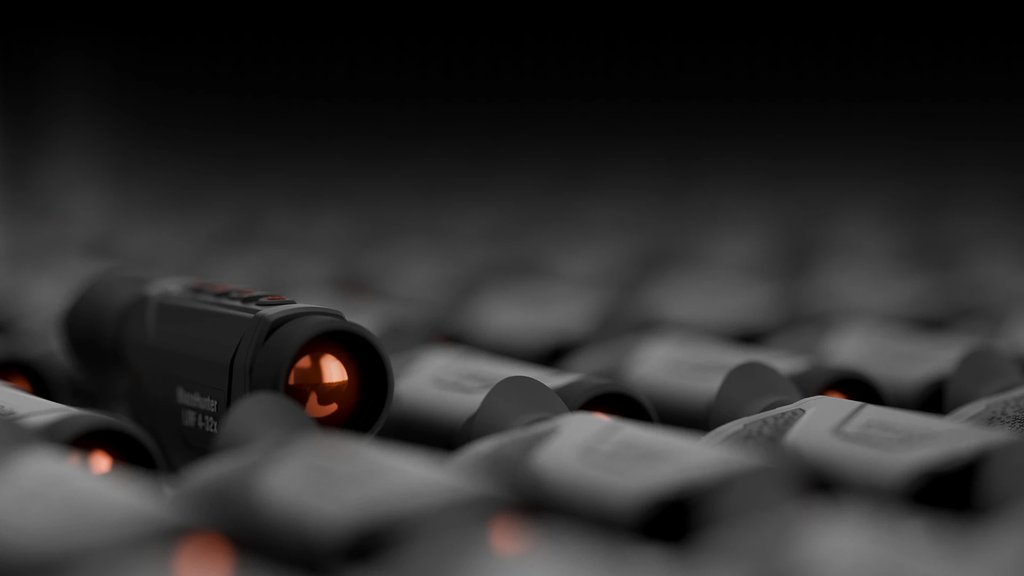
ATN ThOR 6 640x512 2-16x — best for mission-length runtime
Hot-swap power keeps you in the fight
The replaceable 18650 battery system is what makes this the endurance pick. On a long operation you carry spare cells and swap them in seconds, so runtime is limited by how many batteries you brought, not by a sealed pack that dies at the wrong moment. It also changes how you plan a night: instead of rationing screen time, you scan freely, knowing a fresh set of cells restores full runtime in the time it takes to reach into a pocket. For anyone who stays out past a single battery's life, that removable design is worth more than a few extra rated hours.
A wider base view for scanning
Starting at 2x gives a wider field of view than the 3-24x, so sweeping a perimeter or a treeline is quicker. Field of view is how much ground you see at once, and more of it up front means fewer passes to clear an area and less chance an animal slips through a gap between sweeps. When your job is detection across a wide arc rather than pinpoint work at extreme range, that broader base view is the more useful starting point, and you still have 16x on tap when something appears and you need to close in.
The same 640 sensor, no compromise on clarity
Choosing the 2-16x for its runtime and view does not cost you image quality. It carries the identical 640x512 sensor and ≤15 mK NETD as the flagship, so every heat signature resolves with the same duty-grade detail. The only trade against the 3-24x is a slightly shorter 3100 m detection range and a lower top magnification, which for scanning-first work is often the right call rather than a downgrade.
Who it is for: anyone who prioritizes uptime and wide scanning. Who it is not for: the long-range specialist who would rather have the 3-24x reach.
ATN ThOR 6 384x288 2.5-20x — best value entry
The full duty feature set for less
The 384x288 model runs every ThOR 6 capability — Recoil Activated Video, Hot Point Tracking, Zeroing Freeze — on a smaller sensor. It is the way to get the duty-style feature set without the flagship outlay, and nothing about the interface or the toolkit is stripped back to hit the lower price. You get the same one-shot Zeroing Freeze that locks the reticle so you sight in without chasing the crosshair, and the same Hot Point Tracking that flags the warmest object in the frame, so a first-time thermal buyer learns on the full software rather than a cut-down version.
Capable where most work happens
Its 2300 m detection range covers the ranges most real engagements and hunts actually occur at. You trade some long-distance detail for a lighter load and a lower price, but the 384 sensor still resolves a target clearly out to the distances a typical hunter takes a shot. Most nights on typical terrain, the practical difference between this and a 640 sensor never comes up — it shows itself only when you regularly need to identify small targets at the far edge of what thermal can reach.
The lightest, most packable option
At 1.74 lbs the 384 model is the lightest in the line, which matters more than it sounds on a long stalk or a rifle you carry all day. Less weight over the bore means faster handling and less fatigue, and the smaller sensor's efficiency helps stretch the same 18650 battery pack. For a walk-and-stalk hunter or anyone building a trim, do-everything setup, that lighter package is a genuine advantage rather than a consolation prize.
Who it is for: new buyers and mid-range users. Who it is not for: those who need every pixel at extreme distance.
How to choose an army-grade thermal scope
Judge capability by these traits, not by the word army on a listing:
- Resolution — a 640x512 sensor identifies targets, not just spots them.
- Detection range — 3650 m on the 3-24x is the longest reach in the line.
- Durability under recoil — Recoil Activated Video and a rugged build hold the image and log the shot.
- Runtime — hot-swap 18650 cells on the 2-16x extend time on task.
- Budget — the 384 model gives the full feature set at the entry point.
- NETD sensitivity — a ≤15 mK rating pulls faint heat out of a cool background, the trait that finds a bedded animal others miss.
- Weight and handling — a lighter scope like the 384 rides better on a carry rifle; match the mass to how far you walk.
How we picked these ATN thermal scopes
We considered only the current 6th-generation ThOR 6 line and measured it against the capabilities people mean by an army thermal scope: sensor resolution, NETD sensitivity, magnification, detection range, refresh rate, weight, and battery endurance. The honest trade-off is that these are civilian sporting optics, not restricted military hardware, and we make no claim to defense certification. This is an in-house comparison of ATN's own range rather than an independent lab test. If you need duty-grade capability you can legally own and actually use, weigh these specs against your ranges and mission length before you buy.
Frequently Asked Questions
Can civilians buy an army thermal scope?
You cannot buy restricted military-issue optics, since those are controlled and not sold to the public. What you can do is own a civilian scope built around the same core capabilities. The ATN ThOR 6 640x512 3-24x delivers duty-grade resolution, long reach, and recoil-proof video in a package any hunter can legally purchase. In practice that means the traits people want from army gear are available to you, just without the label and the paperwork.
What makes a thermal scope army-grade in practice?
It comes down to four things: resolution that identifies targets rather than just flagging heat, long detection range, a stable image that survives recoil, and dependable runtime in the field. Those are performance traits, not a certification you can shop for. The ThOR 6 line hits them with a 640x512 sensor, up to 3650 m detection, Recoil Activated Video, and hot-swap batteries. Judge any scope claiming to be army-grade against that checklist instead of the marketing copy.
Which ThOR 6 is closest to military capability?
The ATN ThOR 6 640x512 3-24x is the closest, with the highest-resolution sensor and the longest 3650 m detection range in the family. It is the model to choose when reach and target identification matter most, such as open-country work where you detect far out and confirm before committing. The 2-16x shares the same sensor if you value scanning and runtime more than top-end magnification. All three run the same duty-style software, so the choice is really about range and endurance.
How does detection range translate to real use?
Detection range is how far out a heat signature first shows as a target, before you can identify exactly what it is. A 3650 m figure means you can pick up warm bodies at long distance, then zoom in with the scope's magnification to confirm what you are looking at before acting. Think of detection as the early-warning number and resolution plus magnification as the confirmation step. In the field the two work together: you catch the heat early, then close the visual gap to make a safe, informed decision.
Why does NETD matter for a duty-style optic?
NETD is the smallest temperature difference the sensor can detect, measured in millikelvin, so a lower number means a more sensitive sensor. A ≤15 mK rating means the ThOR 6 separates a warm target from a cool background with high contrast, which is the difference between spotting a threat early and missing it. It is especially important in marginal conditions — light rain, humidity, or a target with a weak heat signature against ground that has barely cooled. Better NETD is what lets you find the animal or object others walk right past.
Is the 384 model good enough for serious use?
For most practical ranges, yes. It runs the full ThOR 6 feature set — Recoil Activated Video, Hot Point Tracking, Zeroing Freeze — with a 2300 m detection range at a lower price and the lightest weight in the line. The 384 sensor resolves targets clearly out to the distances most hunters and shooters actually engage at. Move up to a 640 sensor only if you regularly need fine detail on distant or small targets at the far edge of thermal range.
Does removable-battery power really matter?
It can be the deciding factor on a long night. The ThOR 6 640 2-16x uses replaceable 18650 cells, so instead of being tied to a sealed internal pack you carry spares and swap them in seconds. That turns runtime into a matter of how many batteries you packed rather than a hard ceiling. If you routinely stay out past a single charge, that hot-swap design is worth more than a slightly higher rated battery life on a non-removable system.
You will not find issued military optics for sale, but you can own their capability. The ATN ThOR 6 640x512 3-24x brings duty-grade resolution, long reach, and recoil-proof video into a scope built for civilian hunters. Want to line up runtime and range across the family before deciding? Explore the full ATN thermal scope lineup and match sensor, magnification, and battery to the way you actually operate.
Created: August 5, 2026 · 19:53:39 UTC