A 640 thermal scope is defined by its sensor — a 640x512 thermal detector that holds over 327,000 pixels, which is the resolution serious hunters reach for when they want to identify a target at distance, not just spot a heat blob. The current 6th-gen ATN ThOR 6 line offers that 640 sensor in two rifle-scope variants, plus a 384 for anyone who wants to see what the step down looks like. This roundup ranks them so you can pick the 640 configuration that fits how far you shoot.
Best 640 for a wider field: ATN ThOR 6 640x512 2-16x — same 640 sensor, broader view for scanning.
Value step-down: ATN ThOR 6 384x288 2.5-20x — lower resolution, same 6th-gen features, for mid-range budgets.
Why a 640 sensor is worth it in ATN's 6th-gen line
A 640x512 sensor is worth it because those extra pixels turn into detail and distance — the difference between knowing something is warm out there and knowing exactly what it is. Across the ThOR 6 line, the 640 models pair that resolution with a ≤15 mK NETD, so the picture stays clean and high-contrast even on low-contrast nights, and SharpIR AI enhancement sharpens it further. Both 640 variants also carry the full 6th-gen feature set — Recoil Activated Video, Zeroing Freeze, Picture-in-Picture, Hot Point Tracking and built-in Wi-Fi — on a Full-HD OLED display. The only real choice between them is magnification and field of view.
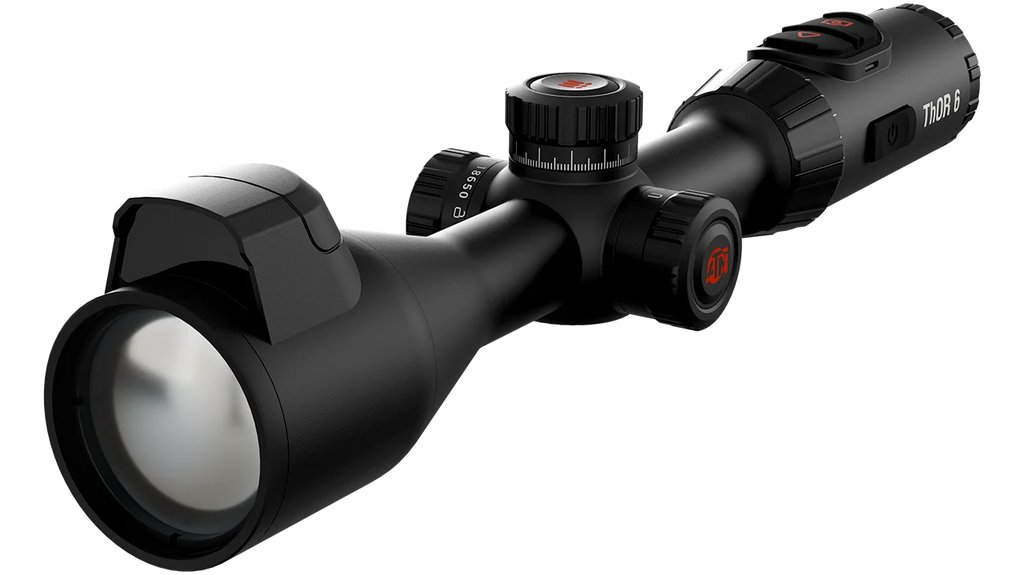
ATN ThOR 6 640x512 3-24x — the flagship 640 scope
The ATN ThOR 6 640x512 3-24x is the 640 scope to buy when you want the resolution to pay off at distance. It puts the full 640 sensor behind the biggest lens and the highest magnification in the line.
Full 640 resolution behind a 50 mm lens
The 640x512 sensor's 327,000-plus pixels, gathered through a 50 mm lens, let you identify a target at the far end of a field before you shoot. This is where a 640 earns its keep — detail that a smaller sensor cannot resolve at the same distance.
Reach that matches the sensor
A 3650 m detection range and 3-24x magnification mean the optic keeps up with the resolution, so you can find, magnify and identify at long range. The ≤15 mK NETD keeps that image clean when contrast is poor.
Who it's for: the hunter who bought a 640 for long-range detail and wants to use all of it. Who it's not for: someone who prefers a wider field over top magnification.
ATN ThOR 6 640x512 2-16x — 640 detail, wider field
The ATN ThOR 6 640x512 2-16x gives you the identical 640 sensor in a package tuned for a wider view. For many hunters this is the more practical 640, because a broad field makes finding game faster.
A wider base view
Starting at 2x with a 35 mm lens opens up the field so you can scan a tree line before zooming in. The sensor is unchanged, so the image is just as detailed as the 3-24x — you simply trade top-end reach for an easier view.
Reach for most hunting
At 3100 m detection range it still reaches well past the distances most hunters shoot, so you keep the full 640 resolution without paying for range you rarely use.
Who it's for: the hunter who wants 640 detail with a wider, easier field. Who it's not for: the long-range shooter chasing the maximum reach of the 3-24x.
ATN ThOR 6 384x288 2.5-20x — the value step-down
The ATN ThOR 6 384x288 2.5-20x is the honest value option for hunters who do not need a full 640. It keeps every 6th-gen feature while lowering the pixel count to fit a tighter budget.
Enough resolution for mid-range
At 384x288 the sensor holds about 110,000 pixels — fewer than a 640 but enough to identify game at mid-range, with the same ≤15 mK NETD and a 2300 m detection range.
What you give up vs a 640
Compared with a 640, detail softens sooner at long distance. If your hunting stays inside mid-range, that trade saves money; if you want the full detail a 640 delivers at the far end of a field, step up to one of the 640 variants.
Who it's for: the value-minded hunter at mid-range. Who it's not for: anyone who specifically wants 640 resolution and long-range detail.
What a 640 sensor buys you at distance
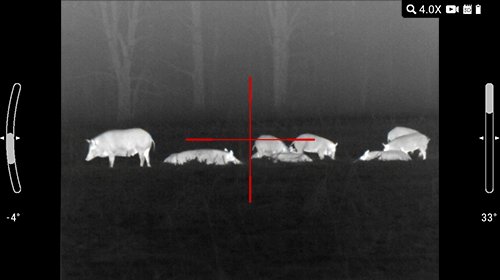
The practical payoff of a 640 sensor shows up when the target is far away. At close range almost any modern thermal sensor gives you a usable picture, but as distance grows, the number of pixels landing on the animal shrinks. A 640x512 sensor lands roughly three times as many pixels on that distant shape as a 384x288, and those extra pixels are what let you tell a hog from a coyote — or an animal from a person or a stray dog — before you ever consider a shot. That is the difference between detection (something warm is out there) and identification (you know exactly what it is and can act responsibly). Paired with a ≤15 mK NETD, the 640 also keeps that distant image high-contrast, so the detail is not lost to a muddy, low-contrast picture on a humid night. For a hunter who regularly reaches across open ground, the 640 is not a luxury spec — it is the resolution that makes a long, ethical shot possible.
The 6th-gen features every 640 ThOR shares
Choosing a 640 also means inheriting the full 6th-gen toolkit, and it is worth knowing what comes along for the ride. Both 640 variants carry Recoil Activated Video, which starts recording on the shot so your hunt is captured hands-free; Zeroing Freeze for a fast one-shot zero at the bench; Picture-in-Picture, which floats a magnified aiming window over the wider scene so you can hold a wide field and a precise aim point at once; and Hot Point Tracking to keep a bead on the warmest object in frame.
Connectivity and power
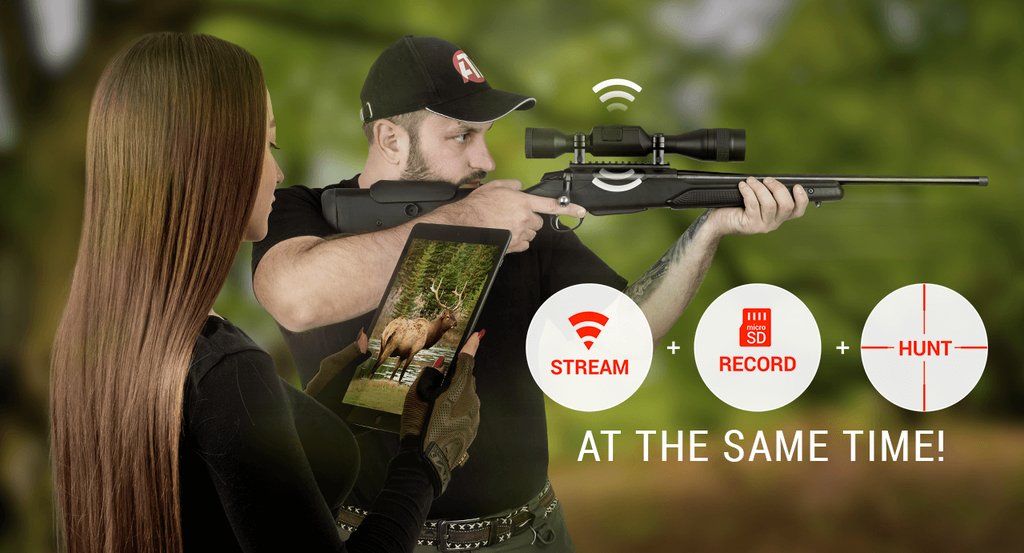
Built-in Wi-Fi with ATN Connect 6 streams the view and pulls footage to your phone, and the replaceable 18650 battery system runs about nine hours and lets you hot-swap charged spares on a long sit. None of this changes between the two 640 variants, which is why the real decision comes down to magnification and field of view rather than features.
How to choose the right 640 configuration
If you have decided on a 640, the remaining choice is magnification and field of view, then whether you truly need 640 at all. Both 640 variants share the same sensor and image, so pick by how you hunt rather than by picture quality.
- Magnification — the 3-24x reaches farthest; the 2-16x starts wider for scanning.
- Lens and reach — the 50 mm lead detects to 3650 m; the 35 mm 2-16x to 3100 m.
- Field of view — a lower base magnification finds game faster across open ground.
- Do you need 640? — for mid-range hunting the 384 saves money with the same features.
- Shared features — both 640s carry the full 6th-gen suite and ≤15 mK NETD, so the sensor is not the differentiator.
How we picked these ATN thermal scopes
We focused on what a 640 buyer actually cares about: how the two 640x512 variants differ in magnification, lens, field of view and reach, and where the 384x288 makes sense as a value step-down. We judged resolution, NETD, detection range, refresh and weight against real hunting distances, keeping the comparison to current 6th-gen hardware only.
We were straight about the trade-offs — the 384 gives up detail at long range, and the 3-24x trades a wide field for reach. This is an in-house comparison of ATN's own 640 line, not an independent lab review, so decide whether you truly need 640 for your ranges before you pay for it, and pick the variant that matches how you hunt.
Frequently Asked Questions
What does 640 mean on a thermal scope?
It refers to a 640x512 thermal sensor — a detector with over 327,000 pixels. More pixels mean finer detail and the ability to identify a target at greater distance, which is why 640 is the resolution serious long-range hunters look for.
Which ATN 640 thermal scope is best for long range?
The ATN ThOR 6 640x512 3-24x. It pairs the full 640 sensor with a 50 mm lens, 3-24x magnification and a 3650 m detection range, so the optic keeps up with the resolution all the way out to long distance.
What's the difference between the two ATN 640 scopes?
They share the identical 640x512 sensor and image quality; the difference is magnification and field. The 3-24x reaches farther with a 50 mm lens, while the 2-16x starts at a lower magnification with a 35 mm lens for a wider scanning view.
Do I really need a 640 or is a 384 enough?
If you hunt at mid-range, a 384x288 shares the same ≤15 mK NETD and 6th-gen features and saves money. A 640 pays off at long range, where the extra pixels hold detail and let you identify a target the 384 would leave soft.
Does a 640 sensor use more battery than a 384?
Not meaningfully. All three ThOR 6 scopes here run about nine hours on a pair of 18650 cells, so resolution is not what determines your runtime. The replaceable cells also let you carry spares for a longer night.
Is a 640 scope heavier than a 384?
Only slightly. The 640 variants weigh about 830 g and the 384 about 790 g, a difference you will barely notice on the rifle. Choose by resolution and magnification needs rather than by that small weight gap.
If you have set your sights on a 640 thermal scope, the ATN ThOR 6 640x512 3-24x puts the full sensor behind the reach to use it, while the 640 2-16x widens the field and the 384 covers mid-range for less. Compare the 640 variants side by side on the ATN thermal scope page and pick the configuration that matches how far you actually shoot.
Created: August 10, 2026 · 10:05:21 UTC